The Corporate Bitcoin Journey: Lessons from Early Allocators
Speakers/Moderators

Allen Helm
Allen Helm


Rob Massey
Rob Massey
Rob’s blockchain expertise spans the comprehensive tax considerations of blockchain enabled transactions and the analysis of the tax impacts of tokenization and digital asset transactions across business models, industries, and geographies. He also has a growing expertise in tax controversy matters involving digital assets and blockchain based business models.
Rob (and co-Author Conor O’Brien) worked with 50 other tax specialists in Deloitte to produce Bloomberg BNA’s Tax Management Portfolio, Taxation of Cryptocurrency and Other Digital Assets, No. 190-2nd. This 400-page tax treatise examines U.S. federal and state income taxation of digital assets, including cryptocurrencies, providing a detailed analysis of the classification of digital assets for tax purposes. It offers an inclusive overview of the digital asset ecosystem, tax guidance to date, tax classification, and accounting treatment. The portfolio further delves into the tax implications of using, dealing, trading, and investing in digital assets, and addresses novel tax questions raised by digital asset transactions.

Urban Lavrenčič
Urban Lavrenčič
Today, he bridges the gap between legacy finance and the Bitcoin ecosystem, overseeing Operations, Financial Infrastructure, AML, and Marketing at the group level. A specialist in navigating the intersection of the Bitcoin economy and traditional finance within an evolving regulatory landscape, Urban is a leading voice on how Bitcoin enterprises can integrate with traditional financial systems while ensuring institutional-grade compliance without compromising the ethos of Bitcoin.
Session
Overview
The Corporate Bitcoin Journey: Lessons from Early Allocators brought together Alan Helm of Bitcoin for Corporations with Brian Consolvo of KPMG, Rob Massey of Deloitte Tax, and Urban Lavrenčič of NiceHash to discuss how companies are approaching Bitcoin on the balance sheet and in operations.
The panel traced the evolution from early Bitcoin businesses operating with little regulatory guidance to the more mature environment shaped by spot Bitcoin ETFs, tax and broker reporting rules, banking guidance, and digital asset legislation. Speakers emphasized that 2024 was a major inflection point for institutional credibility and corporate conversations.
A central theme was that corporate Bitcoin adoption is not only an investment decision. Large companies must work through accounting, tax basis tracking, custody, self custody, internal controls, cybersecurity, BSA/AML obligations, board approval, and organizational culture. The panel also noted that ordinary-course payment flows, cross-border transactions, customer demand, and Bitcoin-backed lending may be more natural entry points for many enterprises than treasury allocation alone.
The discussion highlighted both U.S. and European perspectives, including the impact of MiCA and ongoing de-banking challenges in Europe. NiceHash added the operating-company perspective, emphasizing mining, security practices, and the need for coexistence between traditional finance and Bitcoin-focused businesses.
I'm excited about this topic today: corporate Bitcoin adoption. Trillions of inflows coming into Bitcoin, making number go up. But we're going to talk about a lot of things today. I'm Alan Helm, co-founder at Bitcoin for Corporations, an advisory and advocacy firm for many of the Bitcoin treasury companies out there that have Bitcoin on the balance sheet. I'm joined today by a phenomenal panel. Brian, why don't we start with you for introductions? Talk about your background, what you do, how long you've been in Bitcoin, that sort of thing.
Brian, I'm a partner with KPMG. I've been with KPMG about 20 years now and lead our digital assets practice within our advisory group. I got into Bitcoin back in 2019. I think, like many of you, I probably dismissed it many years ago and then finally came back to it, and I've been hooked on it ever since. I've been very fortunate over the past five years or so that it has coincided with my professional life. Given everything we'll talk about today, there has been some pretty exciting news.
Rob Massey. I'm a tax partner at Deloitte. Back in 2012, I was the first person in Deloitte to start serving clients in crypto. Obviously, Bitcoin was what was around, so that was the first order of business. It has been a great journey. We serve across tax, audit, consulting, all the things you would imagine of Deloitte, and we do that with crypto and specifically Bitcoin. It has been a fantastic journey to be on, very into the space, with a big impact to all of our client base, which is why we're engaged. I haven't touched fiat transactions in a number of years. It's pretty fun. Great team, great journey. Thank you guys for being here.
Hello. I'm the director at NiceHash, a global marketplace for hash rate. We have been dealing with Bitcoin since 2014, and we are one of the companies that has had it on the balance sheet since the first day. So there is some experience in place.
Amazing, gentlemen. I want to start with a little bit of a history lesson. I know a lot of the panels here at this event today have been hyper-dominated by the new class of Bitcoiners that has come in. We're a long way off from the T-shirt days and those sorts of things. Rob, you've been in the industry since 2012. A lot changed after 2024 with the new administration. Walk us through everything that has happened. It was really an early class of highly convicted individuals that wanted Bitcoin on the balance sheet. Give us a little bit of the lessons there.
In 2012, there was no guidance, period. But we had a few serious individuals who wanted to do this. They wanted to get it right. They wanted to stay out of trouble. They secured counsel, and tax was a thing they were worried about. What was going on then? Bitcoin was some hundred dollars. Mining operations had 50 bitcoin coinbase transactions. People were thinking about mining rigs with unique ideas, many of which are mainstream today. But going bold into something with no guidance out there, and the news being filled with really dark stuff pretty consistently, was difficult.
You had a couple of pretty courageous entrepreneurs, frankly, who wanted to get it right. That's how it started. They said, we trust your brand to get this right. Okay, heavy lift. Our management was skeptical, I will tell you, and this took a while. But there was a realization back in 2012, a realization that some people in this space today had, that using crypto, and importantly Bitcoin, in normal commercial transactions was going to be mainstream.
There was a vision even back then about the proliferation of crypto and how it is transformative to everyday transactions, whether cross-border, or in countries around the world where your property is not your own, but Bitcoin is something different. Reflecting on what we had just gone through with the financial crisis, people were like, okay, if this vision is real, we need to get ahead of this.
Our first client base had an issuer, an early-stage exchange, and a miner. That was lucky because you got to see how the ecosystem worked together differently than traditional payment flows today. The concept of peer to peer, what that does from a KYC and AML perspective, and having property that acts like a fund but is not issued by a central bank. How this all works together created a lot of really interesting questions, many of which have not been answered today. We're still evolving through this, thanks to many of you in the room being courageous and having good conversations with regulators.
That carried through. In 2013, we had a little bit of guidance about KYC and AML, and in 2014 was the first piece of guidance we got from the IRS. Until that time, we were cloaked. Even though I was serving in the space, we could not talk about it even internally for fear of brand risk. In 2014, that's when we began to come public about this, and that sort of balanced everything a little bit and allowed more broad collaboration. But there were relatively few advisors in this space. Big, bold transactions, companies betting the farm. If they were wrong in a position they took from a tax perspective, they would not have the funds to pay the bills. To be clear, that was the kind of risk they were taking. Pretty bold moves, and we rest on all of their shoulders today.
Early, it was operators, miners, a custodian. But really in 2024, things started to accelerate rapidly. Brian, maybe walk us through the regulatory unlocks that started to happen that paved the way for the ETFs and then this rise of the Bitcoin treasury playbook.
First, I love that Rob says he doesn't deal with fiat anymore. That's a great story. When I look at the past five years, actually probably the past six years since Covid, it has been an extremely volatile time. But for me, 2024 was the watershed moment for crypto because that's when we got the ETF approval. I think that's where we started to erase the brand risk of this asset class.
When that much capital started to flow into these ETFs, the IBIT ETF was the fastest growing ETF in history, and I believe there are thousands and thousands of them, to $10 billion, and it hit every record subsequent to that. That made it very easy for us to have conversations with clients because the demand is clearly there. At the end of the day, our clients are going to do what their customers want.
That moment really gave credence to this industry. It was no longer this kind of dark asset class that, like Rob mentioned, would potentially bring brand and reputation risk. I think we've all probably seen some element of that in corporate America over the years. It still exists to this day, believe it or not.
After the ETFs, we obviously had a new administration. One thing we didn't talk about was some of the regulations that came out from the prior administration that made it very difficult for any company to engage with digital assets. The prudential regulators, the ones that regulate the banks, put out very stern guidance. We had SAB 121 that the SEC issued. This made it very prohibitive for any company to custody digital assets because they had to put them on the balance sheet. This was handled very differently from any other asset these companies were custodying.
With the new administration, and I think everyone remembers two years ago in Nashville, we had presidential candidates talking about how they wanted this to be the Bitcoin capital of the world. That was a pretty eye-opening experience, to think where we were several years, or maybe even two years, prior to that, to now having presidential candidates putting their clout behind this. That made it very clear the direction they were going to go.
When the new administration came in, they started off with a number of executive orders that laid the foundation for how they were going to view digital assets. The regulators rescinded some of the guidance I mentioned previously that made it very prohibitive, especially for banks, to engage in this space. Say what you will about the banks, but I do think the banks are the next wave of adoption with this because it makes sense on so many different levels. Everything that we saw last year really paved the way for significant adoption.
To emphasize 2024, we got a law passed in 2021 about broker reporting and basis tracking, but it was relatively light. In 2024, Treasury dropped a significant regulations package, which gave a lot of clarity on broker reporting, many of which people are living with today. But importantly, basis tracking and the concept of defining what is a wallet, with a range of motion to allow a significant amount of interpretation and planning as to how you engage with crypto.
This gave us a lot of latitude in how to deal with it, allowing people with different security concerns across custodians and self custody. The fact that we have clarity through Treasury about how to deal with self custody through a tax lens is significant. Even though they seem burdensome, at least we have clarity and a lot of range of motion to do what you want with it. So again, 2024 was a very big deal. A lot of things we had been waiting on got clear.
I totally agree. Then obviously in 2025, the other big moment was the GENIUS Act. I get that it's focused on stablecoins, but that was the first legislation that we've ever had in the United States related to digital assets. The great part about the GENIUS Act is that it was bipartisan. Last year, we also had the CLARITY Act passed out of the House. If and when that gets approved, I think it is the next shoe to drop that will give companies the assurances they need to move forward.
Right now, looking ahead to midterms and the 2028 election, a lot of companies are worried that we have this guidance coming out from the regulators, but as you've seen, that guidance can be pulled back depending on who's in office. Once this stuff gets codified into law, I think it's going to create quite a boom.
From a European perspective, the ETFs gave BTC a lot more integrity. When it comes to European companies dealing with BTC, it became a little bit easier for us because when Wall Street gets into a deal, then there must be something right with it.
Urban, we were talking backstage. We've had a lot of perspectives from the U.S. side, but on the European side, things are still lagging a little bit. I think it's great that the administration is setting the right example for Europe. What are some of the biggest hurdles you see with the banks there that need to be addressed?
The situation in Europe was, for a while, quite demanding, having several regulations around several countries. Now with the MiCA framework, it's a little bit easier. The banks did ease up a little bit when it comes to supporting crypto companies, but still a lot of de-banking has not been undone. I think there is room for improvement, and the banks in Europe should get more comfortable with BTC and crypto companies with time. At least we hope so.
We set the stage for why this adoption curve is starting to happen. Backstage, we were talking about how in 2025 we really had this flood of corporate adoption that occurred, and then it stalled out. Why haven't we seen more companies, from the Mag Seven, put Bitcoin on the balance sheet yet? What's holding people back? What are some of the questions you guys are getting that are holding these corporate boards from putting Bitcoin on the balance sheet?
I can take this one. I would even go back to 2020, when MicroStrategy took its first position in Bitcoin. Several months later, Tesla did the same thing. I think all of us back then probably thought there was going to be a flood of companies that started doing this, and it never happened. Even with the current regulations that have made it more favorable to engage with digital assets, we're still not seeing it. Quite frankly, I've given it some thought, and I'm not overly surprised by this.
If you think about the fact that we always compare Bitcoin to digital gold, I think that's a very reasonable comparison. How many Fortune 500 companies have gold on their balance sheet? I don't think very many, if any, do. At the end of the day, these companies are not investment firms. They're not hedge funds. The reason why so much of their reserve assets are tied up in treasuries is because it is extremely liquid, and they can earn yield on it. They're not trying to 4x their capital. It's literally just to do something with idle cash.
Imagine if you were a CFO of a company, or you took something to the board saying that you wanted to put Bitcoin on the balance sheet. Maybe you had a large cash position that just wasn't getting a lot of use. So you go to your board, you go through all the trouble of convincing everybody who clearly has doubts. And I can tell you, with these large companies, there are a lot of people who have to buy in before you can do anything with digital assets. It's not like Michael Saylor, who had a very unique position with the board that allowed him to make these decisions somewhat unilaterally. Most companies just aren't structured like that.
You go to your board, you convince everybody that putting, I don't know, $100 million on the balance sheet is a good thing. Everyone agrees begrudgingly. Then in the October-November timeframe, Bitcoin drops 40% or 50%. You have now jeopardized your entire reputation and your entire career because of what you convinced everyone to do.
Some people might argue every company should take some small position. Maybe, maybe not. I don't really have a view on that. I would argue that every individual should maybe have a position, because you can withstand the ups and downs of that differently than an organization can when it is beholden to shareholders. So I think that's one of the big things I point to for why we're not seeing a slew of different large companies put Bitcoin on the balance sheet.
All of us who follow this space closely have seen the various rumors that have come out about certain very large-cap companies. We think, oh, this is going to be the next one that ignites that bull run, and it just never happens. I suspect it's for a lot of the reasons I just mentioned.
Number two, if you think back to the first days when you started to understand how Bitcoin works, you probably remember that it was not the easiest topic to get your head around. It took a lot of reading, a lot of podcasts, and a lot of researching before you finally had the moment. Multiply that by at least 50, except the risks are much higher and the stakes are much higher with a company that now needs to get its internal audit group comfortable, its IT cybersecurity group comfortable with how this works, and how they're going to manage private keys, which for most people is an absolute nightmare to think about.
You have your CFO, accounting, finance groups, and all these different functions within an organization that need to be educated at a reasonable level. They don't need to be experts. They often come to Deloitte and KPMG to help talk through these things. But at the end of the day, it's a very large hurdle to get over.
Over the past year, year and a half, we've seen a lot of companies starting to have conversations. I think they all realize they need to do something with digital assets. There is also a little bit of an innovator's dilemma that some of these companies are facing, because at the end of the day, things like Bitcoin, and even stablecoins for that matter, threaten a lot of existing business models. A lot of these companies are talking through it. I just don't think it's happening at the rate that many people thought, but I do think it's happening.
The investment thesis is an important one, and it is a great topic. It feels very unnatural for traditional enterprise for that to be the entry point. What seems to be happening more naturally is evaluating Bitcoin in ordinary-course payment flows. I'm not talking about buying cups of coffee. I'm talking about taking it from customers, using it to pay vendors, importantly cross-border, employees that want to get their hands on it, and cross-border intercompany transactions.
People are reevaluating payment rails, and there is a real use for Bitcoin in larger volumes. Again, not coffee, but larger volumes. It does different stuff, and it is a payment rail that is unique. The conversation increasingly for Fortune 500 companies is stablecoins and Bitcoin. That is the common conversation. That is probably a more natural entry point because it solves other business things first, as opposed to just treasury diversification. Not to say that isn't important, but that feels like a more natural muscle given the evolution of commercial activities in general. But you live this, Urban.
Yes, we do live this every day. When it comes to getting Bitcoin onto the balance sheet, it is like every other business decision: benefits versus risks. But I can tell you it's a lot easier if you make money with Bitcoin every day through your business, instead of just putting it on the balance sheet and waiting to see if it goes up or down. Having a clear idea of what to do, what markets it will bring, what new groups of users, what the benefits should be, and what risks should be considered and mitigated makes it easier.
Then you have a normal commercial flow that feels natural for a treasurer to evaluate. How much of this do we want to keep versus leg out into fiat or something different?
It's not just for the treasury. It's actually for the whole company: the board, mid-management, accounting, IT security, everything, practically. It is some kind of culture that has to be developed. One of the obstacles I see for companies not going more often into Bitcoin is that it requires changing the culture of the company, for sure.
Heavy collaboration. Every department has to be in line. It's not just reading emails. It's listening to one another about what's different from an accounting, controls, risk, or legal perspective so that we get it, and we don't misunderstand each other in some interpretation of what it is and what it's not.
I want to get into some lessons and best practices. Backstage, we were talking about why a company would want to do self custody versus working with a custodian. Walk us through some lessons you have learned through your clients and your experiences. What does a CFO here listening today who wants to put Bitcoin on the balance sheet need to know?
Less about putting Bitcoin on the balance sheet and more about what Bitcoin services we could offer, because I think that's where a lot of my experience has been. When companies are thinking through this, they recognize that custody is very difficult. You have to have very intelligent cryptographers who are very experienced if you want to build a self custody model. When certain clients have asked me, or they get to the stage where they're asking, do we build this or do we buy it, I almost immediately say, you buy it. You have no business trying to build a custody solution. There are custodians out there that have been doing this for over a decade. They're regulated. They have all of the risks and controls accounted for. It just doesn't really make sense.
A lot of them, at least in my experience, have pretty much defaulted to using a sub-custodian. Rob and I talked backstage, and his clients might be on the other end of the spectrum, which is pretty fascinating. But if you just look at some of the hacks that we've had over the years, executives read headlines, and over the past five to 10 years, there have been a lot of negative headlines as it relates to digital assets. Custody is probably the highest-risk area in crypto, as many of you know.
The other thing that we won't get too much into is the BSA and AML requirements and some of the challenges that come with that, including having to monitor on-chain transactions that might be going to sanctioned entities. I always get a kick out of the fact that some of the largest banks in the world continue to receive massive fines because of their BSA and AML breakdowns. Now take those banks and tell them, hey, we're going to start transacting with Bitcoin on public blockchains. We need you to manage that as well. That would keep me up at night. Those are some of the things that are slowing adoption a little bit more than we would like to see, but I do think the wheels are in motion.
Custody is a critical point in safeguarding crypto. Safeguarding Bitcoin is much more complicated than safeguarding traditional treasury assets. It's a new muscle throughout all elements of the organization. We're not talking about signatures on a bank card to secure funds. We're talking about who has access to the keys, and every custodian does things a little bit differently.
There needs to be a really thoughtful evaluation by the executives, comprehensively evaluating diligence and hard scenarios. We're living through a world of legitimate deepfake videos of executives. This is serious stuff. Building those practices and hygiene to protect the assets and the humans is something people don't talk about enough, but it's a really important point.
We are finding that, for sure, companies are going to trusted custodians and asking how to do that. There is also a deep belief that self custody is a thing, and not just for us as individuals. Is there a place for large corporates for self custody? It is interesting how many are coming to that conclusion. But it's usually an and: use a custodian for these instances, these transactions, these use cases, these flows, and there may be a reason for self custody for other reasons. That's a really interesting conversation that is evolving today, with an increasingly mature mindset to evaluate why and why not, how to get it right, how to get everyone in the boat, and how to protect the assets and the humans.
Urban, on your end, you guys have invested in a number of different companies. What have you seen from these boards? What are you looking for, in particular, as an indicator that they're executing correctly? And what's the flip side? What have you seen some of these guys do incorrectly or wrong?
We see a lot of partners on our side that try to enhance the use of Bitcoin, having some kind of balance sheet, but also figuring out what can be done with it. Bring new markets, new opportunities, handle it in several ways. If I may refer back to the other colleagues, when it comes to security, this is something that the boards and all the people who are dealing with Bitcoin in some way should not forget. The best combination, probably, when it comes to security is a good, trustworthy custodian, self custody, plus having in place several internal protocols that can prevent critical events in case of unauthorized access to the wallets. This would be recommended to everybody who would like to have Bitcoin on the balance sheet.
That makes a lot of sense. We're coming up on about four minutes left. I want to talk forward-looking. A lot has evolved and changed from a regulation standpoint, but there's still a whole lot of work to be done. What still needs to happen?
Let's talk about what has happened and where it's going. We're watching the clarity that happened in the basis tracking rules. Let's tie this back to custody, because this is a really important point. Many of us in the room might have Bitcoin at different bases because we bought it over time. That is also true for large corporates out there. While there may be fair value adjustments from a GAAP perspective, this doesn't hold true for tax. For most taxpayers, you're going to maintain the basis you had. You're not going to trigger gain or loss because of the change in value.
So designing a wallet structure through custody solutions matters. The rules are slightly different when you're dealing with a custodian than when you're using self custody. You need the wherewithal, getting back to management to see that your processes are in place, to identify which tranche you're moving, using, or disposing of prior to the transaction. The concept of specific identification, if you want to choose the Bitcoin that you had a basis at $70,000 because you want to trigger a lot of gain or loss, versus the Bitcoin you bought at $100, you better be well ahead of this, with documented management intentions prior to the date and time of transaction, emphasis on time.
The preamble for the Treasury regulations was very clear. We understand that this stuff settles near real time. While in traditional specific identification scenarios you have until the time of settlement, this stuff settles real time. So you better make sure you identify it real time. That's the new muscle we're talking about. It gets into the design of custodial solutions. What are your communication channels with the custodian? Do you have standing instructions in place? How do you write it if need be? This is some of the clarity we got. There are still a ton of unanswered questions despite the robustness of the Treasury regulations. There is a lot out there, a lot of ambiguities. At the same time, there is a great framework to use, and we will see this evolve.
To add to that, I will reiterate that a lot of companies, I would say almost all of my clients, are doing something with digital assets. Yes, they might still very much be in the planning phase. They're also trying to figure out where this fits in and how they manage it. But the bottom line is they are having these conversations. That is significantly different than what things were like two years ago, when hardly anyone wanted to talk about digital assets.
I make the joke that four or five years ago, we used to have monthly calls and there were 100 people on the call at KPMG. In the middle of the bear market in 2022, we were down to like four of us. We had the true believers who were still talking about this topic. I think we held out for all the right reasons, because right now you can read the headlines today. Every investment bank, Morgan Stanley, whoever, pick your investment firm, they're doing something. They're starting to offer various products and services.
The banks very much still want to talk about stablecoins, and for obvious reasons. But what I always tell the banks is, why not just give your customers access to Bitcoin? Much like what SoFi did. They have told me personally they see the outflows of their deposits go to Coinbase, go to Galaxy, pick whatever market you want to use. So why not keep them all in your own ecosystem? I personally would love to have my checking and savings account next to my Bitcoin account. I think there are a lot of people out there who would want that.
The other thing these companies aren't thinking about is lending. If you're a bank, using something like Bitcoin is one of the perfect forms of collateral. You're seeing a lot of use cases where this is being done. I think that's another huge missed opportunity that the banks are seeing right now. Again, they're laser-focused on stablecoins, I think for somewhat defensive purposes, but also because cross-border payments and things like that are stealing all the headlines right now.
Urban, why don't you close us out? What makes you excited? What is NiceHash looking forward to?
They still support the mining community and the mining business. Without mining, there is probably no Bitcoin. So we are here to stay and further develop our services and products to support this industry. Also, we are not against stablecoins. It should be somehow integrated into the future of our business. When it comes to banks, I have to say that I see the future in a coexistence of traditional finance and crypto. These fights between traditional finance and crypto do not bring anything good.
Amazing. Well, gentlemen, that is all the time we have today. If you are an executive or looking to put Bitcoin on the balance sheet, please come up here and talk to Rob, talk to Brian, talk to Urban. They have fantastic insights. Gentlemen, thank you very much for the time today.
Similar
Sessions
Guide to Institutional Maturity: Tax, Insurance, and Corporate Governance

Vijay Selvam
Vijay Selvam
Rob Massey
Rob Massey
Rob’s blockchain expertise spans the comprehensive tax considerations of blockchain enabled transactions and the analysis of the tax impacts of tokenization and digital asset transactions across business models, industries, and geographies. He also has a growing expertise in tax controversy matters involving digital assets and blockchain based business models.
Rob (and co-Author Conor O’Brien) worked with 50 other tax specialists in Deloitte to produce Bloomberg BNA’s Tax Management Portfolio, Taxation of Cryptocurrency and Other Digital Assets, No. 190-2nd. This 400-page tax treatise examines U.S. federal and state income taxation of digital assets, including cryptocurrencies, providing a detailed analysis of the classification of digital assets for tax purposes. It offers an inclusive overview of the digital asset ecosystem, tax guidance to date, tax classification, and accounting treatment. The portfolio further delves into the tax implications of using, dealing, trading, and investing in digital assets, and addresses novel tax questions raised by digital asset transactions.

Becca Rubenfeld
Becca Rubenfeld

Allison Handy
Allison Handy
Guide to Institutional Maturity: Tax, Insurance, and Corporate Governance
Speakers/Moderators
Vijay Selvam
Vijay Selvam
Rob Massey
Rob Massey
Rob’s blockchain expertise spans the comprehensive tax considerations of blockchain enabled transactions and the analysis of the tax impacts of tokenization and digital asset transactions across business models, industries, and geographies. He also has a growing expertise in tax controversy matters involving digital assets and blockchain based business models.
Rob (and co-Author Conor O’Brien) worked with 50 other tax specialists in Deloitte to produce Bloomberg BNA’s Tax Management Portfolio, Taxation of Cryptocurrency and Other Digital Assets, No. 190-2nd. This 400-page tax treatise examines U.S. federal and state income taxation of digital assets, including cryptocurrencies, providing a detailed analysis of the classification of digital assets for tax purposes. It offers an inclusive overview of the digital asset ecosystem, tax guidance to date, tax classification, and accounting treatment. The portfolio further delves into the tax implications of using, dealing, trading, and investing in digital assets, and addresses novel tax questions raised by digital asset transactions.
Becca Rubenfeld
Becca Rubenfeld
Allison Handy
Allison Handy
The Corporate Bitcoin Journey: Lessons from Early Allocators
Allen Helm
Allen Helm
Rob Massey
Rob Massey
Rob’s blockchain expertise spans the comprehensive tax considerations of blockchain enabled transactions and the analysis of the tax impacts of tokenization and digital asset transactions across business models, industries, and geographies. He also has a growing expertise in tax controversy matters involving digital assets and blockchain based business models.
Rob (and co-Author Conor O’Brien) worked with 50 other tax specialists in Deloitte to produce Bloomberg BNA’s Tax Management Portfolio, Taxation of Cryptocurrency and Other Digital Assets, No. 190-2nd. This 400-page tax treatise examines U.S. federal and state income taxation of digital assets, including cryptocurrencies, providing a detailed analysis of the classification of digital assets for tax purposes. It offers an inclusive overview of the digital asset ecosystem, tax guidance to date, tax classification, and accounting treatment. The portfolio further delves into the tax implications of using, dealing, trading, and investing in digital assets, and addresses novel tax questions raised by digital asset transactions.
Urban Lavrenčič
Urban Lavrenčič
Today, he bridges the gap between legacy finance and the Bitcoin ecosystem, overseeing Operations, Financial Infrastructure, AML, and Marketing at the group level. A specialist in navigating the intersection of the Bitcoin economy and traditional finance within an evolving regulatory landscape, Urban is a leading voice on how Bitcoin enterprises can integrate with traditional financial systems while ensuring institutional-grade compliance without compromising the ethos of Bitcoin.
The Corporate Bitcoin Journey: Lessons from Early Allocators
Speakers/Moderators
Allen Helm
Allen Helm
Rob Massey
Rob Massey
Rob’s blockchain expertise spans the comprehensive tax considerations of blockchain enabled transactions and the analysis of the tax impacts of tokenization and digital asset transactions across business models, industries, and geographies. He also has a growing expertise in tax controversy matters involving digital assets and blockchain based business models.
Rob (and co-Author Conor O’Brien) worked with 50 other tax specialists in Deloitte to produce Bloomberg BNA’s Tax Management Portfolio, Taxation of Cryptocurrency and Other Digital Assets, No. 190-2nd. This 400-page tax treatise examines U.S. federal and state income taxation of digital assets, including cryptocurrencies, providing a detailed analysis of the classification of digital assets for tax purposes. It offers an inclusive overview of the digital asset ecosystem, tax guidance to date, tax classification, and accounting treatment. The portfolio further delves into the tax implications of using, dealing, trading, and investing in digital assets, and addresses novel tax questions raised by digital asset transactions.
Urban Lavrenčič
Urban Lavrenčič
Today, he bridges the gap between legacy finance and the Bitcoin ecosystem, overseeing Operations, Financial Infrastructure, AML, and Marketing at the group level. A specialist in navigating the intersection of the Bitcoin economy and traditional finance within an evolving regulatory landscape, Urban is a leading voice on how Bitcoin enterprises can integrate with traditional financial systems while ensuring institutional-grade compliance without compromising the ethos of Bitcoin.
Other
Speakers

Michael Saylor
Michael Saylor

Todd Blanche
Todd Blanche
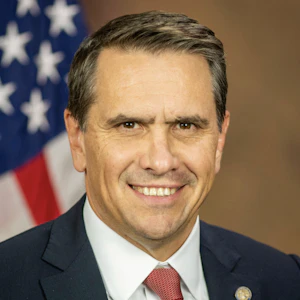
Biography of Deputy Attorney General Todd Blanche
The Honorable Todd Blanche is the 40th Deputy Attorney General of the United States, overseeing the work of the 115,000 dedicated employees who fulfill the Department of Justice’s mission at Main Justice, the FBI, DEA, U.S. Marshals, ATF, and 93 U.S. Attorney’s Offices.
Todd began his career at the Department where he served for over fifteen years in a variety of capacities, including as a contractor, a paralegal in the Criminal Division, and at the United States Attorney’s office for the Southern District of New York where he eventually became an AUSA and later a supervisor.
After leaving the Department, Todd worked as a criminal defense attorney that included representing President Donald Trump in three of the criminal cases brought against him in 2023 and 2024.
Following President Trump’s historic return to the White House, the President appointed Todd to work alongside Attorney General Pam Bondi to make America safe again. At the DOJ, Todd is working tirelessly to implement President Trump’s priorities that include confronting illegal protecting American businesses from fraud.
Todd has been married to his wonderful wife Kristine for nearly thirty years, is a father and grandfather.

Paul Atkins
Paul Atkins
Prior to returning to the SEC, Chairman Atkins was most recently chief executive of Patomak Global Partners, a company he founded in 2009. Chairman Atkins helped lead efforts to develop best practices for the digital asset sector. He served as an independent director and non-executive chairman of the board of BATS Global Markets, Inc. from 2012 to 2015.
Chairman Atkins was appointed by President George W. Bush to serve as a Commissioner of the SEC from 2002 to 2008. During his tenure, he advocated for transparency, consistency, and the use of cost-benefit analysis at the agency. Chairman Atkins also represented the SEC at meetings of the President’s Working Group on Financial Markets and the U.S.-EU Transatlantic Economic Council. From 2009 to 2010, he was appointed a member of the Congressional Oversight Panel for the Troubled Asset Relief Program.
Before serving as an SEC Commissioner, Chairman Atkins was a consultant on securities and investment management industry matters, especially regarding issues of strategy, regulatory compliance, risk management, new product development, and organizational control.
From 1990 to 1994, Chairman Atkins served on the staff of two chairmen of the SEC, Richard C. Breeden and Arthur Levitt, ultimately as chief of staff and counselor, respectively. He received the SEC’s 1992 Law and Policy Award for work regarding corporate governance matters.
Chairman Atkins began his career as a lawyer in New York, focusing on a wide range of corporate transactions for U.S. and foreign clients, including public and private securities offerings and mergers and acquisitions. He was resident for 2½ years in his firm's Paris office and admitted as conseil juridique in France.
A member of the New York and Florida bars, Chairman Atkins received his J.D. from Vanderbilt University School of Law in 1983 and was Senior Student Writing Editor of the Vanderbilt Law Review. He received his A.B., Phi Beta Kappa, from Wofford College in 1980.
Originally from Lillington, North Carolina, Chairman Atkins grew up in Tampa, Florida. He and his wife Sarah have three sons.

Mike Selig
Mike Selig
Chairman Selig brings to the role deep public and private sector experience working with a wide range of stakeholders across agriculture, energy, financial, and digital asset industries, which rely upon and operate in CFTC-regulated markets.
Prior to his leadership at the CFTC, Chairman Selig most recently served as chief counsel of the Securities and Exchange Commission’s Crypto Task Force and senior advisor to SEC Chairman Paul S. Atkins. In this role, Chairman Selig helped to develop a clear regulatory framework for digital asset securities markets, harmonize the SEC and CFTC regulatory regimes, modernize the agency’s rules to reflect new and emerging technologies, and put an end to regulation by enforcement. He also participated in the President’s Working Group on Digital Asset Markets and contributed to its report on “Strengthening American Leadership in Digital Financial Technology.”
Prior to government service, Chairman Selig was a partner at an international law firm, focusing on derivatives and securities regulatory matters. During his years in private practice, he represented a broad range of clients subject to regulation by the CFTC, including commercial end users, futures commission merchants, commodity trading advisors, swap dealers, designated contract markets, derivatives clearing organizations, and digital asset firms. Chairman Selig advised clients on compliance with the Commodity Exchange Act and the CFTC’s rules and regulations thereunder, including in connection with registration applications and obligations, enforcement matters, and complex transactions.
Chairman Selig earned his law degree from The George Washington University Law School and was articles editor of The George Washington Law Review. He received his undergraduate degree from Florida State University.

David Bailey
David Bailey

Eric Trump
Eric Trump
Mr. Trump also serves as Executive Vice President of The Trump Organization, where he oversees the global management and operations of the Trump family’s extensive real estate portfolio. This includes Trump Hotels, Trump Golf, commercial and residential real estate, Trump Estates, and Trump Winery. Known for his hands-on leadership and strong market instincts, he has played a key role in expanding the company’s presence across major U.S. and international markets.
A globally recognized business leader and public figure, Mr. Trump is a prominent advocate for Bitcoin and decentralized finance. He is a co-founder of World Liberty Financial, a decentralized finance (DeFi) platform, and serves on the Board of Advisors of Metaplanet, Japan’s largest corporate holder of Bitcoin.
Beyond his business activities, Mr. Trump has helped raise more than $50 million for St. Jude Children’s Research Hospital in the fight against pediatric cancer, a philanthropic mission he began at age 21.
Mr. Trump earned a degree in Finance and Management from Georgetown University. He currently resides in Florida with his wife, Lara, and their two children. He is also the author of Under Siege, his memoir published in October 2025.

Jack Mallers
Jack Mallers

Cynthia Lummis
Cynthia Lummis
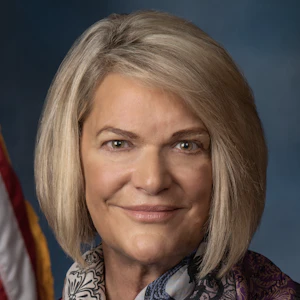
As the first-ever Chair of the Senate Banking Subcommittee on Digital Assets, Senator Lummis is the architect of the legislative framework shaping America's digital asset future. She introduced the landmark Lummis-Gillibrand Responsible Financial Innovation Act, the first comprehensive bipartisan crypto regulatory framework in Senate history. She co-authored the GENIUS Act — the first federal stablecoin law ever enacted — and introduced the BITCOIN Act, which would establish a U.S. strategic Bitcoin reserve of up to one million BTC. She is leading the Clarity Act, which will bring long-overdue regulatory certainty to the digital asset industry. She has also championed digital asset tax reform, including a de minimis exemption for small transactions and equal tax treatment for miners and stakers.
Known as Congress' "Crypto Queen," Senator Lummis represents Wyoming — a state she has helped build into one of the most digital asset-friendly regulatory environments in the nation. Before serving in the Senate, she served 14 years in the Wyoming Legislature, eight years as Wyoming State Treasurer, and eight years in the U.S. House. She is a three-time graduate of the University of Wyoming.
Her work represents a crucial bridge between traditional financial systems and the emerging digital economy, ensuring America leads the world in financial innovation while protecting the individual freedoms that define it.

Adam Back
Adam Back

Amy Oldenburg
Amy Oldenburg

David Marcus
David Marcus

Matt Schultz
Matt Schultz

Fred Thiel
Fred Thiel
Throughout his career, Mr. Thiel has consistently driven rapid growth and created substantial shareholder value. Prior to MARA, Mr. Thiel served as the CEO of two other public companies, Local Corporation (NASDAQ: LOCM) and Lantronix, Inc (NASDAQ: LTRX). He has successfully raised billions in equity and debt through private and public offerings, led companies through IPOs, executed high-value exits to strategic and financial acquirers, and implemented effective M&A and roll-up strategies.
Mr. Thiel attended the Stockholm School of Economics and executive classes at Harvard Business School, and is fluent in English, Spanish, Swedish, and French. Mr. Thiel is the Chairman of the Board for Oden Technology, Inc. and is active in Young Presidents’ Organization where he has led initiatives in both the FinTech and Technology Networks.
A recognized voice in the industry, Fred frequently shares his insights on energy and technology with major media outlets like Bloomberg TV, CNBC, and FOX Business, contributing to vital discussions about the future of these sectors.
Tim Draper
Tim Draper
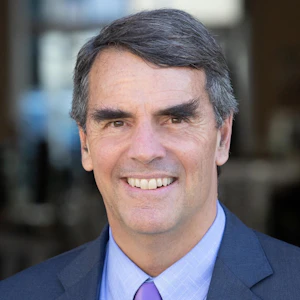
He is a supporter and global thought leader for entrepreneurs everywhere, and is a leading spokesperson for Bitcoin and decentralization, having won the Bitcoin US Marshall’s auction in 2014, invested in over 50 crypto companies, and led investments in Coinbase, Ledger, Tezos, and Bancor, among others.

Afroman
Afroman