The Dollar Milkshake Meets Stablecoins: Where Does Bitcoin Fit in The Equation?
Speakers/Moderators

Danny Knowles
Danny Knowles
Venture Partner @ Epoch


Brent Johnson
Brent Johnson
He enjoyed more than nine years as a Managing Director at BakerAvenue, a $4 Billion Asset Manager and Wealth Management firm, with offices in San Francisco, Dallas and New York. During his time there he was the lead advisor for several of the firms largest clients.
Prior to joining BakerAvenue, Brent spent nine years at Credit Suisse in their private client group. He got his start as part of the training program at Donaldson, Lufkin & Jenrette (DLJ) in New York prior to moving to San Francisco. He joined Credit Suisse in the fall of 2000 when the bank purchased DLJ.
Earlier in his career, Brent was a financial auditor for Philip Morris Management Company in New York City where he performed audits at the company’s headquarters as well as subsidiaries in Germany, Hong Kong, and Richmond, Virginia.
In addition to his role at Santiago Capital, he is also a member of the Advisory Board for Monetary Metals, a platform that allows investors to earn a yield on gold, paid in gold, by leasing and lending to qualified precious metals businesses in the industry.
Brent regularly gives interviews and speaks at conferences regarding precious metals, currencies & macroeconomic trends. He is well known as the originator of the “Dollar Milkshake Theory” and his views have been quoted in numerous print, online and television outlets. He lives in San Juan, Puerto Rico with his wife Mary and son Moses.
Session
Overview
Brent Johnson and Dylan LeClair discuss how the Dollar Milkshake Theory intersects with stablecoins and Bitcoin. Johnson outlines his view that global monetary stress and fiat debasement can still lead to a stronger U.S. dollar relative to other currencies, especially during crisis conditions.
The conversation explores whether stablecoins act as digital eurodollars, extending dollar demand into markets where access to U.S. dollars was previously difficult. Johnson argues that dollar stablecoins could accelerate global dollarization, while also creating a regulatory environment that may indirectly support the broader digital asset ecosystem.
LeClair frames Bitcoin as a long-term response to monetary debasement, even if the dollar remains stronger than other fiat currencies. The panel also covers seizure risk, sanctions, Bitcoin corporate treasury strategies, volatility, and the possibility that Bitcoin remains an important bearer asset for people seeking monetary freedom.
We've got the legendary Bitcoin bear Brent Johnson here and Dylan LeClair. I think we're going to get into the convergence of three things: the Dollar Milkshake Theory, stablecoins, and Bitcoin. But before we start anything, we should probably cover exactly what your Dollar Milkshake Theory is.
Sure. For anybody who hasn't heard of it, essentially the Dollar Milkshake Theory was my belief that the world had many problems, and one of the ways the governments of the world would try to solve them is they would print a bunch of money. But for many reasons, some deserved and some undeserved, the United States had the biggest straw and would suck up all that liquidity. As a result, the dollar would do well versus its foreign peers, and U.S. assets, specifically equities but also gold, would rise in value. That's essentially what it is.
You're obviously a bit of a goldbug. The Bitcoin idea is that fiat is going to fail and Bitcoin is going to eat at least a portion of that. Your idea is not that fiat doesn't fail, you just think the dollar is the last one to fail. Is that right?
Yeah. Fiat currency always returns to its intrinsic value, which is zero, but there's a progression. If you believe the dollar is a bad currency, it's hard for me to understand why any of the other countries' fiat currencies are any better. As they start to fail, because they trade relative to each other, the dollar will rise. That causes all kinds of problems for the rest of the world, and I believe it will eventually become such a problem that they'll have to reset everything. But I've come to believe that may be further down the road than I initially thought.
Dylan, you're obviously one of the faces of Metaplanet now, but before that you've been following macro for such a long time. Do you agree with Brent's theory?
Yeah, I do. I think the dollar is structurally a lot stronger and more entrenched than all the other fiat currencies. I think, as we'll talk about, stablecoins have accelerated that or at least proliferated it further, maybe extended the terminal lifetime of the dollar. So yeah, I think we probably agree in principle on most of the broad Milkshake Theory.
The thing I'm always unsure about with this is, you say the dollar is going to strengthen. If you look back a decade, I was looking at this earlier on an index, the dollar hasn't strengthened much in the last decade. What would you have to see to say, okay, this has now started?
We got very close. When I first started talking about it, the dollar index was around 90, and today it's around 98. But you have to remember that's despite massive injections of liquidity, QE, bailouts, etc. It's very possible that they just keep kicking the can down the road and the dollar trades within a band, maybe between 90 and 110 or whatever it is, for another five or ten years. My belief, though, is if we ever do get into this quote-unquote endgame scenario, the dollar is likely to rise rather than fall.
It's funny, because I've been covering macro a lot on the podcast, and one of the things that since this conflict started everyone has said is that your previous view on how the world is going to work in the future kind of has to be thrown out and reassessed now. Has that played into any of your thinking?
What we're seeing now is, first of all, not surprising to me at all. Me and a couple of my friends who kind of see the world the same way have been talking about this for a long time. It's just finally here. Our belief was that if and when the world ever started to fracture, you would start to go from a world that was based on economics to a world that was just based on pure power. If and when the United States was ever seriously challenged, they would do things to shore up their side of the world and make sure they were not surpassed without using every tool available. I think that's what we're seeing now. How exactly that plays out is yet to be determined, but the actions taking place are not surprising.
One of the interesting things you could observe when this conflict started was that Bitcoin did relatively well. Generally, whenever there's a big geopolitical event, Bitcoin is one of the first things to move. It's a 24/7 market, so it's the first thing that can move sometimes, and often the first thing that does. But Bitcoin was kind of sideways to up during the war. Did that surprise you?
It was definitely a sign that the sellers had been exhausted, at least relatively. Bitcoin was a very poor performer for six months before then, so it was good to see it not make a new low. It was good to see some relative strength. But equities are at highs, gold is near highs, and Bitcoin still has a lot of wood to chop. I think a one-month time frame isn't actually too relevant.
If I could rewind a little bit, one of the things I wanted to ask you on the Dollar Milkshake is, how does something like freezing Russian FX, or just a couple of weeks ago, the IRGC was using stablecoins and those were frozen, how does the censorship risk or seizure risk play into this versus bearer assets like gold or Bitcoin?
There are a couple of different factors here. When the U.S. seized or froze, however you want to define that, I think ultimately that will be seen as a mistake because it kicked off this power competition on a higher level. My position has always been not that the end won't come, but that if the end does come, it will see the dollar go higher rather than lower.
It's not to say the world is not trying to dissolve, and it's not to say there won't be further attempts to get out from underneath the rule of the dollar. It's just much, much harder to actually pull off without massive pain. The example I would use from what's happened in the last couple of months is that the Gulf countries came under severe pressure. They had to sell some of their gold in order to get dollars to continue operating. Subsequently, they've asked for a swap line from Bessent, but they've done that because they don't want to deal with the pain. They would prefer to continue using dollars than deal with the pain.
Whether people do it or countries do it willingly or unwillingly, I think it's likely that if we see this massive de-dollarization effort and the world leaves the dollar, that will mean the dollar goes higher rather than lower before it ultimately falls. I hope that answers your question.
That makes a lot of sense.
I think that plays into something else that's happened recently, where when Iran was going to be charging a toll for ships to go through the shipping lane, they were talking about how they could take payment. The payment options they suggested were Bitcoin, stablecoins, and I think gold. I don't know if any of those transactions actually happened in Bitcoin, but does that signal something? If this world is becoming much more multipolar, could Bitcoin play an increased role in that?
Yeah, absolutely. Bitcoin is a secondary way to move money around the world and avoid U.S. sanctions. I think the U.S. has gotten better at controlling those flows, but they're still out of its purview or regulatory ability. I do think the rise of U.S. dollar stablecoins is part of what has dampened Bitcoin's price. Even though they were avoiding the traditional U.S. banking system by using Tether, they're still ultimately using dollars.
Why do you think the rise of stablecoins has dampened Bitcoin's price?
Because I think countries, individuals, or institutions that would traditionally use Bitcoin because it was quicker or faster, or because of the sanctioning ability of the United States, have now started using Tether because they ultimately want dollars to operate. Tether is very fast, it's very efficient, it's cheap, and it's not yet fully regulated or under the purview of the United States. But you can see that in the last week, they confiscated some of that as well, so they're getting their hands deeper into it. But it's still not perfect.
Do you think that's right, that the rise of stablecoins has had an effect on Bitcoin's price?
I could probably make a case for both. I think stablecoin liquidity has definitely been a net benefit to the overall crypto complex. The skeptics on the far side would say it's helped inflate a bubble. On the other side of the spectrum, you could say that's latent Bitcoin demand that was never fulfilled. I don't have a strong view either way.
Naturally, BTC is the numerator. It's digital. It makes sense that the denominator, USD, is also digital. I think that was always going to be kind of an endgame for crypto, having two digital-native rails. But I don't feel too strongly one way or another.
I would say that even though I think stablecoins have been part of the reason the Bitcoin price has come down, the rise of U.S. dollar stablecoins means that Bitcoin doesn't go away. To a certain extent, the fact that the United States and the U.S. Treasury have given their blessing to stablecoins means the digital asset space and tokenization are probably here to stay. As a result, if that industry or market segment is here to stay, it probably means Bitcoin is here to stay.
When you say that, what do you mean? Are you saying the regulatory environment because of stablecoins may protect Bitcoin?
Yeah. Again, a U.S. dollar stablecoin is not the same thing as Bitcoin. It's not the same thing as perhaps another token. But it is kind of in the same space. It has many of the same functions. As a result, if the U.S. wants stablecoins to be a viable system, I think they have to be very careful about attacking other digital systems, and I think Bitcoin is part of that.
That's interesting. I'm curious if you agree with that, Dylan, because from a Bitcoiner angle you might say, well, they can freeze stablecoins, but you can't stop Bitcoin. Bitcoin is unstoppable money. Do you think it does benefit from the regulatory environment that's building around the stablecoin movement?
Yeah. One of the things I would say is that me five or six years ago, as a cypherpunk, anarchist Bitcoiner, versus someone interfacing more with the institutional landscape these days, I've come to understand that there's so much capital in the world that can't buy spot Bitcoin, will never buy spot Bitcoin, or will never buy a commodity in general or a bearer asset. For asset allocators, you kind of have to meet them where they are. That looks like equity or credit or preferred or private.
Stablecoins basically exist, in my opinion, as a lubricant to interface Bitcoin with the traditional system or elements of the traditional system, like lending. You have this neo-bank financial system emerging. In 2022, you had a lot of bucket shops, very reminiscent of the 1900s or Great Depression-style stockbroking houses, and they all went bust. Bitcoin lived to see the other side of it. The stablecoins and infrastructure that were robust survived. I think that's all good. Stablecoin regulation and proliferation opens up the asset class to more capital.
If we get back to the Dollar Milkshake Theory, this idea that the dollar is going to win out against other fiat currencies makes sense. When you look at the world before stablecoins, if you're in Argentina and living under high inflation and you want to get your hands on some dollars, the way you would have to do that is go get black market dollars from a dollar dealer. Stablecoins change that picture entirely. Is this the biggest turbocharger on this theory that you've ever seen?
Yeah, it really is. I wasn't always sure how this was going to happen. I should say, there was a guy, and I cannot remember his last name, but his name was Max. I knew him when I lived in San Francisco. He reached out one time and said, you've got to look into these stablecoins. These are the new eurodollars. I kind of knew what he was saying, but at the time, I didn't think the U.S. was going to give it its blessing. He saw it much earlier than I did. I wish I could remember his last name because I'd love to call and talk to him.
Essentially what this provides is a new set of rails, for lack of a better way of saying it, that allows the U.S. to rewire the entire global monetary system. But they can do it in a way that they don't have to force it upon anybody. It will be willingly adopted by local citizens all around the world because the U.S. dollar stablecoin is better than their local currency. When they do that, essentially what you're doing is draining the sovereignty from the local government. That allows U.S. influence and U.S. economic hegemony to spread like wildfire.
I think that's largely what you will see now. Other countries won't like this, and they will certainly try to limit it to a certain extent. If you look at central banks and monetary authorities around the world, they're already coming out and saying, this is not good, we've got to figure out a way to limit this, because they're terrified. They should be, because I think this really has the ability to dollarize the world rather than de-dollarize the world.
What does that mean for the U.S. empire, as it were, in terms of the U.S. being the hegemon? Does this enshrine that for the next five decades to come?
I've long said the dollar is the greatest weapon the U.S. has, and this is just a way to proliferate that on a greater scale. It's really, really difficult. It's almost more difficult for a foreign country to protect against this than it is to protect against military action, because the citizens want the dollars. They don't want bombs.
How do you see Bitcoin fitting into this, Dylan? I don't know where you fall in terms of Bitcoin being the global reserve currency at some point in the future, or a global reserve asset, but Bitcoin is going to play a part in this world. If Brent is right and the world generally trends toward more and more dollars, where does Bitcoin play its part?
Part of the essence of the Dollar Milkshake Theory is the result that there is so much debt out there that can never be paid. That's creating the demand for the dollar. Dollar debt is a short dollar position. You're a forced buyer of dollars later. That's part of the mechanics of the Dollar Milkshake Theory as I understand it.
The natural result of that short squeeze on the dollar, which continues to happen in these short- or long-term debt cycles, is that it's met with a reaction from policymakers, which is debasement, whether fiscal or monetary. Part of my conviction in Bitcoin is, yes, it's the numerator, BTC, and all of its properties, absolute scarcity, production costs, etc. But the other half of the thesis is the USD component. Not the USD depreciating against other currencies, but against a basket of everything you would ever want to own, the USD is almost programmatically debasing.
I agree with Brent on the USD versus every other currency, and I think we actually agree on the USD supply mechanics and what it means on a long time frame if you had to zero. Naturally, we're on this panel thinking in multi-decades. I'm a young guy. Where do I want to hold my money for the next 50 years? Probably not in treasury bills, or rather not in bonds, that's for sure.
It's funny, you obviously are agreeing on a lot here, and you think Bitcoin is clearly going to play a role in the future of the financial system. But Brent, we've spoken a couple of times and I think you've moved closer to Bitcoin, but you're not a full-blown Bitcoiner. Where do you see it?
I should probably clarify something. Whenever I talk, I always talk about what I think is going to happen. It's not what I want to happen. I've always loved the concept of Bitcoin. At heart, I'm a libertarian. I don't even think governments should exist.
I'm with you.
But they do, and they're always going to. As much as I like the idea of a utopian society where we all enter into mutually agreed-upon transactions, history tells me that's just not the way the world works. I've always thought that governments and the power structure would not willingly allow Bitcoin to become the global reserve currency. But it doesn't mean that it doesn't have a role.
The reason I've always said the dollar and gold will go up together is because the dollar will lose purchasing power. It's just that all the other currencies will lose purchasing power even more. It would not shock me, and I've said this many times, if Bitcoin goes to $1 million. It will not surprise me because they will have to print a bunch of money, but the rest of the world will have to print a bunch of money as well. I think Bitcoin will do even better against foreign currencies than it will do in U.S. dollars.
I also think there will always be, even though I don't think fiat currency is going away and I don't think governments are going to willingly adopt Bitcoin, a subset of the world fighting for liberty. Bitcoin will probably be their money.
I feel like I can't have you both on stage without asking this question. Brent, there are a lot of companies in Bitcoin now that are using Bitcoin as a way of doing a sort of speculative attack on the dollar through capital markets. If you think the dollar is only going to get stronger, do you think that is a good move? Do you think these companies will be successful in that trade?
Probably not.
This is somewhere I'm sure you guys disagree. Why do you think this is the trade?
Let me caveat it: it depends on which currency we're talking about. In yen, perhaps, but not in dollars.
That's a fair bit of nuance. I think the calculus is, assuming there's leverage, because with common equity there's no risk, what's your cost of capital, and do you expect Bitcoin to outperform that? If Bitcoin goes up 10%, 11%, 12%, 13%, 14% a year, Saylor is going to be a giant, Metaplanet is going to be a giant. If Bitcoin doesn't perform, it's the other end of the spectrum.
Every investor in our company and everyone at our company is very much aligned on what we believe in. But if someone thinks the opposite, we encourage you to take the other side of the bet. That's the beauty of the market.
By saying that, Brent, correct me if I'm wrong, does that not mean that Bitcoin is not going up in dollar terms if these people are essentially trying to do the speculative attack on the dollar?
I should probably caveat what I say. By being successful, I don't think companies in general are going to start on a large scale adopting Bitcoin as a reserve asset. Even though it might go up in price, I think it will still be wildly volatile. I don't think companies and their boards of directors on a large scale are willing to put the company on the line on an asset that is that volatile.
That's an interesting take, because over the last decade we've seen Bitcoin volatility drop a lot. I am of the opinion that probably continues. I think volatility dampens through time, and I think companies like Strategy are probably going to be a big reason for that. They're still buying huge amounts of Bitcoin now while the price is at local lows. Do you see the volatility dropping in the future, Dylan?
For sure. I think over time, just the law of large numbers. But also, Wall Street sees a new asset class, financializes it, and dampens the volatility. That's kind of the playbook. But I think volatility can never be truly suppressed. It's only transformed or transmuted. Bitcoin will continue to be volatile in both directions.
I do agree with Brent's point, though. For Metaplanet, our entire mission and focus is that we're a Bitcoin company, so it's our identity. But there were ten other companies in Japan that followed us. Nine out of the ten companies have come out and apologized to shareholders for saying, hey, we bought Bitcoin too high, or we raised money at the wrong time, or whatever it may be. I do think volatility can still be a shock factor if you're not ready for it, don't deeply understand it, and aren't ready to hold through the drawdowns.
I guess one of the counterarguments for the lack of volatility in the future could be gold, because gold is a huge asset compared to Bitcoin. Over the last three years, it's been incredibly volatile.
But you don't see companies putting gold on their balance sheet either. Maybe they should, but I don't think they will. Again, that gets back to should they? Maybe. But will they? I don't think so.
I think Bitcoiners will be fine with central banks only. We could skip the company part.
I want to get back to a question that I asked you a little bit before, Brent. What would you have to see to know this is happening? When does the Dollar Milkshake Theory take off and start accelerating? Is this a gradually, then suddenly moment, where it can go from the U.S. dollar at 90 to 140 quickly?
Yeah. When I say the dollar, I don't know that it will necessarily keep getting stronger, and the U.S. doesn't want it to keep getting stronger. I just think in some kind of crisis or endgame scenario, that's where we see it. If we see the dollar get above 115, which was the high back in 2022, and it breaks through that and we get some more geopolitical uncertainty, you could see a gap to 125 or 130 pretty quickly. The U.S. would no question come out and try to dampen that down. They don't want that to happen. But ultimately, the full expression of the Milkshake Theory is when it completely gets away from the Fed, it gets away from everybody, and that is the final endgame.
All right, we're out of time. I think the final note is, buy Bitcoin, maybe buy some gold. Thank you, Brent and Dylan.
Similar
Sessions
2026 Sentiment Report

Mason Foard
Mason Foard

Nuri Chang
Nuri Chang
Prior to BitGo, Nuri held product manager positions at several Silicon Valley startups including Nuna Inc., Affirm, and Zenefits. Earlier in his career, he was a strategist at Propane, an advertising agency. Nuri holds a B.A. from the University of California, Berkeley.

Gui Gomes
Gui Gomes
Prior to founding OranjeBTC, Gui served as Chief Revenue Officer at Swan Bitcoin, where he played a key role in scaling the business and launching new products. Earlier, he worked at Bridgewater Associates, advising leading banks and insurance companies on portfolio strategy and capital allocation.
Gui began his career as a founder, co-creating Jazz Side, a Brazilian brand experience company that was later acquired by one of the region’s largest tourism conglomerates.
2026 Sentiment Report
Speakers/Moderators
Mason Foard
Mason Foard
Nuri Chang
Nuri Chang
Prior to BitGo, Nuri held product manager positions at several Silicon Valley startups including Nuna Inc., Affirm, and Zenefits. Earlier in his career, he was a strategist at Propane, an advertising agency. Nuri holds a B.A. from the University of California, Berkeley.
Gui Gomes
Gui Gomes
Prior to founding OranjeBTC, Gui served as Chief Revenue Officer at Swan Bitcoin, where he played a key role in scaling the business and launching new products. Earlier, he worked at Bridgewater Associates, advising leading banks and insurance companies on portfolio strategy and capital allocation.
Gui began his career as a founder, co-creating Jazz Side, a Brazilian brand experience company that was later acquired by one of the region’s largest tourism conglomerates.
The Endgame: Inflation, Deflation, or Both?
Sam Callahan
Sam Callahan

Arthur Hayes
Arthur Hayes
Brent Johnson
Brent Johnson
He enjoyed more than nine years as a Managing Director at BakerAvenue, a $4 Billion Asset Manager and Wealth Management firm, with offices in San Francisco, Dallas and New York. During his time there he was the lead advisor for several of the firms largest clients.
Prior to joining BakerAvenue, Brent spent nine years at Credit Suisse in their private client group. He got his start as part of the training program at Donaldson, Lufkin & Jenrette (DLJ) in New York prior to moving to San Francisco. He joined Credit Suisse in the fall of 2000 when the bank purchased DLJ.
Earlier in his career, Brent was a financial auditor for Philip Morris Management Company in New York City where he performed audits at the company’s headquarters as well as subsidiaries in Germany, Hong Kong, and Richmond, Virginia.
In addition to his role at Santiago Capital, he is also a member of the Advisory Board for Monetary Metals, a platform that allows investors to earn a yield on gold, paid in gold, by leasing and lending to qualified precious metals businesses in the industry.
Brent regularly gives interviews and speaks at conferences regarding precious metals, currencies & macroeconomic trends. He is well known as the originator of the “Dollar Milkshake Theory” and his views have been quoted in numerous print, online and television outlets. He lives in San Juan, Puerto Rico with his wife Mary and son Moses.
The Endgame: Inflation, Deflation, or Both?
Speakers/Moderators
Sam Callahan
Sam Callahan
Arthur Hayes
Arthur Hayes
Brent Johnson
Brent Johnson
He enjoyed more than nine years as a Managing Director at BakerAvenue, a $4 Billion Asset Manager and Wealth Management firm, with offices in San Francisco, Dallas and New York. During his time there he was the lead advisor for several of the firms largest clients.
Prior to joining BakerAvenue, Brent spent nine years at Credit Suisse in their private client group. He got his start as part of the training program at Donaldson, Lufkin & Jenrette (DLJ) in New York prior to moving to San Francisco. He joined Credit Suisse in the fall of 2000 when the bank purchased DLJ.
Earlier in his career, Brent was a financial auditor for Philip Morris Management Company in New York City where he performed audits at the company’s headquarters as well as subsidiaries in Germany, Hong Kong, and Richmond, Virginia.
In addition to his role at Santiago Capital, he is also a member of the Advisory Board for Monetary Metals, a platform that allows investors to earn a yield on gold, paid in gold, by leasing and lending to qualified precious metals businesses in the industry.
Brent regularly gives interviews and speaks at conferences regarding precious metals, currencies & macroeconomic trends. He is well known as the originator of the “Dollar Milkshake Theory” and his views have been quoted in numerous print, online and television outlets. He lives in San Juan, Puerto Rico with his wife Mary and son Moses.
The Dollar Milkshake Meets Stablecoins: Where Does Bitcoin Fit in The Equation?
Danny Knowles
Danny Knowles
Venture Partner @ Epoch
Brent Johnson
Brent Johnson
He enjoyed more than nine years as a Managing Director at BakerAvenue, a $4 Billion Asset Manager and Wealth Management firm, with offices in San Francisco, Dallas and New York. During his time there he was the lead advisor for several of the firms largest clients.
Prior to joining BakerAvenue, Brent spent nine years at Credit Suisse in their private client group. He got his start as part of the training program at Donaldson, Lufkin & Jenrette (DLJ) in New York prior to moving to San Francisco. He joined Credit Suisse in the fall of 2000 when the bank purchased DLJ.
Earlier in his career, Brent was a financial auditor for Philip Morris Management Company in New York City where he performed audits at the company’s headquarters as well as subsidiaries in Germany, Hong Kong, and Richmond, Virginia.
In addition to his role at Santiago Capital, he is also a member of the Advisory Board for Monetary Metals, a platform that allows investors to earn a yield on gold, paid in gold, by leasing and lending to qualified precious metals businesses in the industry.
Brent regularly gives interviews and speaks at conferences regarding precious metals, currencies & macroeconomic trends. He is well known as the originator of the “Dollar Milkshake Theory” and his views have been quoted in numerous print, online and television outlets. He lives in San Juan, Puerto Rico with his wife Mary and son Moses.
The Dollar Milkshake Meets Stablecoins: Where Does Bitcoin Fit in The Equation?
Speakers/Moderators
Danny Knowles
Danny Knowles
Venture Partner @ Epoch
Brent Johnson
Brent Johnson
He enjoyed more than nine years as a Managing Director at BakerAvenue, a $4 Billion Asset Manager and Wealth Management firm, with offices in San Francisco, Dallas and New York. During his time there he was the lead advisor for several of the firms largest clients.
Prior to joining BakerAvenue, Brent spent nine years at Credit Suisse in their private client group. He got his start as part of the training program at Donaldson, Lufkin & Jenrette (DLJ) in New York prior to moving to San Francisco. He joined Credit Suisse in the fall of 2000 when the bank purchased DLJ.
Earlier in his career, Brent was a financial auditor for Philip Morris Management Company in New York City where he performed audits at the company’s headquarters as well as subsidiaries in Germany, Hong Kong, and Richmond, Virginia.
In addition to his role at Santiago Capital, he is also a member of the Advisory Board for Monetary Metals, a platform that allows investors to earn a yield on gold, paid in gold, by leasing and lending to qualified precious metals businesses in the industry.
Brent regularly gives interviews and speaks at conferences regarding precious metals, currencies & macroeconomic trends. He is well known as the originator of the “Dollar Milkshake Theory” and his views have been quoted in numerous print, online and television outlets. He lives in San Juan, Puerto Rico with his wife Mary and son Moses.
How Bitcoin Companies Are Aligning Globally

George Mekhail
George Mekhail

David Bailey
David Bailey

How Bitcoin Companies Are Aligning Globally
Speakers/Moderators
George Mekhail
George Mekhail
David Bailey
David Bailey
Matt Odell and Friends


Alex Gladstein
Alex Gladstein
Matt Odell and Friends
Speakers/Moderators
Alex Gladstein
Alex Gladstein
Other
Speakers
Michael Saylor
Michael Saylor
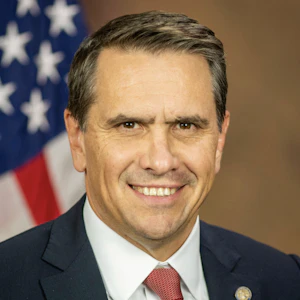
Todd Blanche
Todd Blanche
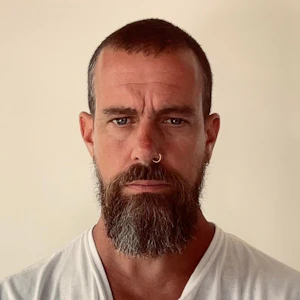
Biography of Deputy Attorney General Todd Blanche
The Honorable Todd Blanche is the 40th Deputy Attorney General of the United States, overseeing the work of the 115,000 dedicated employees who fulfill the Department of Justice’s mission at Main Justice, the FBI, DEA, U.S. Marshals, ATF, and 93 U.S. Attorney’s Offices.
Todd began his career at the Department where he served for over fifteen years in a variety of capacities, including as a contractor, a paralegal in the Criminal Division, and at the United States Attorney’s office for the Southern District of New York where he eventually became an AUSA and later a supervisor.
After leaving the Department, Todd worked as a criminal defense attorney that included representing President Donald Trump in three of the criminal cases brought against him in 2023 and 2024.
Following President Trump’s historic return to the White House, the President appointed Todd to work alongside Attorney General Pam Bondi to make America safe again. At the DOJ, Todd is working tirelessly to implement President Trump’s priorities that include confronting illegal protecting American businesses from fraud.
Todd has been married to his wonderful wife Kristine for nearly thirty years, is a father and grandfather.
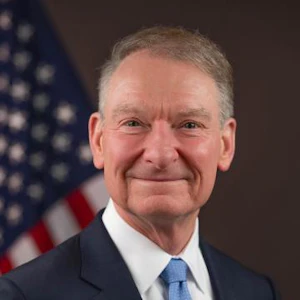
Paul Atkins
Paul Atkins
Prior to returning to the SEC, Chairman Atkins was most recently chief executive of Patomak Global Partners, a company he founded in 2009. Chairman Atkins helped lead efforts to develop best practices for the digital asset sector. He served as an independent director and non-executive chairman of the board of BATS Global Markets, Inc. from 2012 to 2015.
Chairman Atkins was appointed by President George W. Bush to serve as a Commissioner of the SEC from 2002 to 2008. During his tenure, he advocated for transparency, consistency, and the use of cost-benefit analysis at the agency. Chairman Atkins also represented the SEC at meetings of the President’s Working Group on Financial Markets and the U.S.-EU Transatlantic Economic Council. From 2009 to 2010, he was appointed a member of the Congressional Oversight Panel for the Troubled Asset Relief Program.
Before serving as an SEC Commissioner, Chairman Atkins was a consultant on securities and investment management industry matters, especially regarding issues of strategy, regulatory compliance, risk management, new product development, and organizational control.
From 1990 to 1994, Chairman Atkins served on the staff of two chairmen of the SEC, Richard C. Breeden and Arthur Levitt, ultimately as chief of staff and counselor, respectively. He received the SEC’s 1992 Law and Policy Award for work regarding corporate governance matters.
Chairman Atkins began his career as a lawyer in New York, focusing on a wide range of corporate transactions for U.S. and foreign clients, including public and private securities offerings and mergers and acquisitions. He was resident for 2½ years in his firm's Paris office and admitted as conseil juridique in France.
A member of the New York and Florida bars, Chairman Atkins received his J.D. from Vanderbilt University School of Law in 1983 and was Senior Student Writing Editor of the Vanderbilt Law Review. He received his A.B., Phi Beta Kappa, from Wofford College in 1980.
Originally from Lillington, North Carolina, Chairman Atkins grew up in Tampa, Florida. He and his wife Sarah have three sons.

Mike Selig
Mike Selig
Chairman Selig brings to the role deep public and private sector experience working with a wide range of stakeholders across agriculture, energy, financial, and digital asset industries, which rely upon and operate in CFTC-regulated markets.
Prior to his leadership at the CFTC, Chairman Selig most recently served as chief counsel of the Securities and Exchange Commission’s Crypto Task Force and senior advisor to SEC Chairman Paul S. Atkins. In this role, Chairman Selig helped to develop a clear regulatory framework for digital asset securities markets, harmonize the SEC and CFTC regulatory regimes, modernize the agency’s rules to reflect new and emerging technologies, and put an end to regulation by enforcement. He also participated in the President’s Working Group on Digital Asset Markets and contributed to its report on “Strengthening American Leadership in Digital Financial Technology.”
Prior to government service, Chairman Selig was a partner at an international law firm, focusing on derivatives and securities regulatory matters. During his years in private practice, he represented a broad range of clients subject to regulation by the CFTC, including commercial end users, futures commission merchants, commodity trading advisors, swap dealers, designated contract markets, derivatives clearing organizations, and digital asset firms. Chairman Selig advised clients on compliance with the Commodity Exchange Act and the CFTC’s rules and regulations thereunder, including in connection with registration applications and obligations, enforcement matters, and complex transactions.
Chairman Selig earned his law degree from The George Washington University Law School and was articles editor of The George Washington Law Review. He received his undergraduate degree from Florida State University.
David Bailey
David Bailey

Eric Trump
Eric Trump
Mr. Trump also serves as Executive Vice President of The Trump Organization, where he oversees the global management and operations of the Trump family’s extensive real estate portfolio. This includes Trump Hotels, Trump Golf, commercial and residential real estate, Trump Estates, and Trump Winery. Known for his hands-on leadership and strong market instincts, he has played a key role in expanding the company’s presence across major U.S. and international markets.
A globally recognized business leader and public figure, Mr. Trump is a prominent advocate for Bitcoin and decentralized finance. He is a co-founder of World Liberty Financial, a decentralized finance (DeFi) platform, and serves on the Board of Advisors of Metaplanet, Japan’s largest corporate holder of Bitcoin.
Beyond his business activities, Mr. Trump has helped raise more than $50 million for St. Jude Children’s Research Hospital in the fight against pediatric cancer, a philanthropic mission he began at age 21.
Mr. Trump earned a degree in Finance and Management from Georgetown University. He currently resides in Florida with his wife, Lara, and their two children. He is also the author of Under Siege, his memoir published in October 2025.

Jack Mallers
Jack Mallers
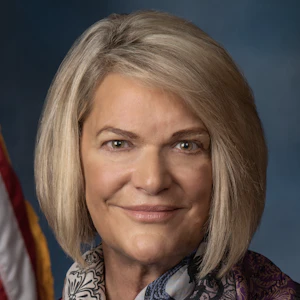
Cynthia Lummis
Cynthia Lummis
As the first-ever Chair of the Senate Banking Subcommittee on Digital Assets, Senator Lummis is the architect of the legislative framework shaping America's digital asset future. She introduced the landmark Lummis-Gillibrand Responsible Financial Innovation Act, the first comprehensive bipartisan crypto regulatory framework in Senate history. She co-authored the GENIUS Act — the first federal stablecoin law ever enacted — and introduced the BITCOIN Act, which would establish a U.S. strategic Bitcoin reserve of up to one million BTC. She is leading the Clarity Act, which will bring long-overdue regulatory certainty to the digital asset industry. She has also championed digital asset tax reform, including a de minimis exemption for small transactions and equal tax treatment for miners and stakers.
Known as Congress' "Crypto Queen," Senator Lummis represents Wyoming — a state she has helped build into one of the most digital asset-friendly regulatory environments in the nation. Before serving in the Senate, she served 14 years in the Wyoming Legislature, eight years as Wyoming State Treasurer, and eight years in the U.S. House. She is a three-time graduate of the University of Wyoming.
Her work represents a crucial bridge between traditional financial systems and the emerging digital economy, ensuring America leads the world in financial innovation while protecting the individual freedoms that define it.

Adam Back
Adam Back
Amy Oldenburg
Amy Oldenburg
David Marcus
David Marcus

Matt Schultz
Matt Schultz
Fred Thiel
Fred Thiel
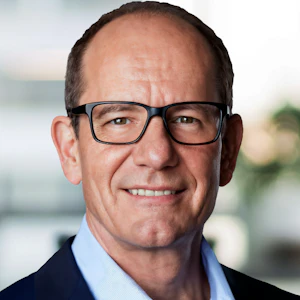
Throughout his career, Mr. Thiel has consistently driven rapid growth and created substantial shareholder value. Prior to MARA, Mr. Thiel served as the CEO of two other public companies, Local Corporation (NASDAQ: LOCM) and Lantronix, Inc (NASDAQ: LTRX). He has successfully raised billions in equity and debt through private and public offerings, led companies through IPOs, executed high-value exits to strategic and financial acquirers, and implemented effective M&A and roll-up strategies.
Mr. Thiel attended the Stockholm School of Economics and executive classes at Harvard Business School, and is fluent in English, Spanish, Swedish, and French. Mr. Thiel is the Chairman of the Board for Oden Technology, Inc. and is active in Young Presidents’ Organization where he has led initiatives in both the FinTech and Technology Networks.
A recognized voice in the industry, Fred frequently shares his insights on energy and technology with major media outlets like Bloomberg TV, CNBC, and FOX Business, contributing to vital discussions about the future of these sectors.
Tim Draper
Tim Draper
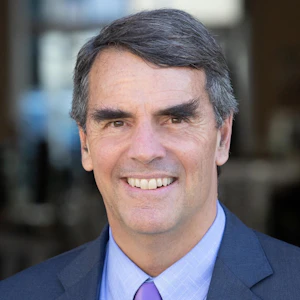
He is a supporter and global thought leader for entrepreneurs everywhere, and is a leading spokesperson for Bitcoin and decentralization, having won the Bitcoin US Marshall’s auction in 2014, invested in over 50 crypto companies, and led investments in Coinbase, Ledger, Tezos, and Bancor, among others.

Afroman
Afroman