The Evolution of Bitcoin Mining to AI
Speakers/Moderators

Charles L'Ecuyer
Charles L'Ecuyer
In 2019, Chuck led the development of the Intelliflex product line—an advanced, fully integrated modular solution purpose-built for next-generation computing. Originally designed to meet the demanding needs of blockchain and cloud infrastructure, the Intelliflex platform has since expanded to power cutting-edge AI factories and high-density modular data centers. Engineered for rapid deployment and scalability, Intelliflex enables clients to fast-track infrastructure rollouts and accelerate return on investment.
Session
Overview
Charles L'Ecuyer of Intelliflex discusses how Bitcoin mining infrastructure is evolving toward AI and high-performance computing. Drawing on a Florida data center project that continued through Hurricane Ian, he argues that AI workloads require more resilient, predictable, and professionally engineered infrastructure than many traditional mining builds.
The talk centers on four requirements for the Bitcoin mining industry’s transition into AI: speed, scale, flexibility, and quality. L'Ecuyer contrasts the slower timelines and rigidity of conventional data centers with the fast hardware cycles of GPUs, changing power requirements, and higher expectations from AI customers.
A major theme is modular infrastructure. The presentation explains how factory-built modular AI data centers can reduce deployment timelines, support phased growth, improve quality control, and better handle environmental risks. Intelliflex’s Octopod digital twin is used as an example of a modular AI factory with integrated cooling, power distribution, redundancy, and service access.
In 2022, we were building a data center project in Florida. Everything was going great. Who doesn't like a project in Florida, right? But then in late September, my phone started blowing up. It was our customer calling us. Hurricane Ian hit mainland.
Who remembers? Because I sure do. We're talking Category 5, 160-mile-per-hour winds, and about $112 billion in damage.
The next morning, speaking to our customer, it was chaos. There were people everywhere on boats and Sea-Doos trying to help their neighbors. We all understood it was a crisis, and the priority was making sure everybody was safe and in good care. But here's the thing: the world doesn't stop. It doesn't stop for much, usually, even in these crises. There are still projects to complete. The show must go on. That's what AI demands.
Can your field construction and operation keep going in a hurricane? If your construction is halfway through, what survives? How many months of delays and repairs? If you're operational, can it keep running? Is it rated for the area where you deploy? Do you have redundancy and concurrently maintainable systems to meet your customer's expectations?
When I say hurricane, I don't just mean a literal hurricane. I'm talking about rain, mud, dust, and extreme hot and cold weather patterns that we're all facing on construction sites. What about supply chain interruptions and water supply interruptions? I've seen projects crippled for less than that.
Here's the thing. During the hurricane, we never stopped. We kept going. By the time they were doing cleanup, we were deploying phase two of the project.
My company has built infrastructure since 2011. We've been part of the Bitcoin industry since 2019, and I've gotten to see firsthand the group of high achievers that it's made of. You find land, you find power, and you put compute online faster than anyone. We've built lots of projects together, which I'm very proud of.
But AI demands more. We're not just serving the blockchain anymore. The good enough mentality and basic tier-one infrastructure are simply incompatible with an AI transition. We'll need to follow strict guidelines and operating processes to make these projects a success.
As we pivot and diversify to AI, let's consider four main areas of challenge: speed, scale, flexibility, and quality.
Traditional data centers are slow. We're talking 24 to 36 months of infrastructure build time, without considering bad weather, supply chain issues, labor shortages, or complex permitting. AI moves too fast for this. If we follow NVIDIA's GPU roadmap, your infrastructure will be a dinosaur, completely outdated by the time it's constructed.
Stick-built data center projects tie up large amounts of capital upfront. They're inflexible. It's large building infrastructure with fixed, centralized power and cooling systems. This is all based on the available GPU at the time of design, which may have been three years ago. It doesn't allow you to grow in phases as customer demand comes in.
Traditional data centers are inflexible by nature. You think you can retrofit for new generations of GPUs as they get released, but you have to think twice. Bitcoin miner upgrades follow the halving every four years. In between, you have minimal hash rate upgrades and very minimal changes on the hardware. You don't have to retrofit your system as you go.
But AI GPUs evolve every 12 months. We're not talking simple optimization here. We're talking about doubling the compute density, potentially changing the form factor, and shifting voltage as well. Those are major changes. At this rate, you would be in a constant retrofit pattern. You need to get ahead of the hardware cycle. You need infrastructure that allows flexibility for AI densification.
We all know that infrastructure quality in the Bitcoin mining industry varies a lot. Maybe a little too much. A lot of the time, it's due to CapEx constraints or the good enough mentality out there. But now we have a whole new set of rules.
AI customers will have different but very strict expectations. We're talking quick deployment, no single point of failure, concurrently maintainable systems, and the highest-quality components. We'll have to follow NVIDIA reference guidelines on top of that, which is not easy. This is a completely different ballgame.
Here's the response to our challenges: modular. A fully integrated modular system that includes everything from utility connection through your white space, cooling plant, power generation, power transformation, control room, warehousing, and a true modular AI factory built in a controlled factory environment.
Let's bring this back to the hurricane story for a second. The only way we maintained operation during the hurricane and delivered a project on time was a high-quality, pre-engineered modular system, engineered and built for the environment it was deployed in. In that case, hurricane rated.
Moving forward, let's think hurricane winds, high elevation operation, and seismic rating. A manufacturing facility with lean processes and quality processes will always win the race. Speed, scale, flexibility, and quality. Collectively, let's start thinking modular. That's how you control all the variables.
Let's forget 24 to 36 months. Keep this number in mind: 12 months and under. This is how you're going to attract customers, and this is how you're going to make your project successful. Modular infrastructure transforms data center delivery from a construction project to a product line with a predictable supply chain and manufacturing schedule. It allows a parallel path between site construction and manufacturing activity. That's how you're moving fast. The only path to AI-ready infrastructure at the speed the market demands is modular. Field construction simply can't keep pace.
Grow in phases. Scale as you grow. No guesswork, no overbuilding, no stranded capital in large building infrastructure. You start generating returns under 12 months. The scalability of a modular system is simply unmatched. You scale block by block without disrupting uptime and the operation of your previous phases.
Keep your modular design flexible. You can't allow hardware densification to set you back with retrofits all the time. We're talking adaptable power and cooling systems that can follow NVIDIA's GPU roadmap. Power draws are leaping from 130 to 600 kW plus. Voltage is shifting from 415 AC to 800 volt DC. Inflexible infrastructure doesn't age; it literally expires. Modular flexibility is not an option anymore. It's how you avoid building tomorrow's outdated data centers.
Building in a controlled factory environment allows for quality control and factory acceptance testing. You can follow all of these processes and execute them consistently, again mitigating surprises on site that could cost you on quality and overall project delivery.
Quality comes at a price. Typical Bitcoin mining infrastructure ranges between $150,000 and $500,000 per megawatt. An AI factory starts around $7.5 million per megawatt. This is the cost of an AI transition. I don't want to sound redundant, but it is a completely different ballgame. This is not the same industry, but there are ways to transition properly.
Let's go through the digital twin of our Octopod solution as an example of a modular solution. Octopod from Intelliflex is a true start-to-finish modular AI factory.
The first piece is the connecting module, where you bring all your medium-voltage power distribution system through busway. This is where you house all your fire suppression systems and control panels. This is also how you interconnect the next block when you grow your facilities.
Then we go through a contained hot aisle in the IT hall. This is where we have our cooling units and fan wall. They take care of all the residual heat that you have in your direct liquid cooling racks, and they take care of all your lower-density networking racks and storage that don't have liquid cooling.
In the cold aisle, we have all of our facility water coming through. This is our distributed pump system. You're going to have a one-to-one ratio with the IT rack, your GPUs, and the cooling equipment. This is all N+1 redundancy. As you can see, this is a facility. This is not a containerized component. We're talking about a true AI factory that you can walk through, install, operate for your day-to-day operations, and access every piece of equipment.
Modular always brings repeatability. The second data hall mirrors the other side. Overall, in one of our factories, we're going to have up to four of those, which will give you 8.8 MW of critical IT load.
The cooling plant has four levels. The plant is made with chiller units on the first floor in a six-to-make-five configuration, and it gives you all the chilled water cooling necessary to cool your IT loads. In the middle, we have our utility modules and pump systems. The secondary level has other utilities like power distribution.
Again, you'll see the repeatable modules on the other side. It's a mirror image. You have the three other chillers on this side. Outside, you can see the overall cooling plant from the outside, including levels three and four. It is very large, industrial, modular, and not containerized. It is all structural steel rated for the environment it's deployed in.
The dry coolers on top work in parallel with the chiller units, and they have the same configuration, a six-to-make-five configuration.
You need access to all your components. This is why we have walkways on the second floor. This is where we host all of our HVAC plenum, busway systems, tap boxes, and cable trays for networking. You can see all the tap boxes here for the direct liquid cooling racks, and four levels of cable tray for networking and fiber cable.
Again, you have access to every piece of equipment. We're talking about platforms to do all your preventive maintenance daily.
One last piece is our Mega Box. This is where you do the power transformation from medium voltage to low voltage distribution, which feeds the data center from there.
That's a quick overview of a modular data center, the Octopod from Intelliflex. It's an idea of how you can actually achieve this properly.
It doesn't matter how many times we go through it, it's always nice to see the digital twin. It really puts it in perspective.
Here's what I want everyone to remember: speed under 12 months. Scale block by block. Don't strand your capital. Flexibility means staying ahead of the hardware curve. Quality means building in a controlled manufacturing environment.
If you follow these four words, they will guide you toward a successful AI transition or buildout. Remember, modular wins the race every time: speed, scale, flexibility, and quality.
Thank you so much for listening. I'm truly looking forward to seeing you all on the floor. We're in booth 334, right across over here. We're displaying a lot of solutions, and you can take the digital twin for a spin. Thank you, and have a great rest of the conference.
Similar
Sessions
The Evolution of Bitcoin Mining to AI
Charles L'Ecuyer
Charles L'Ecuyer
In 2019, Chuck led the development of the Intelliflex product line—an advanced, fully integrated modular solution purpose-built for next-generation computing. Originally designed to meet the demanding needs of blockchain and cloud infrastructure, the Intelliflex platform has since expanded to power cutting-edge AI factories and high-density modular data centers. Engineered for rapid deployment and scalability, Intelliflex enables clients to fast-track infrastructure rollouts and accelerate return on investment.
The Evolution of Bitcoin Mining to AI
Speakers/Moderators
Charles L'Ecuyer
Charles L'Ecuyer
In 2019, Chuck led the development of the Intelliflex product line—an advanced, fully integrated modular solution purpose-built for next-generation computing. Originally designed to meet the demanding needs of blockchain and cloud infrastructure, the Intelliflex platform has since expanded to power cutting-edge AI factories and high-density modular data centers. Engineered for rapid deployment and scalability, Intelliflex enables clients to fast-track infrastructure rollouts and accelerate return on investment.
The Financial, Physical & Legal Architecture of the HPC Transition

Nishant Sharma
Nishant Sharma

Rachel Silverstein
Rachel Silverstein

Gary Vecchiarelli
Gary Vecchiarelli
Charles L'Ecuyer
Charles L'Ecuyer
In 2019, Chuck led the development of the Intelliflex product line—an advanced, fully integrated modular solution purpose-built for next-generation computing. Originally designed to meet the demanding needs of blockchain and cloud infrastructure, the Intelliflex platform has since expanded to power cutting-edge AI factories and high-density modular data centers. Engineered for rapid deployment and scalability, Intelliflex enables clients to fast-track infrastructure rollouts and accelerate return on investment.
The Financial, Physical & Legal Architecture of the HPC Transition
Speakers/Moderators
Nishant Sharma
Nishant Sharma
Rachel Silverstein
Rachel Silverstein
Gary Vecchiarelli
Gary Vecchiarelli
Charles L'Ecuyer
Charles L'Ecuyer
In 2019, Chuck led the development of the Intelliflex product line—an advanced, fully integrated modular solution purpose-built for next-generation computing. Originally designed to meet the demanding needs of blockchain and cloud infrastructure, the Intelliflex platform has since expanded to power cutting-edge AI factories and high-density modular data centers. Engineered for rapid deployment and scalability, Intelliflex enables clients to fast-track infrastructure rollouts and accelerate return on investment.
Other
Speakers
Michael Saylor
Michael Saylor
Todd Blanche
Todd Blanche
Biography of Deputy Attorney General Todd Blanche
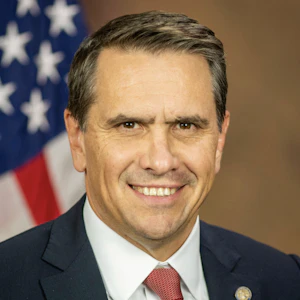
The Honorable Todd Blanche is the 40th Deputy Attorney General of the United States, overseeing the work of the 115,000 dedicated employees who fulfill the Department of Justice’s mission at Main Justice, the FBI, DEA, U.S. Marshals, ATF, and 93 U.S. Attorney’s Offices.
Todd began his career at the Department where he served for over fifteen years in a variety of capacities, including as a contractor, a paralegal in the Criminal Division, and at the United States Attorney’s office for the Southern District of New York where he eventually became an AUSA and later a supervisor.
After leaving the Department, Todd worked as a criminal defense attorney that included representing President Donald Trump in three of the criminal cases brought against him in 2023 and 2024.
Following President Trump’s historic return to the White House, the President appointed Todd to work alongside Attorney General Pam Bondi to make America safe again. At the DOJ, Todd is working tirelessly to implement President Trump’s priorities that include confronting illegal protecting American businesses from fraud.
Todd has been married to his wonderful wife Kristine for nearly thirty years, is a father and grandfather.

Paul Atkins
Paul Atkins
Prior to returning to the SEC, Chairman Atkins was most recently chief executive of Patomak Global Partners, a company he founded in 2009. Chairman Atkins helped lead efforts to develop best practices for the digital asset sector. He served as an independent director and non-executive chairman of the board of BATS Global Markets, Inc. from 2012 to 2015.
Chairman Atkins was appointed by President George W. Bush to serve as a Commissioner of the SEC from 2002 to 2008. During his tenure, he advocated for transparency, consistency, and the use of cost-benefit analysis at the agency. Chairman Atkins also represented the SEC at meetings of the President’s Working Group on Financial Markets and the U.S.-EU Transatlantic Economic Council. From 2009 to 2010, he was appointed a member of the Congressional Oversight Panel for the Troubled Asset Relief Program.
Before serving as an SEC Commissioner, Chairman Atkins was a consultant on securities and investment management industry matters, especially regarding issues of strategy, regulatory compliance, risk management, new product development, and organizational control.
From 1990 to 1994, Chairman Atkins served on the staff of two chairmen of the SEC, Richard C. Breeden and Arthur Levitt, ultimately as chief of staff and counselor, respectively. He received the SEC’s 1992 Law and Policy Award for work regarding corporate governance matters.
Chairman Atkins began his career as a lawyer in New York, focusing on a wide range of corporate transactions for U.S. and foreign clients, including public and private securities offerings and mergers and acquisitions. He was resident for 2½ years in his firm's Paris office and admitted as conseil juridique in France.
A member of the New York and Florida bars, Chairman Atkins received his J.D. from Vanderbilt University School of Law in 1983 and was Senior Student Writing Editor of the Vanderbilt Law Review. He received his A.B., Phi Beta Kappa, from Wofford College in 1980.
Originally from Lillington, North Carolina, Chairman Atkins grew up in Tampa, Florida. He and his wife Sarah have three sons.

Mike Selig
Mike Selig
Chairman Selig brings to the role deep public and private sector experience working with a wide range of stakeholders across agriculture, energy, financial, and digital asset industries, which rely upon and operate in CFTC-regulated markets.
Prior to his leadership at the CFTC, Chairman Selig most recently served as chief counsel of the Securities and Exchange Commission’s Crypto Task Force and senior advisor to SEC Chairman Paul S. Atkins. In this role, Chairman Selig helped to develop a clear regulatory framework for digital asset securities markets, harmonize the SEC and CFTC regulatory regimes, modernize the agency’s rules to reflect new and emerging technologies, and put an end to regulation by enforcement. He also participated in the President’s Working Group on Digital Asset Markets and contributed to its report on “Strengthening American Leadership in Digital Financial Technology.”
Prior to government service, Chairman Selig was a partner at an international law firm, focusing on derivatives and securities regulatory matters. During his years in private practice, he represented a broad range of clients subject to regulation by the CFTC, including commercial end users, futures commission merchants, commodity trading advisors, swap dealers, designated contract markets, derivatives clearing organizations, and digital asset firms. Chairman Selig advised clients on compliance with the Commodity Exchange Act and the CFTC’s rules and regulations thereunder, including in connection with registration applications and obligations, enforcement matters, and complex transactions.
Chairman Selig earned his law degree from The George Washington University Law School and was articles editor of The George Washington Law Review. He received his undergraduate degree from Florida State University.

David Bailey
David Bailey

Eric Trump
Eric Trump
Mr. Trump also serves as Executive Vice President of The Trump Organization, where he oversees the global management and operations of the Trump family’s extensive real estate portfolio. This includes Trump Hotels, Trump Golf, commercial and residential real estate, Trump Estates, and Trump Winery. Known for his hands-on leadership and strong market instincts, he has played a key role in expanding the company’s presence across major U.S. and international markets.
A globally recognized business leader and public figure, Mr. Trump is a prominent advocate for Bitcoin and decentralized finance. He is a co-founder of World Liberty Financial, a decentralized finance (DeFi) platform, and serves on the Board of Advisors of Metaplanet, Japan’s largest corporate holder of Bitcoin.
Beyond his business activities, Mr. Trump has helped raise more than $50 million for St. Jude Children’s Research Hospital in the fight against pediatric cancer, a philanthropic mission he began at age 21.
Mr. Trump earned a degree in Finance and Management from Georgetown University. He currently resides in Florida with his wife, Lara, and their two children. He is also the author of Under Siege, his memoir published in October 2025.
Jack Mallers
Jack Mallers
Cynthia Lummis
Cynthia Lummis
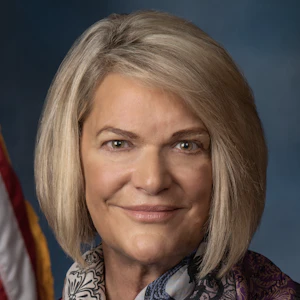
As the first-ever Chair of the Senate Banking Subcommittee on Digital Assets, Senator Lummis is the architect of the legislative framework shaping America's digital asset future. She introduced the landmark Lummis-Gillibrand Responsible Financial Innovation Act, the first comprehensive bipartisan crypto regulatory framework in Senate history. She co-authored the GENIUS Act — the first federal stablecoin law ever enacted — and introduced the BITCOIN Act, which would establish a U.S. strategic Bitcoin reserve of up to one million BTC. She is leading the Clarity Act, which will bring long-overdue regulatory certainty to the digital asset industry. She has also championed digital asset tax reform, including a de minimis exemption for small transactions and equal tax treatment for miners and stakers.
Known as Congress' "Crypto Queen," Senator Lummis represents Wyoming — a state she has helped build into one of the most digital asset-friendly regulatory environments in the nation. Before serving in the Senate, she served 14 years in the Wyoming Legislature, eight years as Wyoming State Treasurer, and eight years in the U.S. House. She is a three-time graduate of the University of Wyoming.
Her work represents a crucial bridge between traditional financial systems and the emerging digital economy, ensuring America leads the world in financial innovation while protecting the individual freedoms that define it.
Adam Back
Adam Back

Amy Oldenburg
Amy Oldenburg
David Marcus
David Marcus

Matt Schultz
Matt Schultz
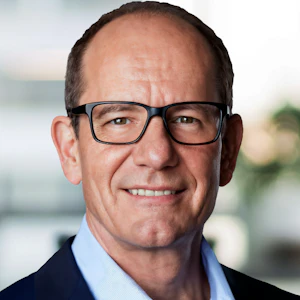
Fred Thiel
Fred Thiel
Throughout his career, Mr. Thiel has consistently driven rapid growth and created substantial shareholder value. Prior to MARA, Mr. Thiel served as the CEO of two other public companies, Local Corporation (NASDAQ: LOCM) and Lantronix, Inc (NASDAQ: LTRX). He has successfully raised billions in equity and debt through private and public offerings, led companies through IPOs, executed high-value exits to strategic and financial acquirers, and implemented effective M&A and roll-up strategies.
Mr. Thiel attended the Stockholm School of Economics and executive classes at Harvard Business School, and is fluent in English, Spanish, Swedish, and French. Mr. Thiel is the Chairman of the Board for Oden Technology, Inc. and is active in Young Presidents’ Organization where he has led initiatives in both the FinTech and Technology Networks.
A recognized voice in the industry, Fred frequently shares his insights on energy and technology with major media outlets like Bloomberg TV, CNBC, and FOX Business, contributing to vital discussions about the future of these sectors.
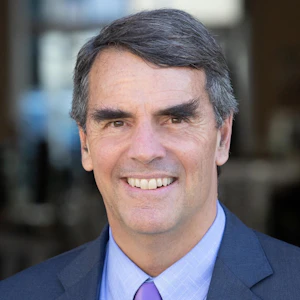
Tim Draper
Tim Draper
He is a supporter and global thought leader for entrepreneurs everywhere, and is a leading spokesperson for Bitcoin and decentralization, having won the Bitcoin US Marshall’s auction in 2014, invested in over 50 crypto companies, and led investments in Coinbase, Ledger, Tezos, and Bancor, among others.

Afroman
Afroman