The Game Theory Behind Miner Centralization

Session
Overview
Micah Warren of the University of Oregon explains miner centralization through coalitional game theory, focusing on how miners might choose between remaining part of a decentralized network or forming a majority coalition. The talk introduces solution concepts such as the Nash equilibrium, core, stable sets, kernel, nucleolus, and Shapley value, then applies those ideas to Bitcoin mining.
The central model compares the value of decentralized mining, represented as D, with the value of a centralized or colluding mining coalition, represented as C. Warren argues that Bitcoin’s security assumptions depend on the relationship between those values and on whether miners find it more profitable to follow the rules than to coordinate a takeover.
A key theme is that the incentive landscape may change as Bitcoin matures. The talk questions whether the market reaction to mining centralization would be as severe today as it appeared to be in earlier events such as GHash.io in 2014, especially as more traditional financial activity enters Bitcoin.
The conclusion is that game theory can explain why decentralized mining remains stable under certain assumptions, but also suggests a risk: if the economic value of centralization rises high enough, miners may have stronger incentives to consolidate hashpower.
Thank you. Thank you for coming to my talk. I'm a mathematician, and this is the first time I've ever given a talk to a non-academic audience. So I didn't realize I'd be competing with a member of the president's family. Thank you for coming.
I usually study elliptic PDEs, but I've been in Bitcoin for a little while, and I started looking at the game theory at some point. It's worth writing it down. It's worth figuring out what the assumptions are. We all know that it works in practice, but does it work in theory? That's kind of a silly way to phrase the question, but it actually is a good question, because if we understand why the theory works, we know why the theory can break.
Game theorists study something called solution concepts. A solution concept is an outcome that we expect games to take. These are going to be mathematically possible to write down, and they have to make sense economically.
The one that you've probably heard of is the Nash equilibrium. That's where all the players in the game are utility maximizing. It makes a lot of sense economically. Everyone is trying to maximize their utility. It's a good solution concept because it makes sense, and it's easy to describe. It's not always available. Lots of games don't have a Nash equilibrium. Some games have zero. Some have infinitely many. And sometimes it's not even something that you would describe as being part of the game.
Other games, like a bargaining game, don't have a Nash equilibrium. You have a bargaining solution. John Nash also described how he thought that would play out, and it usually does. When you have Go, or tic-tac-toe, or something like that, there are also subgame equilibria. There are lots of different solution concepts you would expect to see in different types of games. You might have Bayesian equilibrium when you're trying to guess other people's strategies, that kind of thing.
Coalitional games are what I'm going to talk about. As it sounds, it's a game with, say, n players. Each of the n players has to decide among the other n players who they want to form a coalition with. The way this is described mathematically is via some sort of payoff function, nu, which describes how much that coalition gets if it forms. They can't join multiple coalitions. And obviously, everybody in the coalition has to agree that the others are also in the coalition.
So the game is specified by this payoff function, nu, but then we assume transferable utilities, which allows the players to negotiate how the payout is going to come out in the end. This allows them to play one coalition against other ones.
This is the first, non-interesting coalitional game. If somebody donated a Bitcoin, I could take three people from the audience, say, give me your Bitcoin address, and send it to the three of you in a two-of-three multisig transaction. I would have just created a very standard textbook coalitional game called Odd Man Out. I can do it with Bitcoin. You can do it without violence. Usually the game involves bank robbers in the forest or something, but with Bitcoin, we can get rid of the violence.
How would you spend that, the three of you? I don't know what you would do. You could get together and split it three ways. Two of you could just meet up and take it.
Here's how it's specified in terms of the payout. You have the coalition of three players. They get the whole Bitcoin. They get to spend it however they want. Any coalition of two players also gets to spend it however they want. Any coalition of one player cannot move it unilaterally.
In coalitional games, there's no natural equilibrium. There's something called a core, which feels like a natural equilibrium in the sense that it's an arrangement in which every coalition that could form and do better for all of its members has formed. There is no temptation to form, defect from a current arrangement, and get any better.
In this previous game, you can see that no matter how the payout works, no matter how you decide to split up your Bitcoin three ways, two people can always take whatever another person has and redirect it to themselves. So there's never going to be a core where everybody is kind of maximally happy. It is a standard concept. A lot of times it doesn't apply, like in this game.
Game theorists had to come up with more sophisticated ways to look for solution concepts, not just everybody's happy. There's this idea of objection and counter-objection. An objection is some proposal by some coalition that says, well, we could do better for ourselves. If you take this Bitcoin and want to split it three ways, two people can always tell the third person, we can do better for ourselves if we take it and split it in half.
But the counter-objection to that is that once you start this game, things might follow. Other people are going to make objections to the objection, and that's called a counter-objection. You can define these all mathematically in really nice ways.
The idea here is that the more stable coalitions, the ones that we expect to see, are those where anytime you defect from it, you're going to end up with something that might, not at that step but maybe a step down the road, be a little bit worse.
There are a lot of solution concepts for coalitional games: stable sets, kernel, the core, the bargaining set, nucleolus, and Shapley value. Mathematicians like the nucleolus because it's unique and it exists.
For this particular game I was talking about, there's a stable set, which is the set of three-way splits. Without giving you the exact definition, I can tell you why it works. No matter what payout I suggest, say 30, 30, 40 or something, there are always two people who could form a coalition and get something better in this set of three payout vectors. Also, there is no payout vector that is strictly preferred by the full coalition among this set.
Interestingly, the nucleolus, and I won't give you the definition, suggests that the three-way split is actually the most stable.
This again highlights the fact that game theory is only a little bit predictive. We don't know exactly what's going to happen. We can show you some outcomes that we think are likely. We'd be surprised if it were 60, 40, zero. But a one-third, one-third, one-third split is reasonable, or a one-half, one-half split. Those are reasonable.
To get back to Bitcoin, if you're looking at miners, you could ask if this is a weighted majority game. You can probably figure out what the weighted majority game is. You have a bunch of players, and they each have weights. If a coalition forms for a group of players and it is a majority, then they win the prize, whatever that prize is. This is very classical theory. It goes back to von Neumann in the 1940s. There is lots of theory behind it, lots of theory developed in the 1950s, 1960s, and 1970s. So I thought, can I apply this to mining?
There's a little bit of a problem. The theory doesn't quite go through. There's this giant thing right in the middle of it, and that's the decentralized coalition. It is like a coalition in the sense that it's there, and everybody wins if they participate in it by not colluding. If a majority chooses not to collude, they don't even have to collude to do this. They've sort of just created this grand decentralized coalition. So what I've tried to do is shoehorn that into game theory and see how this fits with all the other classical solution concepts.
Here is the game. I'm taking the miners, which have hash rate that adds up to one. It's a fraction. I'm thinking of these as mining companies that want some profits, so I'm taking that as a flow value. If the network is decentralized, everybody gets their hash rate fraction times the profits that are going out into the entire network. I'm using this value D. This is the value of profit to the full network. There is a little bit of a simplification, obviously.
Then I'm also putting in this other option, which says that if some coalition, a 51% group, decides to collude and take over the network, they get C. C is going to be the value. Obviously, we know these are different numbers. The value of Bitcoin decentralized is different from the value of Bitcoin centralized. The profits are going to be different. I'm leaving these numbers, and this is the kind of assumption I think is important. We don't know what these numbers are, but we're going to write down a model in terms of these numbers.
Obviously, there are some things which, this being the Energy Stage, I wouldn't suggest that hash cost is uniform across the board. Everybody has different hash costs, so it's not perfect. It's a toy model. Also, the centralized payout, if miners in Texas colluded to take over the network versus miners in China, it would do different things to the network. There would be different ramifications. I'm not even going to touch selfish mining. It makes it too complicated.
The big question is, what's the difference between C and D? What determines C versus what determines D? Like I said, I want to write down the assumptions that go into everybody's model. We know that it works in practice, but what is the theory?
I think it's in the white paper: "He ought to find it more profitable to follow the rules." We've kind of echoed this, and it is part of the folklore. We all talk about, if somebody says, what if miners centralized, what would happen? You often hear this story about GHash.io in 2014. They got about 51%. It was just a pool, but they got above 50% or something, and then Bitcoin crashed from 630 to 580 or something. Peter Todd went on Reddit and said he was selling some coins.
Everyone since then has had this assumption, this hypothesis, that if anyone were to ever do anything damaging to the decentralization of the network, everyone would just sell their Bitcoin. I don't think this is true anymore.
In 2014, this was sort of like Old Testament times. Bitcoin was still an experiment. You did not have a Bitcoin conference. You did not have Michael Saylor. You did not have a lot of this stuff that is going on here. So I would suggest that we need to look at this number more closely.
If miners did centralize, I think a lot of people wouldn't sell their Bitcoin because there are still 21 million. It still would work. Unless you're maybe Iran or something, it would still work for most people just doing most of their investment TradFi things. So it's an interesting question how much this holds in 2026, or how much it will hold in 2032 or 2038. It held in 2014, but it's a dynamic thing.
Other things that might affect or give miners incentive to centralize: you get to pick the fees. You can charge some users, you can charge whales more if you want. They might not like it, but you can do it. You can also crank down the hash rate because you don't really need to compete anymore. You can crank it up if someone competes with you, but you can kind of wind it down until all the other miners have traded away. That's cheaper.
Of course, there are a lot of complicated things that could happen here. One thing is, if you're in a jurisdiction where, and I'm not a lawyer, obviously, if the authorities are hostile, they might call you a money transmitter or something and make your life miserable. Or if they have reasons to want to control the blockchain for certain reasons, like stopping global adversaries from receiving payments, they might be very happy just to have you control the network. This can work both ways. You can think of it as a benefit or a cost.
I've explained C and D in the model. I worked out the solution concepts. In the Satoshi days, a long time ago, when Bitcoin was sort of fragile, we thought of the ratio C over D as basically zero. If miners were to centralize in 2012, the experiment would have been over. C is zero, so C over D is significantly less than one.
But we can look at what happens as that increases. It turns out it depends on your particular model. This is a simplification: I've got n miners. There is going to be a value. Think of M as maybe a little bit more than 51%, and then M star is a little bit less than one. As long as this ratio of C over D stays less than this M, the grand decentralized coalition is still the core. It's still the stable set. It's the kernel. It's the nucleolus. So it's all of the solution concepts. It has the checkmate grand slam. This explains why, in theory, it works now.
Of course, the question is what happens later if this C gets to be a larger number. There is this transition phase where you go between this number, which is a little bit bigger than one-half, and this number, which is closer to one, where the grand decentralization is no longer the core. So it's not this super stable thing that everyone's going to be immediately attracted to. People will be tempted away from it. It is not in the stable set either. There's no stable set, but it is going to be in the nucleolus. It is the unique thing in the nucleolus.
This suggests that we could get to this C over D, and decentralized mining is still going to be predicted by game theory, even though people will start to be tempted. It will look appetizing, maybe, to centralize. But for these objection and counter-objection reasons, people will probably stay decentralized.
But then what happens later? Once C over D gets bigger than one, game theory predicts that miners will centralize and redistribute according to their relative power.
The black-pill takeaway is that if we get too much TradFi in the system and nobody cares if mining is decentralized, it won't stay decentralized. Or at least that's what game theory would try to predict. Thank you.
Similar
Sessions
The Game Theory Behind Miner Centralization
The Game Theory Behind Miner Centralization
Speakers/Moderators
Incentives & Illusions in Prediction Markets

Matt Crosby
Matt Crosby

Paul Sztorc
Paul Sztorc

Derek Orr
Derek Orr
When his co-founder Sanjay Shah, came calling with an opportunity to step in as CEO and CFO of Predyx — one of the world's first and only Bitcoin-only prediction markets — he didn't hesitate. Built natively on the Lightning Network, Predyx lets users trade real-world outcomes across markets, sports, elections, and AI events with instant sat-denominated payouts, zero fiat on-ramps, and micro-market scalability that only Lightning makes possible.
Derek brings to Predyx the same conviction he brings to Bitcoin itself: that sovereign, permissionless financial rails aren't just an ideology — they're a product feature.
Incentives & Illusions in Prediction Markets
Speakers/Moderators
Matt Crosby
Matt Crosby
Paul Sztorc
Paul Sztorc
Derek Orr
Derek Orr
When his co-founder Sanjay Shah, came calling with an opportunity to step in as CEO and CFO of Predyx — one of the world's first and only Bitcoin-only prediction markets — he didn't hesitate. Built natively on the Lightning Network, Predyx lets users trade real-world outcomes across markets, sports, elections, and AI events with instant sat-denominated payouts, zero fiat on-ramps, and micro-market scalability that only Lightning makes possible.
Derek brings to Predyx the same conviction he brings to Bitcoin itself: that sovereign, permissionless financial rails aren't just an ideology — they're a product feature.
Other
Speakers

Michael Saylor
Michael Saylor

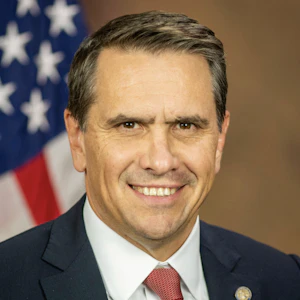
Todd Blanche
Todd Blanche
Biography of Deputy Attorney General Todd Blanche
The Honorable Todd Blanche is the 40th Deputy Attorney General of the United States, overseeing the work of the 115,000 dedicated employees who fulfill the Department of Justice’s mission at Main Justice, the FBI, DEA, U.S. Marshals, ATF, and 93 U.S. Attorney’s Offices.
Todd began his career at the Department where he served for over fifteen years in a variety of capacities, including as a contractor, a paralegal in the Criminal Division, and at the United States Attorney’s office for the Southern District of New York where he eventually became an AUSA and later a supervisor.
After leaving the Department, Todd worked as a criminal defense attorney that included representing President Donald Trump in three of the criminal cases brought against him in 2023 and 2024.
Following President Trump’s historic return to the White House, the President appointed Todd to work alongside Attorney General Pam Bondi to make America safe again. At the DOJ, Todd is working tirelessly to implement President Trump’s priorities that include confronting illegal protecting American businesses from fraud.
Todd has been married to his wonderful wife Kristine for nearly thirty years, is a father and grandfather.

Paul Atkins
Paul Atkins
Prior to returning to the SEC, Chairman Atkins was most recently chief executive of Patomak Global Partners, a company he founded in 2009. Chairman Atkins helped lead efforts to develop best practices for the digital asset sector. He served as an independent director and non-executive chairman of the board of BATS Global Markets, Inc. from 2012 to 2015.
Chairman Atkins was appointed by President George W. Bush to serve as a Commissioner of the SEC from 2002 to 2008. During his tenure, he advocated for transparency, consistency, and the use of cost-benefit analysis at the agency. Chairman Atkins also represented the SEC at meetings of the President’s Working Group on Financial Markets and the U.S.-EU Transatlantic Economic Council. From 2009 to 2010, he was appointed a member of the Congressional Oversight Panel for the Troubled Asset Relief Program.
Before serving as an SEC Commissioner, Chairman Atkins was a consultant on securities and investment management industry matters, especially regarding issues of strategy, regulatory compliance, risk management, new product development, and organizational control.
From 1990 to 1994, Chairman Atkins served on the staff of two chairmen of the SEC, Richard C. Breeden and Arthur Levitt, ultimately as chief of staff and counselor, respectively. He received the SEC’s 1992 Law and Policy Award for work regarding corporate governance matters.
Chairman Atkins began his career as a lawyer in New York, focusing on a wide range of corporate transactions for U.S. and foreign clients, including public and private securities offerings and mergers and acquisitions. He was resident for 2½ years in his firm's Paris office and admitted as conseil juridique in France.
A member of the New York and Florida bars, Chairman Atkins received his J.D. from Vanderbilt University School of Law in 1983 and was Senior Student Writing Editor of the Vanderbilt Law Review. He received his A.B., Phi Beta Kappa, from Wofford College in 1980.
Originally from Lillington, North Carolina, Chairman Atkins grew up in Tampa, Florida. He and his wife Sarah have three sons.

Mike Selig
Mike Selig
Chairman Selig brings to the role deep public and private sector experience working with a wide range of stakeholders across agriculture, energy, financial, and digital asset industries, which rely upon and operate in CFTC-regulated markets.
Prior to his leadership at the CFTC, Chairman Selig most recently served as chief counsel of the Securities and Exchange Commission’s Crypto Task Force and senior advisor to SEC Chairman Paul S. Atkins. In this role, Chairman Selig helped to develop a clear regulatory framework for digital asset securities markets, harmonize the SEC and CFTC regulatory regimes, modernize the agency’s rules to reflect new and emerging technologies, and put an end to regulation by enforcement. He also participated in the President’s Working Group on Digital Asset Markets and contributed to its report on “Strengthening American Leadership in Digital Financial Technology.”
Prior to government service, Chairman Selig was a partner at an international law firm, focusing on derivatives and securities regulatory matters. During his years in private practice, he represented a broad range of clients subject to regulation by the CFTC, including commercial end users, futures commission merchants, commodity trading advisors, swap dealers, designated contract markets, derivatives clearing organizations, and digital asset firms. Chairman Selig advised clients on compliance with the Commodity Exchange Act and the CFTC’s rules and regulations thereunder, including in connection with registration applications and obligations, enforcement matters, and complex transactions.
Chairman Selig earned his law degree from The George Washington University Law School and was articles editor of The George Washington Law Review. He received his undergraduate degree from Florida State University.

David Bailey
David Bailey

Eric Trump
Eric Trump
Mr. Trump also serves as Executive Vice President of The Trump Organization, where he oversees the global management and operations of the Trump family’s extensive real estate portfolio. This includes Trump Hotels, Trump Golf, commercial and residential real estate, Trump Estates, and Trump Winery. Known for his hands-on leadership and strong market instincts, he has played a key role in expanding the company’s presence across major U.S. and international markets.
A globally recognized business leader and public figure, Mr. Trump is a prominent advocate for Bitcoin and decentralized finance. He is a co-founder of World Liberty Financial, a decentralized finance (DeFi) platform, and serves on the Board of Advisors of Metaplanet, Japan’s largest corporate holder of Bitcoin.
Beyond his business activities, Mr. Trump has helped raise more than $50 million for St. Jude Children’s Research Hospital in the fight against pediatric cancer, a philanthropic mission he began at age 21.
Mr. Trump earned a degree in Finance and Management from Georgetown University. He currently resides in Florida with his wife, Lara, and their two children. He is also the author of Under Siege, his memoir published in October 2025.

Jack Mallers
Jack Mallers

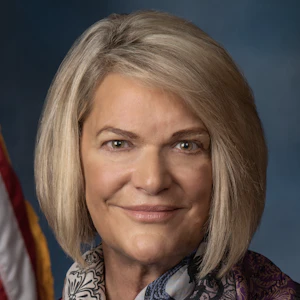
Cynthia Lummis
Cynthia Lummis
As the first-ever Chair of the Senate Banking Subcommittee on Digital Assets, Senator Lummis is the architect of the legislative framework shaping America's digital asset future. She introduced the landmark Lummis-Gillibrand Responsible Financial Innovation Act, the first comprehensive bipartisan crypto regulatory framework in Senate history. She co-authored the GENIUS Act — the first federal stablecoin law ever enacted — and introduced the BITCOIN Act, which would establish a U.S. strategic Bitcoin reserve of up to one million BTC. She is leading the Clarity Act, which will bring long-overdue regulatory certainty to the digital asset industry. She has also championed digital asset tax reform, including a de minimis exemption for small transactions and equal tax treatment for miners and stakers.
Known as Congress' "Crypto Queen," Senator Lummis represents Wyoming — a state she has helped build into one of the most digital asset-friendly regulatory environments in the nation. Before serving in the Senate, she served 14 years in the Wyoming Legislature, eight years as Wyoming State Treasurer, and eight years in the U.S. House. She is a three-time graduate of the University of Wyoming.
Her work represents a crucial bridge between traditional financial systems and the emerging digital economy, ensuring America leads the world in financial innovation while protecting the individual freedoms that define it.

Adam Back
Adam Back

Amy Oldenburg
Amy Oldenburg

David Marcus
David Marcus

Matt Schultz
Matt Schultz
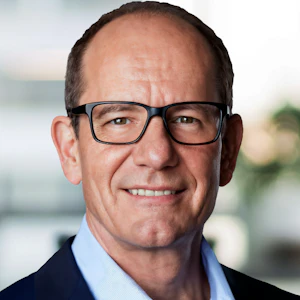
Fred Thiel
Fred Thiel
Throughout his career, Mr. Thiel has consistently driven rapid growth and created substantial shareholder value. Prior to MARA, Mr. Thiel served as the CEO of two other public companies, Local Corporation (NASDAQ: LOCM) and Lantronix, Inc (NASDAQ: LTRX). He has successfully raised billions in equity and debt through private and public offerings, led companies through IPOs, executed high-value exits to strategic and financial acquirers, and implemented effective M&A and roll-up strategies.
Mr. Thiel attended the Stockholm School of Economics and executive classes at Harvard Business School, and is fluent in English, Spanish, Swedish, and French. Mr. Thiel is the Chairman of the Board for Oden Technology, Inc. and is active in Young Presidents’ Organization where he has led initiatives in both the FinTech and Technology Networks.
A recognized voice in the industry, Fred frequently shares his insights on energy and technology with major media outlets like Bloomberg TV, CNBC, and FOX Business, contributing to vital discussions about the future of these sectors.
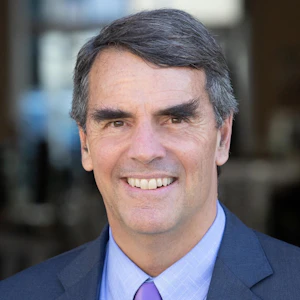
Tim Draper
Tim Draper
He is a supporter and global thought leader for entrepreneurs everywhere, and is a leading spokesperson for Bitcoin and decentralization, having won the Bitcoin US Marshall’s auction in 2014, invested in over 50 crypto companies, and led investments in Coinbase, Ledger, Tezos, and Bancor, among others.

Afroman
Afroman