The Great Pivot: How to Think About the Difference Between HPC & Mining Infrastructure
Speakers/Moderators

Ariel Deschapell
Ariel Deschapell
Deschapell also has extensive policy experience, having held the Henry Hazlitt Fellowship at the Foundation for Economic Education and served as a Senior Fellow for Crypto and Web3 at the Foundation for American Innovation. He submitted independent comments to the SEC on digital asset custody (April 2021) and responded to the Department of Commerce’s request for information on GPU export policy (late 2025). He is a founder of BIPBounty.org, an initiative funding bounties for Bitcoin Improvement Proposal reviews.
His recent work articulates “Compute Maximalism”—the thesis that Bitcoin mining and AI workloads are synergistic rather than competitive, with Bitcoin providing flexible, interruptible load that complements AI inference demands. He brings hands-on Bitcoin development experience, policy credentials, and current infrastructure leadership at the intersection of Bitcoin mining economics and AI compute.

Brent Whitehead
Brent Whitehead

Taras Kulyk
Taras Kulyk
Prior to co-founding Synteq Digital, Taras served in a number of senior roles within the digital mining data center sector; including Founder & CEO of SunnySide Digital, and SVP Growth with Core Scientific, where he originated several billion dollars in total contract value.
Before beginning his data center focused career, Taras was a Toronto based investment banker with BMO Capital Markets covering the traditional mining sector, followed by over two years with TD Securities in the Communications, Media, and Technology team, where his coverage included telecom, technology, media and data center companies.

Taylor Monnig
Taylor Monnig
Session
Overview
The Great Pivot explored how Bitcoin mining infrastructure compares with high-performance computing and AI data center infrastructure. Ariel Deschapell of Hydra Host moderated a discussion with Brent Whitehead of Giga Energy, Taras Kulyk of Synteq Digital, and Taylor Monnig of CleanSpark on where miners and infrastructure providers fit as demand for AI compute grows.
The panel emphasized that while Bitcoin mining and HPC both begin with access to power, the business models and engineering requirements differ substantially. HPC requires far greater redundancy, stricter contracts, customer support, enterprise sales, specialized talent, and more complex networking, cooling, and power systems. Panelists also discussed challenges around firm load, utility interconnection agreements, equipment lead times, labor shortages, permitting, and local community pushback.
The discussion also covered how Bitcoin mining and AI infrastructure may coexist. Some panelists see opportunities for hybrid sites, flexible load management, and Bitcoin mining as a bridge while larger AI facilities are built. Others were more skeptical of long-term co-location economics, arguing that AI data centers and Bitcoin mines have very different cost structures and operational requirements.
Thanks, everybody, for making it. We've got a pretty exciting lineup of panelists here, and an exciting topic that everybody is buzzing about recently, which is making the transition from Bitcoin mining to high performance compute, or AI infrastructure. As a little bit of background on myself, I'm the co-founder of Hydra Host and also the CTO. We specialize in building out AI infrastructure and monetizing it with inference platforms. I also have a long background in Bitcoin going back to 2013, so I have a unique view on both sides of the aisle.
To jump right into things, because we have so much to cover, can we go one at a time and talk about how you started out in the Bitcoin space, how you started making the transition into HPC, how you are currently thinking about that, and when that happened? Two years ago I was talking to a lot of miners here and no one was really thinking about it to any great extent. Now it seems like everybody is thinking about it, or at least making plans.
My name is Taylor. I'm the chief operating officer over at CleanSpark. I started mining Bitcoin in 2015, and that really led me down a path into liquid cooling. My career has been split between Bitcoin mining and HPC at my previous company. CleanSpark itself has been mining for about six years now. We have roughly 50 exahash online and powered. To address the pivot question, we look at it as an add-on to our business. We have no plans to stop mining. We have 50 exahash online and powered, and we continue that endeavor.
We had a CEO switch last August into September, and that's really when we started to add and think about our HPC vertical. Right now we're hyper-focused on building out powered shells and providing the infrastructure for the AI companies to come in and ultimately architect whatever they want to build.
Thanks for the invitation. I started in the ecosystem in 2017 after being a banker for a few years. I was tasked with building up Calvin Ayre's private mining fleet. We went from 60 ASICs to 330,000 ASICs in seven countries. I left that ecosystem and saw the light with Bitcoin proper. I got picked up by Core Scientific and was there for a few years, basically building up the business, closing deals, and selling hosting and hardware.
Then I started my own thing. I had Sunnyside Digital for a few years, where we were focusing on working with great teams like CleanSpark, Matt and team, and Taylor, helping make sure that large hardware deals and large infrastructure deals were being done by trusted counterparties and intermediaries. Then I saw the light with all of our major partners going from 50 or 100 megawatts to gigawatts of power under management. This industry was scaling and maturing.
The vision I saw with Synteq was combining my old company, Sunnyside, with another business to really become an enterprise services provider. As that happened, we started dabbling in the GPU side and really saw what was happening with digital compute. That's really an evolution of how we manage power to either generate hash rate for Bitcoin or generate FLOPS for AI. I think that's where the market is going.
We will never abandon our foundation in digital mining. I think that is a fundamental, necessary component to what we're doing as a business. But we are definitely putting our efforts into HPC and expanding what we're doing there. There are a lot of announcements coming from our team, and it's an exciting time to be part of the ecosystem.
Howdy. My name is Brent Whitehead. I started Giga with my co-founder Matt Lohstroh about seven years ago. We actually started as a flare gas Bitcoin mining company. After quickly having issues procuring certain infrastructure for our sites, we started building our own. That grew into what we are as a company today, which is an energy infrastructure provider: switchboards, transformers, modular data centers.
We started getting into the AI space because we were getting pulled in that direction, not because we were trying to push toward it. I think this is probably the case for a lot of companies here, maybe even some of you on stage. Organically, you saw the transition start happening. Bitcoin mining was the first industry that went and grabbed a ton of load all over the United States, and that was the easiest thing for AI companies to go out and start converting large interconnects to AI power.
A lot of these customers started converting them. You saw Core Scientific and a lot of people start signing contracts to retrofit their Bitcoin assets. We were already an equipment supplier for a lot of these companies, so organically we started getting pulled into servicing AI infrastructure.
The other thing we saw is that we also build and develop our own sites. If you go back a year ago and talked to most of the leaders in the AI space, or even the public company Bitcoin miners, and said, would AI ever go out and build a 50 megawatt site in West Texas, they'd say, you're crazy. They would say you need to be in a city with a professional football team because the city is that big, and if you're not at half a gigawatt, you're wasting your time.
A lot of Bitcoin miners avoided jumping into the AI space because they saw these massive gigawatt-scale sites happening quickly. You've seen that collapse, where people have started going to smaller and smaller sites. Those two avenues led us to say, we have a lot of things these companies are looking for, so we should really pursue it organically.
Do I think Bitcoin will continue to be part of our business? Absolutely. There is no intention of killing anything that we're doing in the Bitcoin ecosystem. It's more that the total addressable market in AI is so much larger right now that it's skewing what your business looks like, candidly.
One thing you just hit on, Brent, is that at least superficially there seem to be a lot of similarities between Bitcoin mining and AI infrastructure. In both cases, you have to go get power, and that is the bottleneck in many situations. But one of the topics we really want to explore is the differences between AI infrastructure and Bitcoin mining, and the real challenges in making that transition.
Before we dive straight into that, the AI infrastructure stack is pretty complex. There are a lot of different parts to it. If we look at what Jensen and Nvidia have said, it's like a five-layer cake. At the bottom, you have energy and chips. Then you have infrastructure, then models and applications. Where do you see your companies fitting into that stack? What is your business model going forward? Are you looking to own GPUs, do colo, or provide equipment?
On our end, we look at it as energy, infrastructure, cloud space, and labs. We do not have intentions at this moment to purchase GPUs. If you look at all the companies in the Bitcoin space that have started moving into AI, there are a lot of similarities between what they did from a principles standpoint in Bitcoin and what they're doing in AI.
We did an asset-light model in Bitcoin. We were going to build sites; we were not going to buy ASICs. GPUs are really expensive, a bit more than S21s. You can tell how much I'm out of the Bitcoin space now; that's probably not even the newest ASIC. But we don't see ourselves buying the GPUs. We really see ourselves on the energy and development side, with our infrastructure.
We see the ability to be a full, vertically integrated AI infrastructure developer, from the white space, transformers, houses, and switchboards all the way across. That's where we see the biggest bottleneck. Candidly, our view is that in a lot of ways, this is the first time you are seeing technology innovate faster than the physical world is keeping up with.
If you went back 10 years ago and asked Google how hard it is to find a site to build a data center, they'd say they just choose where they want to build a data center, and it comes down to capital and getting everything together. We are reaching the point in the United States where technology is innovating and growing quicker than what the physical real world can keep up with. I don't think that's going to stop if you truly see how AI is growing exponentially.
Our view is that energy and infrastructure are always going to be the rate limiter for all of these companies in the AI space. That's why I think Bitcoin miners are probably some of the most well-positioned companies in the world right now for the AI industry.
Absolutely. We've been a partner to the largest Bitcoin miners in the market for the past few years. We made a commitment that we would never be a Bitcoin miner ourselves, to maintain that Switzerland-type neutrality where you never want to feed someone who will be your competitor.
That's the mentality we're taking to the GPU and HPC spaces. We will never be a hyperscaler. Synteq's positioning in the market is to become what I would term a hyperscaler supplier, otherwise known as edge compute or inference compute. We're looking to develop small-scale data centers, 2 to 25 megawatts, in every NFL city in the United States, every NHL city north of the border, and then in Europe, Latin America, the Middle East, and other regions.
We think our advantage is understanding how to manage large-scale fleets for cleaning, testing, and repair, which is why we acquired a company last year. The acquisition of CrunchBits, which has recently been rebranded to Synteq HPC, has given us the ability to plug in and manage GPUs and sell compute directly to clients. We don't need a Fluidstack or a neocloud in the middle. We actually own the relationship from the GPU right to the client.
The next phase of our growth, after we raise some capital, is to go down a little further. We're not going to be a power generator. That's not where we play and not our specialty. It will be owning the infrastructure and making sure that we manage the power we get from our power generation partners. When you're renting or leasing an infrastructure site, you don't control your own future. If you own the site itself, that's when you really have control of your own destiny. I think you become a very interesting counterparty for folks to interact with.
One additional point for the audience is that everyone is chasing the billion-dollar deal. Everybody wants a gigawatt of power or 500 megawatts of power. That's fantastic. Frontier model training is extremely important, and I think it will be for the foreseeable future. What people forget is that small to medium-sized businesses and enterprises need compute. That's where the models we're building are actually being used day to day. That's where Synteq is focused: delivering the compute they need, a Toyota versus a Ferrari. You don't need a GB300 for most applications. You can use lower-quality GPUs just to get the job done, and that's really our target market.
To summarize, would it be fair to say that Brent, you're focused on dirt to power, or dirt to servers, and Synteq is more focused on servers to tokens?
We're actually taking advantage of a lot of the points both of the other speakers brought up. We're obviously a large-scale Bitcoin miner. We've got sites as large as 600 megawatts and some as small as 5 to 10 megawatts. Our core competency and focus has always been acquiring land and power, building, constructing, and operating data centers.
While they are wildly different, at the end of the day they are a warehouse full of computers. It might be a different type of computer, but we're going to continue to grow on our expertise. Our main focus is to acquire land and power and build out powered-shell data centers. That way we can lease them out to folks downstream that are using AI in a multitude of different ways.
While we're focused right now primarily on the hyperscalers, we certainly see a wide range of inference that is going to develop in the future. We took a couple of knocks over the last couple of years. People wondered why we didn't have these hyperscale sites like Riot, Marathon, and some of the other ones. We had a more distributed approach, and I think that same strategy is really going to pay off in the HPC market over the coming years, as training becomes less involved and people try to get the ultimate product out to the end market.
You set up the meat of the discussion pretty perfectly: what are the differences between these things? I'm going to challenge you a little bit and throw it right back. They are both computers in a warehouse, but they're very different computers, very different workloads, and different CapEx. AI infrastructure is phenomenally expensive compared to Bitcoin mining. The cooling requirements and power requirements are exponentially higher. The SLAs you have to maintain contractually don't even exist in Bitcoin mining. You don't have a customer in Bitcoin mining.
How do you think about the difficulties of making this transition? What do you think is going to be more difficult for your company to tackle? How are you resourcing that and strategizing around it?
In some ways it is more difficult. To hyper-focus on one point: in Bitcoin mining, the network topology is miner, switch, bigger switch, out to the internet. It's incredibly simple. But when you look at a high performance compute cluster these days, you have more fiber in one single rack than you would in a whole entire data center.
On the flip side, the Bitcoin mining industry has been a bit of the Wild West. When you buy a miner from Bitmain, WhatsMiner, or Canaan, it comes with a little pamphlet that gives you some guidelines on how to run it, with minimal engineering input on helping you design and build facilities. On the opposite side, when we go into a customer now, sometimes we'll get handed a 30-page basis of design that has every single requirement the customer would like inside their data center, the exact specs, how they want to build, and everything like that.
So while it is a more complex and difficult build, at least we're now working in an environment where we have very strict engineering guidelines that say, this is what the customer wants. As long as we can deploy infrastructure that matches those, we have a clear set way to win. There are positives and negatives to all parts of it. It is more complicated, but in some ways it is a little more simple.
I want to double-click on the hardware component with you, Brent. You've built infrastructure for Bitcoin mining and for HPC now, with completely different power and cooling profiles. What kind of engineering challenges has that presented? What kind of operational challenges? How are you tackling that divide?
It would be a wild statement to say a modular Bitcoin mine is comparable to HPC white space. It really comes down to redundancy, which is probably the biggest thing you see. You go to certain Bitcoin mining sites and they don't even have a main breaker on the box. With HPC, you have switchboards for redundancy, transformers for redundancy, UPS, and every aspect of it is so intertwined.
You have to understand the liquidated damages. It's not that people want to put all these redundancies in. It's that the opportunity cost is so massive. In Bitcoin mining, if it shuts down, it is a pure opportunity cost. With HPC, these are contracts where the liquidated damages are so massive that you cannot afford to not be at five nines, or wherever you land for your uptime.
What we have done is bring in exceptional people. Our CTO was director of data centers at Google. We've tried to bring in people from the hyperscaler and HPC side to help with design and engineering, knowing that it's not going to be the same as Bitcoin mining. That's been our main challenge.
On the differences between Bitcoin and AI, I think there are external things and internal things. On the external side, I'm seeing more pushback from local ordinances and local communities than I saw with Bitcoin, believe it or not.
Why do you think that is?
Firm load. There is not a point in time when it makes economic sense for them to shut down. They will run. There is no price response. Bitcoin mining will shut down at a power rate that is probably less than what people pay as a residential electrical bill from an energy standpoint. That's not the case with AI.
The other thing is the disruption factor. How fast and how much capital is moving into these big companies creates a stigma, and people get pretty pissed off. Bitcoin was the warmup for it, candidly, as much as I hate to say it. I see more pushback where people say, if you're building a Bitcoin site, great. If you're building an AI site, I don't want you here. I look for that to be a bigger issue.
The second big difference is that too many people are missing the forest for the trees on just getting an electrical interconnect contract. What they don't understand is that a lot of these sites and agreements for power commitments were built off flexible load. I think you're going to have a lot of people buying assets thinking they have an AI site, and then quickly realizing that contractually they could never actually have a firm load with what they have.
You really need to look into your local ordinances for what you're building if you're going for HPC. You also really need to look at your agreement to understand the mechanics of that interconnection.
One of the other big differences I want to focus on is not just the hardware. It's the nature of the business. Bitcoin mining is extremely simple. You plug this thing into the wall, get it running, put it in a pool, and start making money. There are a few more steps, but it's a straightforward relationship.
With AI infrastructure, there is a crucial difference: you have customers. You have contracts and SLAs. Suddenly that changes the equation for a lot of different things you might not think about. Redundancy is an obvious one, but also customer support and go-to-market. Miners don't have to do customer support. Miners don't have to find customers. Talk to us about the mentality shift you need to have going from mining into having inference customers and AI customers. What are the challenges there?
If anybody has seen me on a panel before, you might notice a subtle difference today. I'm wearing a jacket. HPC is a lot more of an enterprise corporate space than Bitcoin mining has been historically, from the days of building data centers in the backcountry of Kazakhstan. We're now dealing with systemically important financial institutions that are looking to integrate compute, storage, and HPC into their day-to-day operations.
The name of the game has materially changed. It's not just the intensity of capital, which is an obvious factor. It's like sevenfold per megawatt, based on what you're building, between HPC and mining. It's also the risk-reward profile of what you're doing. If you shut down as a Bitcoin miner, your economic incentive is in 10-minute chunks. If you shut down for 10 minutes, you've lost a 10-minute opportunity cost.
If you have an enterprise customer or a frontier model training partner that has been building a model within your site for three months and you shut down for two seconds, all of that opportunity cost is gone. Liquidated damages become a major issue for you as an operator. The stakes of the game are not seven times higher. They're like 100 times higher. Contractual certainty, redundancy, and attention to detail all amp up the engineering and certainty that you require.
Over time, you will see that with Synteq we have been upgrading our team, and we will continue to do so. We will continue to grow the business through organic and inorganic acquisition. We are looking for existing operators in the HPC space to bolt on so that we have the right people in the right seats with the right experience to get the job done, because the stakes are way too high.
Even your wardrobe had to change completely. Was that one of the hardest parts?
Not the hardest part, but certainly one of the parts.
A couple of reports I've seen recently say that out of all the data centers planned for the rest of 2026, at least half are going to be tremendously delayed. A lot of people are trying to get into this gold rush, trying to bring power and land online quickly, often making promises that they can do it quickly in order to secure contracts and financing. Why is that happening? What do you think is the number one point of friction, the hardest thing people are underestimating when they first get into developing these sites?
I think it's multifold, but a big one is obviously the construction process. You are not building a Bitcoin mine. You are building a highly integrated computing facility that has 100x of everything that went into your Bitcoin mine.
The other big one is community pushback. You're seeing very well-organized groups moving around the country providing pushback on water usage, energy prices, and a lot of it is misinformation. Most modern data centers these days are closed loop. They don't even use water after fill-up, and things like that.
I'm seeing it even in my personal social media, from kids I grew up with and went to school with. That anti-data-center movement is growing. I think it's based on a lot of misinformation and people not being up to date with current technologies, the impacts they'll have in their communities, and how they operate. There's a big misconception that these HPC factories aren't going to have any employees, which we both know is not true. Between maintaining and operating at the rack level, not only are there an abundance of jobs, but they're meaningful jobs, high-tech jobs, cutting-edge things people can do.
We need to work as a community to attack the misinformation happening around data centers, so we don't do all this amazing work of having a fantastic design, having the supply chain, hiring amazing people, building the company and technology, only to have the knees cut out from under it over a community, zoning, or ordinance issue.
The other big thing is the power contracts. If you don't read into the details and you go secure a big deal with a hyperscaler, only to find out that you've got to curtail your load 8% of the time, the deal is pretty much dead right there. Those are the three main points that I see holding up some of these data center builds around the country.
It might be time for the industry to create its own version of the Bitcoin Mining Council, which we put together with Michael Saylor, to really combat the FUD around what is going on with HPC. There is a lot of misinformation, a lot of fear, and a lot of economic uncertainty. People crystallize their anxiety on the data center because of likely loss of economic opportunity for themselves.
People are looking at AI as this massive job killer that is going to fundamentally alter work for the future. They're not wrong that it's going to alter work for the future. But that's the same thing that happened with PCs. It's the same thing that happened with the typewriter or the printing press. People back in the day smashed printing presses because they thought handwritten scribes should continue into the future.
I think HPC data centers as a sector need to come together and let the population know that it is better for us to be more productive. The quality of life will improve with more use of AI and automation. The less we have to do on an individual basis that is monotonous, the better we will be as a society.
It is as much an information issue as it is permitting and supply chain. The fear that people talk to me about pretty consistently in the general population is, you're building the robots that are going to kill us in the future. Actually, no. I'm building the tool that is going to help you not have to transcribe your notes or help you with email processing, things that will make your life better. It's positioning as much as it is the fundamental physical reality of construction of data centers.
In my opinion, the big main things slowing down and delaying sites right now are clearly utilities delaying energy. There are a lot of utilities that have bitten off more than they can chew, and candidly, a lot of them don't have to be held accountable. They can say, sorry, it's going to be 12 extra months. Best of luck.
The second is infrastructure. There are massive lead times on high-voltage equipment, breakers, medium-voltage equipment, you name it. But the one that I think is most underrated, and that no one really talks about, is labor. A lot of these projects are going well over budget because they have to pay so much money for skilled labor in the middle of nowhere. These sites are not all being built in metroplexes. Some are in very remote areas that take thousands of laborers.
I was talking with a group that said they had seven gigawatts. I don't know how realistic that is. Everybody has seven gigawatts, I've got three and I'm trying to get to seven. But they said when you run the math for us to build seven gigawatts on the timeline we want, we would be one of the largest employers in the entire United States. There is not enough skilled labor. Too many people are underestimating that piece.
For context for the audience, we throw around these numbers and they are like Looney Tunes numbers. A gigawatt is roughly the power that the entire metro area of Denver uses. So when you're talking about seven, it's pretty insane.
I think they say a typical home uses a megawatt a month, so that would be 1,000 megawatts per hour. You're talking about a lot of power.
I want to focus on one comment you made. One big difference is the personnel you need to do these two different businesses. How has your roadmap and your pivot impacted your hiring, the kind of talent you need, and how hard has it been to fill those roles?
Electrical engineers are probably one of the most sought-after people right now. I messed up. Engineers are making so much money. If you've spent any time in the hyperscaler space or data center space, you are sought after. Someone is knocking on your door weekly.
We have really tried targeting that from a recruiting standpoint. The other aspect is that a lot of people don't realize there are a lot of details that go into these contracts. You want to have sophisticated people who have done these contracts before. We've hired people from companies that have been doing this. That's been our focus.
On our side, it's a lot of the people actually plugging in and configuring. We've got quite a bit of in-house expertise doing what a lot of OEMs do, which is assembly and server creation. We're looking for skilled hands that have been around GPUs, hard drives, and related equipment. Luckily, we know a lot of former Ethereum miners, so it has been helpful to get these folks back in the game and employed assembling servers with us.
Look at Atlantic Crypto, formerly known as CoreWeave. I think there's a lot of talent out there that cut their teeth in digital asset mining that is going to be repurposed and actually super helpful for what we're doing as a company going forward.
However, we are seeing the war on talent happening right now. We need to upgrade our equity compensation plans and compensation generally to make sure that once folks are trained on the team, they stay with us and don't get poached by somebody else. Competition is great, but when you're a business owner and you want to keep the best team possible, you have to keep that in mind. We're not looking for history majors. We're looking for STEM engineers, technicians, and people who can actually build stuff. That is what will be valuable today and into the future.
For us, it has been a full stack of everything these guys said. We have our Bitcoin mining operation, and we've made structural changes within our company to have an entire AI vertical stand alone. We've brought in a head of AI, a head of sales, a new head of construction engineering, lawyers, project management, cost management. We really had to run the full gamut of going from where we were in our Bitcoin mining operation to doing everything we talked about: not only building the facilities and operating them, but customer service and the full stack.
The war on talent is heavy. It's been nice for us at CleanSpark. I think we've done a really good job of having a positive reputation inside the Bitcoin mining space and really executing well over the last four years. Now that we're adding this vertical to our business, we've had a lot of luck hiring from people seeing our success in mining and having confidence that we'll have that same type of success in HPC.
You are all running businesses, which is hard enough usually. You're also running businesses in this cutting-edge area, figuring out all these problems and dealing with these difficulties every day. What are some of the best horror stories you have so far? Is there something you could tell the audience in a bit more detail? Maybe it was an issue with a utility council and the permits you needed, maybe an issue with a vendor, maybe an engineering challenge that was a lot more difficult or hairy than you initially anticipated. Anything that could provide on-the-ground details for what it is actually like making this transition?
I think the biggest challenge and issue we're dealing with is that in the space we're targeting, enterprise takes forever. It's not dealing with Bitcoin mining cowboys, which in my heart of hearts I am one. However, I'm transitioning to become an enterprise guy, hence the suit jacket.
It's definitely night and day. We hired an incredible person from Accenture and Dell to really upgrade the enterprise chops of what we're doing, to know the level of attention to detail and speak the language that folks on the enterprise procurement side demand. It's a very different conversation than dealing with someone who wants to plug in 100 rigs, 500 rigs, or 1,000 rigs. When someone is working within an enterprise that needs compute for ongoing operational issues and AI applications, it's a totally different language.
That's been the biggest moment for me: realizing we need to upgrade the entire team as fast as possible. We need to keep the existing folks, but definitely add another layer to galvanize the enterprise focus we're going after.
I don't think it's a horror story, but the biggest eye-opener for us is the contracts, not only between us and our customers, but on the infrastructure side as well. That's been a major uplift and learning curve for us. We've had good partners give us a lot of insight and steering. We also upgraded the team and found people who have been doing this for 15 or 20 years to help cover those gaps.
Definitely not a horror story, but if you're coming out of Bitcoin mining and moving into the HPC or standard data center space, when you start getting into these lease agreements and infrastructure agreements, and having to partner all those documents together to have a successful outcome for your customer, that has really been the biggest lift for us.
I have horror stories every day. I'm a professional firefighter at Giga. That's all we do is put out fires. Naturally, there hasn't been anything this year that I think is absolutely crazy. It's really just been growing.
The biggest moment for us was probably when we started bringing infrastructure into some of these AI and HPC sites. A lot of us didn't take the leap of trying to pursue AI because Bitcoin mining is much more simplistic. Sometimes we don't give ourselves enough credit for what we're capable of in this industry.
We started selling infrastructure and deploying it, and seeing some sites where it was like, this is supposed to be the most technologically advanced facility in the world, and my Bitcoin mining site is cleaner than this. That was the aha moment for us: taking a step back and realizing that just because a company is well-funded, big, and has a lot of press releases doesn't mean they're as sophisticated as you think.
Don't take for granted what you are sitting on from your capabilities, from having sites and infrastructure. It is absolutely possible to be right in the middle of all this deal flow. That was the biggest moment. It is straightforward, and it's waiting for all of us to jump in and take some market share.
Personally, I feel like that character from Blade Runner. I've seen things you people wouldn't believe. There are so many instances where folks turn out not to really know what they're doing, or are definitely in over their heads, or are overstating their capabilities. One lesson I've taken from Bitcoin into AI that has been very helpful for me personally is don't trust, verify. You always want to see the ground truth of what you're working with. You never want to just trust what a vendor is saying. You want to verify that for yourself.
We could talk a lot more about that, but we only have about five minutes left. I think we've got time for one more question. To wrap up, I want to make a slight pivot and talk about Bitcoin and AI, and how they could coexist if they can coexist. How are you thinking about that? Are you thinking about it in terms of some sites being suitable for Bitcoin and others for AI? Are you thinking about hybrid sites that have both mining and AI? What's your current thinking around that?
I think I've heard the term mullet mining thrown around over the last month. That's the hybrid. From a company perspective, we obviously have our two business verticals and we're going to continue to do that. But we certainly want to take advantage of Bitcoin mining and AI on the same site.
A simple one is a take-or-pay agreement. You have the load of the AI fluctuating. They're going to have to pay for that power anyway. Having a Bitcoin miner on the other side that can keep that load consistent and take that power at a discounted rate is something we're absolutely looking toward.
On the other side, anything we can do to help balance grid stability matters. Every type of AI workload has a different power demand curve, and that's a big drawback for a lot of the utilities and cities where we operate. Anything we can do to keep that line flat utilizing Bitcoin mining is something we're interested in. From a site perspective and a company perspective, we definitely see how they can both work together to be successful.
Is that power draw problem something that is currently in R&D for you? Have you deployed it? Where are you with it?
It's certainly in R&D, looking at how we're going to do that. The basic theory is tying into the customer's BMS. Whenever the PUE is not being utilized, there is excess power there, and we'd be able to ramp our miners on the other side by controlling it via firmware or a number of other ways. It's certainly on the forefront of CleanSpark's mind, how we partner AI and Bitcoin to be successful together.
I'll take a different tack on this. We're seeing the intersection of HPC, Bitcoin mining, and digital assets actually happening at the protocol and application layer. One of our major customers, which I can disclose, is a company using our services, compute, and a ton of storage around how to manage data using blockchain technology, and actually implementing some Bitcoin itself into some of their processes.
I think AI itself, and HPC generally, will utilize digital assets for the speed of transaction and finality of transaction within the workflows that we're going to use across enterprise in the future.
What do you mean by Bitcoin being part of that transaction?
Bitcoin itself can be used as the digital medium for applications and different commercial uses. Transactions themselves, if you're selling a service or product, can use it as the medium for exchange.
My personal opinion is that Bitcoin will continue to become more and more decentralized. You had these massive mega-sized mining sites. Those are not really a thing anymore, and the ones that are still there, trust me, they will be converted. I can almost guarantee you that.
I feel like Bitcoin is going to be redistributed into smaller sites, and continue to be redistributed into smaller sites. A year ago, a 50 megawatt site was only a Bitcoin site. Now you can make an argument that there are companies and neoclouds that would pick that up.
If you think about all this Bitcoin mining infrastructure at a 200 megawatt site that gets turned into an AI site, you're not going to take that and move it to the next 200 megawatt site. You're going to put it in 20 ten-megawatt sites. The only place where I think Bitcoin has a place in these larger sites is if it's a bridge while you wait for the ability to convert it to an AI site. I have minimum utility bills and things I have to do. It's going to take a long time to get this going, so I'm going to put modular Bitcoin mining facilities here, move these assets, and cash flow them while I wait to build out an AI facility.
I don't see a world where Bitcoin with AI together at the same site pencils out, in my opinion. I'm still skeptical of that. You're talking about $10 million-plus per megawatt to build out a tier three data center. A Bitcoin mining facility is a couple hundred thousand dollars per megawatt. The marginal increase you're trying to get on revenue savings, I don't see how that pencils out. Now you're introducing more variables of equipment that's pulling off power that needs to be redundant.
I really wish we had the time to delve into that even more because I think it's a fascinating topic. Next time. I want to thank you for joining me up here today. I think this has been a great panel. Let's give them a round of applause for what they shared, and thanks everybody for making it out.
Similar
Sessions
The Great Pivot: How to Think About the Difference Between HPC & Mining Infrastructure
Ariel Deschapell
Ariel Deschapell
Deschapell also has extensive policy experience, having held the Henry Hazlitt Fellowship at the Foundation for Economic Education and served as a Senior Fellow for Crypto and Web3 at the Foundation for American Innovation. He submitted independent comments to the SEC on digital asset custody (April 2021) and responded to the Department of Commerce’s request for information on GPU export policy (late 2025). He is a founder of BIPBounty.org, an initiative funding bounties for Bitcoin Improvement Proposal reviews.
His recent work articulates “Compute Maximalism”—the thesis that Bitcoin mining and AI workloads are synergistic rather than competitive, with Bitcoin providing flexible, interruptible load that complements AI inference demands. He brings hands-on Bitcoin development experience, policy credentials, and current infrastructure leadership at the intersection of Bitcoin mining economics and AI compute.
Brent Whitehead
Brent Whitehead
Taras Kulyk
Taras Kulyk
Prior to co-founding Synteq Digital, Taras served in a number of senior roles within the digital mining data center sector; including Founder & CEO of SunnySide Digital, and SVP Growth with Core Scientific, where he originated several billion dollars in total contract value.
Before beginning his data center focused career, Taras was a Toronto based investment banker with BMO Capital Markets covering the traditional mining sector, followed by over two years with TD Securities in the Communications, Media, and Technology team, where his coverage included telecom, technology, media and data center companies.
Taylor Monnig
Taylor Monnig
The Great Pivot: How to Think About the Difference Between HPC & Mining Infrastructure
Speakers/Moderators
Ariel Deschapell
Ariel Deschapell
Deschapell also has extensive policy experience, having held the Henry Hazlitt Fellowship at the Foundation for Economic Education and served as a Senior Fellow for Crypto and Web3 at the Foundation for American Innovation. He submitted independent comments to the SEC on digital asset custody (April 2021) and responded to the Department of Commerce’s request for information on GPU export policy (late 2025). He is a founder of BIPBounty.org, an initiative funding bounties for Bitcoin Improvement Proposal reviews.
His recent work articulates “Compute Maximalism”—the thesis that Bitcoin mining and AI workloads are synergistic rather than competitive, with Bitcoin providing flexible, interruptible load that complements AI inference demands. He brings hands-on Bitcoin development experience, policy credentials, and current infrastructure leadership at the intersection of Bitcoin mining economics and AI compute.
Brent Whitehead
Brent Whitehead
Taras Kulyk
Taras Kulyk
Prior to co-founding Synteq Digital, Taras served in a number of senior roles within the digital mining data center sector; including Founder & CEO of SunnySide Digital, and SVP Growth with Core Scientific, where he originated several billion dollars in total contract value.
Before beginning his data center focused career, Taras was a Toronto based investment banker with BMO Capital Markets covering the traditional mining sector, followed by over two years with TD Securities in the Communications, Media, and Technology team, where his coverage included telecom, technology, media and data center companies.
Taylor Monnig
Taylor Monnig
Other
Speakers
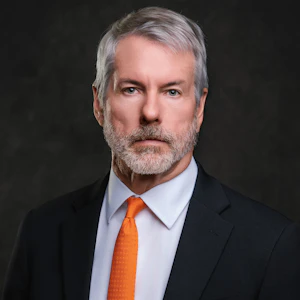
Michael Saylor
Michael Saylor
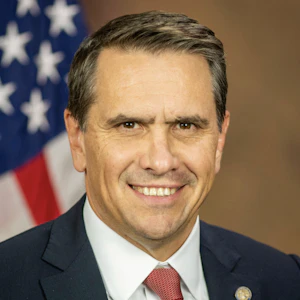
Todd Blanche
Todd Blanche
Biography of Deputy Attorney General Todd Blanche
The Honorable Todd Blanche is the 40th Deputy Attorney General of the United States, overseeing the work of the 115,000 dedicated employees who fulfill the Department of Justice’s mission at Main Justice, the FBI, DEA, U.S. Marshals, ATF, and 93 U.S. Attorney’s Offices.
Todd began his career at the Department where he served for over fifteen years in a variety of capacities, including as a contractor, a paralegal in the Criminal Division, and at the United States Attorney’s office for the Southern District of New York where he eventually became an AUSA and later a supervisor.
After leaving the Department, Todd worked as a criminal defense attorney that included representing President Donald Trump in three of the criminal cases brought against him in 2023 and 2024.
Following President Trump’s historic return to the White House, the President appointed Todd to work alongside Attorney General Pam Bondi to make America safe again. At the DOJ, Todd is working tirelessly to implement President Trump’s priorities that include confronting illegal protecting American businesses from fraud.
Todd has been married to his wonderful wife Kristine for nearly thirty years, is a father and grandfather.

Paul Atkins
Paul Atkins
Prior to returning to the SEC, Chairman Atkins was most recently chief executive of Patomak Global Partners, a company he founded in 2009. Chairman Atkins helped lead efforts to develop best practices for the digital asset sector. He served as an independent director and non-executive chairman of the board of BATS Global Markets, Inc. from 2012 to 2015.
Chairman Atkins was appointed by President George W. Bush to serve as a Commissioner of the SEC from 2002 to 2008. During his tenure, he advocated for transparency, consistency, and the use of cost-benefit analysis at the agency. Chairman Atkins also represented the SEC at meetings of the President’s Working Group on Financial Markets and the U.S.-EU Transatlantic Economic Council. From 2009 to 2010, he was appointed a member of the Congressional Oversight Panel for the Troubled Asset Relief Program.
Before serving as an SEC Commissioner, Chairman Atkins was a consultant on securities and investment management industry matters, especially regarding issues of strategy, regulatory compliance, risk management, new product development, and organizational control.
From 1990 to 1994, Chairman Atkins served on the staff of two chairmen of the SEC, Richard C. Breeden and Arthur Levitt, ultimately as chief of staff and counselor, respectively. He received the SEC’s 1992 Law and Policy Award for work regarding corporate governance matters.
Chairman Atkins began his career as a lawyer in New York, focusing on a wide range of corporate transactions for U.S. and foreign clients, including public and private securities offerings and mergers and acquisitions. He was resident for 2½ years in his firm's Paris office and admitted as conseil juridique in France.
A member of the New York and Florida bars, Chairman Atkins received his J.D. from Vanderbilt University School of Law in 1983 and was Senior Student Writing Editor of the Vanderbilt Law Review. He received his A.B., Phi Beta Kappa, from Wofford College in 1980.
Originally from Lillington, North Carolina, Chairman Atkins grew up in Tampa, Florida. He and his wife Sarah have three sons.

Mike Selig
Mike Selig
Chairman Selig brings to the role deep public and private sector experience working with a wide range of stakeholders across agriculture, energy, financial, and digital asset industries, which rely upon and operate in CFTC-regulated markets.
Prior to his leadership at the CFTC, Chairman Selig most recently served as chief counsel of the Securities and Exchange Commission’s Crypto Task Force and senior advisor to SEC Chairman Paul S. Atkins. In this role, Chairman Selig helped to develop a clear regulatory framework for digital asset securities markets, harmonize the SEC and CFTC regulatory regimes, modernize the agency’s rules to reflect new and emerging technologies, and put an end to regulation by enforcement. He also participated in the President’s Working Group on Digital Asset Markets and contributed to its report on “Strengthening American Leadership in Digital Financial Technology.”
Prior to government service, Chairman Selig was a partner at an international law firm, focusing on derivatives and securities regulatory matters. During his years in private practice, he represented a broad range of clients subject to regulation by the CFTC, including commercial end users, futures commission merchants, commodity trading advisors, swap dealers, designated contract markets, derivatives clearing organizations, and digital asset firms. Chairman Selig advised clients on compliance with the Commodity Exchange Act and the CFTC’s rules and regulations thereunder, including in connection with registration applications and obligations, enforcement matters, and complex transactions.
Chairman Selig earned his law degree from The George Washington University Law School and was articles editor of The George Washington Law Review. He received his undergraduate degree from Florida State University.

David Bailey
David Bailey

Eric Trump
Eric Trump
Mr. Trump also serves as Executive Vice President of The Trump Organization, where he oversees the global management and operations of the Trump family’s extensive real estate portfolio. This includes Trump Hotels, Trump Golf, commercial and residential real estate, Trump Estates, and Trump Winery. Known for his hands-on leadership and strong market instincts, he has played a key role in expanding the company’s presence across major U.S. and international markets.
A globally recognized business leader and public figure, Mr. Trump is a prominent advocate for Bitcoin and decentralized finance. He is a co-founder of World Liberty Financial, a decentralized finance (DeFi) platform, and serves on the Board of Advisors of Metaplanet, Japan’s largest corporate holder of Bitcoin.
Beyond his business activities, Mr. Trump has helped raise more than $50 million for St. Jude Children’s Research Hospital in the fight against pediatric cancer, a philanthropic mission he began at age 21.
Mr. Trump earned a degree in Finance and Management from Georgetown University. He currently resides in Florida with his wife, Lara, and their two children. He is also the author of Under Siege, his memoir published in October 2025.
Jack Mallers
Jack Mallers
Cynthia Lummis
Cynthia Lummis
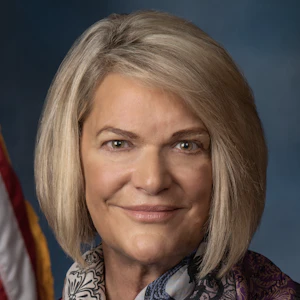
As the first-ever Chair of the Senate Banking Subcommittee on Digital Assets, Senator Lummis is the architect of the legislative framework shaping America's digital asset future. She introduced the landmark Lummis-Gillibrand Responsible Financial Innovation Act, the first comprehensive bipartisan crypto regulatory framework in Senate history. She co-authored the GENIUS Act — the first federal stablecoin law ever enacted — and introduced the BITCOIN Act, which would establish a U.S. strategic Bitcoin reserve of up to one million BTC. She is leading the Clarity Act, which will bring long-overdue regulatory certainty to the digital asset industry. She has also championed digital asset tax reform, including a de minimis exemption for small transactions and equal tax treatment for miners and stakers.
Known as Congress' "Crypto Queen," Senator Lummis represents Wyoming — a state she has helped build into one of the most digital asset-friendly regulatory environments in the nation. Before serving in the Senate, she served 14 years in the Wyoming Legislature, eight years as Wyoming State Treasurer, and eight years in the U.S. House. She is a three-time graduate of the University of Wyoming.
Her work represents a crucial bridge between traditional financial systems and the emerging digital economy, ensuring America leads the world in financial innovation while protecting the individual freedoms that define it.

Adam Back
Adam Back

Amy Oldenburg
Amy Oldenburg
David Marcus
David Marcus

Matt Schultz
Matt Schultz
Fred Thiel
Fred Thiel
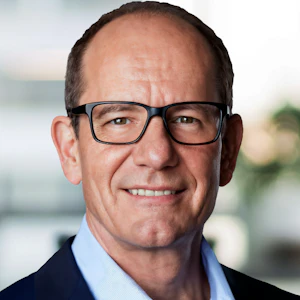
Throughout his career, Mr. Thiel has consistently driven rapid growth and created substantial shareholder value. Prior to MARA, Mr. Thiel served as the CEO of two other public companies, Local Corporation (NASDAQ: LOCM) and Lantronix, Inc (NASDAQ: LTRX). He has successfully raised billions in equity and debt through private and public offerings, led companies through IPOs, executed high-value exits to strategic and financial acquirers, and implemented effective M&A and roll-up strategies.
Mr. Thiel attended the Stockholm School of Economics and executive classes at Harvard Business School, and is fluent in English, Spanish, Swedish, and French. Mr. Thiel is the Chairman of the Board for Oden Technology, Inc. and is active in Young Presidents’ Organization where he has led initiatives in both the FinTech and Technology Networks.
A recognized voice in the industry, Fred frequently shares his insights on energy and technology with major media outlets like Bloomberg TV, CNBC, and FOX Business, contributing to vital discussions about the future of these sectors.
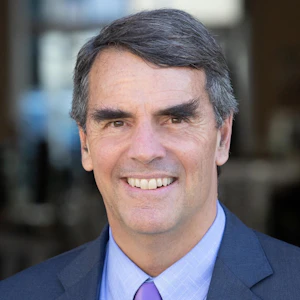
Tim Draper
Tim Draper
He is a supporter and global thought leader for entrepreneurs everywhere, and is a leading spokesperson for Bitcoin and decentralization, having won the Bitcoin US Marshall’s auction in 2014, invested in over 50 crypto companies, and led investments in Coinbase, Ledger, Tezos, and Bancor, among others.

Afroman
Afroman