Portfolio Construction & Financial Products with Bitcoin at the Core
Speakers/Moderators

Tim Savage
Tim Savage
Prior to founding Ion, Tim practiced as a CPA for 14 years. He was an accomplished Tax Partner at Weaver and was highly successful in building the firm’s blockchain and digital assets practice, advising digital asset investment funds, financial services companies, and bitcoin miners. Earlier in his career, he spent 3 years at Ernst & Young, working with global financial enterprises and ranked as an elite Senior at the firm.

Dhruv Patel
Dhruv Patel
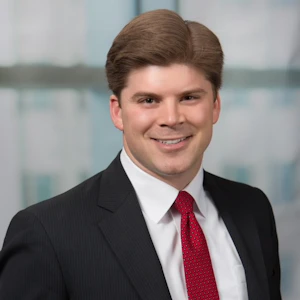
Sam Konigsberg
Sam Konigsberg
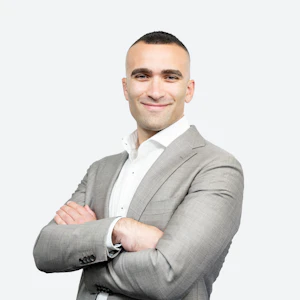
Bisher Khudeira
Bisher Khudeira
At Stormrake, Bisher drives execution quality, liquidity access, and custody governance by helping clients buy, sell, and safekeep Bitcoin with clean settlement and disciplined risk.
Session
Overview
This discussion focused on how Bitcoin is being integrated into modern portfolio construction and financial products, including ETFs, lending markets, broker platforms, and collateralized credit. Tim Savage moderated a conversation with Dhruv Patel of Arch Lending, Sam Konigsberg of BlackRock, and Bisher Khudeira of Stormrake.
The panel explored Bitcoin ETF adoption among wealth managers, the role of education in moving investors from zero allocation to modest portfolio exposure, and how products like IBIT have helped financial intermediaries access Bitcoin through familiar infrastructure. The speakers also discussed Bitcoin-backed lending, including how individuals and institutions use Bitcoin as collateral for liquidity while maintaining long-term exposure.
A recurring theme was the importance of regulatory clarity, especially around Bitcoin’s treatment as collateral and the potential impact of a de minimis tax exemption for everyday payments. The conversation also compared U.S. and Australian market development, highlighting the greater depth of Bitcoin financial products and competition in the United States.
Overall, the session framed Bitcoin as a maturing asset class with expanding use cases across wealth management, corporate finance, lending, and settlement. The speakers emphasized education, liquidity, product innovation, and clearer policy as key drivers for broader institutional and retail adoption.
All right. Good morning, everyone. It's wonderful to see your beautiful faces here. I'm excited to spend the next 30 minutes on this panel with our distinguished panelists. Why don't we kick off with introductions? Dhruv, would you like to go first?
Yeah. Hey, everyone. Dhruv Patel, co-founder and CEO of Arch Lending. We provide Bitcoin-backed loans to individuals and institutions.
Sam Konigsberg. I work on the Bitcoin ETF team at BlackRock.
Bisher Khudeira, co-founder at Stormrake. We're a digital asset broker based out of Melbourne.
And I am your moderator, Tim Savage. I run Ion Strategies, which is a Bitcoin-focused hedge fund.
Okay, let's kick it off here with you, Sam. You educate advisors and institutions on the unique aspects of Bitcoin. You've been in Bitcoin for at least a decade now, so you're very knowledgeable. Can you walk us through how far we've come since BlackRock launched its ETF in the last couple of years? What's changed, and how has it opened new doors?
Yeah. Thank you, and thank you Bitcoin 2026 for having us here. A lot has changed over the last two years. I think what I'm most proud of, and what the firm is most proud of, is that we meet investors where they're at. There are many financial intermediaries that wouldn't want the responsibility of a bearer asset. So to be able to deliver access to Bitcoin in a liquid ETF wrapper that they're comfortable with and familiar with has unlocked a tremendous amount of doors.
The ETF now is upwards of $60 billion. Over the last two years, a tremendous amount has changed. The misconception is that when the SEC approves an ETF, it is now approved everywhere for everyone, but that's not the case in the wealth management industry. When we launched this in January 2024, it was basically blocked everywhere: every wirehouse, every independent, and even some major RIAs.
Then you get to work. You work with the home office due diligence teams at these various firms, walk through the ETF structure, and walk through what Bitcoin is. They have to go through their due diligence process. You basically go from fully blocked, to them allowing their clients to ask for Bitcoin, to advisors being able to talk about Bitcoin to their clients but still needing their permission, to advisors being able to invest on behalf of their clients in a discretionary manner, to home offices saying, “We think you should allocate X percentage.” Then the final boss is the home offices at these various wealth managers actually putting it into their home office model.
Earlier this month, we saw the first major wealth manager add IBIT at a 2% allocation to their home office ETF model, which was significant. We've made a lot of progress, but even today, we've still got a long, long way to go. Wealth managers in the U.S. only make up 20% of IBIT flows, which is only $12 billion. We're excited to continue to invest in that education and propagating Bitcoin to the wealth management industry.
That's been amazing to see, especially since 2024. It was a very noticeable shift in the industry, with Bitcoin going mainstream across traditional finance, and it's been really pleasing to see the progress so far.
Pivoting to you, Dhruv. In just a short span of time, we've seen Bitcoin shift from being pushed away by traditional finance and financial service providers to now being adopted and collateralized by some of the most respected financial institutions in the world. Tell us about your typical clients who are using Bitcoin as collateral, how you go about structuring products, and how it benefits them.
Yeah. We service a range of clients, from individuals to institutions. On the individual side, the use cases range widely. Many people borrow to make other investments, buy a house, or diversify into other assets that they are interested in. Many folks are also using it to handle life expenses that come up, whether it's a medical bill or a tax bill. There's also a general segment of people who are just living off their Bitcoin, so they're using it for their day-to-day lifestyle.
On the institutional side, we service small to medium businesses throughout the U.S. that have Bitcoin on their balance sheet, as well as publicly listed miners and treasury companies. Those use cases are very different. Many of them are borrowing either to fund expansion for their businesses or to cover payroll or other expenses that come up. I would say those are benefiting corporate expansion plans or growth plans, or covering cyclical shortfalls that arise.
Bisher, Australia is your home, and you've run an incredibly successful FX company. Congratulations on your new launch yesterday in Dallas, expanding into the U.S. With your background in traditional FX brokerage, how are Australian investors, and by extension now U.S. investors, treating Bitcoin in their portfolios compared to the traditional FX side of things?
It's a fantastic question, because we've seen here in America that your markets for Bitcoin are far more developed. Your digital asset acceptance is far ahead of where we're at. I like to say that the Australian laid-back attitude kind of works against us in that way.
Here, you've got so many different ways that people access Bitcoin. Of course, you've got ETFs. There are people employing it through mining and through derivatives markets. Whereas within Australia, it's almost just seen as a speculative asset. Only recently, as of April 1, did we pass our own digital asset framework bill, which is our equivalent of what the Americans would be looking for with the Clarity Act.
Up until that point, we were an unregulated asset class. That made transacting in the space extremely difficult, and it made Australian banks cautious. If you remember a few years ago, there was Operation Choke Point, which made transferring from your bank or your institution extremely difficult when coming across into a Bitcoin platform or a crypto platform. We've been experiencing that. We had over $9 million worth of deposits blocked in the first quarter of 2026.
There is still a long way to go before Bitcoin in Australia is as mainstream and as accepted as it is here in America. We'd love to bridge that gap. That's why we started our operation in Dallas just yesterday. You have to come to the epicenter of where finance and capital markets are moving toward, and that's definitely here in America.
Foreign exchange markets are adapting rapidly because of stablecoins. I'm being cognizant that I'm at a Bitcoin conference, so I'm not going to pivot the conversation to stablecoins. But they're a really interesting layer that's being added in there, and seeing Bitcoin as a base money that people can settle toward is fantastic to see as well. I would love to see the Aussies step up their game and start investing as bullishly and aggressively as the Americans are doing at the moment. That would be great.
I'd love to see it too. Even five years ago, and especially ten years ago, to think of all the different ways Bitcoin would be adopted, collateralized, and built into traditional financial infrastructure would have been kind of a dream. It's mind-boggling to see the progress and how fast the adoption is occurring.
Sam, you and I were talking this morning at breakfast about IBIT, allocations, and adoption. With IBIT being one of the most successful ETFs and Bitcoin vehicles, you mentioned 2%. Do you see a greater appetite for larger allocations? What is the timeline for getting more Bitcoin exposure into the mainstream portfolio?
Yeah, it's a great question. We're working hard. I think one of the reasons why IBIT was so successful was because iShares, the ETF brand at BlackRock, has decades of building trust with financial intermediaries. They know us for our S&P 500 ETFs and our bond ETFs.
We start with education. I'm sure everybody on this stage, and even in this room, starts with education. You start with the fundamentals, because we know how volatile Bitcoin can be. Without conviction, you're going to have a very challenged behavioral investing experience. We spend a lot of time working with financial intermediaries, financial advisors, and home offices on Bitcoin and blockchain fundamentals.
Our deck shows a 2% allocation to Bitcoin from a 60/40 portfolio, rebalanced quarterly. Over the last ten years, that added about 200 basis points of total return, but it kept the risk profile the same. Many wealth advisors, when they're managing money on behalf of clients, do a wealth plan, conduct questionnaires, and find one of five, six, or seven risk profiles that the client is at, and then they allocate there. For us to be able to help them add Bitcoin without changing the risk profile is significant, whether it's for an institution with a very specific investment policy statement or a small business owner sitting in Atlanta, Georgia.
What I'm encouraged by is that the home offices that, two years ago, were hesitant to add IBIT now are showing recommendations of 1% to 4%, which, to financial advisors coming off zero, is actually a big deal. Our ETF is now $60 billion. $12 billion of that is with the wealth management industry, and that industry is $30 trillion. So we're continuing to invest in them and in education.
I think if we can get most investors off zero, which we're not there yet, and continue to bring these home offices along that adoption curve, that's going to happen with time. All ETFs are still blocked at some of these major firms. The adoption is really one-directional. No one has adopted or approved it to a certain point and then gone backward. Everything is moving in this adoption and approval direction, so all those things are encouraging. Other firms are doing great work educating in the space as well.
That's amazing. My inner Bitcoin maxi hopes that within two years BlackRock will recommend a 90% allocation.
Dhruv, can you walk us through how Arch Lending looks at your clients' ability to borrow and collateralize their Bitcoin? How do your interests as a company align with theirs? Walk us through the mechanics of what it actually looks like if you wanted to collateralize Bitcoin.
Yeah. I think credit really legitimizes any sort of asset. If you look at it, when people own homes or stocks and need to tap into additional liquidity, they're able to take out a HELOC or borrow against those stocks. This is really enabling people to do the same thing with Bitcoin.
What it allows you to do is use Bitcoin as collateral and borrow against it at whatever percentage you feel comfortable with. We allow certain LTV thresholds. That enables people to get liquidity for a variety of reasons that I mentioned earlier, but continue to benefit from the upside of Bitcoin because, as they pay off their loan, they receive their Bitcoin back.
That was really the biggest unlock: allowing people to maintain appreciation and the benefit of the ownership of Bitcoin that they've accumulated, while continuing to access cash as people need it, given lifestyle changes that come up, and really just live the day-to-day life that they want.
Just to follow up on that, with the recent presidential administration's directive to allow Bitcoin to be an official collateralized asset, have you seen that catalyze your own clientele and their desire to use Bitcoin as collateral?
Yeah, I think it's twofold. We work with clients directly, as well as many wealth managers and RIAs throughout the country. As people like Sam are doing the good work on the educational side, and more and more individuals and businesses have their allocations go from zero to something meaningful, naturally the need arises to access cash as more and more of your wealth is in an asset like Bitcoin.
All of that is a catalyst that we're seeing: the price of Bitcoin going up and more people having larger amounts of wealth in it, as well as further adoption creating the need for lending products around it.
Bisher, tapping into the U.S. operations, you touched on this a few minutes ago. What lessons are you taking from back home as you grow and expand into the U.S.? Do you think that's going to be a different perspective, given a different set of compliance rules, regulations, and regulatory environment compared to back home?
Yeah. One thing I've been noticing, particularly here in America, is that it's very much a relationship-driven economy. Back home in Australia, people don't like being sold to. They want to be able to make their own decisions. They don't want to hear out a pitch or see what Bitcoin can do for them. They want to be justified in coming to the market themselves. Whereas here in America, people are willing to listen, willing to come out, hear you out, and give you 30 seconds of their time to see what Bitcoin can do for their portfolio.
It's been really interesting seeing that transition coming over here. More importantly, the U.S. market is so competitive. In Australia, there are probably three or four operators that you're really going up against at any one time. Here, it's a super-saturated market, and that actually benefits the end investor, the end consumer, and the end user, because they have so many options for how they can express their position, manage their Bitcoin wealth, and access Bitcoin in the first place. It makes the whole standard lift to a much higher level.
Over time, anybody who can thrive in America and provide really good access to Bitcoin, whether that be via services, ETFs, lending, spot access, or whatever it may be, those businesses are going to be the more competitive players moving forward within the financial markets. You hear this phrase a lot, “the future of finance.” You see powerhouse names like Goldman Sachs and JP Morgan. They got started as small trading shops that had a niche and an edge they were able to take advantage of, and then they became these massive monolithic institutions that have dominated global finance for the last 50 years. But they didn't start there.
That's where I believe a lot of the players, whether it be ourselves or many of the other companies here today, are the ones that are going to be powering ahead and becoming major global financial players moving forward as Bitcoin absorbs more and more capital from the available pool of allocation. If you compare it to, for example, the global bond market sitting at $300 trillion, or the U.S. debt market sitting at $100 trillion, the amount of capital that flows through there is substantial. I imagine that Bitcoin as a settlement layer will eventually have more money markets move over to Bitcoin.
In that way, you see a lot of interesting products being issued, including preferred equity options and direct investments that can help bolster people's portfolios. That's what I would like to see over the next couple of years, especially competing here in America: American-native firms starting to take Bitcoin and make it a genuine global powerhouse asset that should empower a lot of people along the way.
That's amazing. It's interesting to see the competition, because on one hand, everyone wants Bitcoin to thrive here and we want to grow the pie. Sam, going a little bit off script, BlackRock's Bitcoin products have been the most successful among the recent products that have been launched, and some of the most successful ETFs that BlackRock has ever launched. Do you see other products coming online as competition, and is it healthy to have multiple options and selections available to consumers?
I think it's extremely healthy. What meritocracy makes, our market makes. Capitalism. Even on this stage, we are all meeting investors where they are on their specific journeys with their specific needs. Bisher might be a better phone call for certain clients, and Dhruv is meeting specific needs.
The more competition, the better. We love to compete. That's just going to make everybody better and grow the pie, because when it comes to the average financial intermediary's knowledge of the fundamentals, we need as many hands lifting as possible. They want it. They want people to come in, like Bisher said. They're open to the ideas. They're getting asked by their clients. IBIT or Bitcoin's price is on CNBC four times an hour. The third time a financial advisor gets a phone call from a client saying, “What about Bitcoin?” they need someone to call. We hope it's BlackRock, but there are many others that are qualified to pick up the phone and give them answers on what it is. So the more competition and the more innovation, the better.
Wonderful. In our last few minutes here, I just want to go down the line, starting with you, Dhruv. Looking forward, what is one thing that you're really excited about that you think is going to push Bitcoin to new levels of adoption and new price levels?
For us, one of the things we're focused on is really meeting our clients where they are and developing tailored use cases for them when it comes to their liquidity needs. That ranges whether you're an individual or an institution. If you're an institution, maybe you want more options strategies associated with your loan, as well as hedging strategies. If you're an individual, we have some products that are tailor-built toward specific use cases.
Some people are able to borrow and use those borrowed proceeds to buy mining equipment and replicate an income stream in Bitcoin. Some people are able to borrow perpetually. What we do is develop a strategy where you borrow conservatively against your Bitcoin, and you can use that every year to emulate another income stream if you're retired or don't have a strong W-2. We continue through more of these tailored use cases, combining Bitcoin with real estate and other asset classes so that it really meets all of our clients' needs where they are. That's our main focus.
Same question to you, Bisher. What is one thing that's exciting to you that you think is going to help push Bitcoin to that next level?
It will be a two-pronged approach. One will be regulatory clarity. For example, there was a wonderful breakfast this morning talking about the de minimis tax exemption on Bitcoin, so it can be utilized as a currency and buying a cup of coffee in the morning doesn't trigger a tax event. That would be huge.
I know there's a lot of talk about applying a minimum tax exemption on stablecoins because they are intended to hold their value and peg it against the USD. But I think if we can apply that same framework to Bitcoin and stay true to the original white paper, where it's peer-to-peer electronic cash, that's going to drive it on both the adoption side and the regulatory side.
Whether that be the de minimis tax exemption or the Clarity Act coming in later on, that will then drive adoption. Institutions will be able to come in with clarity and size their investments in a much more meaningful manner. For the everyday individual investor, having the ability to know how their taxes are going to be treated when they're using their Bitcoin should drive adoption significantly higher and drive network usage up and up.
Therefore, Bitcoin miners are going to feel a little bit more inclined to allocate their computing power toward Bitcoin mining, because obviously data centers are going to be a competing interest as well. I feel that is a very positive reflexive loop that should be coming in within the next three to six months: de minimis tax exemption feeding into regulatory clarity, feeding into adoption, which then drives up network usage and makes miner fees a bit more attractive. That's what I'm expecting over the next six months that will be very positive.
You're speaking my language. De minimis is a huge unlock. As soon as you can start getting that medium of exchange really proliferating, it's absolutely huge. Sam, same question to you.
I think further education. Every day, the largest asset manager in the world is working with financial intermediaries to educate across all asset classes, and that includes Bitcoin. One of the things we're most proud of is that we are down 35% or so from the highs in October, and we've seen $2.7 billion net come into the ETF in a down market. That doesn't happen. When markets are down, flows are negative.
To be in a bear market with an ETF that's trading $2 billion a day on a penny or two bid-ask spread, which is similar to a stock in the Dow, and to have the options market now thriving and growing around the ETF, which is known to many professional investors, that opens the door for more things that we can do. We can deliver more defined outcomes for various investors.
We've filed for an ETF that will launch later this year. If you are creating defined outcomes with Bitcoin as the base layer, that is just going to encourage more and more traditional investors, who tend to be wealthier and older, to at least consider what the underlying is that is driving this very attractive outcome.
We're excited for the growth of the options, the growth of liquidity, and the growth of the adoption curve across wealth managers and institutions. We have 13F filings that we check quarterly. We can see who's using it. We're excited for new entrants to come to the market and bring new ideas. Ultimately, I think continuing to educate on what it is and seeing the growth is key. Liquidity begets liquidity, and we're excited to continue to build in this market.
Really exciting to hear. Personally, I think we live in an interesting time in the world where there's a lot of volatility and uncertainty. As Bitcoin continues to get adopted, my hope, and something that excites me, is the idea that the general population gains a stronger understanding of history and monetary economics. I think Bitcoin has that to offer. Everyone here in this room is probably well versed in this already, otherwise you might not be here. But for the general person to gain an understanding of where we are monetarily in the world, that education is very powerful. I hope to see that continue to proliferate.
We are out of time. Thank you, gentlemen, for your time and for being on this panel with me. And thank you, everyone in the audience.
Thank you, Tim.
Similar
Sessions
Portfolio Construction & Financial Products with Bitcoin at the Core
Tim Savage
Tim Savage
Prior to founding Ion, Tim practiced as a CPA for 14 years. He was an accomplished Tax Partner at Weaver and was highly successful in building the firm’s blockchain and digital assets practice, advising digital asset investment funds, financial services companies, and bitcoin miners. Earlier in his career, he spent 3 years at Ernst & Young, working with global financial enterprises and ranked as an elite Senior at the firm.
Dhruv Patel
Dhruv Patel
Sam Konigsberg
Sam Konigsberg
Bisher Khudeira
Bisher Khudeira
At Stormrake, Bisher drives execution quality, liquidity access, and custody governance by helping clients buy, sell, and safekeep Bitcoin with clean settlement and disciplined risk.
Portfolio Construction & Financial Products with Bitcoin at the Core
Speakers/Moderators
Tim Savage
Tim Savage
Prior to founding Ion, Tim practiced as a CPA for 14 years. He was an accomplished Tax Partner at Weaver and was highly successful in building the firm’s blockchain and digital assets practice, advising digital asset investment funds, financial services companies, and bitcoin miners. Earlier in his career, he spent 3 years at Ernst & Young, working with global financial enterprises and ranked as an elite Senior at the firm.
Dhruv Patel
Dhruv Patel
Sam Konigsberg
Sam Konigsberg
Bisher Khudeira
Bisher Khudeira
At Stormrake, Bisher drives execution quality, liquidity access, and custody governance by helping clients buy, sell, and safekeep Bitcoin with clean settlement and disciplined risk.
Other
Speakers
Michael Saylor
Michael Saylor
Todd Blanche
Todd Blanche
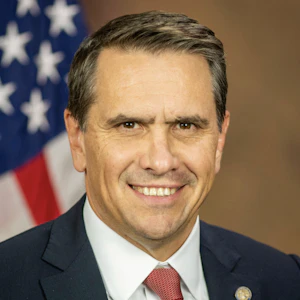
Biography of Deputy Attorney General Todd Blanche
The Honorable Todd Blanche is the 40th Deputy Attorney General of the United States, overseeing the work of the 115,000 dedicated employees who fulfill the Department of Justice’s mission at Main Justice, the FBI, DEA, U.S. Marshals, ATF, and 93 U.S. Attorney’s Offices.
Todd began his career at the Department where he served for over fifteen years in a variety of capacities, including as a contractor, a paralegal in the Criminal Division, and at the United States Attorney’s office for the Southern District of New York where he eventually became an AUSA and later a supervisor.
After leaving the Department, Todd worked as a criminal defense attorney that included representing President Donald Trump in three of the criminal cases brought against him in 2023 and 2024.
Following President Trump’s historic return to the White House, the President appointed Todd to work alongside Attorney General Pam Bondi to make America safe again. At the DOJ, Todd is working tirelessly to implement President Trump’s priorities that include confronting illegal protecting American businesses from fraud.
Todd has been married to his wonderful wife Kristine for nearly thirty years, is a father and grandfather.

Paul Atkins
Paul Atkins
Prior to returning to the SEC, Chairman Atkins was most recently chief executive of Patomak Global Partners, a company he founded in 2009. Chairman Atkins helped lead efforts to develop best practices for the digital asset sector. He served as an independent director and non-executive chairman of the board of BATS Global Markets, Inc. from 2012 to 2015.
Chairman Atkins was appointed by President George W. Bush to serve as a Commissioner of the SEC from 2002 to 2008. During his tenure, he advocated for transparency, consistency, and the use of cost-benefit analysis at the agency. Chairman Atkins also represented the SEC at meetings of the President’s Working Group on Financial Markets and the U.S.-EU Transatlantic Economic Council. From 2009 to 2010, he was appointed a member of the Congressional Oversight Panel for the Troubled Asset Relief Program.
Before serving as an SEC Commissioner, Chairman Atkins was a consultant on securities and investment management industry matters, especially regarding issues of strategy, regulatory compliance, risk management, new product development, and organizational control.
From 1990 to 1994, Chairman Atkins served on the staff of two chairmen of the SEC, Richard C. Breeden and Arthur Levitt, ultimately as chief of staff and counselor, respectively. He received the SEC’s 1992 Law and Policy Award for work regarding corporate governance matters.
Chairman Atkins began his career as a lawyer in New York, focusing on a wide range of corporate transactions for U.S. and foreign clients, including public and private securities offerings and mergers and acquisitions. He was resident for 2½ years in his firm's Paris office and admitted as conseil juridique in France.
A member of the New York and Florida bars, Chairman Atkins received his J.D. from Vanderbilt University School of Law in 1983 and was Senior Student Writing Editor of the Vanderbilt Law Review. He received his A.B., Phi Beta Kappa, from Wofford College in 1980.
Originally from Lillington, North Carolina, Chairman Atkins grew up in Tampa, Florida. He and his wife Sarah have three sons.

Mike Selig
Mike Selig
Chairman Selig brings to the role deep public and private sector experience working with a wide range of stakeholders across agriculture, energy, financial, and digital asset industries, which rely upon and operate in CFTC-regulated markets.
Prior to his leadership at the CFTC, Chairman Selig most recently served as chief counsel of the Securities and Exchange Commission’s Crypto Task Force and senior advisor to SEC Chairman Paul S. Atkins. In this role, Chairman Selig helped to develop a clear regulatory framework for digital asset securities markets, harmonize the SEC and CFTC regulatory regimes, modernize the agency’s rules to reflect new and emerging technologies, and put an end to regulation by enforcement. He also participated in the President’s Working Group on Digital Asset Markets and contributed to its report on “Strengthening American Leadership in Digital Financial Technology.”
Prior to government service, Chairman Selig was a partner at an international law firm, focusing on derivatives and securities regulatory matters. During his years in private practice, he represented a broad range of clients subject to regulation by the CFTC, including commercial end users, futures commission merchants, commodity trading advisors, swap dealers, designated contract markets, derivatives clearing organizations, and digital asset firms. Chairman Selig advised clients on compliance with the Commodity Exchange Act and the CFTC’s rules and regulations thereunder, including in connection with registration applications and obligations, enforcement matters, and complex transactions.
Chairman Selig earned his law degree from The George Washington University Law School and was articles editor of The George Washington Law Review. He received his undergraduate degree from Florida State University.

David Bailey
David Bailey

Eric Trump
Eric Trump
Mr. Trump also serves as Executive Vice President of The Trump Organization, where he oversees the global management and operations of the Trump family’s extensive real estate portfolio. This includes Trump Hotels, Trump Golf, commercial and residential real estate, Trump Estates, and Trump Winery. Known for his hands-on leadership and strong market instincts, he has played a key role in expanding the company’s presence across major U.S. and international markets.
A globally recognized business leader and public figure, Mr. Trump is a prominent advocate for Bitcoin and decentralized finance. He is a co-founder of World Liberty Financial, a decentralized finance (DeFi) platform, and serves on the Board of Advisors of Metaplanet, Japan’s largest corporate holder of Bitcoin.
Beyond his business activities, Mr. Trump has helped raise more than $50 million for St. Jude Children’s Research Hospital in the fight against pediatric cancer, a philanthropic mission he began at age 21.
Mr. Trump earned a degree in Finance and Management from Georgetown University. He currently resides in Florida with his wife, Lara, and their two children. He is also the author of Under Siege, his memoir published in October 2025.

Jack Mallers
Jack Mallers
Cynthia Lummis
Cynthia Lummis
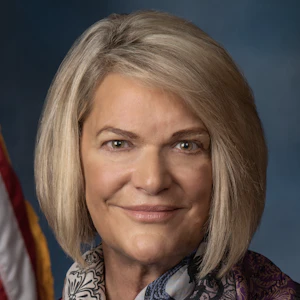
As the first-ever Chair of the Senate Banking Subcommittee on Digital Assets, Senator Lummis is the architect of the legislative framework shaping America's digital asset future. She introduced the landmark Lummis-Gillibrand Responsible Financial Innovation Act, the first comprehensive bipartisan crypto regulatory framework in Senate history. She co-authored the GENIUS Act — the first federal stablecoin law ever enacted — and introduced the BITCOIN Act, which would establish a U.S. strategic Bitcoin reserve of up to one million BTC. She is leading the Clarity Act, which will bring long-overdue regulatory certainty to the digital asset industry. She has also championed digital asset tax reform, including a de minimis exemption for small transactions and equal tax treatment for miners and stakers.
Known as Congress' "Crypto Queen," Senator Lummis represents Wyoming — a state she has helped build into one of the most digital asset-friendly regulatory environments in the nation. Before serving in the Senate, she served 14 years in the Wyoming Legislature, eight years as Wyoming State Treasurer, and eight years in the U.S. House. She is a three-time graduate of the University of Wyoming.
Her work represents a crucial bridge between traditional financial systems and the emerging digital economy, ensuring America leads the world in financial innovation while protecting the individual freedoms that define it.

Adam Back
Adam Back
Amy Oldenburg
Amy Oldenburg
David Marcus
David Marcus

Matt Schultz
Matt Schultz
Fred Thiel
Fred Thiel
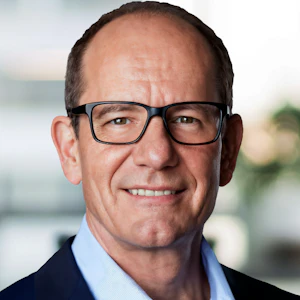
Throughout his career, Mr. Thiel has consistently driven rapid growth and created substantial shareholder value. Prior to MARA, Mr. Thiel served as the CEO of two other public companies, Local Corporation (NASDAQ: LOCM) and Lantronix, Inc (NASDAQ: LTRX). He has successfully raised billions in equity and debt through private and public offerings, led companies through IPOs, executed high-value exits to strategic and financial acquirers, and implemented effective M&A and roll-up strategies.
Mr. Thiel attended the Stockholm School of Economics and executive classes at Harvard Business School, and is fluent in English, Spanish, Swedish, and French. Mr. Thiel is the Chairman of the Board for Oden Technology, Inc. and is active in Young Presidents’ Organization where he has led initiatives in both the FinTech and Technology Networks.
A recognized voice in the industry, Fred frequently shares his insights on energy and technology with major media outlets like Bloomberg TV, CNBC, and FOX Business, contributing to vital discussions about the future of these sectors.
Tim Draper
Tim Draper
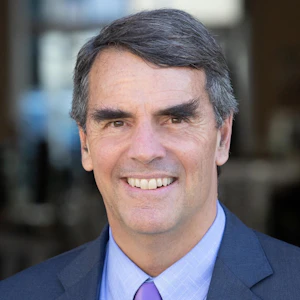
He is a supporter and global thought leader for entrepreneurs everywhere, and is a leading spokesperson for Bitcoin and decentralization, having won the Bitcoin US Marshall’s auction in 2014, invested in over 50 crypto companies, and led investments in Coinbase, Ledger, Tezos, and Bancor, among others.

Afroman
Afroman