The OpCo Edge
Speakers/Moderators

Tracy Hoyos-Lopez
Tracy Hoyos-Lopez
Paul Tarantino
Paul Tarantino
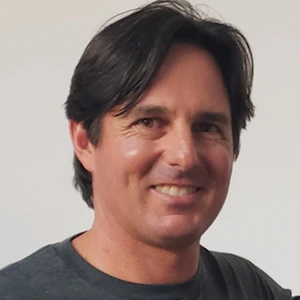
My Bitcoin journey began with personal investment and client fund management, leading to co-founding the Florida Blockchain Business Association and advocating for Bitcoin education. As President & CEO of Byte Federal, I'm dedicated to democratizing Bitcoin access for individuals and businesses, fostering financial inclusivity through innovative Bitcoin financial services.
I'm committed to advancing Bitcoin education and championing seamless integration across diverse sectors. The convergence of Bitcoin with traditional finance, institutional capital, and transformative technologies like Lightning Network and NOSTR represents an exciting future for decentralized finance.
My vision is ushering in the future of finance through Bitcoin's open protocol, leveraging its transformative potential through the innovative products we develop at Byte Federal.
Will Reeves
Will Reeves
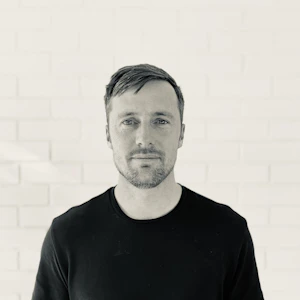
Since founding Fold in 2019, Will has grown the company into a national Bitcoin platform serving households and enterprise partners, distributing tens of millions in bitcoin rewards and building one of the largest Bitcoin treasuries among public operating companies.
His work focuses on integrating Bitcoin into the core of financial life by designing products, capital structures, and corporate strategies that treat Bitcoin as long term financial infrastructure.

Brandon Bailey
Brandon Bailey
Session
Overview
The OpCo Edge examined the shift from viewing Bitcoin treasury companies as passive holders to understanding them as operating businesses that use Bitcoin as a foundation for growth. Tracy Hoyos Lopez of Kraken Institutional moderated the discussion with Will Reeves of Fold, Paul Tarantino of Byte Federal, and Brandon Bailey of Nakamoto.
The panel compared different models for corporate Bitcoin adoption. Fold described building consumer financial products that generate Bitcoin revenue and add to the company treasury. Byte Federal explained how Bitcoin ATMs, wallets, and merchant tools create a transaction-based Bitcoin flywheel, while also serving underbanked users. Nakamoto outlined a vertically integrated model where a Bitcoin treasury funds BTC Inc and UTXO Management to support broader Bitcoin adoption.
The conversation also covered market drawdowns, regulatory scrutiny, fraud prevention, compliance costs, and institutional treasury management. A central theme was that Bitcoin can function not only as a reserve asset, but also as productive financial infrastructure for companies building real products, customer relationships, and Bitcoin-native revenue streams.
Tracy Hoyos Lopez: Oh my God. Hi. You're all here for me. This is so exciting. Welcome. My name is Tracy Hoyos Lopez. I am the head of strategic initiatives for Kraken Institutional, and it is my absolute pleasure to be here today moderating this panel.
I'm going to start with a couple of things. The Bitcoin treasury, or Bitcoin corporate adoption story, has been evolving very quickly. The treasury company narrative did not fail. It proved itself. It laid the foundation. What we're seeing now is what you can build on top of that foundation: companies that do not just hold Bitcoin, but use it as a launchpad for operating businesses that generate real revenue, real products, and real customers. The treasury is the foundation. The operating company is what you build on it.
The companies on this stage are proof that those two things are not in competition. They are sequential. I also want to say something before starting this panel, and that is that some of the most important companies in this space right now are completely misunderstood companies. Part of that is because we have a huge illiteracy problem in this country. I'm guessing people just do not know how to read the things that are published about these companies, what their intent is, what they are building, and what they are doing now.
Companies that have the courage to build a vision that the market has not fully priced yet, that takes a different kind of conviction than simply following a trend. This is a new space. We are in uncharted territory. What these companies are building is not something where we have a roadmap. There is a lot of trial and error. The people on this stage have that conviction, and this is the room that deserves to hear what they are actually building.
This session is called The OpCo Edge, and the conversation today is about what it looks like to build the next layer, and why getting that foundation right makes it possible.
Very quickly, I will introduce our panel. We've got Brandon Bailey from Nakamoto Inc. Brandon is the director of corporate development, the person executing Nakamoto's vision, sourcing acquisitions, structuring deals, and building the platform of Bitcoin-native businesses. His background spans Galaxy Digital, $300 million-plus in real estate at Kettler, and co-founder of Second Gate Advisory.
Paul Tarantino from Byte Federal. About 1,200-plus Bitcoin ATMs in 40-plus states, non-custodial wallets, merchant point-of-sale, and an IPO expected in 2026.
Will Reeves from Fold. Bitcoin rewards credit cards, consumer financial app, enterprise Bitcoin bonus programs, and about 1,527 Bitcoin in its treasury, correct? There you go. I'm pretty good.
All right, let's start with the core idea driving this panel. The thesis is not that treasury companies were wrong. It is that treasury companies are the foundation, and the operating company is what you build on it. They are not competing models. Like I said, it is sequential.
Will, Fold has been explicit that the operating business comes first and Bitcoin accumulates through it. How does that sequence play out in practice, and what does the treasury enable that you could not do without it?
Will Reeves: Thank you, Tracy, for the great intro. Before the Bitcoin treasury company, there was a thing just called the company. The idea of the company is to build products and services that resonate with real people, and they are willing to pay you for that.
Fold saw an opportunity to build a financial services company powered by Bitcoin. How can you accumulate Bitcoin, earn it, use it in your life, and live a life with Bitcoin? We started the company not just to provide that service, but to provide a company that is also able to accumulate Bitcoin efficiently.
Fold earns Bitcoin revenue with every transaction from our customers, just as they are earning Bitcoin for themselves or buying Bitcoin. There is a really great alignment that has always allowed us to provide a great service to our customers, but also grow with them.
How have we accumulated our Bitcoin? We have always considered Bitcoin as our core long-term asset. That has always meant that as a private company, we would fundraise and we would put long-term funds in Bitcoin. Today, Fold essentially has more Bitcoin in our treasury than all the money we have raised in the history of the company.
That is just a crazy statistic for traditional companies to see because things normally do not work like that. The company intends to put our native revenues into Bitcoin, directly into the treasury. Ultimately, we hope we build an incredible company that drives the treasury, not the other way around.
Tracy Hoyos Lopez: Paul, Byte Federal is one of the few companies here that touches Bitcoin at the point of transaction: ATM kiosks, the wallet, the merchant terminal. You are not just holding Bitcoin. You are moving it for real people every day. Does that give you a fundamentally different view of what a Bitcoin operating company needs?
Paul Tarantino: Yeah. For us, all of those products that you mentioned are about giving access to individuals. When I say access, I mean we are working with people who are unbanked, and with 30 million families in the United States that are underbanked, that rely on Bitcoin to have access to digital finance. If you do not have a bank account, you are not shopping on Amazon.
We have merchants and companies that want to be able to accept Bitcoin. Maybe they feel like they missed the boat, but they want to be able to acquire Bitcoin through the selling and operating of their own business, and we are facilitating that.
For us, what that means is that it looks like a Bitcoin flywheel. If we are processing payments for somebody and taking a margin on that, and we are selling it to retail and taking a margin on that, all of that flywheel, as Bitcoin circulates as inventory, gives us our share that goes into our treasury.
From day one, we had to build on Bitcoin. I think this is important for people to understand. We started in late 2016. We could not get a bank account. We could not get a loan. We built the company on $500,000. The company does over $100 million a year in sales and we have no debt. That is because Bitcoin was our business partner. Bitcoin was our line of credit. Bitcoin was our investor. Bitcoin has been the crucial part of our success and our ability to grow our business.
Tracy Hoyos Lopez: What is really interesting to me is that you have a business where, again, you touch Bitcoin at the point of transaction and you manage to do all of these Bitcoin ATMs, and you guys are not in prison.
Will Reeves: Thank you.
Paul Tarantino: That's right. When we started in this space, there was no regulatory clarity. We can question whether there is any clarity today still, but the reality was that banks did not want to work with us. We knew that we had to go above and beyond the compliance infrastructure of traditional BSA, KYC, AML, OFAC checks, the whole ball of wax.
We have gone as far as to make sure anybody over 60 years old gets a live phone call while they are standing at the ATM. We do KYC, AML, OFAC checks, and check your wallet address before you are allowed to do a transaction. We have some of the most stringent compliance policies you can imagine in a segment of the market where everybody looks at you and says, you are the scammer, you are the problem, you are the one charging too much.
If you look at our financials, you will see that it takes a 20% markup on an ATM so that by the time you are doing cash transport with Brinks, Garda, or Loomis, installing the ATMs, paying rent at the ATM location, and paying a third party to verify all your KYC and AML just so you can deposit the cash, if you run a 3% or 4% margin, you have done really well.
A lot of the Bitcoin ATM companies in the space are being hit hard with fines because they are not going that extra level. But the real question should be: why are legislators holding us to a higher standard than anybody else in our industry? Why is somebody allowed to go buy a gift card and use that to send money to a scammer somewhere in the world, or use PayPal or Venmo, or do a fraudulent wire transfer, and all they are getting is a SAR and a CTR, while if you are a Bitcoin ATM company, you risk going to jail?
Tracy Hoyos Lopez: I want to get into the regulatory stuff. Not now, but we are going to come back to it, because I want to get to Brandon here and talk a little bit about Nakamoto.
At the beginning, I said that some of the most important companies in this space are misunderstood companies. I think Nakamoto is one that has suffered some severe consequences in this space for being purely misunderstood, because there is no precedent for what it is building. They are navigating completely uncharted territory. At the same time, I find that one of the most fascinating things. If you are in this industry, you got into this industry because you are into finance, you are into freedom, but you are also into building things that did not exist before.
Nakamoto has built something that has no precedent. You are building a vertically integrated, publicly traded Bitcoin company with a world-class treasury, the most recognized media brand in Bitcoin through BTC Inc and Bitcoin Magazine, and a world-class asset management arm in UTXO Management, all under one roof.
The part I want to focus on is the why behind the structure. The reason is not just the balance sheet. It is supposed to be the engine that funds and grows these operating businesses. Brandon, walk us through how that actually works in practice. How does the Nakamoto treasury create fuel for BTC Inc and UTXO to grow, and what does that flywheel look like when it is fully running?
Brandon Bailey: Thank you, Tracy. I think that is a great question, and I really appreciate your framing. One of the reasons why I appreciate that framing is because I think you almost have to take a step back. When we think about what a Bitcoin treasury company even is, I think there is some segmentation within that vertical that a lot of people are missing.
There are really three primary buckets that we use to view companies that hold Bitcoin on the balance sheet. The first bucket is companies that have Bitcoin on the balance sheet purely as a reserve asset. Examples of that would be Tesla, or maybe Block, where they have an operating company that is the primary driver or focal point, and Bitcoin is simply used as a store of value or digital gold to protect from monetary debasement.
The second bucket is what most people think of when they hear the term Bitcoin treasury company. That is a company that has a treasury where the name of the game is accumulating as much Bitcoin as possible. They are primarily focused on growing Bitcoin per share through financial engineering or providing financial services to ultimately grow their Bitcoin treasury. The key point there is that the treasury really is the product they are offering. They may have an operating company, but it really pales in comparison to the Bitcoin treasury. That is the name of their game.
The third vertical is where we sit, which is that we are this vertically integrated Bitcoin operating company. We do have a Bitcoin treasury, but the Bitcoin treasury is really the engine that fuels the Bitcoin operating companies. For us, our biggest driver and motivation behind Nakamoto is the advancement of Bitcoin adoption. We want to see a world in which hyperbitcoinization is actualized.
We use our treasury to invest in our operating companies, BTC Inc and UTXO, so that we can accelerate Bitcoin adoption. Our treasury serves as the source of capital by which we can earn a Bitcoin-denominated return, because these businesses are Bitcoin-native and correlated with Bitcoin, but also continue to build a strategic moat to help strengthen the Bitcoin economy.
Tracy Hoyos Lopez: That is really interesting. Adam Back said when we were in Hong Kong that every company will become a Bitcoin treasury company. I could not disagree more. I think that is actually not true. I think a lot of people mistake what a treasury company is. You guys can disagree with me or agree with me. I would love to debate.
Bitcoin treasury companies have been misunderstood to mean, okay, we take Bitcoin, we hold Bitcoin, we do not touch it, we just hold it. The truth is that who sits with the Bitcoin treasury company is a strategy was Michael Saylor. He created a financial services company, a company that actually put its Bitcoin to work aside from the operating business that they had.
This expectation to just hold Bitcoin and do nothing with it is kind of silly, right? You guys are building companies, you are supporting companies, and you are investing in operating companies around the world. You guys are at every point of a transaction. You actually went up in value and generated more during the worst times, proving that you do not just hold the asset. You put it to work.
Let me transition into this. Bitcoin dropped from $124,000 to $60,000 in February. For pure companies, that is an existential stress test. For operating companies, it is a different kind of test. Your customer slows down, your revenue slows, but your infrastructure is still standing.
Will, Fold actually grew revenue 34% in 2025 despite that drawdown. What held up, and what did not?
Will Reeves: With Bitcoin, we often focus on number go up, the price. But behind the scenes, a whole other dynamic is really happening, especially for a company operating in Bitcoin. Bitcoin is one of the fastest-growing financial networks ever. It has one of the most viral brands, and it is moving deeper and deeper into the personal lives of regular people.
When I think back about this year, yes, we dropped 50%. But I also look at this year and see that Fold partnered with the best payments and credit providers, with Stripe and Visa, to launch our Bitcoin Rewards credit card. We partnered with Steak 'n Shake to give all of their employees Bitcoin bonuses this year on a recurring basis. We put Bitcoin on the shelves of Kroger around the country.
On almost every metric except the Bitcoin price, it was an incredible year. That is really indicative of the true adoption and the true signal of how Bitcoin is continuing to change the world, regardless of price. Price will catch up to that reality. Bitcoin, Bitcoiners, and Bitcoin companies continue to march on even when price is down, and that is when some of the best work happens. I think that is reflected in our results.
Tracy Hoyos Lopez: Paul, you operate in a space, like we said, Bitcoin ATMs, that is under real regulatory scrutiny now from FinCEN, Senator Lummis, state attorneys general. You have been very vocal about the right way to regulate without eliminating access. How do you build a durable operating business in that environment? And keeping in mind that, as we have discussed before, the regulatory environment for you is actually significantly more hostile now than it was during the Biden administration, correct?
Paul Tarantino: Yes, 100%.
Tracy Hoyos Lopez: Right. Keep it to one minute.
Paul Tarantino: Okay, I'll try.
For us, what we have been doing is trying to educate legislators. It is all about education. Legislators have been told, or believe, that Bitcoin and Bitcoin operating companies like ours are the problem, that we are the scam. So we built an entire website called Byte Federal Fraud Prevention. Please visit it and check it out. All the data is there. All the sources are there.
The reality is that these scams start in the telecom and voice over IP providers. You can get access to a phone number and you can spoof a name and content for $100. They have done a number of things to try to regulate that space. None of it has worked. They have a rating system. You can scrub that rating off by going through the old copper networks, and you can place calls all over the United States.
There were 52.5 billion robocalls last year in the United States. The reality is, when they get somebody on the hook for a scam, they then drive them to the bank to withdraw cash. The banks are not the target of this attack, even though that money is coming out of those banks. SARs are being filed, but that is just a report. They are doing nothing to prevent that scam from taking place.
Then those dollars go and buy gift cards. They go into wire fraud. They are sent to PayPal, Venmo, you name it, and then finally to a Bitcoin ATM. When we get those customers, there are fraud prevention stickers all over our ATMs. There are fraud prevention windows. There are terms of service you have to select and go through. We move the buttons so that you cannot be coached on what buttons to touch.
If you are over 60, you are going to get a live phone call. That live phone call is going to talk through all the known scams with you to make sure that you are aware and to make sure that this is for yourself. This is only being purchased for investment purposes. You are not sending it to anyone else. What wallet are you using? If you do not know your wallet, there is a red flag. What does the wallet look like? What is the color? If you do not know what the color is, there is another red flag.
Then we ask, are you 100% sure that you are not being scammed today? Among people over 60 that we have done this routine with, we have blocked 84% of them from doing a transaction. We are the only financial institution in the entire chain that stops the transaction before the scam can be implemented. We have recorded calls that we have played for law enforcement where our customer support is saying, take that money back and deposit it back in your bank.
Tracy Hoyos Lopez: That is actually quite fascinating.
Paul Tarantino: If you talk to any legislator in this world, Republican or Democrat, oftentimes we are told that we are the problem.
Tracy Hoyos Lopez: I just want to remind everyone that Bitcoin is not political. Bitcoin is a tool for freedom, and it is actually built on the tenets of the United States Constitution. I very much stand by that.
Very quickly, I want to bring an institutional perspective here, because this is where a lot of these companies intersect: custody, lending, yield strategies, treasury management. At Kraken, we work with companies at every stage of building a Bitcoin strategy, from a first custody account to structured lending facilities.
What I find most interesting is when a company uses Bitcoin not just as a reserve asset, but as active financial infrastructure. Brandon, Nakamoto's $210 million Bitcoin-backed facility with Kraken is a great example of that. The treasury is being used as a productive asset to fund and grow the operating businesses, BTC Inc and UTXO. That is a fundamentally different relationship with Bitcoin than passive accumulation.
How do you think about deploying that capital? What does responsible use of the treasury to grow an operating company actually look like?
Brandon Bailey: That is a great question. For us at Nakamoto, it really starts with two primary focal points.
One, it is about matching deployment or uses of Bitcoin with Bitcoin-denominated returns. Whenever we are evaluating an investment or use of Bitcoin to invest in BTC Inc or UTXO, we are thinking about the potential ROI of that initiative and how it is going to perform relative to Bitcoin. For us, Bitcoin is that hurdle rate. It is our guide in terms of how we think about our cost of capital and how we think about Bitcoin as a capital source to ultimately grow our businesses.
The other side of that goes back to one of our missions, which is trying to accelerate the adoption of Bitcoin and hyperbitcoinization. If there is an opportunity, whether it is a business or a new initiative, and we think it can grow the strategic moat of the Bitcoin economy, or would be a new avenue, a new financial service, or a product that would be additive to one of the existing operating businesses, then that is something we would also consider very strongly.
Tracy Hoyos Lopez: Ladies and gentlemen, we are in completely uncharted territory, and these are the rock stars building this new level, this new phase of finance. Please give a hand for them. Gentlemen, it has been my absolute pleasure to speak with you today.
And just remember to buy all your Bitcoin and get your services at Kraken. Have an awesome day.
Similar
Sessions
The OpCo Edge
Tracy Hoyos-Lopez
Tracy Hoyos-Lopez
Paul Tarantino
Paul Tarantino
My Bitcoin journey began with personal investment and client fund management, leading to co-founding the Florida Blockchain Business Association and advocating for Bitcoin education. As President & CEO of Byte Federal, I'm dedicated to democratizing Bitcoin access for individuals and businesses, fostering financial inclusivity through innovative Bitcoin financial services.
I'm committed to advancing Bitcoin education and championing seamless integration across diverse sectors. The convergence of Bitcoin with traditional finance, institutional capital, and transformative technologies like Lightning Network and NOSTR represents an exciting future for decentralized finance.
My vision is ushering in the future of finance through Bitcoin's open protocol, leveraging its transformative potential through the innovative products we develop at Byte Federal.
Will Reeves
Will Reeves
Since founding Fold in 2019, Will has grown the company into a national Bitcoin platform serving households and enterprise partners, distributing tens of millions in bitcoin rewards and building one of the largest Bitcoin treasuries among public operating companies.
His work focuses on integrating Bitcoin into the core of financial life by designing products, capital structures, and corporate strategies that treat Bitcoin as long term financial infrastructure.
Brandon Bailey
Brandon Bailey
The OpCo Edge
Speakers/Moderators
Tracy Hoyos-Lopez
Tracy Hoyos-Lopez
Paul Tarantino
Paul Tarantino
My Bitcoin journey began with personal investment and client fund management, leading to co-founding the Florida Blockchain Business Association and advocating for Bitcoin education. As President & CEO of Byte Federal, I'm dedicated to democratizing Bitcoin access for individuals and businesses, fostering financial inclusivity through innovative Bitcoin financial services.
I'm committed to advancing Bitcoin education and championing seamless integration across diverse sectors. The convergence of Bitcoin with traditional finance, institutional capital, and transformative technologies like Lightning Network and NOSTR represents an exciting future for decentralized finance.
My vision is ushering in the future of finance through Bitcoin's open protocol, leveraging its transformative potential through the innovative products we develop at Byte Federal.
Will Reeves
Will Reeves
Since founding Fold in 2019, Will has grown the company into a national Bitcoin platform serving households and enterprise partners, distributing tens of millions in bitcoin rewards and building one of the largest Bitcoin treasuries among public operating companies.
His work focuses on integrating Bitcoin into the core of financial life by designing products, capital structures, and corporate strategies that treat Bitcoin as long term financial infrastructure.
Brandon Bailey
Brandon Bailey
Outplaying the House: Beating the Banks at Their Own Game

Anthony Magliacca
Anthony Magliacca

Harsha Goli
Harsha Goli
Alex Leishman
Alex Leishman
Will Reeves
Will Reeves
Since founding Fold in 2019, Will has grown the company into a national Bitcoin platform serving households and enterprise partners, distributing tens of millions in bitcoin rewards and building one of the largest Bitcoin treasuries among public operating companies.
His work focuses on integrating Bitcoin into the core of financial life by designing products, capital structures, and corporate strategies that treat Bitcoin as long term financial infrastructure.
Outplaying the House: Beating the Banks at Their Own Game
Speakers/Moderators
Anthony Magliacca
Anthony Magliacca
Harsha Goli
Harsha Goli
Alex Leishman
Alex Leishman
Will Reeves
Will Reeves
Since founding Fold in 2019, Will has grown the company into a national Bitcoin platform serving households and enterprise partners, distributing tens of millions in bitcoin rewards and building one of the largest Bitcoin treasuries among public operating companies.
His work focuses on integrating Bitcoin into the core of financial life by designing products, capital structures, and corporate strategies that treat Bitcoin as long term financial infrastructure.
Other
Speakers
Michael Saylor
Michael Saylor
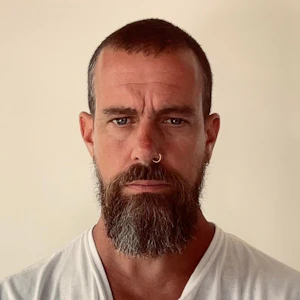
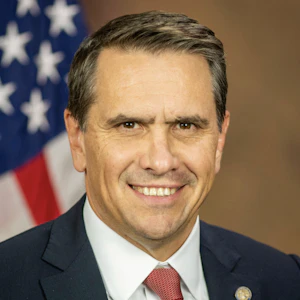
Todd Blanche
Todd Blanche
Biography of Deputy Attorney General Todd Blanche
The Honorable Todd Blanche is the 40th Deputy Attorney General of the United States, overseeing the work of the 115,000 dedicated employees who fulfill the Department of Justice’s mission at Main Justice, the FBI, DEA, U.S. Marshals, ATF, and 93 U.S. Attorney’s Offices.
Todd began his career at the Department where he served for over fifteen years in a variety of capacities, including as a contractor, a paralegal in the Criminal Division, and at the United States Attorney’s office for the Southern District of New York where he eventually became an AUSA and later a supervisor.
After leaving the Department, Todd worked as a criminal defense attorney that included representing President Donald Trump in three of the criminal cases brought against him in 2023 and 2024.
Following President Trump’s historic return to the White House, the President appointed Todd to work alongside Attorney General Pam Bondi to make America safe again. At the DOJ, Todd is working tirelessly to implement President Trump’s priorities that include confronting illegal protecting American businesses from fraud.
Todd has been married to his wonderful wife Kristine for nearly thirty years, is a father and grandfather.
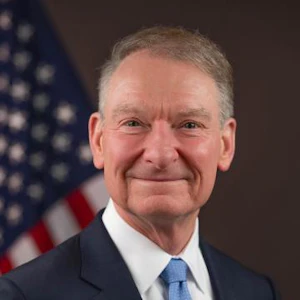
Paul Atkins
Paul Atkins
Prior to returning to the SEC, Chairman Atkins was most recently chief executive of Patomak Global Partners, a company he founded in 2009. Chairman Atkins helped lead efforts to develop best practices for the digital asset sector. He served as an independent director and non-executive chairman of the board of BATS Global Markets, Inc. from 2012 to 2015.
Chairman Atkins was appointed by President George W. Bush to serve as a Commissioner of the SEC from 2002 to 2008. During his tenure, he advocated for transparency, consistency, and the use of cost-benefit analysis at the agency. Chairman Atkins also represented the SEC at meetings of the President’s Working Group on Financial Markets and the U.S.-EU Transatlantic Economic Council. From 2009 to 2010, he was appointed a member of the Congressional Oversight Panel for the Troubled Asset Relief Program.
Before serving as an SEC Commissioner, Chairman Atkins was a consultant on securities and investment management industry matters, especially regarding issues of strategy, regulatory compliance, risk management, new product development, and organizational control.
From 1990 to 1994, Chairman Atkins served on the staff of two chairmen of the SEC, Richard C. Breeden and Arthur Levitt, ultimately as chief of staff and counselor, respectively. He received the SEC’s 1992 Law and Policy Award for work regarding corporate governance matters.
Chairman Atkins began his career as a lawyer in New York, focusing on a wide range of corporate transactions for U.S. and foreign clients, including public and private securities offerings and mergers and acquisitions. He was resident for 2½ years in his firm's Paris office and admitted as conseil juridique in France.
A member of the New York and Florida bars, Chairman Atkins received his J.D. from Vanderbilt University School of Law in 1983 and was Senior Student Writing Editor of the Vanderbilt Law Review. He received his A.B., Phi Beta Kappa, from Wofford College in 1980.
Originally from Lillington, North Carolina, Chairman Atkins grew up in Tampa, Florida. He and his wife Sarah have three sons.

Mike Selig
Mike Selig
Chairman Selig brings to the role deep public and private sector experience working with a wide range of stakeholders across agriculture, energy, financial, and digital asset industries, which rely upon and operate in CFTC-regulated markets.
Prior to his leadership at the CFTC, Chairman Selig most recently served as chief counsel of the Securities and Exchange Commission’s Crypto Task Force and senior advisor to SEC Chairman Paul S. Atkins. In this role, Chairman Selig helped to develop a clear regulatory framework for digital asset securities markets, harmonize the SEC and CFTC regulatory regimes, modernize the agency’s rules to reflect new and emerging technologies, and put an end to regulation by enforcement. He also participated in the President’s Working Group on Digital Asset Markets and contributed to its report on “Strengthening American Leadership in Digital Financial Technology.”
Prior to government service, Chairman Selig was a partner at an international law firm, focusing on derivatives and securities regulatory matters. During his years in private practice, he represented a broad range of clients subject to regulation by the CFTC, including commercial end users, futures commission merchants, commodity trading advisors, swap dealers, designated contract markets, derivatives clearing organizations, and digital asset firms. Chairman Selig advised clients on compliance with the Commodity Exchange Act and the CFTC’s rules and regulations thereunder, including in connection with registration applications and obligations, enforcement matters, and complex transactions.
Chairman Selig earned his law degree from The George Washington University Law School and was articles editor of The George Washington Law Review. He received his undergraduate degree from Florida State University.

David Bailey
David Bailey

Eric Trump
Eric Trump
Mr. Trump also serves as Executive Vice President of The Trump Organization, where he oversees the global management and operations of the Trump family’s extensive real estate portfolio. This includes Trump Hotels, Trump Golf, commercial and residential real estate, Trump Estates, and Trump Winery. Known for his hands-on leadership and strong market instincts, he has played a key role in expanding the company’s presence across major U.S. and international markets.
A globally recognized business leader and public figure, Mr. Trump is a prominent advocate for Bitcoin and decentralized finance. He is a co-founder of World Liberty Financial, a decentralized finance (DeFi) platform, and serves on the Board of Advisors of Metaplanet, Japan’s largest corporate holder of Bitcoin.
Beyond his business activities, Mr. Trump has helped raise more than $50 million for St. Jude Children’s Research Hospital in the fight against pediatric cancer, a philanthropic mission he began at age 21.
Mr. Trump earned a degree in Finance and Management from Georgetown University. He currently resides in Florida with his wife, Lara, and their two children. He is also the author of Under Siege, his memoir published in October 2025.
Jack Mallers
Jack Mallers
Cynthia Lummis
Cynthia Lummis
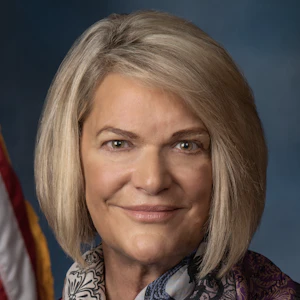
As the first-ever Chair of the Senate Banking Subcommittee on Digital Assets, Senator Lummis is the architect of the legislative framework shaping America's digital asset future. She introduced the landmark Lummis-Gillibrand Responsible Financial Innovation Act, the first comprehensive bipartisan crypto regulatory framework in Senate history. She co-authored the GENIUS Act — the first federal stablecoin law ever enacted — and introduced the BITCOIN Act, which would establish a U.S. strategic Bitcoin reserve of up to one million BTC. She is leading the Clarity Act, which will bring long-overdue regulatory certainty to the digital asset industry. She has also championed digital asset tax reform, including a de minimis exemption for small transactions and equal tax treatment for miners and stakers.
Known as Congress' "Crypto Queen," Senator Lummis represents Wyoming — a state she has helped build into one of the most digital asset-friendly regulatory environments in the nation. Before serving in the Senate, she served 14 years in the Wyoming Legislature, eight years as Wyoming State Treasurer, and eight years in the U.S. House. She is a three-time graduate of the University of Wyoming.
Her work represents a crucial bridge between traditional financial systems and the emerging digital economy, ensuring America leads the world in financial innovation while protecting the individual freedoms that define it.
Adam Back
Adam Back
Amy Oldenburg
Amy Oldenburg
David Marcus
David Marcus

Matt Schultz
Matt Schultz
Fred Thiel
Fred Thiel
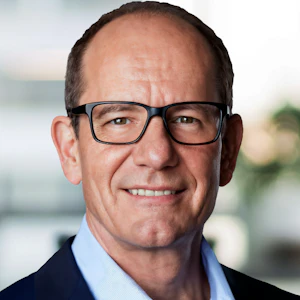
Throughout his career, Mr. Thiel has consistently driven rapid growth and created substantial shareholder value. Prior to MARA, Mr. Thiel served as the CEO of two other public companies, Local Corporation (NASDAQ: LOCM) and Lantronix, Inc (NASDAQ: LTRX). He has successfully raised billions in equity and debt through private and public offerings, led companies through IPOs, executed high-value exits to strategic and financial acquirers, and implemented effective M&A and roll-up strategies.
Mr. Thiel attended the Stockholm School of Economics and executive classes at Harvard Business School, and is fluent in English, Spanish, Swedish, and French. Mr. Thiel is the Chairman of the Board for Oden Technology, Inc. and is active in Young Presidents’ Organization where he has led initiatives in both the FinTech and Technology Networks.
A recognized voice in the industry, Fred frequently shares his insights on energy and technology with major media outlets like Bloomberg TV, CNBC, and FOX Business, contributing to vital discussions about the future of these sectors.
Tim Draper
Tim Draper
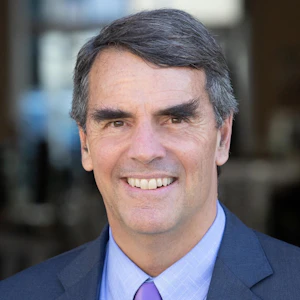
He is a supporter and global thought leader for entrepreneurs everywhere, and is a leading spokesperson for Bitcoin and decentralization, having won the Bitcoin US Marshall’s auction in 2014, invested in over 50 crypto companies, and led investments in Coinbase, Ledger, Tezos, and Bancor, among others.
Afroman
Afroman