The Sovereign Individual in the Bitcoin Era
Speakers/Moderators
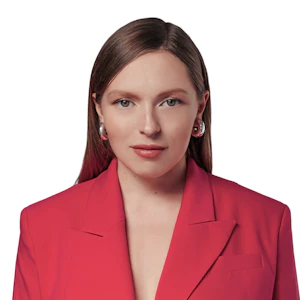
Katie The Russian
Katie The Russian
Mother of two. Former pro-sailor.
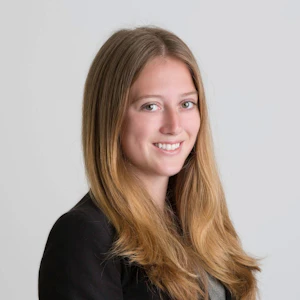
Jennifer Harding-Marlin
Jennifer Harding-Marlin
As Founder and Managing Director of JH Marlin Law, she advises Bitcoin founders, early adopters, and internationally mobile families on jurisdictional strategy, second citizenship, residency planning, and long-term sovereign risk mitigation. She has advised some of the earliest participants in the Bitcoin ecosystem and helped the world’s first Bitcoin investor design and implement a multi-jurisdictional passport portfolio as part of a long-term sovereignty and risk-mitigation strategy.
JH Marlin Law actively operates and maintains strategic partnerships across the Caribbean, Europe, Africa, and the Pacific.

Michelle Weekley
Michelle Weekley
Before Bitcoin she lived in the UAE and worked in China.
She is a global corruption whistleblower and a free speech advocate.
Session
Overview
The Sovereign Individual in the Bitcoin Era explores how Bitcoin, self custody, second citizenship, and jurisdictional choice fit into the broader sovereign individual thesis. Katie from CitizenX leads a discussion with Michelle Weekley of Byte Federal and Jennifer Harding-Marlin of JH Marlin Law on how decentralized money changes the relationship between individuals and nation-states.
The conversation contrasts “stick” jurisdictions, where regulation, capital controls, surveillance, and restrictions on cash are increasing, with “carrot” jurisdictions that use tax policy, residency programs, citizenship by investment, and pro-Bitcoin rules to attract mobile capital and talent. El Salvador, Saint Kitts and Nevis, Panama, Paraguay, Costa Rica, Antigua and Barbuda, and other countries are discussed as examples of places drawing attention from Bitcoiners.
A major theme is optionality. The speakers argue that Bitcoin in self custody, a second passport, residency rights, international banking access, mobile business structures, and strong local communities can help individuals prepare before political or financial pressure intensifies. The session frames sovereign planning not only as an escape strategy, but as a practical way to protect family, capital, and freedom of movement.
Hi. What's up? Well, I brought some books, and I hope you guys are familiar with this book, but we will talk about it more in the panel.
Ladies and gentlemen, I appreciate you being here today. Ladies, thank you for joining me. I would like to introduce Michelle and Jennifer. Ladies, can you give yourselves an intro, please?
Great to be here with you. My name is Michelle. I do product development for one of the original Bitcoin ATM companies in the United States. I spent more than a decade in Washington, D.C., working with the elite. I fled to Dubai to try to get out of that, got recruited deeper into it, ended up working in China, and eventually really burned out of it all. Now I am retired in Florida, where I work with these wonderful guys at Byte Federal. We are fighting the war on cash. It is really great to be here, and I think this is going to be a great panel.
Thank you. Hi, I am Jennifer Harding. I am a Canadian and Saint Kitts and Nevis attorney. I founded the law firm JH Marlin Law nearly a decade ago, and we help with citizenship by investment. We assisted the first investor in Bitcoin in the world to create a diversified passport portfolio. I have since gone on to found a global mobility platform to help with citizenship by investment, residency by investment, and citizenship by descent. I am super excited to be here with these ladies.
Thank you. I am Katie from CitizenX, also known as Plan B Passport on Twitter. I have been moderating this panel since 2022 and have been helping Bitcoiners get a second citizenship on their journey to become more sovereign. This is what we are going to be talking about today.
This panel is called The Sovereign Individual in the Bitcoin Era. If you guys are not familiar, let me ask the audience: how many of you understand the concept of the sovereign individual or have read the book The Sovereign Individual? Let's go. I actually have some books to give out if anybody wants a copy.
The Sovereign Individual was written in 1997. I was barely born, but they precisely predicted Bitcoin. They did not say Bitcoin, but they predicted digital, borderless money not issued by any government, and that it would be internet-native.
Another thing we want to talk about today is what is described in the end of the nation-state section of the book. Basically, once money is global and borderless, capital and talent become so mobile that nation-states now have to compete for individuals, citizens, capital, and talent. Ladies, I want to ask you: it feels like right now the world is separated into carrot and stick countries. The Sovereign Individual talks about attracting citizens, but it seems like we are seeing more stick than carrot.
There are a lot of sticks. The United States is leading the stick category, unfortunately. A lot of people here at the conference are talking about the end of Operation Chokepoint 2.0, but the war on Bitcoin is absolutely not over. There is a lot happening with regulation. There is a lot happening behind the scenes. I know these ladies see it when they are working with people who are exploring options to leave the country, and I see it at work every single day.
We have to deal with the regulations that get put in place, and the United States is banning more and more categories of sovereign options. They are looking to outright ban Bitcoin ATMs, which is what we do, because they do not want anyone to facilitate cash transactions. It is too hard for them to spy on those transactions. They are shutting down some of the last on-ramps you can use to get into Bitcoin without being fully surveilled. You are still a little surveilled, but there are so many sticks happening.
Unfortunately, most people are not alphabet-regulation experts, so they have no idea it is happening. Then one day the laws come into place and they are blindsided. I would want everyone to pay as much attention as you can and pay attention to the alarms you are seeing online, because the war on Bitcoin is not over. In fact, I think it is probably escalating.
Jennifer, what do you see in terms of capital and talent flow, and carrot and stick countries?
She talked a bit about stick countries, so I may talk a little bit more about carrot countries. There are certain countries around the world that are trying to attract international investors and have people invest and build up the country. Through citizenship and residency by investment, tax incentives, or enterprise zones, some countries are trying to attract more wealth.
There are certain countries that are more pro-Bitcoin than others. Some of the countries where we are seeing people relocate to, or do citizenship or residency in, include Panama, Paraguay, Antigua and Barbuda, Saint Kitts and Nevis, and others. While some countries are increasing regulation, increasing taxation, and making it more difficult for Bitcoiners, there are certain countries around the world that are trying to attract Bitcoiners.
What is interesting in this whole world of immigration is that if you look at global migration, countries like Canada are still having a lot of people coming in. But if you look at the wealthy, the actual capital, those people are like canaries in the coal mine. They are the first ones to leave because they know what is happening. While Canada is still attracting tons of entrepreneurs, young talent, and young professionals, you see the wealthy leaving Canada very quickly. The U.K. is leading that capital exodus. That shows right there.
I have another question. You talked about regulation and how the war on Bitcoin is absolutely not over. Executive Order 6102: everybody familiar with 6102, the confiscation of gold that took place in the previous crisis? Is it possible in the U.S.? Is it coming? How would this possibly unfold? We have sovereign money in self custody. Is 6102 even possible, and how would this happen here?
It is a great question. Is it possible they enact the regulation? Absolutely. Can they force your hand? It gets more gray. Will you comply? The problem is, they do not need everyone to comply. You have everyone on the internet screaming that Bitcoin does not care and that their Bitcoin is in cold storage. But unfortunately, they know where you live and they can show up at your house.
You can refuse to comply, but they can also take some people and put them in jail. I believe when they did 6102 with gold, there was only something like a 20% or 30% compliance rate, or less. They do not need a lot of people to comply.
Politics is kind of a pendulum swinging back and forth. I think we are going to get a swing in the other direction, and it is very likely that in that moment they will try something like a 6102. I trust Bitcoiners not to comply. But at the same time, if you KYC'd your Bitcoin and bought it with an on-ramp, then they have your address. They know where you live. Even though you choose not to comply, it is possible they show up and knock on your door.
My question is, what do you do then? To all the people who say, we will not comply, we do not need to fight, and we do not need to worry about politicians and their laws, that is all well and good while you are running your mouth on the internet. But when they come and knock on your door, what is your plan?
The Plan B passport.
That is right, folks.
These swings just keep getting longer and bigger. There is this concept of the Fourth Turning. If you look at historical cycles, we had this High America of the 1950s: everybody is happy, everybody is excited, there is big trust in institutions, unity, and a united enemy, the Soviets, of course. Everybody feels aligned. Then we start questioning things. By the time we get to 2008, the crisis begins again.
The previous crisis was 1929 to 1945. During those times, borders were completely redrawn. The game board completely changed. The only people who came out of that Fourth Turning on top were the people with optionality: people who held gold outside of government promises, and people who had access to a safe jurisdiction.
If we keep moving in this direction and get to the culmination of this Fourth Turning in the next six years, that basically covers the end of this presidency cycle and the next swing in the other direction. I think that swing is going to be so far gone that we might finally wake up.
If you are an American citizen, you might want to check out some countries that do not extradite.
I do not think governments are completely powerless. I think there will be a chokehold on Bitcoin, whether that is around on-ramping and off-ramping Bitcoin. The people who plan early in advance, before the exit doors become jam-packed, are the people who are going to succeed over the next five or six years. I have seen a lot of uncertainty and a lot of tension.
Sometimes people say you can stay and fight, or you can leave and escape. Well, sometimes it is much easier to fight from the outside. People talk about stay and fight as a movement, but what if you are targeted individually? Then it does not become a movement. You have to protect yourself and your family, and it is much easier to fight that fight from a safe jurisdiction where you have access to a phone and access to a lawyer.
You set this Plan B in place before you actually need it. Then you have optionality to pick and choose what your course of action is going to be.
Let us talk about those safe countries. I do not want to be all negative about it, because there are nice places. There are places that truly attract capital and truly attract Bitcoiners. These days, I am certainly very much into El Salvador. It is clearly amazing to see what has been happening there over the last six years. The change is something nobody could predict, and this is specifically the sovereign individual thesis playing out. All they are doing is attracting people with policies. They say, if you want to build on Bitcoin, we have the special law for you. We will make it easy. We will make it not a credit nightmare like the one you are living through. If you want to bring in capital and become a citizen of El Salvador, please, let us get that done.
What other countries do you see attracting the sovereign individual? How is this playing out on the ground? Are there communities? Are people trying to integrate into local life?
I have spent time visiting El Salvador, and I can tell you it is absolutely amazing, the transformation that has undergone. There is a huge Bitcoin community, very supportive for developers and people who wish to relocate to El Salvador.
I personally live in the Caribbean, in Saint Kitts and Nevis, so we help a lot of people relocate to the Caribbean. There is a growing Bitcoin community there. It is smaller, but it is one of the countries among others that we see Bitcoiners looking at. Capital gains tax and tax filing are part of what inspired me to move to the Caribbean over a decade ago.
Plus one for El Salvador. It is incredible. I have been down there many times. Like you said, it is absolutely the sovereign thesis playing out. We are looking at opening offices down there and hedging geopolitically.
I am not as well versed on the countries specifically as these ladies are. But what I will say is, I think what you said earlier about capital exits is really important to watch. What we see categorically is that most of the Western countries that people used to want to flee to are the ones in decline. Do not take anything you thought you knew for granted. Do new research. There are new places coming. I think there will be new places on the grid that are countries we have never heard of. I do not know if you can get a passport to Bhutan yet, but it is something I am watching.
Everything is changing geopolitically. It is important to follow folks like these ladies and keep up on where the capital is going. Follow the smart money.
Picking the right jurisdiction is very important, but also, a second passport is a second passport. I say that specifically because you do not know who is going to be on top in six years. You might have a crystal ball, you might be following geopolitics on Twitter precisely, and you might have a good guess on what will be a safe jurisdiction or a safe haven in the next six, ten, or fifteen years.
But one of the important things I say is that a second passport is a second passport. Probably 30% of you sitting here today are eligible to apply for a European passport through your great-grandparents, et cetera. This might not be the jurisdiction you want to go to right now, because their policies do not look attractive. But keep this nationality running in your family so your kids have the option to go there, or maybe their kids have the option.
We are also seeing African passports for sale now. Again, it might not be the jurisdiction you want to go to, but if your home country passport gets revoked, you have a second set of documents to travel, cross borders, and get to a safe jurisdiction.
What other sovereign tools should a sovereign individual consider? Obviously, we have made it our life work to sell citizenships. We think that a passport is the ultimate tool. Passport and Bitcoin: I truly believe this is the combo that will save you in this crisis. But there are definitely other tools in the sovereign individual toolbox. What would you consider important to look into?
Bitcoin is just one piece of the puzzle, and a second passport gives you more optionality and more mobility.
Bitcoin in self custody is super important, even if they show up at your door. You have options. If you have another passport and your Bitcoin is in custody, you might be long gone by the time they show up at your door. That is really, really high up there.
Residencies are still a very solid tool in the sovereign individual toolbox. It is not going to be the document that gets you across the border, but it is your access to a safe jurisdiction and your ability to work and live there full time if you need to. Many people are getting a second citizenship from a country they never want to go to, and then they get a residency from the country where they like the lifestyle and can build a family life. It is like a perfect trifecta.
One thing that is important to consider, if you have Bitcoin in self custody and you are maybe new to exploring a second passport, is that maybe you are not ready yet. One thing you can start to do is prepare your life. Prepare your digital life. Who do you bank with? Are they international? Will they let you send funds internationally? Are they online only? I highly recommend not having any services that are only accessible online. That is maybe its own tangent, but getting your life in order, particularly as it relates to things happening online, is super important. You can prepare now even if you are not ready to commit to a second passport.
Doing a self-audit of your lifestyle is important: where you live, where you think you want to live in the future, the safety of your children, and perhaps making your Plan B your Plan A. If you actually have to relocate to that country one day on a moment's notice, you want to have local connections in the country you want to go to, be able to do banking, set up a business, and make sure you yourself can be mobile and your business can be mobile as well.
You also have to build a tribe where you are. I always say that tribe is another flag in the sovereign individual toolbox. Being able to access people who are like-minded, and not being lost in a new jurisdiction, is important. Is the community strong? Do you feel like you are in a tiny bubble in Saint Kitts, or are you comfortable there?
Some of you here have traveled to the country. It is small; the population is 55,000. There are quite a few really big Bitcoiners. A lot of people relocated in 2013 and 2014, when I relocated, and it is a growing community. People can transact in Bitcoin. It is not necessarily widespread, but I know people who have purchased real estate using their Bitcoin locally.
The Bitcoin community is really strong globally. I encourage everybody to lean into those relationships, because you never know when you might show up on a random island and meet a long-lost friend or make a new friend. Those connections can be very important.
I have lived through a couple of immigrations myself, so immigration is a skill, and the local community definitely makes it much easier for you. Just being able to ask questions from people who lived through the same experience you are about to live through helps. That is why it is so easy to relocate to El Salvador already, because over the last couple of years people have done that and there is a lot of content out there. There are services specifically helping with relocation. On top of that, they are building expat-targeted services like schooling systems, medical systems, and things you are familiar with that do not necessarily feel foreign in a foreign country.
Saint Kitts has adapted to those people who fled the stick countries. I think we are seeing it in quite a few countries in Latin America. That is the continent I am very curious about right now. First of all, they are the only ones not at war, so that is a big one. It is really curious to see how many people relocate down south and build a life there from scratch.
From El Salvador to Panama to Paraguay, which has a big Bitcoin community, and Costa Rica, which has a big Bitcoin community, we are seeing a lot of people relocate to South America specifically to be in a community of people that support Bitcoin, to create Bitcoin ecosystems, and to have access to services in those areas.
How about we all take two minutes for a rant to encourage people to actually take action on the sovereign individual journey? I will start with Michelle. She is really good at rants.
I am good at rants. I was not prepared for this one, though. The war on Bitcoin is not over. I am going to go back to that because it is hot on my mind. It is all that we deal with all day, every day: getting audited, getting in trouble for things that we did not do well enough.
The government in the United States, and in most Western countries, if you look at the EU and all of these countries that were formerly great, where everybody wanted to go, their governments are so massive that you cannot do anything. You cannot just open a company. You cannot just run a company. You cannot just live your life. In some of them, you cannot even post a meme anymore. The governments are getting completely out of control.
I do product development, but what I really do is deal with regulation. We build a product, and all of a sudden the regulators and Big Tech are like, you cannot put that button there. It cannot be in that font. These are the things they are coming after. The font size is too big. Your compliance language needs to be in bigger font. Your buttons are too big. They are too flashy. They are the wrong color. I am not exaggerating. This is the level to which the government has gone.
We know historically that once governments get this level of power, they do not give it back up. I do not want to say it is over, but it is probably over, which is why these ladies are thriving in their businesses. If you want to stay and fight and try to take some of the power back from the states, we are absolutely doing that. We are not going to let them ban Bitcoin ATMs. But eventually, over a long enough time horizon, they are probably going to do it anyway. That is why we now have ATMs in a bunch of new countries, because you have to hedge this stuff.
The governments are not going to give up the power they have taken. You need to look around and find new governments that have carrots and that are interested in allowing you to open and run businesses and live a life where you are thriving and free. I would really encourage everybody to take this very seriously.
There are also capital controls in certain countries, making it really difficult to send funds internationally. If you are doing an international wire, for example, a lot of countries are implementing more exit taxes to make it more difficult for you to leave, making it very complicated and targeting people who want to leave the system.
Those capital controls trickle down. One of the things we are seeing is the reduction of limits. You used to be able to go to the bank and take out $10,000. Good luck doing that now. The limits are like $2,000 or $3,000. A lot of people do not encounter capital controls in day-to-day life, and then you go to do something and you are told, no, you cannot do that. Then you hit those walls.
If only there were a highly liquid asset that you can have full custody of.
My encouragement is to take action. If you want to stay and fight, that is great. I also understand that you love your lifestyle. You built your life where you are. You have relatives. You have multiple generations living together. It is absolutely hard to leave, and I am not saying you should. Maybe it is not the time yet.
What I am saying is, get yourself that Plan B in place. It can be one step at a time. Not all the options out there are extremely expensive. They are not for the wealthy only. There are citizenship-by-descent options that you are eligible to apply for today. There are residency programs that will cost you one week of groceries. Start researching what is the best option for you. You can start small and take it step by step. When the time comes, you will have the sovereign individual plan in place and you will be able to execute if you have to.
Once you do that, it is like, okay, I have Bitcoin in self custody. I do not care as much about hyperinflation and capital controls anymore. Once you have this Plan B in place, you will sleep better at night knowing that if you have to, you can leave tomorrow. If you have to, you can protect yourself from abroad. You can hire a lawyer. You can withstand the force that can come at you from the nation-state or from some party you do not want to deal with, and you will have a safe haven to deal with that from.
My encouragement is to reread The Sovereign Individual and start taking action step by step. We are obviously here to guide you through that. I can see our booth from right here. I have more Sovereign Individual copies at the booth, so come and check with us about that.
We also have a booth located just behind here if anybody wants to meet in person. Thank you so much.
We actually do not have a booth, but there are a bunch of us here. If you want to learn more about the war on cash and the regulatory assault, feel free to grab me. I am happy to talk to anybody.
Thank you, everybody. Thank you, ladies.
Similar
Sessions
The Sovereign Individual in the Bitcoin Era
Katie The Russian
Katie The Russian
Mother of two. Former pro-sailor.
Jennifer Harding-Marlin
Jennifer Harding-Marlin
As Founder and Managing Director of JH Marlin Law, she advises Bitcoin founders, early adopters, and internationally mobile families on jurisdictional strategy, second citizenship, residency planning, and long-term sovereign risk mitigation. She has advised some of the earliest participants in the Bitcoin ecosystem and helped the world’s first Bitcoin investor design and implement a multi-jurisdictional passport portfolio as part of a long-term sovereignty and risk-mitigation strategy.
JH Marlin Law actively operates and maintains strategic partnerships across the Caribbean, Europe, Africa, and the Pacific.
Michelle Weekley
Michelle Weekley
Before Bitcoin she lived in the UAE and worked in China.
She is a global corruption whistleblower and a free speech advocate.
The Sovereign Individual in the Bitcoin Era
Speakers/Moderators
Katie The Russian
Katie The Russian
Mother of two. Former pro-sailor.
Jennifer Harding-Marlin
Jennifer Harding-Marlin
As Founder and Managing Director of JH Marlin Law, she advises Bitcoin founders, early adopters, and internationally mobile families on jurisdictional strategy, second citizenship, residency planning, and long-term sovereign risk mitigation. She has advised some of the earliest participants in the Bitcoin ecosystem and helped the world’s first Bitcoin investor design and implement a multi-jurisdictional passport portfolio as part of a long-term sovereignty and risk-mitigation strategy.
JH Marlin Law actively operates and maintains strategic partnerships across the Caribbean, Europe, Africa, and the Pacific.
Michelle Weekley
Michelle Weekley
Before Bitcoin she lived in the UAE and worked in China.
She is a global corruption whistleblower and a free speech advocate.
Making Bitcoin Babies: Sovereignty Starts in the Womb
Conor Chepenik
Conor Chepenik

Making Bitcoin Babies: Sovereignty Starts in the Womb
Speakers/Moderators
Conor Chepenik
Conor Chepenik
Other
Speakers
Michael Saylor
Michael Saylor
Todd Blanche
Todd Blanche
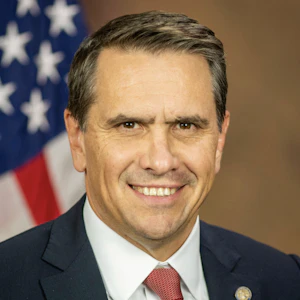
Biography of Deputy Attorney General Todd Blanche
The Honorable Todd Blanche is the 40th Deputy Attorney General of the United States, overseeing the work of the 115,000 dedicated employees who fulfill the Department of Justice’s mission at Main Justice, the FBI, DEA, U.S. Marshals, ATF, and 93 U.S. Attorney’s Offices.
Todd began his career at the Department where he served for over fifteen years in a variety of capacities, including as a contractor, a paralegal in the Criminal Division, and at the United States Attorney’s office for the Southern District of New York where he eventually became an AUSA and later a supervisor.
After leaving the Department, Todd worked as a criminal defense attorney that included representing President Donald Trump in three of the criminal cases brought against him in 2023 and 2024.
Following President Trump’s historic return to the White House, the President appointed Todd to work alongside Attorney General Pam Bondi to make America safe again. At the DOJ, Todd is working tirelessly to implement President Trump’s priorities that include confronting illegal protecting American businesses from fraud.
Todd has been married to his wonderful wife Kristine for nearly thirty years, is a father and grandfather.
Paul Atkins
Paul Atkins
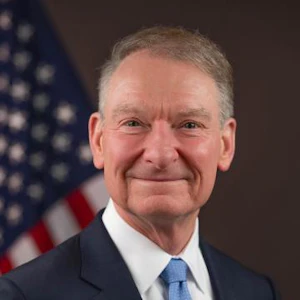
Prior to returning to the SEC, Chairman Atkins was most recently chief executive of Patomak Global Partners, a company he founded in 2009. Chairman Atkins helped lead efforts to develop best practices for the digital asset sector. He served as an independent director and non-executive chairman of the board of BATS Global Markets, Inc. from 2012 to 2015.
Chairman Atkins was appointed by President George W. Bush to serve as a Commissioner of the SEC from 2002 to 2008. During his tenure, he advocated for transparency, consistency, and the use of cost-benefit analysis at the agency. Chairman Atkins also represented the SEC at meetings of the President’s Working Group on Financial Markets and the U.S.-EU Transatlantic Economic Council. From 2009 to 2010, he was appointed a member of the Congressional Oversight Panel for the Troubled Asset Relief Program.
Before serving as an SEC Commissioner, Chairman Atkins was a consultant on securities and investment management industry matters, especially regarding issues of strategy, regulatory compliance, risk management, new product development, and organizational control.
From 1990 to 1994, Chairman Atkins served on the staff of two chairmen of the SEC, Richard C. Breeden and Arthur Levitt, ultimately as chief of staff and counselor, respectively. He received the SEC’s 1992 Law and Policy Award for work regarding corporate governance matters.
Chairman Atkins began his career as a lawyer in New York, focusing on a wide range of corporate transactions for U.S. and foreign clients, including public and private securities offerings and mergers and acquisitions. He was resident for 2½ years in his firm's Paris office and admitted as conseil juridique in France.
A member of the New York and Florida bars, Chairman Atkins received his J.D. from Vanderbilt University School of Law in 1983 and was Senior Student Writing Editor of the Vanderbilt Law Review. He received his A.B., Phi Beta Kappa, from Wofford College in 1980.
Originally from Lillington, North Carolina, Chairman Atkins grew up in Tampa, Florida. He and his wife Sarah have three sons.

Mike Selig
Mike Selig
Chairman Selig brings to the role deep public and private sector experience working with a wide range of stakeholders across agriculture, energy, financial, and digital asset industries, which rely upon and operate in CFTC-regulated markets.
Prior to his leadership at the CFTC, Chairman Selig most recently served as chief counsel of the Securities and Exchange Commission’s Crypto Task Force and senior advisor to SEC Chairman Paul S. Atkins. In this role, Chairman Selig helped to develop a clear regulatory framework for digital asset securities markets, harmonize the SEC and CFTC regulatory regimes, modernize the agency’s rules to reflect new and emerging technologies, and put an end to regulation by enforcement. He also participated in the President’s Working Group on Digital Asset Markets and contributed to its report on “Strengthening American Leadership in Digital Financial Technology.”
Prior to government service, Chairman Selig was a partner at an international law firm, focusing on derivatives and securities regulatory matters. During his years in private practice, he represented a broad range of clients subject to regulation by the CFTC, including commercial end users, futures commission merchants, commodity trading advisors, swap dealers, designated contract markets, derivatives clearing organizations, and digital asset firms. Chairman Selig advised clients on compliance with the Commodity Exchange Act and the CFTC’s rules and regulations thereunder, including in connection with registration applications and obligations, enforcement matters, and complex transactions.
Chairman Selig earned his law degree from The George Washington University Law School and was articles editor of The George Washington Law Review. He received his undergraduate degree from Florida State University.

David Bailey
David Bailey

Eric Trump
Eric Trump
Mr. Trump also serves as Executive Vice President of The Trump Organization, where he oversees the global management and operations of the Trump family’s extensive real estate portfolio. This includes Trump Hotels, Trump Golf, commercial and residential real estate, Trump Estates, and Trump Winery. Known for his hands-on leadership and strong market instincts, he has played a key role in expanding the company’s presence across major U.S. and international markets.
A globally recognized business leader and public figure, Mr. Trump is a prominent advocate for Bitcoin and decentralized finance. He is a co-founder of World Liberty Financial, a decentralized finance (DeFi) platform, and serves on the Board of Advisors of Metaplanet, Japan’s largest corporate holder of Bitcoin.
Beyond his business activities, Mr. Trump has helped raise more than $50 million for St. Jude Children’s Research Hospital in the fight against pediatric cancer, a philanthropic mission he began at age 21.
Mr. Trump earned a degree in Finance and Management from Georgetown University. He currently resides in Florida with his wife, Lara, and their two children. He is also the author of Under Siege, his memoir published in October 2025.

Jack Mallers
Jack Mallers
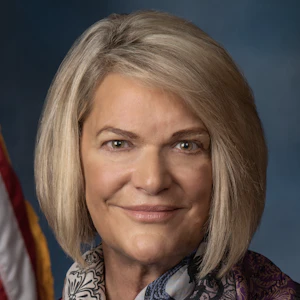
Cynthia Lummis
Cynthia Lummis
As the first-ever Chair of the Senate Banking Subcommittee on Digital Assets, Senator Lummis is the architect of the legislative framework shaping America's digital asset future. She introduced the landmark Lummis-Gillibrand Responsible Financial Innovation Act, the first comprehensive bipartisan crypto regulatory framework in Senate history. She co-authored the GENIUS Act — the first federal stablecoin law ever enacted — and introduced the BITCOIN Act, which would establish a U.S. strategic Bitcoin reserve of up to one million BTC. She is leading the Clarity Act, which will bring long-overdue regulatory certainty to the digital asset industry. She has also championed digital asset tax reform, including a de minimis exemption for small transactions and equal tax treatment for miners and stakers.
Known as Congress' "Crypto Queen," Senator Lummis represents Wyoming — a state she has helped build into one of the most digital asset-friendly regulatory environments in the nation. Before serving in the Senate, she served 14 years in the Wyoming Legislature, eight years as Wyoming State Treasurer, and eight years in the U.S. House. She is a three-time graduate of the University of Wyoming.
Her work represents a crucial bridge between traditional financial systems and the emerging digital economy, ensuring America leads the world in financial innovation while protecting the individual freedoms that define it.
Adam Back
Adam Back
Amy Oldenburg
Amy Oldenburg
David Marcus
David Marcus

Matt Schultz
Matt Schultz
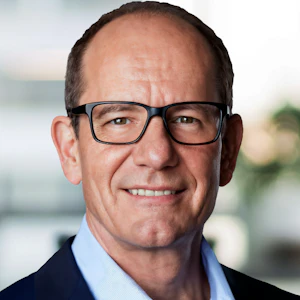
Fred Thiel
Fred Thiel
Throughout his career, Mr. Thiel has consistently driven rapid growth and created substantial shareholder value. Prior to MARA, Mr. Thiel served as the CEO of two other public companies, Local Corporation (NASDAQ: LOCM) and Lantronix, Inc (NASDAQ: LTRX). He has successfully raised billions in equity and debt through private and public offerings, led companies through IPOs, executed high-value exits to strategic and financial acquirers, and implemented effective M&A and roll-up strategies.
Mr. Thiel attended the Stockholm School of Economics and executive classes at Harvard Business School, and is fluent in English, Spanish, Swedish, and French. Mr. Thiel is the Chairman of the Board for Oden Technology, Inc. and is active in Young Presidents’ Organization where he has led initiatives in both the FinTech and Technology Networks.
A recognized voice in the industry, Fred frequently shares his insights on energy and technology with major media outlets like Bloomberg TV, CNBC, and FOX Business, contributing to vital discussions about the future of these sectors.
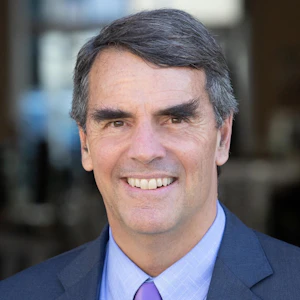
Tim Draper
Tim Draper
He is a supporter and global thought leader for entrepreneurs everywhere, and is a leading spokesperson for Bitcoin and decentralization, having won the Bitcoin US Marshall’s auction in 2014, invested in over 50 crypto companies, and led investments in Coinbase, Ledger, Tezos, and Bancor, among others.

Afroman
Afroman