Then They Fight You: From Ignored to Opposed, Where Bitcoin Is Now
Speakers/Moderators

Hailey Lennon
Hailey Lennon
Most recently, Ms. Lennon served as General Counsel of Fold and helped take the company public in February 2025. Prior to joining Fold, Lennon was a corporate partner in Brown Rudnick’s Digital Commerce group, advising clients on regulatory compliance involving FinCEN, OFAC, the CFTC, and the SEC. Before that, she served as regulatory counsel at leading crypto platforms Coinbase and bitFlyer and crypto bank Silvergate Bank. At Coinbase, she managed regulatory relationships with federal and state agencies, led securities law analyses for digital assets, helped launch Coinbase’s margin product in 23 states, and worked closely with the NYDFS on BitLicense and Trust Company oversight. At bitFlyer, she oversaw U.S. expansion, obtained 33 money transmitter licenses and the third ever New York Bitlicense, and led the company’s BSA/AML program. Earlier in her career, she has also served as board secretary for the Virtual Commodity Association, supporting the development of industry-led self-regulation.
Lennon is a recognized voice in the bitcoin space, frequently speaking at major conferences and contributing to outlets like Forbes and Bitcoin Magazine.

Chris Lane
Chris Lane
Chris has a deep technical understanding of both Bitcoin and Traditional Finance, with hands-on experience linking settlement between digital assets and fiat currencies. He has led cross-functional teams both implementing and operating Tier 0/1 payments and FX platforms within a U.S. banks.

Emily Kapur
Emily Kapur
Emily has served as lead or co-lead counsel in some of the most consequential digital asset cases in the market. Her representations include bringing multi-billion-dollar claims on behalf of the FTX debtors, representing Binance's former CEO in a closely-watched SEC enforcement action that the SEC dismissed with prejudice, defending crypto clients in numerous securities class actions dismissed at the pleading and summary judgment stages, and successful resolutions of major founders’ disputes. She has been repeatedly recognized for her leadership in crypto and fintech litigation by Benchmark Litigation, Law360, and Lawdragon, among other publications. Emily received her B.A., Ph.D., and J.D. from Stanford University and her M.Sc. from the London School of Economics as a Marshall Scholar.

Jonathan Melton
Jonathan Melton
At Xapo, he marketed custody and trading to institutional investors. Subsequently, he joined Silvergate where he helped to build and scale their Bitcoin collateralized lending program to nearly $1.5B in commitments with no losses.
Jonathan now leads the lending business at Unchained, the longest-tenured continuously operating lender in the industry.
Session
Overview
Hailey Lennon moderated a discussion with Emily Kapur, Jonathan Melton, and Chris Lane on Bitcoin’s move from being ignored to being opposed, and whether the market has now entered a more accepted phase. The panel examined how judges, banks, regulators, and institutional investors have changed their views as Bitcoin and digital assets become more familiar parts of financial infrastructure.
The conversation covered banking access, OCC trust charters, stablecoins, tokenization, Bitcoin-backed lending, and the role of commercial banks in Bitcoin’s future. Chris Lane framed Bitcoin as more comparable to a globally distributed central bank than a retail payment app, while Jonathan Melton discussed how Bitcoin-backed credit may develop as fiat and Bitcoin systems continue to coexist.
The panel also addressed lessons from crypto bankruptcies, including custody, rehypothecation, unsecured creditor status, and the need for transparency in lending products. Emily Kapur described how the US bankruptcy system handled major crypto failures and how courts have become more comfortable with crypto-related cases.
A final theme was the shift away from SEC regulation by enforcement and toward greater regulatory clarity. The speakers noted that disputes will continue, but increasingly look like ordinary financial-sector litigation, reflecting a maturing Bitcoin and digital asset industry.
Welcome to our panel. Today we are talking about “Then They Fight You: From Ignored to Opposed, Where Bitcoin Is Now.” I’m Hailey Lennon. I’ve been an attorney in this space for many years. I worked with Chris at Silvergate Bank in the early days, was in-house at Coinbase, and most recently Fold. I’m really excited for our panel today. We’ll go down the line, introduce ourselves, and then dive in.
Hi, my name is Emily Kapur. I co-chair the crypto practice at Quinn Emanuel. We’re a litigation-only law firm. I’ve been doing litigation in this space since 2017, from before the SEC was interested, through many years in which they were very interested, through crypto bankruptcies and a whole bunch of commercial disputes. We’ve had our hands in a lot of different issues that have come before the courts. I think about the issues we’re talking about today in terms of how judges think about them when we have to show up in front of them in court. One of our biggest successes in this space was that we were the only firm to have a complete courtroom victory against the SEC in SEC v. HEX, which we were very proud of. And, as I’ll talk about later, we’ve had a big role in recovering a lot of assets for creditors in the various crypto bankruptcies.
My name is Jonathan Melton. I’m the head of lending at Unchained. Unchained was founded in 2016 and started lending in 2017. We were the longest-running, continuously operating Bitcoin-backed lender. I was on Wall Street for 13 years with Morgan Stanley, focused on foreign exchange and wealth management. I also worked for Xapo, at one point the largest Bitcoin custodian, and had the pleasure of working at Silvergate from 2020 until the voluntary wind-down in 2023, where I led their Bitcoin-collateralized lending initiative.
I’m Chris Lane, former chief technology officer for Silvergate Bank. I spent the better part of ten years at Silvergate, scaling both deposit operations and payments specifically for the digital asset space. I left Silvergate after we paid back our last depositor and wound down banking operations in 2023. I’ve spent the last three years consulting with banks around the country, everything from operational risk management consulting to digital asset strategies, which got a little bit more interesting at the beginning part of last year. And for the past three months, I’ve been working for SoFi Bank at the intersection of commercial banking and digital assets once again. I do want to mention that I’m here today as a Bitcoiner. Everything I say today is my own opinion and not representative of SoFi.
Awesome. I wanted to start with the title: from ignored to opposed. When I first read that, I thought, are we still in an opposition phase under the current administration? Are we not in that phase, but in a phase of acceptance? And is that temporary? I’d love to start with your general thoughts on that.
I think about this question from the perspective of how judges look at this when I appear in front of them in court, and what we see in decisions coming out of the courts. I certainly think we’ve seen a sea change since I started working in this space in 2017. It used to be that judges had never encountered the technology, didn’t really know the space, and needed to have Bitcoin explained to them. But to the extent that they had heard about it, they thought it was a thing for crime and fraud.
That has really changed. At this point, most of the judges that I encounter in New York, California, Delaware, DC, and Florida have had several Bitcoin or other crypto cases before whichever one I’m in front of them on. I don’t have to draft complaints with ten pages explaining what crypto is. When they write opinions, they don’t spend a whole section explaining the technology before getting to the issues. That is a huge sea change. I don’t think it means we’ve gone from opposition back to ignorance, but I think we have definitely matured into a world where this is another piece of financial infrastructure, and a piece that most folks, including judges, have a lot of familiarity with in an overall positive way.
Running a Bitcoin-collateralized lending business, half my job is spending time in the capital markets with asset managers and banks to fund our lending activities, and half of my time is spent with Bitcoiners, corporates, and individuals that are looking for financing around their Bitcoin. I hesitate to say that we’re actively opposed anymore. A good indicator of that is the number of conversations we have with heavily regulated banks and name-brand asset managers about the loans that we create. That admission that Bitcoin is not going away, and that digital assets have an unprecedented level of institutional support, is really meaningful.
But while we’re not opposed, I still wholeheartedly believe that the overhang from the previous opposition is still with us because we aren’t farther along. When you think about what was created at Silvergate, a billion-and-a-half-dollar lending business in a very regulated environment last cycle, it was notable because it was really about the evolution and scaling of digital asset treasury companies and the securitization of Bitcoin. It was also notable for the lack of meaningful participation by banks.
Banks, by their nature, are conservative and take a long time horizon when they assess strategic decisions. Gatherings of Bitcoiners and continued adoption of Bitcoin as an asset are really important to ensure that Bitcoin stays in front of banks and is an option for them when they think about their loan portfolios or the services that Chris helps them build on the deposit and payment side.
I think there are a couple of different ways to look at this question. If you want to talk about tokenization, stablecoins, tokenized deposits, or tokenized real-world assets more broadly, there is no doubt in my mind that we have moved past opposed, and we’re not going to be able to put the genie back in the bottle. Tokenization, or what I like to call digital signature-based assets, is going to be part of the financial stack moving forward. That is accretive for Bitcoin. When banks take control of their orchestration layer and understand how to custody digital signature-based assets and settle in tokenized fiat, that is the same plumbing that Bitcoin is ultimately going to ride into the banking system.
On the concept of tokenization, no doubt in my mind we’ve moved forward. I think the analysis gets more interesting if you’re talking about Bitcoin proper. You end up having to do more of an incumbent-by-incumbent analysis looking at the existing financial system. When you consider that the largest asset managers on the planet have Bitcoin-backed ETFs, there is no question that we’ve moved past opposed when it comes to Wall Street.
Contrast that with what comes out of the World Economic Forum and Davos. I think what central bankers and politicians like to project about Bitcoin is that you can more or less ignore it when it comes to Bitcoin being an ultimate reserve asset at some point in the future. I think the reality is there is probably still a little bit of opposition behind the scenes, and we’re certainly going to see more direct opposition at some point in the future as Bitcoin starts to challenge central banks for that neutral reserve asset status.
That’s a great point. One of the ways Bitcoin and the industry in general have faced opposition is with banks. Chris, you and I worked at Silvergate Bank. Jonathan, I know you were there after me. Silvergate became synonymous with crypto-friendly banks when other banks really didn’t want to touch this industry. Now fast forward a few years and the OCC is starting to approve cryptocurrency companies for national charters. That’s due in part to the change of administration, but I think we continue to see an undeniable aspect of Bitcoin being merged within the financial industry.
I’d love both of your thoughts on how you see this concept of crypto companies becoming banks, and eventually banks actually supporting Bitcoin or cryptocurrency balances or holding stablecoins. This world seems to have always gone back and forth, melding together. As Bitcoiners, we say we want to be our own bank, but these worlds continue to overlap in certain ways.
Chris has a great framework on digital signatures and how Bitcoin gets in there. Maybe that’s something you want to start off with, and then I’ll finish.
On the topic of trust charters in particular, I think they are certainly accretive. The OCC is a great regulator. Ultimately, whether OCC trust charters end up helping Bitcoin get to where it is going to get will come down to the position the Fed takes with regard to granting Fed master accounts to trust-chartered banks.
Bitcoin is ultimately a neutral reserve settlement asset. If you look at the bank called CLS, what Bitcoin needs to do in order to continue to evolve is effectively link settlement with central bank currencies. The model to think of is CLS, for those who are familiar with how money moves globally.
From a lending perspective, the OCC trust charters are interesting, but they’re really not impactful on the lending side. The ability for a current non-bank FinTech or Bitcoin custodian to become a regulated trust company is undoubtedly good, and I think it provides regulatory clarity on the custody and trading side. But it doesn’t really change the landscape in terms of the ability to be a depository institution and extend loans. That part of the banking and commercial banking world has a long way to go in terms of embracing the credit opportunity around Bitcoin.
I would agree with that. As federal regulators come up with new approaches to this space, it does help bring some clarity to companies. But obviously Unchained does Bitcoin-backed loans, and there are things that companies in the industry will continue to thrive doing as financial institutions.
To change topics a little bit, one of the difficulties the industry went through a few years ago was bankruptcies. A lot of those bankruptcies, whether crypto companies, FTX, BlockFi, or SVB, had overlap with lending products. I think it also reshaped how users think about their own rights when it comes to bankruptcies, consumer protection, transparency, and custody. Maybe you could share your experience with how that actually worked through the bankruptcies and what your takeaways are. Then I’d love anyone else’s thoughts on what the industry has taken away, or what users are now looking for when it comes to those kinds of lending products.
Before I became a litigator, I actually did an economics PhD, and my research was on the financial crisis and how bankruptcy operated in connection with the financial crisis. The big concern coming out of the financial crisis was that we need mechanisms that do not involve taxpayer bailouts and also do not involve the instigation of a financial crisis across the economy.
One thing I think we should be really proud of overall, as a nation, is how well the US legal system worked in the big-picture sense when it came to the crypto bankruptcies. By and large, we didn’t have bailouts, and by and large, we didn’t have financial contagion across the whole financial sector. When you look at what the recoveries have been coming out of the US bankruptcies, they’ve been relatively quick and remarkably high compared to so many other bankruptcies in so many other industries.
There’s a complicating issue, of course, which is dollarization. This has come up in all the bankruptcies and also in bankruptcies offshore. There is the question of whether people actually get their assets back if they have a Bitcoin-denominated obligation, or whether they get back dollars or something else with a claim valued as of the time of the bankruptcy. Obviously the US crypto bankruptcies occurred at a time when prices were at an all-time low. By and large, there was dollarization. But even so, when we look at recoveries, they’ve been remarkable. FTX is looking at 150%. Genesis, which has mostly been in-kind returns, is even at 65%. These are so much higher, within a couple of years, than if you look at Mt. Gox, where they are still trying to get out from under it more than ten years later.
The claims there were yen-denominated. I’m not quite sure what the equivalent is of dollarization, but claims were denominated in Bitcoin-yen prices as of 2014, and people still recovered 20%. So the US Chapter 11 system with the crypto bankruptcies worked incredibly well. All the tools that were available to the estates allowed creditors to recover a remarkable amount, and that is something I think we should be proud of.
The banking issues are maybe more complicated. I think there was a sense that maybe Silvergate was treated differently from SVB, perhaps because of crypto issues, but even there, recoveries have been quite high overall.
I agree, and I think some users still had a wake-up call from the process. Even when we look at how bankruptcies progress, there are legal fees that are pulled out and pockets of money that the bankruptcy courts are looking for. It was a wake-up call for a lot of users because all of a sudden they were unsecured creditors, and they hadn’t really understood that. I’m curious if Unchained has seen a different level of interest in transparency or a full understanding of how some of these products work, and what Unchained is doing to provide a great product to the industry.
I appreciate that. Out of the last cycle, there was definitely a recognition and heightened awareness and scrutiny around understanding where your Bitcoin is being held. In the last cycle, a lot of the leverage and credit was supplied by FinTech companies, some of which you named, and nearly all of them are in bankruptcy. Depositing Bitcoin at a place like Celsius and not having a clear understanding that the Bitcoin might be taken and lent somewhere else for the benefit not of you, the Bitcoin holder, but for the benefit of the company generating interest, is clearly rehypothecation. That word gets thrown around a lot in the industry. Lending out for interest specifically has now become anathema to a lot of Bitcoiners, and people recognize that it’s a risky practice. Generally, that is not happening and is trying to be avoided.
What I still do see is that the market is fairly opaque. It is not uniform that lenders are really clear about their sources of capital and where Bitcoin is being held. At Unchained, we try to encourage our borrowers to think of a couple of questions. Who is holding your Bitcoin when it is posted as collateral? What is the custody environment that is securing your Bitcoin?
We have a couple of different products at Unchained. One is a collaborative custody product where our borrowers actually hold a key, and they can verify six months after their loan or a week after their loan that the Bitcoin they posted is still in that address on the blockchain. It hasn’t been sent anywhere. We have an institutional product with Fidelity where the Bitcoin is held in a tripartite arrangement in a segregated account with full visibility at all times.
Providing that level of assurance, risk management, and transparency for discerning borrowers, and there are a lot of them in this industry, is something we really try to stick to our guns and principles on at Unchained, especially with something as novel and volatile as Bitcoin.
I think that is crucial. The lessons people have learned coming out of the bankruptcies are critical to a well-functioning marketplace. Consumers need to be aware of what their rights are and buy into products that reflect risk profiles that are aligned with what they think they’re buying. In some respects, a crisis can be a good inflection point for people to reinvigorate their efforts to actually understand what their rights are.
I agree. To that point, when we talk about the title again and where Bitcoin is now, what I see a lot is that individuals have bought and held over the years, and they’re looking for optionality in how to use their Bitcoin, whether for a Bitcoin-backed loan, credit, or to earn Bitcoin rewards passively. I think the industry is really thinking about what those business models need to look like and what the regulatory framework needs to look like.
Chris, I know you’ve talked a bit about tokenized assets and stablecoins and how that is segueing banks into using more on-chain currency. I’m curious about your thoughts on how Bitcoin should be integrated into banks in general, or what you think that might look like in the future.
I’m going to let Jonathan speak to the lending side of that. I’m going to speak specifically to custody, which crosses over a little bit between lending and payments, but particularly on the payments front.
I wrote a paper with a Bitcoin VC firm called Epoch out of Denver last year. The first 20 pages are an essay titled “Central Banking.” I think the title of the paper is basically “The Future of Banking and Bitcoin.” The framework to understand Bitcoin when it comes to commercial banking is two-tier banking.
I don’t know how many people here are familiar with the concept of two-tier banking that we have in the US, but basically, up at the top you have central banks. The middle layer, where Silvergate was, is commercial banking. Then down at the bottom, you essentially have FinTechs. It is not even two tiers, it is three. You can think of commercial banks and FinTechs as central bank hyperscalers.
If you walk around this conference and ask people where Bitcoin is on that two-tier banking system, with central banks, commercial banks, and FinTechs, a lot of people will assume Bitcoin is down at the third layer, essentially like a FinTech or some sort of retail payment system. There are a lot of interesting projects, and we certainly could see a scaled use case for retail payments in Bitcoin. But the correct framework for understanding where Bitcoin is is actually up at the top level. I think of Bitcoin as a globally distributed central bank.
What that means is that, ultimately, commercial banks and FinTechs, and probably FinTechs first, are going to interact with Bitcoin in a way very similar to the correspondent banking model, where you essentially have commercial banks that latch on to that central bank. One of the reasons I think this is the right framework is that if you look at Bitcoin layer one, a lot of people throw shade at it and talk about how it doesn’t scale. But one of the foundational things that fiat central banks provide is interbank settlement, the ability to move central bank money.
The primary tool for that in the US is Fedwire. Fedwire is a real-time gross settlement system provided by the central bank. Bitcoin layer one processes, on an annual basis, the same transaction throughput as Fedwire. Fedwire powers the global reserve currency. I don’t see a lot of people suggesting that Fedwire can’t scale. Ultimately, the framework that we’re going to see play out, at least on the deposit side and interbank settlement side, is commercial banks continuing to integrate directly with Bitcoin, again riding those stablecoin and tokenized deposit rails that are being built.
Lending is really interesting, but I strongly recommend everybody read Chris’s essay. If you have a checking account, you’ll understand how banking works better. Fiat banking is incredibly complicated, and taking something as novel and technologically unique as Bitcoin and placing it in context in a really clear manner makes it a really excellent report. I highly suggest it.
On the Bitcoin-backed lending side, we live in a world where Bitcoin is in the process of being monetized, and that is incredibly unique. It is unlike any stock, investment, or commodity in some very real ways. It is like nothing we’ve seen in our lifetime. In a world where all of our liabilities and corporate liabilities are denominated in fiat, and you have an asset that is still being adopted and better understood by investors, companies, and individuals, there will be demand for credit.
These two systems, the fiat world and the Bitcoin world, will coexist. You need trading services. You need the ability to sell your Bitcoin for dollars. There is always going to be an appetite for borrowing against Bitcoin, which also happens to be excellent collateral.
Going back to my comments about the last cycle, commercial banks sort of sat that cycle out. It wasn’t about lending. It wasn’t really about leverage. Maybe that’s why Bitcoin didn’t go higher than $126,000. There is a rich roadmap and engagement in conversation for Bitcoiners and companies that originate Bitcoin-backed assets, like Unchained, to have with banks. Some of the most interesting work that I get to do is speaking with large pools of fiat capital and helping them understand how Bitcoin-backed loan assets stack up against other balance sheet assets and loans that they make. It is often quite favorable.
Another topic I wanted to raise, because I think it is a very good example of maybe less opposition as an industry, is the change under the SEC away from regulation through enforcement actions. As a Bitcoiner, when that shift happened, I thought this was great for the industry in a lot of ways, especially altcoin projects, because they now likely face a little less scrutiny by the SEC. But we’ve also seen it be a very positive thing for Bitcoin in terms of the ETFs and even some of the cases that the SEC had against companies for lending projects.
I’d love to hear the whole panel’s thoughts on that shift and how it has impacted how your companies think about risk. And from the dispute side, problems don’t go away. When regulatory enforcement actions decrease, I would think that there are other places where issues are resolved. I wondered if you’ve seen that trend now that the administration and the organization are regulating differently.
It has been an enormous shift. Litigation against the SEC was a huge part of the litigation that we saw in the courts relating to crypto. They were targeting pretty much everyone. If you weren’t a direct target, you were an indirect target. It has all disappeared, and that is a total sea change.
I think it has made a really big difference, not only for litigators but on the business side. Even projects that weren’t targeted had a cloud hanging over them. We were constantly being brought into boardrooms and asked, if we do it this way, will we be safe? And we had to say, no, nobody is safe. That tenor has certainly changed.
Of course, the states are still out there. There are certain states that are very interested in taking a different approach than the federal government. A really interesting case is the new case by the CFTC against New York, saying this is our playground and you can’t mess around in here. We’ll be interested in watching what happens there.
This does not mean disputes are gone. Everybody had a common enemy in the SEC, and now we see the industry maturing into the same kinds of disputes that we see everywhere. We see busted deals, people falling apart in acquisitions, and those issues are getting litigated. With all the crypto treasury companies, there is a lot more public company litigation in the crypto space, securities class actions, shareholder disputes, and all the typical things we would see in any financial sector. I think that is an encouraging sign. It doesn’t mean there won’t be disputes in this space, but it means everybody is playing on an even playing field.
The courts themselves, the judges, I think have shifted along with the administration. It shouldn’t really be the case that the change in the administration’s view would change how judges are independently thinking about the issues, but it really has. I’ve talked to some district court judges about this and asked why that is. You are supposed to be making up your own minds. They say, we defer a lot to the SEC. If the SEC feels like a whole sector is rampant with crime and fraud, then we probably don’t look at it quite as closely or make up our minds quite as much. Now that shadow has been removed, you see judges taking these issues on their own terms. That is very encouraging.
I would just say that further regulatory clarity and institutional sponsorship are great. Bitcoin’s properties haven’t changed. Some of the larger players have come into the space, and that just means doors remain open for people to learn about Bitcoin. As Bitcoin continues to be a truly novel, miraculous monetary asset worthy of prudent credit activities, that is good for Bitcoin. That is the difference. Doors remain open, and it is untenable to say that Bitcoin does not have a bright future anymore.
It sounds like we’re ending on an optimistic, positive note about Bitcoin. I’m happy to have spoken with you all today. Thank you for your time, and thank you all for joining.
Similar
Sessions
Then They Fight You: From Ignored to Opposed, Where Bitcoin Is Now
Hailey Lennon
Hailey Lennon
Most recently, Ms. Lennon served as General Counsel of Fold and helped take the company public in February 2025. Prior to joining Fold, Lennon was a corporate partner in Brown Rudnick’s Digital Commerce group, advising clients on regulatory compliance involving FinCEN, OFAC, the CFTC, and the SEC. Before that, she served as regulatory counsel at leading crypto platforms Coinbase and bitFlyer and crypto bank Silvergate Bank. At Coinbase, she managed regulatory relationships with federal and state agencies, led securities law analyses for digital assets, helped launch Coinbase’s margin product in 23 states, and worked closely with the NYDFS on BitLicense and Trust Company oversight. At bitFlyer, she oversaw U.S. expansion, obtained 33 money transmitter licenses and the third ever New York Bitlicense, and led the company’s BSA/AML program. Earlier in her career, she has also served as board secretary for the Virtual Commodity Association, supporting the development of industry-led self-regulation.
Lennon is a recognized voice in the bitcoin space, frequently speaking at major conferences and contributing to outlets like Forbes and Bitcoin Magazine.
Chris Lane
Chris Lane
Chris has a deep technical understanding of both Bitcoin and Traditional Finance, with hands-on experience linking settlement between digital assets and fiat currencies. He has led cross-functional teams both implementing and operating Tier 0/1 payments and FX platforms within a U.S. banks.
Emily Kapur
Emily Kapur
Emily has served as lead or co-lead counsel in some of the most consequential digital asset cases in the market. Her representations include bringing multi-billion-dollar claims on behalf of the FTX debtors, representing Binance's former CEO in a closely-watched SEC enforcement action that the SEC dismissed with prejudice, defending crypto clients in numerous securities class actions dismissed at the pleading and summary judgment stages, and successful resolutions of major founders’ disputes. She has been repeatedly recognized for her leadership in crypto and fintech litigation by Benchmark Litigation, Law360, and Lawdragon, among other publications. Emily received her B.A., Ph.D., and J.D. from Stanford University and her M.Sc. from the London School of Economics as a Marshall Scholar.
Jonathan Melton
Jonathan Melton
At Xapo, he marketed custody and trading to institutional investors. Subsequently, he joined Silvergate where he helped to build and scale their Bitcoin collateralized lending program to nearly $1.5B in commitments with no losses.
Jonathan now leads the lending business at Unchained, the longest-tenured continuously operating lender in the industry.
Then They Fight You: From Ignored to Opposed, Where Bitcoin Is Now
Speakers/Moderators
Hailey Lennon
Hailey Lennon
Most recently, Ms. Lennon served as General Counsel of Fold and helped take the company public in February 2025. Prior to joining Fold, Lennon was a corporate partner in Brown Rudnick’s Digital Commerce group, advising clients on regulatory compliance involving FinCEN, OFAC, the CFTC, and the SEC. Before that, she served as regulatory counsel at leading crypto platforms Coinbase and bitFlyer and crypto bank Silvergate Bank. At Coinbase, she managed regulatory relationships with federal and state agencies, led securities law analyses for digital assets, helped launch Coinbase’s margin product in 23 states, and worked closely with the NYDFS on BitLicense and Trust Company oversight. At bitFlyer, she oversaw U.S. expansion, obtained 33 money transmitter licenses and the third ever New York Bitlicense, and led the company’s BSA/AML program. Earlier in her career, she has also served as board secretary for the Virtual Commodity Association, supporting the development of industry-led self-regulation.
Lennon is a recognized voice in the bitcoin space, frequently speaking at major conferences and contributing to outlets like Forbes and Bitcoin Magazine.
Chris Lane
Chris Lane
Chris has a deep technical understanding of both Bitcoin and Traditional Finance, with hands-on experience linking settlement between digital assets and fiat currencies. He has led cross-functional teams both implementing and operating Tier 0/1 payments and FX platforms within a U.S. banks.
Emily Kapur
Emily Kapur
Emily has served as lead or co-lead counsel in some of the most consequential digital asset cases in the market. Her representations include bringing multi-billion-dollar claims on behalf of the FTX debtors, representing Binance's former CEO in a closely-watched SEC enforcement action that the SEC dismissed with prejudice, defending crypto clients in numerous securities class actions dismissed at the pleading and summary judgment stages, and successful resolutions of major founders’ disputes. She has been repeatedly recognized for her leadership in crypto and fintech litigation by Benchmark Litigation, Law360, and Lawdragon, among other publications. Emily received her B.A., Ph.D., and J.D. from Stanford University and her M.Sc. from the London School of Economics as a Marshall Scholar.
Jonathan Melton
Jonathan Melton
At Xapo, he marketed custody and trading to institutional investors. Subsequently, he joined Silvergate where he helped to build and scale their Bitcoin collateralized lending program to nearly $1.5B in commitments with no losses.
Jonathan now leads the lending business at Unchained, the longest-tenured continuously operating lender in the industry.
Other
Speakers

Michael Saylor
Michael Saylor

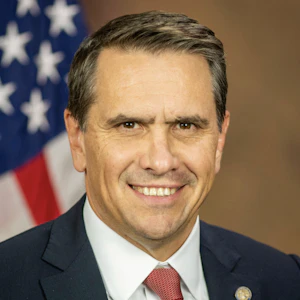
Todd Blanche
Todd Blanche
Biography of Deputy Attorney General Todd Blanche
The Honorable Todd Blanche is the 40th Deputy Attorney General of the United States, overseeing the work of the 115,000 dedicated employees who fulfill the Department of Justice’s mission at Main Justice, the FBI, DEA, U.S. Marshals, ATF, and 93 U.S. Attorney’s Offices.
Todd began his career at the Department where he served for over fifteen years in a variety of capacities, including as a contractor, a paralegal in the Criminal Division, and at the United States Attorney’s office for the Southern District of New York where he eventually became an AUSA and later a supervisor.
After leaving the Department, Todd worked as a criminal defense attorney that included representing President Donald Trump in three of the criminal cases brought against him in 2023 and 2024.
Following President Trump’s historic return to the White House, the President appointed Todd to work alongside Attorney General Pam Bondi to make America safe again. At the DOJ, Todd is working tirelessly to implement President Trump’s priorities that include confronting illegal protecting American businesses from fraud.
Todd has been married to his wonderful wife Kristine for nearly thirty years, is a father and grandfather.

Paul Atkins
Paul Atkins
Prior to returning to the SEC, Chairman Atkins was most recently chief executive of Patomak Global Partners, a company he founded in 2009. Chairman Atkins helped lead efforts to develop best practices for the digital asset sector. He served as an independent director and non-executive chairman of the board of BATS Global Markets, Inc. from 2012 to 2015.
Chairman Atkins was appointed by President George W. Bush to serve as a Commissioner of the SEC from 2002 to 2008. During his tenure, he advocated for transparency, consistency, and the use of cost-benefit analysis at the agency. Chairman Atkins also represented the SEC at meetings of the President’s Working Group on Financial Markets and the U.S.-EU Transatlantic Economic Council. From 2009 to 2010, he was appointed a member of the Congressional Oversight Panel for the Troubled Asset Relief Program.
Before serving as an SEC Commissioner, Chairman Atkins was a consultant on securities and investment management industry matters, especially regarding issues of strategy, regulatory compliance, risk management, new product development, and organizational control.
From 1990 to 1994, Chairman Atkins served on the staff of two chairmen of the SEC, Richard C. Breeden and Arthur Levitt, ultimately as chief of staff and counselor, respectively. He received the SEC’s 1992 Law and Policy Award for work regarding corporate governance matters.
Chairman Atkins began his career as a lawyer in New York, focusing on a wide range of corporate transactions for U.S. and foreign clients, including public and private securities offerings and mergers and acquisitions. He was resident for 2½ years in his firm's Paris office and admitted as conseil juridique in France.
A member of the New York and Florida bars, Chairman Atkins received his J.D. from Vanderbilt University School of Law in 1983 and was Senior Student Writing Editor of the Vanderbilt Law Review. He received his A.B., Phi Beta Kappa, from Wofford College in 1980.
Originally from Lillington, North Carolina, Chairman Atkins grew up in Tampa, Florida. He and his wife Sarah have three sons.

Mike Selig
Mike Selig
Chairman Selig brings to the role deep public and private sector experience working with a wide range of stakeholders across agriculture, energy, financial, and digital asset industries, which rely upon and operate in CFTC-regulated markets.
Prior to his leadership at the CFTC, Chairman Selig most recently served as chief counsel of the Securities and Exchange Commission’s Crypto Task Force and senior advisor to SEC Chairman Paul S. Atkins. In this role, Chairman Selig helped to develop a clear regulatory framework for digital asset securities markets, harmonize the SEC and CFTC regulatory regimes, modernize the agency’s rules to reflect new and emerging technologies, and put an end to regulation by enforcement. He also participated in the President’s Working Group on Digital Asset Markets and contributed to its report on “Strengthening American Leadership in Digital Financial Technology.”
Prior to government service, Chairman Selig was a partner at an international law firm, focusing on derivatives and securities regulatory matters. During his years in private practice, he represented a broad range of clients subject to regulation by the CFTC, including commercial end users, futures commission merchants, commodity trading advisors, swap dealers, designated contract markets, derivatives clearing organizations, and digital asset firms. Chairman Selig advised clients on compliance with the Commodity Exchange Act and the CFTC’s rules and regulations thereunder, including in connection with registration applications and obligations, enforcement matters, and complex transactions.
Chairman Selig earned his law degree from The George Washington University Law School and was articles editor of The George Washington Law Review. He received his undergraduate degree from Florida State University.

David Bailey
David Bailey

Eric Trump
Eric Trump
Mr. Trump also serves as Executive Vice President of The Trump Organization, where he oversees the global management and operations of the Trump family’s extensive real estate portfolio. This includes Trump Hotels, Trump Golf, commercial and residential real estate, Trump Estates, and Trump Winery. Known for his hands-on leadership and strong market instincts, he has played a key role in expanding the company’s presence across major U.S. and international markets.
A globally recognized business leader and public figure, Mr. Trump is a prominent advocate for Bitcoin and decentralized finance. He is a co-founder of World Liberty Financial, a decentralized finance (DeFi) platform, and serves on the Board of Advisors of Metaplanet, Japan’s largest corporate holder of Bitcoin.
Beyond his business activities, Mr. Trump has helped raise more than $50 million for St. Jude Children’s Research Hospital in the fight against pediatric cancer, a philanthropic mission he began at age 21.
Mr. Trump earned a degree in Finance and Management from Georgetown University. He currently resides in Florida with his wife, Lara, and their two children. He is also the author of Under Siege, his memoir published in October 2025.

Jack Mallers
Jack Mallers

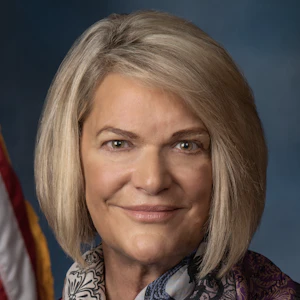
Cynthia Lummis
Cynthia Lummis
As the first-ever Chair of the Senate Banking Subcommittee on Digital Assets, Senator Lummis is the architect of the legislative framework shaping America's digital asset future. She introduced the landmark Lummis-Gillibrand Responsible Financial Innovation Act, the first comprehensive bipartisan crypto regulatory framework in Senate history. She co-authored the GENIUS Act — the first federal stablecoin law ever enacted — and introduced the BITCOIN Act, which would establish a U.S. strategic Bitcoin reserve of up to one million BTC. She is leading the Clarity Act, which will bring long-overdue regulatory certainty to the digital asset industry. She has also championed digital asset tax reform, including a de minimis exemption for small transactions and equal tax treatment for miners and stakers.
Known as Congress' "Crypto Queen," Senator Lummis represents Wyoming — a state she has helped build into one of the most digital asset-friendly regulatory environments in the nation. Before serving in the Senate, she served 14 years in the Wyoming Legislature, eight years as Wyoming State Treasurer, and eight years in the U.S. House. She is a three-time graduate of the University of Wyoming.
Her work represents a crucial bridge between traditional financial systems and the emerging digital economy, ensuring America leads the world in financial innovation while protecting the individual freedoms that define it.

Adam Back
Adam Back

Amy Oldenburg
Amy Oldenburg
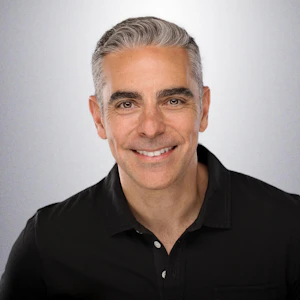
David Marcus
David Marcus

Matt Schultz
Matt Schultz
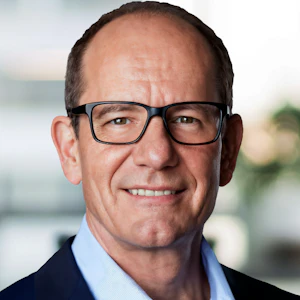
Fred Thiel
Fred Thiel
Throughout his career, Mr. Thiel has consistently driven rapid growth and created substantial shareholder value. Prior to MARA, Mr. Thiel served as the CEO of two other public companies, Local Corporation (NASDAQ: LOCM) and Lantronix, Inc (NASDAQ: LTRX). He has successfully raised billions in equity and debt through private and public offerings, led companies through IPOs, executed high-value exits to strategic and financial acquirers, and implemented effective M&A and roll-up strategies.
Mr. Thiel attended the Stockholm School of Economics and executive classes at Harvard Business School, and is fluent in English, Spanish, Swedish, and French. Mr. Thiel is the Chairman of the Board for Oden Technology, Inc. and is active in Young Presidents’ Organization where he has led initiatives in both the FinTech and Technology Networks.
A recognized voice in the industry, Fred frequently shares his insights on energy and technology with major media outlets like Bloomberg TV, CNBC, and FOX Business, contributing to vital discussions about the future of these sectors.
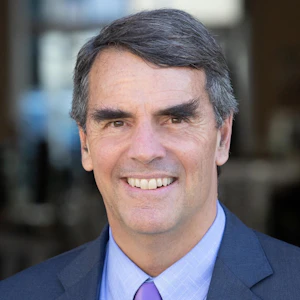
Tim Draper
Tim Draper
He is a supporter and global thought leader for entrepreneurs everywhere, and is a leading spokesperson for Bitcoin and decentralization, having won the Bitcoin US Marshall’s auction in 2014, invested in over 50 crypto companies, and led investments in Coinbase, Ledger, Tezos, and Bancor, among others.

Afroman
Afroman