The Bitcoin Longevity Playbook: Health, Strength, & Vitality
Speakers/Moderators

Brian De Mint
Brian De Mint
Chef Pete Evans
Chef Pete Evans
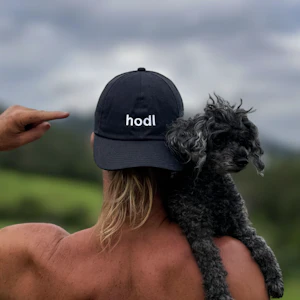
Paleo Way" - a 16 x 30 minute tv cooking series focused on long term regenerative health. Pete hosted PBS A moveable Feast" for 8 seasons, and also hosted Australia's #1 tv series "My Kitchen Rules" for 11 years. Petes'
"Evolve Podcast" features over 500 episodes focusing on long term regenerative health and wealth (only bitcoin is discussed in regards to wealth). Australia's most controversial celebrity for challenging the mainstream agenda on health as well as questioning covid loudly (subsequently cancelled losing over 2 million followers and 15 business. Hit latest offering is The Primal Code, a book featuring over 100 nutritious recipes, which also takes a deep dive into bitcoin and shares the similarities between bitcoin and long term regenerative health.
Erin Crawford
Erin Crawford
Kellie Okonek
Kellie Okonek
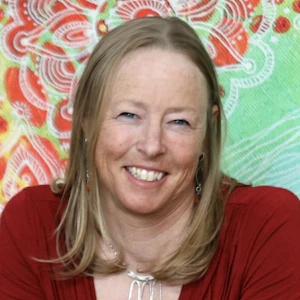
She is also on a mission to integrate Bitcoin mining into oil and gas operations. A former BP executive (with experience at Shell and ExxonMobil too!) who's operated major fields in Alaska, Oman, and Iraq, she sees the marriage of the two industries as inevitable and is working to accelerate it.
Kellie is committed to helping Bitcoiners amplify their lives beyond the financial realm, using Bitcoin to create richness across the spectrum.
Session
Overview
The Bitcoin Longevity Playbook brought together Chef Pete Evans, Erin Crawford, Kellie Okonek, and host Brian De Mint for a discussion on health, physical strength, purpose, and resilience through a Bitcoin lens.
The panel connected low time preference with personal health, arguing that sovereignty should apply to the body as well as money. Speakers discussed nutrition, strength training, emotional resilience, community, and the importance of questioning default systems around medicine, food, and aging.
A recurring theme was healthspan over lifespan: not just living longer, but remaining strong, mobile, curious, and connected. The conversation framed Bitcoiners as people already inclined to question narratives, making them well positioned to rethink longevity, vitality, and personal responsibility.
Ladies and gentlemen, boys and girls, welcome to the main event of the evening. Come on over to the Genesis Stage, where we have the main event of the conference.
Starting to my right, we have Pete Evans, world-famous restaurateur, Australia's favorite celebrity chef, and Australia's number one selling author of over 35 cookbooks. He's the creator of The Magic Pill documentary, and he was famously canceled during COVID for speaking out for your rights.
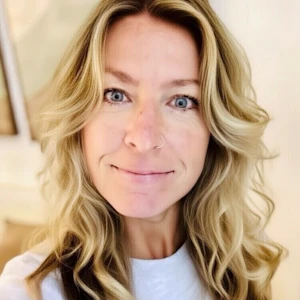
Next up, we have Erin Crawford. She's a Bitcoin educator, a strength and conditioning coach for women, and a death doula. You might know her from her X handle, Death and Bitcoin.
And last but not least, we have Kellie Okonek, a successful oil and gas veteran, now full-time Bitcoin maxi leading immersive experiences into the Alaskan wilderness through her work at Vital Systems.
All right, I've been waiting all week to do that. Somebody gives you a microphone at the Bitcoin Conference, you yell into it.
You better tell them who you are, Brian.
Thank you for the segue. My name is Brian De Mint. I am the head of public relations at Club Orange. If you don't know what Club Orange is yet, we have a booth right over there. If you enjoyed the conference experience of meeting other Bitcoiners in real life, that is precisely what Club Orange does. When you go home, there are Bitcoiners in your neighborhood, and you will find them with Club Orange. So take this experience home and enjoy in-real-life connections with other Bitcoiners.
We are talking about the Bitcoin longevity playbook. The reason why we have these three amazing individuals in front of you today is because they represent different pillars within health and wellness and longevity. Without further ado, I'll kick it over to the panel. I want you to introduce yourselves briefly and share a little bit about your work in health, wellness, longevity, and Bitcoin. Pete, I'm going to kick it over to you first.
Thanks. Stoked to be up here with you all. G'day, everyone. Thanks for joining us. I'll keep it as simple as I can. I believe food is one of the solutions for many hurdles people face in life, understanding what food can do in a positive way.
At the same time, understanding Bitcoin as a solution gives ourselves sovereignty, responsibility, and ownership again, potentially out of what some would call a corrupt financial system, and on the other side, maybe a corrupt medical system. Even though it has some benefits, I will do everything I can for myself and my family to keep us out of that system and to support the Bitcoiners in the world.
I think this is a great meeting of two different walks of life, maybe one walk of life, but they intersect so beautifully. It's about your health, your wealth, and leading by example.
Beautiful. Erin, I'm kicking it to you.
Thank you. Ultimately, I would say that I work for myself, first and foremost. I focus on my own sovereignty, my own robustness, my own strength, and my own freedom. In doing that work for myself, it organically projects its way out onto other people.
People come to me and ask, what are you doing? If they fit in with what I'm doing or if they're curious, then I take those people on and work with them.
My whole thesis at this point is to be hard to kill. You want to be hard to kill. That doesn't mean you're trying to avoid death, because newsflash, that's not going to happen. But you do get to decide how you want to go into that death. Do you want to do it in a cognizant, robust, active sort of way? Or do you want to slowly disintegrate over the last decade or two of your life and lose all sense of agency and sovereignty as you go through that process?
Just like Bitcoin, right? Bitcoin is a honey badger. Bitcoin is hard to kill. You get to a certain point in your Bitcoin journey when you look at the other areas of your life and ask, where am I still vulnerable? What are my vulnerabilities? I want to be more like Bitcoin. I want to embody all of the things that Bitcoin is.
Currently, the phase that I'm in is putting on muscle. I can talk more about that later.
Kellie, let me kick it down to you.
My company is called Vital Systems, and I call myself a vitality architect because I help people design lives around the truth of who they really are and infuse vitality into the way we live and lead. My career was oil and gas, which for me was a playground in what brings people and systems to life, and how you drive change into a major oil and gas company. If you can do it there, you can do it anywhere.
Then I left six years ago and educated myself. I was like, why did that work? What's the neurobiology behind it? And how can I craft those kinds of experiences for other people? So that's my jam. I want to live and lead with the truth of who we are, infuse vitality, and enjoy the heck out of it.
Love it. As you can see, we have a banger panel for you. Now, I want to take this over to the audience. The next question is actually for the audience. I'm going to ask you, and we're going to do a raise of hands.
Let's say in the West, because not everybody is from the United States. It could be Canada, Australia, or Western society generally. Are our health regulators benevolent, are they stupid, or are they nefarious?
Who believes that our health regulators are benevolent? That means good. Who believes that they are stupid? Who believes that they're nefarious, that they are intentionally harming you?
Wow. Panel, that is your audience. You just gave them permission to get into the dark web stuff right now, so they can share the good stuff.
That leads me to my next question. Fat, sick, weak, and unhealthy: why would a system with these outcomes be the default system?
Can I answer that?
Please do. I want you all to answer.
The state doesn't want you dead because you are their resource, right? The government, they're parasites, and they are feeding off of your time and your energy. They don't want you dead. They want Bitcoiners and open-source coders and people who don't follow the rules dead. But they want the majority of people just barely alive so that they can continue to siphon resources away from them. That's why everybody is sick and fat and weak and all the other things, in my opinion.
Can I follow? I love that you use the word default, because I talk about living a default life. That's the life we're given, the way we wind up being. Our dopamine systems are routinely hijacked by everything in culture, right? Social media, food, substances, everything.
The alternative to that is a creative life, connecting to the version of ourselves that we love the most and designing our lives around it. But the truth of that is that it takes work, and a lot of people don't do that work. Most people end up with the default unless they make a decision to create something better.
And they're disabled from ever doing that work because they've been poisoned intentionally.
Hijacked.
I'll offer a little bit of a different perspective, similar lines. I've interviewed hundreds and hundreds of doctors over the years, and they're usually the doctors who have decided to expand their education. A lot of doctors, nurses, and the medical fraternity go into it for the right reasons. They do.
But along the way, they realize that perhaps you've got great trauma care, but in managing chronic health or helping people with chronic health issues, they get to a point in their career where they're like, what I'm offering and what I've learned isn't working for my patient.
The brave ones step out to find more information. They can look at bringing in natural remedies or cures. They can look at diet as one of the tools. There are so many tools that a lot of these doctors start to implement into their lives and into their practices. Then they finally start seeing the results that they went into medicine for.
The one thing in common with these people is that it's a very small percentage of them, because it takes great courage and bravery to question everything they've learned at medical school for six, seven, eight years and then go against the grain.
I think it's nefarious by nature, but I think change is going to take a lot more brave individuals questioning why the system they're currently working in isn't working. I think there are amazing doctors out there. I'm a big proponent of modern medicine, but also ancient wisdom and natural therapies. I think that is what being whole is: looking at the best of everything and incorporating it into your life in whichever way you can.
So it's not us against them. It's actually us working with the ones who are open to working with us.
That's a great answer. I think that leads us into why this panel is here. Why is this happening at a Bitcoin conference? Why do you think Bitcoiners are uniquely positioned to change the narrative on health, appropriate aging, and longevity? Why do we have the high ground, or why should we fight for the high ground based on our position as Bitcoiners? Why do those things overlap?
I think I might go with this one, if that's okay. I've been in the Bitcoin space roughly seven years now, and the one thing I've noticed about Bitcoiners, and those doctors I was speaking about, is that Bitcoiners seem to look outside the box as well. They're curious about what else, what tools we have to help us navigate for the rest of our lives.
As you were saying, we can die a great death when it's time and hopefully be able to pass on our wealth that we've worked so hard for to our children or grandchildren and create generational wealth. The people I've met in the Bitcoin space over the last six or seven years see a vision for humanity that I believe they're going to create, or are creating, at this particular point in time.
I think we're so optimistic about the future, and Bitcoiners are going to play a significant role in the future of humanity. I think it's inevitable. I think we've already crossed that Rubicon, so to speak, and the future is looking very orange and bright.
I would just say Bitcoiners are here to rewrite the narrative on everything, right? Once you see through the narrative that we've been taught about money and food and health and life in general, once you bust out of that and actually learn what money is and what time is and what energy is, you realize all that was bullshit.
Then you look out at all the other shit you're being told, and you're like, maybe that's bullshit too. We're positioned to change the narrative on aging and dying because that's what Bitcoiners do. We change the narrative, period. We can't not.
I would just say Bitcoiners have a long time horizon, an orientation toward truth, and an ability to step outside the current. With those things, we can choose truth in our lives, and we can go through the work, oftentimes very uncomfortable, not for the faint of heart, as I like to say, of authoring our own lives, bringing our own dopamine systems back, and resisting whatever forces are fighting against us being who we are and who we love.
Well said. If you're like me, at some point you found yourself muttering, the rich and the powerful, they made things this way. Are you not Bitcoiners? Are you not the new rich and powerful? Start acting like it. It takes riches and power to change things, and Bitcoiners, from the bottom up, are going to become the rich and powerful. The ball is absolutely in our court.
That leads into the next question. We've talked about death and longevity, but what does it mean to be alive? I think we often ask, how do I prolong my life? But what does it even mean? What is the foundational premise that we're talking about? What are we trying to preserve? What does it mean to be alive? What does that mean to you?
I think every single human being on the face of the planet is a genius. Each and every one of us has our own unique talents, abilities, and gifts that we can share if we're unafraid and brave, without having any expectation of whether they will be received or not.
Each one of us can cultivate a new skill and a new talent. Some of us are born with certain gifts and talents. I think true purpose in life is just to express that in whatever way brings us joy. I think that adds to the longevity equation, where you are authentically you.
Human beings by nature are curious. Fear can be something that can be celebrated. If we have insecurities and fears, and we dive deep into why that belief about that insecurity or fear has arisen, it could be from our parents, it could be from our culture, from speaking out, from being canceled. Every time we confront our insecurities and fears, however small or large they may be, that brings us greater freedom, greater resilience, and more of an opportunity to express who we are and share those talents with whoever is out there that resonates with your unique coherence, frequency, vibration, whatever woo-woo you want to call it, just your beautiful, unique self.
Never be ashamed of who you are. I think that is our true nature, to be authentically, unapologetically our unique selves in life and share that in whatever way brings you joy.
Thank you, Pete. Kellie, you were excited to answer that.
I forgot what the question was.
What does it mean to be alive?
I'm honestly just imagining when I dropped off the summit of Aconcagua and arced the most powerful turn down the most beautiful snow, impossibly perfect. I think, God damn, that's what it means for me to be alive.
Generally speaking, being alive is pulsing with the current of my own life force, feeling it all, and being so thrilled with the entire experience. For me, that's carving turns and landing my airplane in the middle of nowhere and finding a gorgeous glacier. Whatever it is for everybody, that's what I want.
I want a world full of people who know how to connect to their pulsing life force, share their ideas, and put their contributions into the world. If we're all doing that in our own unique ways, life gets so fascinating. It's so interesting, so vibrant, so colorful. That's what I want to be a part of.
When we treat people like machines, it's almost like we're cogs in a wheel, the leftover of the Industrial Revolution. We suck the life out of everything, and we're not machines. We're humans. Messy, complicated humans. When we lean into that and just human hard and enjoy the hell out of it, yes, please. That's what life is to me, and that's the world I want to live in.
I think the idea of being alive is a very broad spectrum, so it all depends on how you define it as an individual. Obviously, there's a major difference between being kept alive by artificial external means versus being alive on the inside.
Do I feel a connection to self? Do I feel a connection to others? Do I feel a connection to God? Am I part of something outside of myself so that I'm not just trapped in here? I want to know that I'm living in an expansive, connected existence so that I can get the juice out of the squeeze.
I don't always feel that way. I think it's cyclical. I've had times where I've felt really aimless and really depressed, even on this Bitcoin journey. But then I read the Bible because I thought maybe I'd find some shit in there. And I did. It's all a process, really. That's what it means for me anyhow.
Can I build on that? I do think being alive is feeling all the feels, right, and going with the cycles of it. That's one thing, ironically, Bitcoin offers. Those cycles can bring out our own humanity. Actually letting our humanity be there, letting it be hard, letting it be painful, and being able to stay with it is part of what allows us not to be hijacked by the world out there, which tries to teach us that feeling discomfort means something is wrong or something is bad. It just means something is natural.
And if you go to your doctor and they ask how you're feeling lately, and you say, well, I'm kind of feeling depressed, they'll say, here, just take this pill. Don't worry about those feelings. You'll be fine on this. But then you miss a massive opportunity to find joy and blessings amidst your suffering, right? And the next opportunity. Because you have to know that you're suffering for a reason.
Unfortunately, we have to wind this up in a few minutes here. I did want to push back and play devil's advocate for just a second. We're here saying Bitcoiners and holistic health and longevity, adding to people's lives. But under Western medicine, we've seen life expectancy increase. You're telling me that we need to go back to the old way of doing things, that we need to be in touch with Mother Nature or whatever you hippies are saying over here. Does that not completely disprove your point? Western medicine has added years to people's lives. What do you say to that?
I say it's a yes-and proposition. You say it's added years. I say, at what cost? Are those good years? I don't think it's a numerical question. What's the quality?
While I do advocate return to nature, it's a yes-and proposition. I'm going to return to nature with my iPhone for navigation. I want to eat good food, but when I have a torn ACL, I would like an orthopedic surgeon, thank you very much.
I think it's a yes-and, and I do think Western medicine has a place in healthspan. But I think the game is healthspan, not lifespan. Good years, not necessarily more years. But the path to more years is good years.
For me, when I envision what kind of old lady I want to be, there's no way I'm going to be that hunched-over little old lady shuffling down the street. Bitcoiners aren't going out like that. Frailty is fiat. If you're frail as you get old, you're fucked. There you go. I said it.
Can we be old ladies together?
In terms of quality versus quantity, there are a lot of old people out there, but they no longer have the mobility or functionality to wipe their own ass. That's not for me. That's why I lift weights: so I can always wipe my own ass.
Sounds like a shirt.
I like to think that we can add decades to our life and life to our decades. Not just years or minutes, but decades. I'm 53 in a couple of months, and I surf and I ski occasionally. One thing that gives me inspiration is when I go surfing, I'm surfing with 78-year-olds. When I go skiing, I see 80- and 90-year-olds out there on the slopes.
Going back to what I was saying before, we have our gifts, talents, and expressions. But finding things we love to do, things we actually really love to do, like surfing and skiing, apart from cooking for our family, eating a good meal, and having great conversations up on stage. Finding the things that bring us joy, filling our car up as often as we can with passionate things that bring us so much joy. I believe it's as simple as that.
If you do not know what brings you joy, go back to your childhood and think about what brought a smile to your face, made you laugh, and made you curious. Keep finding the things that every day, or once a week, or whatever you can, bring you joy. This is what's going to extend our life, because we're going to look forward to doing the things we love, because we love doing them. I think it is that simple.
Don't get stagnant. Don't stop moving. Don't stop learning. Don't stop being open. If you stop the flow of your own energy, you're done for. You're not plugged into the energetic flow anymore. That's it. Stay curious, have fun, learn shit.
I would add community. I think that's the wrapper around that. If you have a place where you belong, and you have people you belong with, there's an accountability factor that can aid that.
There are so many things we can do, but staying curious and staying fun, like you said, you get to fill your cup. There are different ways to do it. What was so amazing about this panel today was that they each have a full competency, but you can clearly see that there's so much overlap.
We have 60 seconds left. We've kind of knocked on Western medicine and talked about holistic health. Is the future what you are hinting at, that Bitcoiners take the high ground and there becomes a merging of what works from old medicine and new medicine, and we get the best medicine? Can you give a buttoned-up, quick yes, no, and maybe one-sentence answer?
Yes.
That's right. We have the best medicine physically, mentally, emotionally, spiritually, and energetically, and Bitcoin prepares you for that. If you're new to Bitcoin, you might not understand what I'm talking about right now, but I'm telling you, if you keep going down the Bitcoin rabbit hole, you will see how all that comes together. It will change your life, if you let it, in every possible way.
This was an amazing conference. Thank you, Bitcoin Conference, for having us out. We are appreciative. Everybody in the audience, you were marvelous. This was Pete, Erin, and Kellie. Go find them on Club Orange, wherever you can find them. We'll be backstage if you want to talk some more. Thank you, everyone.
Similar
Sessions
Bitcoin: Did It Change You, or Did You Find It at the Right Time?

Carly Benson
Carly Benson
Carly became a Bitcoin-only Bitcoiner in 2017 after living in Las Vegas and interacting with the professional poker and sports betting community. She learned about Bitcoin by seeing use-cases for it as the whales of the gambling world have been betting, settling and transacting in BTC for many years.
Before getting in to the Bitcoin space, Carly ran her own successful marketing consultancy for 18 years and was known as an alcohol-free SME, Course Creator and Yoga Instructor.
She has given talks around the world and her work and courses have helped thousands change their relationship with alcohol. She’s been featured in Women’s Health, SELF magazine, Extra TV, Travel Zoo and other notable outlets.
Chef Pete Evans
Chef Pete Evans
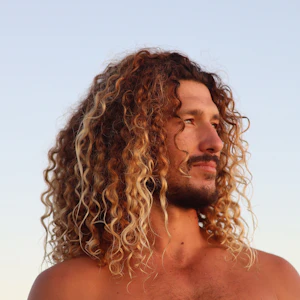
Paleo Way" - a 16 x 30 minute tv cooking series focused on long term regenerative health. Pete hosted PBS A moveable Feast" for 8 seasons, and also hosted Australia's #1 tv series "My Kitchen Rules" for 11 years. Petes'
"Evolve Podcast" features over 500 episodes focusing on long term regenerative health and wealth (only bitcoin is discussed in regards to wealth). Australia's most controversial celebrity for challenging the mainstream agenda on health as well as questioning covid loudly (subsequently cancelled losing over 2 million followers and 15 business. Hit latest offering is The Primal Code, a book featuring over 100 nutritious recipes, which also takes a deep dive into bitcoin and shares the similarities between bitcoin and long term regenerative health.

Richard Byworth
Richard Byworth
Analyze and speak about financial engineering capabilities of Bitcoin treasury companies and advise companies on how to optimize amount of bitcoin on balance sheet. Advisor at UK BTCTC XCE Connecting Excellence, and Chairman at Future (Swiss BTCTC).
For Jan3, act in an advisory capacity for a few sovereign nations, and on energy infrastructure financing structuring options in countries in LATAM and Middle Asia.
Board member at Relai, helping onboard HNWI and FOs to bitcoin.
Bitcoin: Did It Change You, or Did You Find It at the Right Time?
Speakers/Moderators
Carly Benson
Carly Benson
Carly became a Bitcoin-only Bitcoiner in 2017 after living in Las Vegas and interacting with the professional poker and sports betting community. She learned about Bitcoin by seeing use-cases for it as the whales of the gambling world have been betting, settling and transacting in BTC for many years.
Before getting in to the Bitcoin space, Carly ran her own successful marketing consultancy for 18 years and was known as an alcohol-free SME, Course Creator and Yoga Instructor.
She has given talks around the world and her work and courses have helped thousands change their relationship with alcohol. She’s been featured in Women’s Health, SELF magazine, Extra TV, Travel Zoo and other notable outlets.
Chef Pete Evans
Chef Pete Evans
Paleo Way" - a 16 x 30 minute tv cooking series focused on long term regenerative health. Pete hosted PBS A moveable Feast" for 8 seasons, and also hosted Australia's #1 tv series "My Kitchen Rules" for 11 years. Petes'
"Evolve Podcast" features over 500 episodes focusing on long term regenerative health and wealth (only bitcoin is discussed in regards to wealth). Australia's most controversial celebrity for challenging the mainstream agenda on health as well as questioning covid loudly (subsequently cancelled losing over 2 million followers and 15 business. Hit latest offering is The Primal Code, a book featuring over 100 nutritious recipes, which also takes a deep dive into bitcoin and shares the similarities between bitcoin and long term regenerative health.
Richard Byworth
Richard Byworth
Analyze and speak about financial engineering capabilities of Bitcoin treasury companies and advise companies on how to optimize amount of bitcoin on balance sheet. Advisor at UK BTCTC XCE Connecting Excellence, and Chairman at Future (Swiss BTCTC).
For Jan3, act in an advisory capacity for a few sovereign nations, and on energy infrastructure financing structuring options in countries in LATAM and Middle Asia.
Board member at Relai, helping onboard HNWI and FOs to bitcoin.
The Bitcoin Longevity Playbook: Health, Strength, & Vitality
Brian De Mint
Brian De Mint
Chef Pete Evans
Chef Pete Evans
Paleo Way" - a 16 x 30 minute tv cooking series focused on long term regenerative health. Pete hosted PBS A moveable Feast" for 8 seasons, and also hosted Australia's #1 tv series "My Kitchen Rules" for 11 years. Petes'
"Evolve Podcast" features over 500 episodes focusing on long term regenerative health and wealth (only bitcoin is discussed in regards to wealth). Australia's most controversial celebrity for challenging the mainstream agenda on health as well as questioning covid loudly (subsequently cancelled losing over 2 million followers and 15 business. Hit latest offering is The Primal Code, a book featuring over 100 nutritious recipes, which also takes a deep dive into bitcoin and shares the similarities between bitcoin and long term regenerative health.
Erin Crawford
Erin Crawford
Kellie Okonek
Kellie Okonek
She is also on a mission to integrate Bitcoin mining into oil and gas operations. A former BP executive (with experience at Shell and ExxonMobil too!) who's operated major fields in Alaska, Oman, and Iraq, she sees the marriage of the two industries as inevitable and is working to accelerate it.
Kellie is committed to helping Bitcoiners amplify their lives beyond the financial realm, using Bitcoin to create richness across the spectrum.
The Bitcoin Longevity Playbook: Health, Strength, & Vitality
Speakers/Moderators
Brian De Mint
Brian De Mint
Chef Pete Evans
Chef Pete Evans
Paleo Way" - a 16 x 30 minute tv cooking series focused on long term regenerative health. Pete hosted PBS A moveable Feast" for 8 seasons, and also hosted Australia's #1 tv series "My Kitchen Rules" for 11 years. Petes'
"Evolve Podcast" features over 500 episodes focusing on long term regenerative health and wealth (only bitcoin is discussed in regards to wealth). Australia's most controversial celebrity for challenging the mainstream agenda on health as well as questioning covid loudly (subsequently cancelled losing over 2 million followers and 15 business. Hit latest offering is The Primal Code, a book featuring over 100 nutritious recipes, which also takes a deep dive into bitcoin and shares the similarities between bitcoin and long term regenerative health.
Erin Crawford
Erin Crawford
Kellie Okonek
Kellie Okonek
She is also on a mission to integrate Bitcoin mining into oil and gas operations. A former BP executive (with experience at Shell and ExxonMobil too!) who's operated major fields in Alaska, Oman, and Iraq, she sees the marriage of the two industries as inevitable and is working to accelerate it.
Kellie is committed to helping Bitcoiners amplify their lives beyond the financial realm, using Bitcoin to create richness across the spectrum.
Other
Speakers
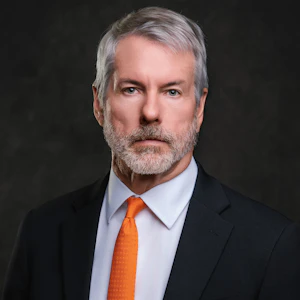
Michael Saylor
Michael Saylor
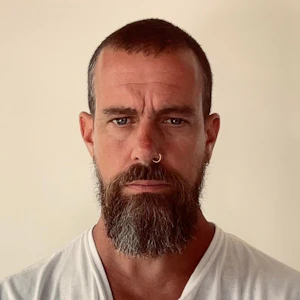
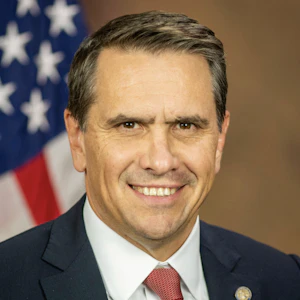
Todd Blanche
Todd Blanche
Biography of Deputy Attorney General Todd Blanche
The Honorable Todd Blanche is the 40th Deputy Attorney General of the United States, overseeing the work of the 115,000 dedicated employees who fulfill the Department of Justice’s mission at Main Justice, the FBI, DEA, U.S. Marshals, ATF, and 93 U.S. Attorney’s Offices.
Todd began his career at the Department where he served for over fifteen years in a variety of capacities, including as a contractor, a paralegal in the Criminal Division, and at the United States Attorney’s office for the Southern District of New York where he eventually became an AUSA and later a supervisor.
After leaving the Department, Todd worked as a criminal defense attorney that included representing President Donald Trump in three of the criminal cases brought against him in 2023 and 2024.
Following President Trump’s historic return to the White House, the President appointed Todd to work alongside Attorney General Pam Bondi to make America safe again. At the DOJ, Todd is working tirelessly to implement President Trump’s priorities that include confronting illegal protecting American businesses from fraud.
Todd has been married to his wonderful wife Kristine for nearly thirty years, is a father and grandfather.
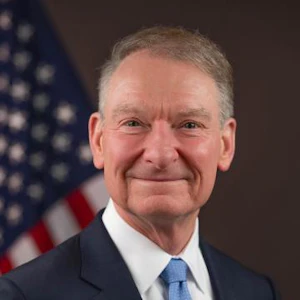
Paul Atkins
Paul Atkins
Prior to returning to the SEC, Chairman Atkins was most recently chief executive of Patomak Global Partners, a company he founded in 2009. Chairman Atkins helped lead efforts to develop best practices for the digital asset sector. He served as an independent director and non-executive chairman of the board of BATS Global Markets, Inc. from 2012 to 2015.
Chairman Atkins was appointed by President George W. Bush to serve as a Commissioner of the SEC from 2002 to 2008. During his tenure, he advocated for transparency, consistency, and the use of cost-benefit analysis at the agency. Chairman Atkins also represented the SEC at meetings of the President’s Working Group on Financial Markets and the U.S.-EU Transatlantic Economic Council. From 2009 to 2010, he was appointed a member of the Congressional Oversight Panel for the Troubled Asset Relief Program.
Before serving as an SEC Commissioner, Chairman Atkins was a consultant on securities and investment management industry matters, especially regarding issues of strategy, regulatory compliance, risk management, new product development, and organizational control.
From 1990 to 1994, Chairman Atkins served on the staff of two chairmen of the SEC, Richard C. Breeden and Arthur Levitt, ultimately as chief of staff and counselor, respectively. He received the SEC’s 1992 Law and Policy Award for work regarding corporate governance matters.
Chairman Atkins began his career as a lawyer in New York, focusing on a wide range of corporate transactions for U.S. and foreign clients, including public and private securities offerings and mergers and acquisitions. He was resident for 2½ years in his firm's Paris office and admitted as conseil juridique in France.
A member of the New York and Florida bars, Chairman Atkins received his J.D. from Vanderbilt University School of Law in 1983 and was Senior Student Writing Editor of the Vanderbilt Law Review. He received his A.B., Phi Beta Kappa, from Wofford College in 1980.
Originally from Lillington, North Carolina, Chairman Atkins grew up in Tampa, Florida. He and his wife Sarah have three sons.

Mike Selig
Mike Selig
Chairman Selig brings to the role deep public and private sector experience working with a wide range of stakeholders across agriculture, energy, financial, and digital asset industries, which rely upon and operate in CFTC-regulated markets.
Prior to his leadership at the CFTC, Chairman Selig most recently served as chief counsel of the Securities and Exchange Commission’s Crypto Task Force and senior advisor to SEC Chairman Paul S. Atkins. In this role, Chairman Selig helped to develop a clear regulatory framework for digital asset securities markets, harmonize the SEC and CFTC regulatory regimes, modernize the agency’s rules to reflect new and emerging technologies, and put an end to regulation by enforcement. He also participated in the President’s Working Group on Digital Asset Markets and contributed to its report on “Strengthening American Leadership in Digital Financial Technology.”
Prior to government service, Chairman Selig was a partner at an international law firm, focusing on derivatives and securities regulatory matters. During his years in private practice, he represented a broad range of clients subject to regulation by the CFTC, including commercial end users, futures commission merchants, commodity trading advisors, swap dealers, designated contract markets, derivatives clearing organizations, and digital asset firms. Chairman Selig advised clients on compliance with the Commodity Exchange Act and the CFTC’s rules and regulations thereunder, including in connection with registration applications and obligations, enforcement matters, and complex transactions.
Chairman Selig earned his law degree from The George Washington University Law School and was articles editor of The George Washington Law Review. He received his undergraduate degree from Florida State University.
David Bailey
David Bailey

Eric Trump
Eric Trump
Mr. Trump also serves as Executive Vice President of The Trump Organization, where he oversees the global management and operations of the Trump family’s extensive real estate portfolio. This includes Trump Hotels, Trump Golf, commercial and residential real estate, Trump Estates, and Trump Winery. Known for his hands-on leadership and strong market instincts, he has played a key role in expanding the company’s presence across major U.S. and international markets.
A globally recognized business leader and public figure, Mr. Trump is a prominent advocate for Bitcoin and decentralized finance. He is a co-founder of World Liberty Financial, a decentralized finance (DeFi) platform, and serves on the Board of Advisors of Metaplanet, Japan’s largest corporate holder of Bitcoin.
Beyond his business activities, Mr. Trump has helped raise more than $50 million for St. Jude Children’s Research Hospital in the fight against pediatric cancer, a philanthropic mission he began at age 21.
Mr. Trump earned a degree in Finance and Management from Georgetown University. He currently resides in Florida with his wife, Lara, and their two children. He is also the author of Under Siege, his memoir published in October 2025.
Jack Mallers
Jack Mallers
Cynthia Lummis
Cynthia Lummis
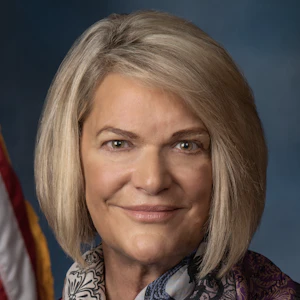
As the first-ever Chair of the Senate Banking Subcommittee on Digital Assets, Senator Lummis is the architect of the legislative framework shaping America's digital asset future. She introduced the landmark Lummis-Gillibrand Responsible Financial Innovation Act, the first comprehensive bipartisan crypto regulatory framework in Senate history. She co-authored the GENIUS Act — the first federal stablecoin law ever enacted — and introduced the BITCOIN Act, which would establish a U.S. strategic Bitcoin reserve of up to one million BTC. She is leading the Clarity Act, which will bring long-overdue regulatory certainty to the digital asset industry. She has also championed digital asset tax reform, including a de minimis exemption for small transactions and equal tax treatment for miners and stakers.
Known as Congress' "Crypto Queen," Senator Lummis represents Wyoming — a state she has helped build into one of the most digital asset-friendly regulatory environments in the nation. Before serving in the Senate, she served 14 years in the Wyoming Legislature, eight years as Wyoming State Treasurer, and eight years in the U.S. House. She is a three-time graduate of the University of Wyoming.
Her work represents a crucial bridge between traditional financial systems and the emerging digital economy, ensuring America leads the world in financial innovation while protecting the individual freedoms that define it.
Adam Back
Adam Back
Amy Oldenburg
Amy Oldenburg
David Marcus
David Marcus

Matt Schultz
Matt Schultz
Fred Thiel
Fred Thiel
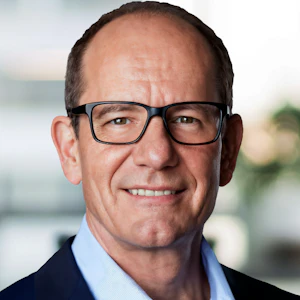
Throughout his career, Mr. Thiel has consistently driven rapid growth and created substantial shareholder value. Prior to MARA, Mr. Thiel served as the CEO of two other public companies, Local Corporation (NASDAQ: LOCM) and Lantronix, Inc (NASDAQ: LTRX). He has successfully raised billions in equity and debt through private and public offerings, led companies through IPOs, executed high-value exits to strategic and financial acquirers, and implemented effective M&A and roll-up strategies.
Mr. Thiel attended the Stockholm School of Economics and executive classes at Harvard Business School, and is fluent in English, Spanish, Swedish, and French. Mr. Thiel is the Chairman of the Board for Oden Technology, Inc. and is active in Young Presidents’ Organization where he has led initiatives in both the FinTech and Technology Networks.
A recognized voice in the industry, Fred frequently shares his insights on energy and technology with major media outlets like Bloomberg TV, CNBC, and FOX Business, contributing to vital discussions about the future of these sectors.
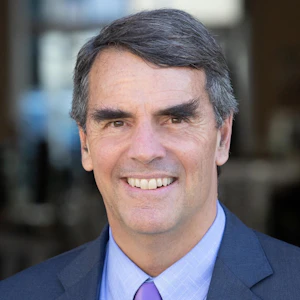
Tim Draper
Tim Draper
He is a supporter and global thought leader for entrepreneurs everywhere, and is a leading spokesperson for Bitcoin and decentralization, having won the Bitcoin US Marshall’s auction in 2014, invested in over 50 crypto companies, and led investments in Coinbase, Ledger, Tezos, and Bancor, among others.

Afroman
Afroman