Through the Eyes of a Cypherpunk Legend: Hyperbitcoinization = HyperAmericanization
Session
Overview
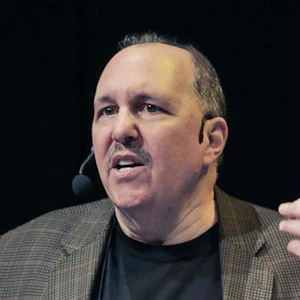
Paul Rosenberg connects hyperbitcoinization with what he calls hyper-Americanization, arguing that Bitcoin carries forward a core American idea: individuals as primary actors rather than subjects of hierarchy. He frames this through faith, creation, and the willingness to build something new despite social pressure and uncertainty.
The talk draws parallels between early American colonists, revolutionary thinkers, cypherpunks, cryptographers, and Bitcoin builders. Rosenberg references John Locke, Thomas Paine, Thomas Jefferson, John Perry Barlow, Timothy C. May, Satoshi, Diffie-Hellman key exchange, and the early financial cryptography movement to show a recurring pattern of people creating new realms of freedom.
He emphasizes that Bitcoin is not a perfect solution to every human problem, but sees decentralization, solid money, cooperation, and self-directed action as meaningful improvements over hierarchical systems. The session positions Bitcoin as a network that encodes users as nodes and independent participants, reinforcing the broader theme of personal agency.
Yes, yes. Thank you very much. It's a pleasure to be here.
Let's talk about hyperbitcoinization and hyper-Americanization, a very interesting topic. It goes into some really interesting places, and I think you're going to be a little surprised where this ends up.
Let's start here. I don't know why I have a big X on there, but there we go. This is the kind of thing I would normally end a presentation with, but it's really very important. It brings us to our point.
We believe that the good, the useful, and the beautiful grow in us.
This is a really important point because it makes us primaries, not secondaries. It makes us sources, not derivatives. That's a really important concept I'd like you to hold in mind, because if the good grows in us, we're the source.
I'm kind of a scientific guy, and I like to use scientific analogies all the time. One of them is that all things physical in the universe that we know of seek a least energy principle. Everything tries to use the minimal amount of energy. This is true at the subatomic level, and it's true in human affairs, where people are trying to be careful. Don't make a mistake. Don't go too far. Stay where you're safe.
But there is an issue with that. The physical world goes to entropy, which is where it wears down and wears out. But life doesn't. Life is actually recognized by its ability to transcend entropy, to take things that are worn out and put them back together into something highly organized and important.
Think of a fruit tree, an apple tree. It takes in water from the soil, it takes in minerals from the soil, it takes in sunlight, it takes some gases from the air, and organizes it all and turns it into fruit. This is a transcendence, a reversal of entropy, of everything wearing out. This is going in the opposite direction. And everything alive does that.
There's one kind of exception, and that is us. Humans can do this willfully, when we want to or not. We can't run as fast as a deer, but we can build machines that take us much faster, much farther. We can't fly like a bird, but we have machines that we can create, that we did create on purpose, with energy and effort, that take us almost immeasurably farther and faster.
Humans can do this willfully, but only if we break that least energy state, only if we care about something. If there's something we really want, something that's in the proper sense of the term sacred to us, something that matters to us, then we can create. I don't know how far we can go. And we do it willfully. That's completely unique in nature.
But this choice to break the least energy state, to care about something and build something you want, this really is faith. What's the Bible line about faith? It's the substance of things hoped for, of things not seen. This is where it begins, because we decide to create something that matters, something we have passion for.
This is what drove America. This is what drove Bitcoin. It's the same base.
This is one of the first acts of faith that you see all over the North American colonies. This is an indentured servitude contract. Indentured servitude was not slavery. I'm sure there were some bad cases, but there are bad cases now. Everywhere we look, there's a bad case in something, because humans aren't fully developed. We've got problems that we still need to fix.
But this was how poor boys and poor girls, by the way, there were a lot of young women who came, easily a million people, came from England to America this way. And why this way? Because how is a poor boy living in Devonshire going to get to America? He can't do this. So a bunch of business guys put together this arrangement where you went and worked for three years, and then you came out of your employment contract.
Think of the faith it took for these people. Think of the conviction they had to have to do this. That's very important. And think also that their families were probably not overall pleased with them.
This is another very important one. This is a little town in Massachusetts, three years before Jefferson and his declaration. These guys say, essentially, that they have the right to judge kings. It says, "The ruled have a right to refuse new laws, and to judge for themselves when rulers are transgressing." You think it took a little bit of determination and courage to say this in 1773?
But these people were convinced, and became convinced, that they were the primaries, that they had a right to build what they wanted and to live as they wanted. They were convinced that they understood it and they could judge kings. That's a big deal.
Here it is for Bitcoiners. This is Diffie and Hellman, for those of you who know the Diffie-Hellman key exchange, which is fundamental to Bitcoin and several other things. These are young men who had a passion for something, who went out to do something that had never been done before: to use math to separate secret keys. Very, very important. But look at the faces. These are people who believe in something.
This is where Bitcoin came from. This is the Financial Cryptography conference in 1997. This was after we had the cypherpunks. People understood what cryptography really meant to us, how it made a terra nova, a new world for us. People began to understand this and said, we need money. We have to have money.
This is a conference that was held on some little island in the Caribbean. Probably most people wouldn't know it. Probably almost no one has been there. These guys weren't going there because they wanted to find venture capital to start something. They were there because they knew this thing was important. They didn't know how to do it, but they wanted to do it, and they were going to spend their time and energy because they believed in this.
This is a community on the coast of Africa. Why are they there building in this spot? Because they believe in something. They found something they can believe in and put their passion into, that they cared about. And I promise you, their families think they're a little crazy. There is lots of social pressure, or social impositions, that go along with all these things. But these people are doing it because they believe in something. They believe they're the primaries.
When America was young, it had no myth. There was no "we're the great America." People had to prove it. They had to prove that living their way was better than living in subjection to the king.
This idea of a myth, and every nation seems to have its own, they're special because of this, they're special because of that, is actually a problem, especially regarding this, because it kind of subsumes you. Take one of the myths from the 19th century, manifest destiny: we really need to go across and take over the continent. Once you find your identity in that, you move a little bit into being a derivative rather than a primary.
So America had to prove it, and they had a lot to prove. I'll just give you a couple little things here. I won't read all of these. The second one is the one that made me laugh. This is Lord Sandwich of the Admiralty: "Who are the Americans, a race of convicts that should be thanked for anything we allow them short of hanging?" Wow.
But we had the same thing in Bitcoin. In 1996, we had the Declaration of Independence of Cyberspace, written by John Perry Barlow. If you haven't read it, please find it somewhere. It was really inspiring at the time. And of course, Wired came out, and Wired is supposed to be the electronics sort of thing, and deemed it hogwash immediately. But it was a big deal at the time. It was on tens of thousands of websites, and there weren't that many websites in 1996.
And then all the things people have said about Bitcoin. I kind of like the last two. "Bitcoin is driven by high school dropouts." Not exactly. I'd say it's more like college dropouts, but close enough. And then, of course, the last one: "Bitcoin refuses to die already." Well, there were plenty of people who thought that about America too, and wanted it to just die already, because it was very inconvenient to the existing ruling orders.
Let's talk about some parallels. Bitcoiners and the early Americans had the same idea of freedom, and they took it from the same guy, John Locke. Essentially, what he's saying is we should be left alone to do whatever we want, so long as we don't hurt anybody. It's kind of the same thing we tell children. And it's kind of the same thing that pretty much everybody believes, unless you're a political science professor, then maybe not.
Some more parallels. We have Thomas Paine saying, "We have it in our power to begin the world over again." Well, this is what we found out once we had cryptography. We can fence off part of the world, a virtual part, but a very real part, and we can create the world over again. Oh my God, what do we want to build? How do we want this to be?
And then we have Timothy C. May, who is one of the founders of cypherpunk, saying the same thing: that this is going to be a very different realm, and it's going to change. We have Thomas Jefferson in his declaration, and there is John Perry Barlow in his declaration. I want to tell you, it was really exciting at the time. Still is.
We have Sam Adams talking about an asylum for liberty, and then we have Satoshi talking about a new territory for freedom. It's the same stuff. It's the same stuff a couple hundred years apart. Same fundamental questions, same fundamental answers.
As soon as the Americans could do it, they started making their own money. As soon as we were able to do it, we started making our own money, and other stuff too.
Money really does create a comprehensible world. Once money is solid, the world cleans up in a lot of ways. Now, it's never going to clean up all the way. There are going to be inconveniences and difficulties in our realm. I'm a massive Bitcoin advocate, but it doesn't solve every single problem. There are still going to be problems because we're still humans and we're not completely developed yet, and we have a lot of stuff left to work out. So we have to remember to expect problems. That's okay.
The people who try to slam you say, "Oh, something could go wrong." Something goes wrong in their system every day, thousands and thousands of times. It's an emotionally driven attack with something called the nirvana fallacy. It doesn't matter. Our decentralized way is better, but it's not magic, and it's not perfect.
We still have to do things. We still have to bring decency and honesty into it, and work well with each other to cooperate. Fundamentally, the better humans cooperate, the better they live, and the worse humans cooperate, the worse they end up living.
Astonishingly, we are setting the terms of the debate. If you had looked at the Enlightenment as it began, you would never know it from all the scholarly journals and all the things they had in those days. But they were starting to set the terms of the debate. And so are we. Two years ago, a presidential candidate came here because we mattered. Wow.
I'll go through this pretty quickly, but I love this analogy of the iceberg. The noisy part, of course, is the TV channels and social media and the permanent state of outrage everybody seems to be in. The part that matters, though, is the big part. This is the people who deliver everything, grow everything, build everything, repair everything. That segment of life is what matters.
And we want ones and twos. We don't want the big super-duper famous guy saying, "Bitcoin is it. Everybody come." You know what I want? I want the people who come into the Bitcoin meetup and say, "Wait, what did you say? Is that right?" Yeah, we've processed over a billion transactions. "Whoa." That's what I want. These are the people I want. That's building with solidity. That's building for real.
This is Thomas Jefferson: "The issue today is the same as it has always been throughout history: whether man shall be allowed to govern himself," to be a primary, "or to be ruled by a small elite," a secondary.
And actually, he had a conversation about this with John Adams. Adams said, let's be specific. The revolution wasn't the war. The revolution began in 1760, in the hearts and minds of people, like the people from that little town in Massachusetts who said, "We're primaries. We judge kings. We're the primaries, not the secondaries."
This is the founding American idea. That's the core of it. That's the kernel of it. And Bitcoin coded us as primaries.
Look at these symbols here. On the left is us. That's Bitcoin. You want to be on the Bitcoin network? You're a node. You're an entity. You're there. The one on the right, that's hierarchy. That's governance hierarchies, corporate hierarchies, institutional hierarchies. We have the primaries up on top, and the secondaries going down.
That's just the way it is. Bitcoin has made us, by code, primary entities. That's what we are in Bitcoin.
Now, we build, and all of us have built. We build not from the stuff we have, but from what we are. That's what matters. We build out of ourselves. That is what makes us the sources, makes us the primaries. And it is a fundamental difference.
Look, all of this has worked. Look at all the dozens of ways America has led the world forward. It's not because we're fundamentally better than everyone else. We are everyone else. But what mattered was that more people here thought of themselves as primaries rather than secondaries.
This is the core of it. This is what made America. This is what made Bitcoin. Thank you so much, everybody. Thank you so much.
Similar
Sessions
Through the Eyes of a Cypherpunk Legend: Hyperbitcoinization = HyperAmericanization
Through the Eyes of a Cypherpunk Legend: Hyperbitcoinization = HyperAmericanization
Speakers/Moderators
Other
Speakers
Michael Saylor
Michael Saylor
Todd Blanche
Todd Blanche
Biography of Deputy Attorney General Todd Blanche
The Honorable Todd Blanche is the 40th Deputy Attorney General of the United States, overseeing the work of the 115,000 dedicated employees who fulfill the Department of Justice’s mission at Main Justice, the FBI, DEA, U.S. Marshals, ATF, and 93 U.S. Attorney’s Offices.
Todd began his career at the Department where he served for over fifteen years in a variety of capacities, including as a contractor, a paralegal in the Criminal Division, and at the United States Attorney’s office for the Southern District of New York where he eventually became an AUSA and later a supervisor.
After leaving the Department, Todd worked as a criminal defense attorney that included representing President Donald Trump in three of the criminal cases brought against him in 2023 and 2024.
Following President Trump’s historic return to the White House, the President appointed Todd to work alongside Attorney General Pam Bondi to make America safe again. At the DOJ, Todd is working tirelessly to implement President Trump’s priorities that include confronting illegal protecting American businesses from fraud.
Todd has been married to his wonderful wife Kristine for nearly thirty years, is a father and grandfather.
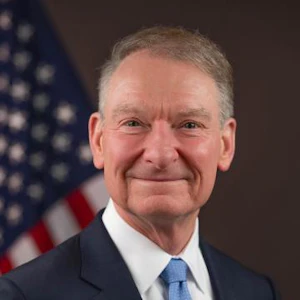
Paul Atkins
Paul Atkins
Prior to returning to the SEC, Chairman Atkins was most recently chief executive of Patomak Global Partners, a company he founded in 2009. Chairman Atkins helped lead efforts to develop best practices for the digital asset sector. He served as an independent director and non-executive chairman of the board of BATS Global Markets, Inc. from 2012 to 2015.
Chairman Atkins was appointed by President George W. Bush to serve as a Commissioner of the SEC from 2002 to 2008. During his tenure, he advocated for transparency, consistency, and the use of cost-benefit analysis at the agency. Chairman Atkins also represented the SEC at meetings of the President’s Working Group on Financial Markets and the U.S.-EU Transatlantic Economic Council. From 2009 to 2010, he was appointed a member of the Congressional Oversight Panel for the Troubled Asset Relief Program.
Before serving as an SEC Commissioner, Chairman Atkins was a consultant on securities and investment management industry matters, especially regarding issues of strategy, regulatory compliance, risk management, new product development, and organizational control.
From 1990 to 1994, Chairman Atkins served on the staff of two chairmen of the SEC, Richard C. Breeden and Arthur Levitt, ultimately as chief of staff and counselor, respectively. He received the SEC’s 1992 Law and Policy Award for work regarding corporate governance matters.
Chairman Atkins began his career as a lawyer in New York, focusing on a wide range of corporate transactions for U.S. and foreign clients, including public and private securities offerings and mergers and acquisitions. He was resident for 2½ years in his firm's Paris office and admitted as conseil juridique in France.
A member of the New York and Florida bars, Chairman Atkins received his J.D. from Vanderbilt University School of Law in 1983 and was Senior Student Writing Editor of the Vanderbilt Law Review. He received his A.B., Phi Beta Kappa, from Wofford College in 1980.
Originally from Lillington, North Carolina, Chairman Atkins grew up in Tampa, Florida. He and his wife Sarah have three sons.

Mike Selig
Mike Selig
Chairman Selig brings to the role deep public and private sector experience working with a wide range of stakeholders across agriculture, energy, financial, and digital asset industries, which rely upon and operate in CFTC-regulated markets.
Prior to his leadership at the CFTC, Chairman Selig most recently served as chief counsel of the Securities and Exchange Commission’s Crypto Task Force and senior advisor to SEC Chairman Paul S. Atkins. In this role, Chairman Selig helped to develop a clear regulatory framework for digital asset securities markets, harmonize the SEC and CFTC regulatory regimes, modernize the agency’s rules to reflect new and emerging technologies, and put an end to regulation by enforcement. He also participated in the President’s Working Group on Digital Asset Markets and contributed to its report on “Strengthening American Leadership in Digital Financial Technology.”
Prior to government service, Chairman Selig was a partner at an international law firm, focusing on derivatives and securities regulatory matters. During his years in private practice, he represented a broad range of clients subject to regulation by the CFTC, including commercial end users, futures commission merchants, commodity trading advisors, swap dealers, designated contract markets, derivatives clearing organizations, and digital asset firms. Chairman Selig advised clients on compliance with the Commodity Exchange Act and the CFTC’s rules and regulations thereunder, including in connection with registration applications and obligations, enforcement matters, and complex transactions.
Chairman Selig earned his law degree from The George Washington University Law School and was articles editor of The George Washington Law Review. He received his undergraduate degree from Florida State University.
David Bailey
David Bailey

Eric Trump
Eric Trump
Mr. Trump also serves as Executive Vice President of The Trump Organization, where he oversees the global management and operations of the Trump family’s extensive real estate portfolio. This includes Trump Hotels, Trump Golf, commercial and residential real estate, Trump Estates, and Trump Winery. Known for his hands-on leadership and strong market instincts, he has played a key role in expanding the company’s presence across major U.S. and international markets.
A globally recognized business leader and public figure, Mr. Trump is a prominent advocate for Bitcoin and decentralized finance. He is a co-founder of World Liberty Financial, a decentralized finance (DeFi) platform, and serves on the Board of Advisors of Metaplanet, Japan’s largest corporate holder of Bitcoin.
Beyond his business activities, Mr. Trump has helped raise more than $50 million for St. Jude Children’s Research Hospital in the fight against pediatric cancer, a philanthropic mission he began at age 21.
Mr. Trump earned a degree in Finance and Management from Georgetown University. He currently resides in Florida with his wife, Lara, and their two children. He is also the author of Under Siege, his memoir published in October 2025.

Jack Mallers
Jack Mallers
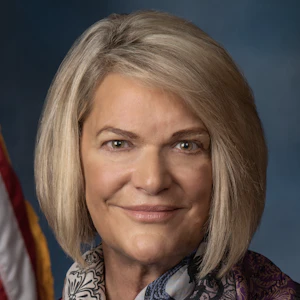
Cynthia Lummis
Cynthia Lummis
As the first-ever Chair of the Senate Banking Subcommittee on Digital Assets, Senator Lummis is the architect of the legislative framework shaping America's digital asset future. She introduced the landmark Lummis-Gillibrand Responsible Financial Innovation Act, the first comprehensive bipartisan crypto regulatory framework in Senate history. She co-authored the GENIUS Act — the first federal stablecoin law ever enacted — and introduced the BITCOIN Act, which would establish a U.S. strategic Bitcoin reserve of up to one million BTC. She is leading the Clarity Act, which will bring long-overdue regulatory certainty to the digital asset industry. She has also championed digital asset tax reform, including a de minimis exemption for small transactions and equal tax treatment for miners and stakers.
Known as Congress' "Crypto Queen," Senator Lummis represents Wyoming — a state she has helped build into one of the most digital asset-friendly regulatory environments in the nation. Before serving in the Senate, she served 14 years in the Wyoming Legislature, eight years as Wyoming State Treasurer, and eight years in the U.S. House. She is a three-time graduate of the University of Wyoming.
Her work represents a crucial bridge between traditional financial systems and the emerging digital economy, ensuring America leads the world in financial innovation while protecting the individual freedoms that define it.
Adam Back
Adam Back
Amy Oldenburg
Amy Oldenburg
David Marcus
David Marcus

Matt Schultz
Matt Schultz
Fred Thiel
Fred Thiel
Throughout his career, Mr. Thiel has consistently driven rapid growth and created substantial shareholder value. Prior to MARA, Mr. Thiel served as the CEO of two other public companies, Local Corporation (NASDAQ: LOCM) and Lantronix, Inc (NASDAQ: LTRX). He has successfully raised billions in equity and debt through private and public offerings, led companies through IPOs, executed high-value exits to strategic and financial acquirers, and implemented effective M&A and roll-up strategies.
Mr. Thiel attended the Stockholm School of Economics and executive classes at Harvard Business School, and is fluent in English, Spanish, Swedish, and French. Mr. Thiel is the Chairman of the Board for Oden Technology, Inc. and is active in Young Presidents’ Organization where he has led initiatives in both the FinTech and Technology Networks.
A recognized voice in the industry, Fred frequently shares his insights on energy and technology with major media outlets like Bloomberg TV, CNBC, and FOX Business, contributing to vital discussions about the future of these sectors.
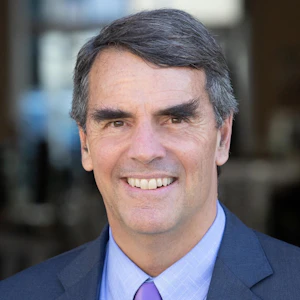
Tim Draper
Tim Draper
He is a supporter and global thought leader for entrepreneurs everywhere, and is a leading spokesperson for Bitcoin and decentralization, having won the Bitcoin US Marshall’s auction in 2014, invested in over 50 crypto companies, and led investments in Coinbase, Ledger, Tezos, and Bancor, among others.
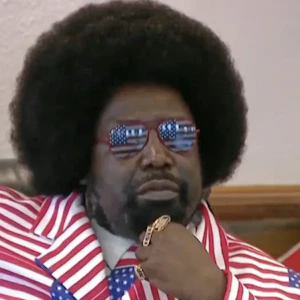
Afroman
Afroman