Transmuting AI Slop to AI Signal
Speakers/Moderators
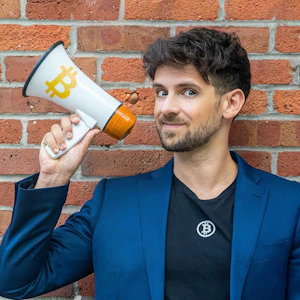
Julian Figueroa
Julian Figueroa

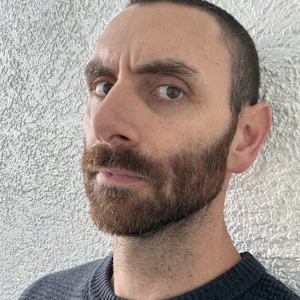

Brian Hirschfield
Brian Hirschfield
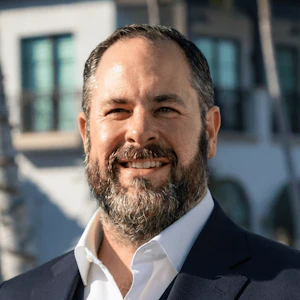
Bruce Barone Jr.
Bruce Barone Jr.
His work blends classical architecture, historical figures, and the development of “electric money” into a cohesive Bitcoin mythology. Drawing on figures such as Tesla and other architects of energy and industry, he frames Bitcoin as a structural achievement — a digital cathedral built from mathematics and electricity. Through cinematic storytelling, graphic novels, and serialized media, Bruce explores sovereignty, technocracy, AI, and intergenerational responsibility, presenting Bitcoin as durable truth infrastructure rather than speculative finance.
Session
Overview
Transmuting AI Slop to AI Signal brought together Michael Sullivan, Mike Oshins, Brian Hirschfield, Bruce Barone Jr., and host Julian Figueroa for a discussion about how creators and builders are using AI as more than a cheap execution tool. The panel explored AI as a collaborator for ideation, research, writing, design, music generation, video production, app building, and education.
A central theme was the difference between low-effort AI output and meaningful work shaped by human taste, judgment, and process. Speakers emphasized that AI can produce “slop” when used without discernment, but it can also accelerate creative feedback loops, help challenge assumptions, and surface unexpected connections when guided by domain expertise.
The conversation also connected AI to Bitcoin culture. Panelists compared the humbling process of learning Bitcoin with the experience of repeatedly revising their assumptions about AI’s capabilities. They discussed open source, gatekeeping, sycophantic AI models, and why preserving human agency matters as AI tools become more powerful.
This panel is called Transmuting AI Slop to AI Signal. I don't see Bitcoin in the title, but it'll come up, as it always does. Really quick, I would love an intro from everyone. We'll start at the far end with Michael: a quick introduction as to who you are, what you do, and how AI enhances or plays into what you do.
What's up, everybody? My name is Michael Sullivan. I am a writer, and I am also an engineer. I use AI constantly in my day to day and used it heavily when writing a book, which I'll definitely be talking about today.
Hi, everybody. I'm Mike Oshins. I'm a content creator with Simply Bitcoin and also a filmmaker, using AI constantly in my video pipeline process.
Hey, I'm Brian Hirschfield. I was an actuary and a planner for 30 years. Then I decided to write a book called Bitcoin for Institutions. Now I'm using AI to create something called the Magic Internet Math Academy, which is intended to teach math and upgrade our civilization in mathematics.
Good afternoon. I'm Bruce Barone, CEO and founder of BrainSprout Studios. We utilize AI in our design process. My son and I created a design creative live studio, and we've launched it with all of our AI tools. AI is one of our foundational tools for all the work we do.
Awesome. My name is Julian Figueroa. I run a show called The Exit Manual on YouTube, all about Bitcoin, living on Bitcoin, moving onto a Bitcoin standard, and trying to keep it fun. I use AI to do all sorts of crazy visual effects in the show, create music for it, and create every little asset under the sun to support the journey of the show.
The first question I'd love to open with is this. A couple of years ago, the Silicon Valley phrase was, “Ideas are cheap and execution is expensive.” I think we've all seen that AI really turns that on its head. There just seems to be infinite abundance in app creation. I know the Apple App Store is struggling with just how many new applications are going live. We've all seen AI slop on our YouTube feed. There is nonstop video creation, from animation to live action.
There has been this inversion from the cost to execute back to ideas. So one of the questions I'd love to start with is: do you think AI has a place to help you in the process, or is it strictly an execution tool for the work that you do?
For our sake, using AI in the idea process is critical. One of the things we're doing is creating original content and original IP. If you take a look at the art gallery over there, BrainSprout Studios, you'll see that what we're doing is designing a mythology around Bitcoin and the timechain. Our work, our ideas, the philosophy, the creativity, is all going through that process, and we're using AI as a tool.
The ideas that we can create, the brainstorming — my background is architecture, so one of the things I've always liked to do is sketch and come up with those ideas before we even start the process. My son and I do that through the design process: sketching, drawing, then bringing that into AI and using it.
One of the things we've also noticed is that even the hallucinations in the design process can be useful. They can launch you into another idea, because that's something you may not have planned for, but it can give you a boost or a foundation into something new. So we use it quite a bit.
In the work that I do with the Math Academy, it's almost all ideation. For example, I will have a seminal work from Euclid, which was over 2,000 years ago. I might have something from Gauss, these great thinkers and their seminal works. Then I would have all 500-plus of Satoshi's posts to the BitcoinTalk forum. And I will ask my AI to write me a book connecting these three men.
It'll come up with something like, well, they're connected by proof, as it turns out. This isn't the kind of thing I would think of by myself, to connect the ideas of great thinkers who are standing on the shoulders of each other. But AI is really good at knowing things. You load it with knowledge, and then on occasion you can ask it to put these disparate ideas together, and it really does come up with banger ideas.
As a content creator, I'm sure you know this, Julian. You have a certain kind of cadence that you have to feed every single week, and it's basically expected of you to produce. Coming up with ideas is absolutely a burden that you have to be able to get out.
What it has done for me is it has cleaned up all of the portions of really deep research that I have to do. Trying to take today's topic, trying to take the field of what's going on in Bitcoin, and come up with something that relates — what you end up doing is you spit back a simple prompt and get 30 ideas. Suddenly you can finally head into something, as opposed to what I used to do, which was scour the internet and crawl around trying to find it all on my own. It's been a revolutionary tool for me.
In the writing domain and the engineering domain, there's been a bit of an existential crisis because AI has been so quick to overtake prose generation. Everybody can just do it instantaneously, basically. But I have personally found, along with a bunch of other writers, that using it during different parts of your process can be really advantageous.
Toward the end, with editing, is really obvious. But one that's a little more counterintuitive, and I've seen a lot of people use intelligently, is to do it up front: having larger, broader questions about your story or your problem, and having it continue to ask more detailed questions about that. For example, I'll walk on a treadmill while having it ask me questions, because some kind of motor movement is helpful for idea generation. It allows you to more rapidly ideate, more rapidly think through things, and have it ask you questions. That has proven to be invaluable to me personally.
One of the interesting ways that I've been using AI lately is that I think a lot of us know how sycophantic it can be. You give it an idea and it says, “Oh, you're a genius. That's the greatest idea since sliced bread.” I have a section of Claude that I've called my Devil's Advocate section.
When I do my writing, I try to come up with an original thesis or something, and then I go on a voice chat and ask it to poke holes in my argument. I tell it to pretend it's the anti-Bitcoin side and have this conversation with me. I go back and forth with it, and I have to basically steelman my own arguments.
This is the type of thing you would generally do in a writers room. If you're doing a TV show with four or five people, you're going to have some guy who says, “Scrap the idea,” and you debate. That's how you get to this really good product, which is the script.
Now with AI, a lot of the time it's sycophantic and it won't knock things down. But if you really train it over time, you can get this thing to basically be a stalwart against all your ideas. Eventually, when it gets bad at debating you, you'll know that you actually probably have a good, defensible thesis. If it can't come up with good counterpoints against you, you have a good thesis. But if it's very easily taking you down, then you've got to work on your arguments.
I've found it's such an inverse of how people normally use AI. There's this big epidemic right now where people are using it for therapy, and it's telling everyone, “Oh yeah, you should have broken up with your ex,” and all this stuff. But you can use it in a darker way as well, which is to make it push back on every single thing you have. I find it really interesting in the writing process.
I'd love to ask you all: what's the most surprising application of AI that you've seen, either in your own work or in another piece of content, media, or app that you've seen online? What has surprised you, where you thought this thing had limitations, but it's been able to do this thing instead?
For us, in terms of the type of work we're doing, I would say that the surprise really comes in with the quality of the work that you're producing. I think it's very easy to say something is slop because it's AI-driven, but I think that's actually intellectually dishonest because fundamentally the AI is the tool. It is not the creator. It is something that has all the systems and has been fed all this information that has been human-created.
One of the things I think is really important is discernment, and being able to curate and understand what you're looking at. Essentially, it's garbage in, garbage out. If you don't have a subtle understanding of what you're working on and you continue the process, it still will produce slop.
If you have a clear plan, a clear structure to how you're going about something, and how you want to see it eventually delivered, there's a much more pragmatic approach to it, as opposed to just hoping and praying something comes out really nicely. That's essentially what you do in the initial iterations. But as you go over time, it's much more of a methodical approach, far more systematic, and that's where you get actual results.
In basketball, you go on things called heat checks, where if you've made a couple of shots in a row, you start to take much harder shots just to see if you can make them. That's my experience with AI. I go on these heat checks.
For the Math Academy, I'm making UX for classes and websites. Then I'll have this idea: can I make a good YouTube video that teaches high school algebra like a liberal art? You don't hit the button and have it come out, but you have this belief that you can do it and you're not really sure if you can. You spend this time, and it's a really pleasant surprise when you get to the end of that process and you have the product, even though it may have been a very painful road from the heat check to getting the result.
I continually find these things surprising. Just the ideas that come into my head, and then saying, “Hey, can we do that?”
For me, the big unlock that this tool has caused is that you can take all these ideas. Back in the day, you had so many things you wanted to do, so many things you wrote down, all these jots on little pieces of paper. All this stuff just stacks up, and you never are able to get to it.
Then suddenly you have this thing that you can communicate with, and it will actually do the work that you want it to do. If I have an idea for something as simple as a Pilates studio app, I can say, “Hey, Claude, can you put together a Pilates studio app for me?” And seven minutes later I have a full app. I can click on it, upload videos to it, put music under it, schedule it, and it can all work together.
I don't have to do all of the brain work that was required to get to that point. I just had the idea. That was the biggest surprise, because now you're thinking, how many things can I build? What is the limit here? It's really just your own imagination.
I feel like my entire life is now moving at a slightly faster pace. I got really into writing novels because I love pulling out a thread and seeing where an idea takes me, trying to pursue the full depth of that idea. Now I can do that on topics at a rate that I never could before.
I can build systems, as my engineering interest, that would have taken me multiple years, and I can spit them out in a couple of months and see if there's actually something interesting there. I'm doing this on multiple different layers, like the AI assistant therapy kind of thing, all these different things that I've personally used as tools and seen people use as tools.
I do it so much more quickly now that I feel like I've had one of the higher growth periods of my entire life in the last six months, just from seeing how many creative ways I can jam these into my life and whether there's any content that can be pulled out of creative ways to use it.
For me, one of the most surprising things was how good the music generation is. I think we've all seen the text, and you can do great prose writing with it, but eventually you'll run into issues. You have to correct it a lot.
With video, you have that too, where you can get great video generations of one shot, but there's error correction. The music AI generation is flawless. I don't know if maybe I don't have a greatly trained ear, but you can go in and generate full songs with lyrics, you can generate backing tracks, you can extend tracks to make leitmotifs. All this stuff is instant, with very little modification needed.
It's completely changed the game for me. I don't know if a lot of people here watch movies and know the term leitmotif, but in Star Wars, when you hear little songs that come up and do little remixes, it creates that sense of connection with a character or an idea. Traditionally that was something that only giant studios could access, or if you were able to afford a composer, you could do it.
Now anybody can do this tried-and-true film technique in YouTube videos, and it lets you connect with people emotionally at a much deeper level. That's something I want to get into for the next question. I think a lot of people look at AI and see it as pulling us further away from our humanity. We're seeing all these generated images. Social media feels a little sloppy because you don't know what's real and what's not anymore. You've got to fact-check everything.
Do you feel there is a side to AI that is bringing us closer to humanity? How do you see that?
I definitely want to play off a few things that you said. I think it's bringing me closer to humanity, whether or not that is more of the recognition of the quality and the level of craftsmanship that we can create at this time now. It's really amazing.
The Hollywood studio level of expenses that would go into the amount of design work we've done for BrainSprout Studios — I would challenge anyone to see if that is comparable to Pixar or anything with The Chronicles of Narnia or The Lord of the Rings. It really brings you through that threshold and gives you an opportunity to take something truly great and build on that as well.
That plays into our design process, the mythology we're creating with our characters and stories, but also just the whole thing is gorgeous. We are designing things with fine art. It is Renaissance-based, highly visual, architectural, and amazing to see. You're blown away by it.
When my son and I started doing these things, it was essentially just for us to enjoy. As we've become stronger and more capable with it, it's exploded. So I think it's quite an awesome thing.
There is this quality of the human condition where your sense of self is something that dissipates in the world. It's very hard to maintain your sense of self in general. If it's out in the world and you're not actively holding it up, it just kind of dissolves.
We live in this world where AI is one such thing that's definitely coming at us that probably does increase that dissipation. The way you hold up your sense of self, the way you prevent that, is by being a builder. Being an aggressive builder is the only thing I would say, for me, that really keeps me grounded to my sense of self and prevents that from dissipating out.
There are these people using AI for therapy, and that's a good example we can pull on. But if you're not building, whatever it is you're doing, you're probably not maintaining a solid frame, and you very well may lose yourself. There's just a lot of content coming at us now. We have to work harder to defend ourselves.
I don't know if it connects people as much. Maybe it connects you much more. People are building things to connect with each other far faster. But the AI slop, for me — if you're a child, you start with your crayons, making your little scribbles, and it goes on a piece of paper and then it gets thrown away.
That little movement, that little slop that you're doing, you can't progress any further in your own self without doing the slop first. That's pretty obvious. We all have to work through the things, the proof of work.
We all get these AI slop images and stuff. But eventually, what it's allowing us to do is see our vision finally. You can keep on scribbling and scribbling until you make that rabbit, or you make that cow, and you finally bring the vision and the image. How amazing is it for a child to be able to write a letter and understand a letter? They started with nothing, just circles, and then they're able to formulate their thoughts together.
I think that's what it's going to do for humanity, similar to what the crayon does for a child.
I love that. AI is a new thing currently, but in some worlds it's been out there for a long time. I'm a big fan of chess. In 1997, Garry Kasparov played Deep Blue, and since that date, computers have beaten humans.
One of the initial opinions about that was that humans were going to stop playing chess completely because humans had been conquered. What actually happened was almost the complete inverse. People continued to play chess, and now, even though there are these novel, crazy techniques being used by the fanciest new chess engines, humans have found a different way to engage with chess.
A lot of chess streaming is becoming much more prominent, and people are finding other ways to creatively look at the game. It's really counterintuitive, but it actually found this new layer of creativity in how humans engage with chess. This happened a long time ago. It's not even a recent thing.
I think we're going to see similar patterns happen here. It's not a direct analog, because the way AI works currently is a little bit more in the creative realm, but I do think that those tools have brought out more layers of humanity.
For me, as an artist, one of the things you have to get used to very early on is dealing with failure: pouring your heart into something and then watching the reception of it be just awful. Some artists do not care what people think. There are these great painters, everyone thought their stuff was crap, then they died and everyone loved it. But by and large, I think most of us care what people think of our creations.
The thing with AI is that now the length of time has gotten so short, it forces us in a way to create faster. I used to do these documentaries on my YouTube channel, Get Based. We would spend three to six months working on one video. I have nothing against documentary filmmakers, but that process of failure, success, failure, success, when you're creating content, that feedback loop is so integral to improving.
Now with AI, because the production process is so small, the self-awareness can be acted upon so quickly with AI and production that I think it really will get us closer to our work in the end. Hopefully a lot of people that are used to creating stuff that takes three months now only spend a month on it, and now they can get three times as much feedback.
It's exhausting, but now you know a little bit more about what works, what people love, and what really connects with people. It allows you to think a little bit more about the humanity in your work versus the grand scope of production.
I'll pivot off this point a little bit, because this is a Bitcoin conference. I know for probably a lot of people in this crowd, learning and going through that journey of being orange-pilled was an ego check. We thought the world worked one way, and we really had to unlearn it to understand Bitcoin: everything about money, economics, politics, red versus blue, the state versus you.
Do you see a similar transformation in your journey learning how to work with these AI tools and how that affects your own ego?
Definitely. It really humbles you. I think Bitcoin is a humbling experience in the initial learning, realizing how much you don't know, and then going through that process and becoming obsessed with it. I think we all seem to follow a similar journey. In terms of what we're doing, it's very important to the process. As we learn AI and go through the stages of it, it's something that we will refine over time. But I do think it's very important.
It's really interesting. My career was as an actuary and financial engineer, and I thought I had really mastered financial markets. I took a lot of pride in that. Then one day I saw the financial markets, including Bitcoin, and realized, okay, it's a total redo, because I now have to rebuild my complete understanding with this thing in the world now.
That was a really long process. The reason I bring that up is because here we are, going along thinking about what's possible with humanity, what's possible, what we're really capable of. Then all of a sudden, this very powerful tool drops in our laps. We really do have to rethink what we're all capable of. It really changes the map for me of how I view the world.
When you get into Bitcoin, you have a certain view, a certain perspective of life, and it seems to transmute you. It seems to change you completely as you take that journey. Similarly with AI, the more you touch it, the more it exposes.
When you're responding back and forth with AI, it's like a mirror. It's simply feeding back at you the things that you gave it. But it has a way of showing you things. My AI always responds to me very nicely, aside from if I tell it not to respond like this. It's very nice and very kind, and it sort of feeds into my ego.
You have to check yourself: okay, that's something that I like, that's something that I'm responding to. Why am I so infatuated with receiving good feedback? It makes me start to question who I am, internally, and my own ego.
In the same way, Bitcoin did this as well. When you first get into Bitcoin, you start to think you're going to get 0.10 Bitcoin and you're going to make it, and it's going to be the best thing. Then as you go cycle after cycle after cycle, you realize it's not about that at all. It's not about getting rich really quick. It's about the work it takes. The longer you're in Bitcoin, if you can hold on to it, the richer you become, in your soul as well.
One of the biggest commonalities for me between Bitcoin and AI was that it really explored and revealed the depths of my own stupidity. I was forced to confront that I had been wrong repeatedly and had to reevaluate my opinion with Bitcoin, as everybody pretty much does when they first get exposed to it.
With AI, I told myself all these stories like, “It's not going to write this part better than me,” or, “It's not going to have this thing.” Over time, I've continually had to walk back my position. The same thing in engineering, where I go, “No, I need to be the architect of this area of the code,” or “I need to own this,” or “My taste is what matters here.”
I think there's an element of truth there, but I keep hearing myself walk these things back over and over again. With every step backward, I feel like my ego has been slightly disillusioned. Overall, I think it's been a net positive for me.
I see that a whole lot with people that are really embedded in building things with AI. You're forced to be a little bit more open to the fact that you're wrong, and you don't know where this thing is heading. Just being open to what this thing is matters.
A lot of the elements of Bitcoin, seeing how much the technology could bring hope and a little bit more optimism into my life, was also a very good starting point or seed that led to the same viewpoint with AI. I really have seen that there are a lot of negatives and a lot of positives in these technologies, but in aggregate, I think it's a massive boon to humanity. I definitely still feel that way about both of these technologies.
I would agree with you. I think it's very easy for us, similar to Bitcoin, where when you're a Bitcoin skeptic you're always judging it for the here and now. “I can't use it to buy a coffee,” or this or that. People only judge it on the one year it's existed, or everything in its past.
People use this phrase with AI: the worst AI is ever going to be is today, and it only gets better. Some people doubt that because they think synthetic data is going to make it disillusioned. But it's the same with Bitcoin, where Bitcoin is at its worst spot for adoption right now. The adoption number is not going to go down. It's only going to go up.
You see all these people and they judge Bitcoin: “I can't spend it anywhere. I can't buy a house with it.” Then you look at people making the same arguments with AI: “It can't do this. It can't do that.”
The cool thing that's interesting about AI is that Bitcoin is very much a good, ossified thing. We don't want it to change. We want AI to get better. There is a collective interest, I think, among the people using it: we want these tools to get more intelligent. We want them to be less sycophantic.
The thing that's a little bit hard with AI is that, because it's so gatekept, all these things that we want from it, we have to ask these AI overlord masters to put in. They have all these broken incentives.
To me, it really reflects back how beautiful open source is. With the top-tier AI models, you now have to depend on intermediaries to craft them or let you do what you want to do: use IP, use certain swear words when you're writing, all that stuff.
With Bitcoin, no one can change the rules of Bitcoin, but that process is open for all of us to discuss, debate, and work on. I'm hoping as AI progresses there are better open source models. We only have about 40 seconds here, but I'm curious: what models does everyone use? What tools are people using? We can be really quick, and then we'll wrap this up. Maybe the audience can dabble with them.
The models we use are Midjourney, Claude, Nano Banana, and Gemini. We're using Grok heavily. We've transitioned into that and are creating great stuff.
Claude Code with Opus, and frequently Open Cloud or Hermes also.
I use Claude Code with Opus and Kling.
I use whatever works best to solve my problem.
Nice. I use Claude Code for writing code, Claude, and then Higgsfield for video generation. It's amazing. Awesome. Thank you, everyone. Really appreciate it.
Similar
Sessions
Transmuting AI Slop to AI Signal
Julian Figueroa
Julian Figueroa
Brian Hirschfield
Brian Hirschfield
Bruce Barone Jr.
Bruce Barone Jr.
His work blends classical architecture, historical figures, and the development of “electric money” into a cohesive Bitcoin mythology. Drawing on figures such as Tesla and other architects of energy and industry, he frames Bitcoin as a structural achievement — a digital cathedral built from mathematics and electricity. Through cinematic storytelling, graphic novels, and serialized media, Bruce explores sovereignty, technocracy, AI, and intergenerational responsibility, presenting Bitcoin as durable truth infrastructure rather than speculative finance.
Transmuting AI Slop to AI Signal
Speakers/Moderators
Julian Figueroa
Julian Figueroa
Brian Hirschfield
Brian Hirschfield
Bruce Barone Jr.
Bruce Barone Jr.
His work blends classical architecture, historical figures, and the development of “electric money” into a cohesive Bitcoin mythology. Drawing on figures such as Tesla and other architects of energy and industry, he frames Bitcoin as a structural achievement — a digital cathedral built from mathematics and electricity. Through cinematic storytelling, graphic novels, and serialized media, Bruce explores sovereignty, technocracy, AI, and intergenerational responsibility, presenting Bitcoin as durable truth infrastructure rather than speculative finance.
Other
Speakers

Michael Saylor
Michael Saylor
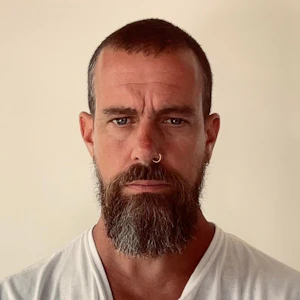
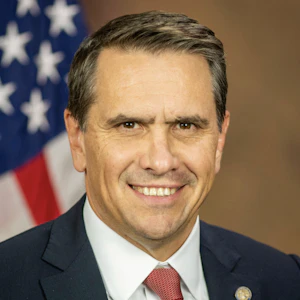
Todd Blanche
Todd Blanche
Biography of Deputy Attorney General Todd Blanche
The Honorable Todd Blanche is the 40th Deputy Attorney General of the United States, overseeing the work of the 115,000 dedicated employees who fulfill the Department of Justice’s mission at Main Justice, the FBI, DEA, U.S. Marshals, ATF, and 93 U.S. Attorney’s Offices.
Todd began his career at the Department where he served for over fifteen years in a variety of capacities, including as a contractor, a paralegal in the Criminal Division, and at the United States Attorney’s office for the Southern District of New York where he eventually became an AUSA and later a supervisor.
After leaving the Department, Todd worked as a criminal defense attorney that included representing President Donald Trump in three of the criminal cases brought against him in 2023 and 2024.
Following President Trump’s historic return to the White House, the President appointed Todd to work alongside Attorney General Pam Bondi to make America safe again. At the DOJ, Todd is working tirelessly to implement President Trump’s priorities that include confronting illegal protecting American businesses from fraud.
Todd has been married to his wonderful wife Kristine for nearly thirty years, is a father and grandfather.

Paul Atkins
Paul Atkins
Prior to returning to the SEC, Chairman Atkins was most recently chief executive of Patomak Global Partners, a company he founded in 2009. Chairman Atkins helped lead efforts to develop best practices for the digital asset sector. He served as an independent director and non-executive chairman of the board of BATS Global Markets, Inc. from 2012 to 2015.
Chairman Atkins was appointed by President George W. Bush to serve as a Commissioner of the SEC from 2002 to 2008. During his tenure, he advocated for transparency, consistency, and the use of cost-benefit analysis at the agency. Chairman Atkins also represented the SEC at meetings of the President’s Working Group on Financial Markets and the U.S.-EU Transatlantic Economic Council. From 2009 to 2010, he was appointed a member of the Congressional Oversight Panel for the Troubled Asset Relief Program.
Before serving as an SEC Commissioner, Chairman Atkins was a consultant on securities and investment management industry matters, especially regarding issues of strategy, regulatory compliance, risk management, new product development, and organizational control.
From 1990 to 1994, Chairman Atkins served on the staff of two chairmen of the SEC, Richard C. Breeden and Arthur Levitt, ultimately as chief of staff and counselor, respectively. He received the SEC’s 1992 Law and Policy Award for work regarding corporate governance matters.
Chairman Atkins began his career as a lawyer in New York, focusing on a wide range of corporate transactions for U.S. and foreign clients, including public and private securities offerings and mergers and acquisitions. He was resident for 2½ years in his firm's Paris office and admitted as conseil juridique in France.
A member of the New York and Florida bars, Chairman Atkins received his J.D. from Vanderbilt University School of Law in 1983 and was Senior Student Writing Editor of the Vanderbilt Law Review. He received his A.B., Phi Beta Kappa, from Wofford College in 1980.
Originally from Lillington, North Carolina, Chairman Atkins grew up in Tampa, Florida. He and his wife Sarah have three sons.

Mike Selig
Mike Selig
Chairman Selig brings to the role deep public and private sector experience working with a wide range of stakeholders across agriculture, energy, financial, and digital asset industries, which rely upon and operate in CFTC-regulated markets.
Prior to his leadership at the CFTC, Chairman Selig most recently served as chief counsel of the Securities and Exchange Commission’s Crypto Task Force and senior advisor to SEC Chairman Paul S. Atkins. In this role, Chairman Selig helped to develop a clear regulatory framework for digital asset securities markets, harmonize the SEC and CFTC regulatory regimes, modernize the agency’s rules to reflect new and emerging technologies, and put an end to regulation by enforcement. He also participated in the President’s Working Group on Digital Asset Markets and contributed to its report on “Strengthening American Leadership in Digital Financial Technology.”
Prior to government service, Chairman Selig was a partner at an international law firm, focusing on derivatives and securities regulatory matters. During his years in private practice, he represented a broad range of clients subject to regulation by the CFTC, including commercial end users, futures commission merchants, commodity trading advisors, swap dealers, designated contract markets, derivatives clearing organizations, and digital asset firms. Chairman Selig advised clients on compliance with the Commodity Exchange Act and the CFTC’s rules and regulations thereunder, including in connection with registration applications and obligations, enforcement matters, and complex transactions.
Chairman Selig earned his law degree from The George Washington University Law School and was articles editor of The George Washington Law Review. He received his undergraduate degree from Florida State University.

David Bailey
David Bailey

Eric Trump
Eric Trump
Mr. Trump also serves as Executive Vice President of The Trump Organization, where he oversees the global management and operations of the Trump family’s extensive real estate portfolio. This includes Trump Hotels, Trump Golf, commercial and residential real estate, Trump Estates, and Trump Winery. Known for his hands-on leadership and strong market instincts, he has played a key role in expanding the company’s presence across major U.S. and international markets.
A globally recognized business leader and public figure, Mr. Trump is a prominent advocate for Bitcoin and decentralized finance. He is a co-founder of World Liberty Financial, a decentralized finance (DeFi) platform, and serves on the Board of Advisors of Metaplanet, Japan’s largest corporate holder of Bitcoin.
Beyond his business activities, Mr. Trump has helped raise more than $50 million for St. Jude Children’s Research Hospital in the fight against pediatric cancer, a philanthropic mission he began at age 21.
Mr. Trump earned a degree in Finance and Management from Georgetown University. He currently resides in Florida with his wife, Lara, and their two children. He is also the author of Under Siege, his memoir published in October 2025.
Jack Mallers
Jack Mallers
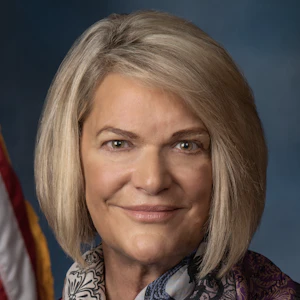
Cynthia Lummis
Cynthia Lummis
As the first-ever Chair of the Senate Banking Subcommittee on Digital Assets, Senator Lummis is the architect of the legislative framework shaping America's digital asset future. She introduced the landmark Lummis-Gillibrand Responsible Financial Innovation Act, the first comprehensive bipartisan crypto regulatory framework in Senate history. She co-authored the GENIUS Act — the first federal stablecoin law ever enacted — and introduced the BITCOIN Act, which would establish a U.S. strategic Bitcoin reserve of up to one million BTC. She is leading the Clarity Act, which will bring long-overdue regulatory certainty to the digital asset industry. She has also championed digital asset tax reform, including a de minimis exemption for small transactions and equal tax treatment for miners and stakers.
Known as Congress' "Crypto Queen," Senator Lummis represents Wyoming — a state she has helped build into one of the most digital asset-friendly regulatory environments in the nation. Before serving in the Senate, she served 14 years in the Wyoming Legislature, eight years as Wyoming State Treasurer, and eight years in the U.S. House. She is a three-time graduate of the University of Wyoming.
Her work represents a crucial bridge between traditional financial systems and the emerging digital economy, ensuring America leads the world in financial innovation while protecting the individual freedoms that define it.
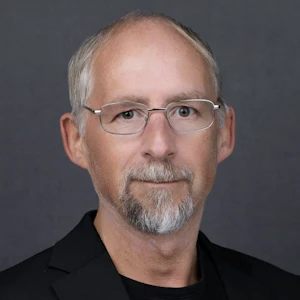
Adam Back
Adam Back

Amy Oldenburg
Amy Oldenburg
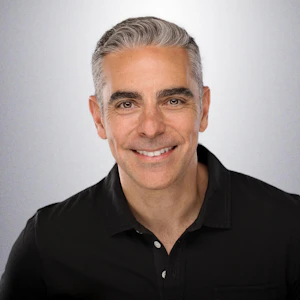
David Marcus
David Marcus

Matt Schultz
Matt Schultz
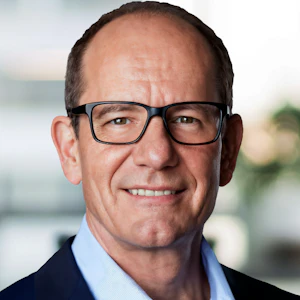
Fred Thiel
Fred Thiel
Throughout his career, Mr. Thiel has consistently driven rapid growth and created substantial shareholder value. Prior to MARA, Mr. Thiel served as the CEO of two other public companies, Local Corporation (NASDAQ: LOCM) and Lantronix, Inc (NASDAQ: LTRX). He has successfully raised billions in equity and debt through private and public offerings, led companies through IPOs, executed high-value exits to strategic and financial acquirers, and implemented effective M&A and roll-up strategies.
Mr. Thiel attended the Stockholm School of Economics and executive classes at Harvard Business School, and is fluent in English, Spanish, Swedish, and French. Mr. Thiel is the Chairman of the Board for Oden Technology, Inc. and is active in Young Presidents’ Organization where he has led initiatives in both the FinTech and Technology Networks.
A recognized voice in the industry, Fred frequently shares his insights on energy and technology with major media outlets like Bloomberg TV, CNBC, and FOX Business, contributing to vital discussions about the future of these sectors.
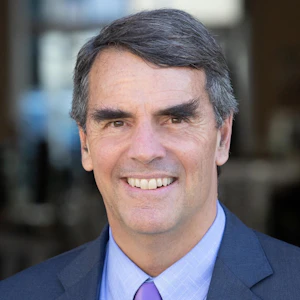
Tim Draper
Tim Draper
He is a supporter and global thought leader for entrepreneurs everywhere, and is a leading spokesperson for Bitcoin and decentralization, having won the Bitcoin US Marshall’s auction in 2014, invested in over 50 crypto companies, and led investments in Coinbase, Ledger, Tezos, and Bancor, among others.

Afroman
Afroman