Allocating Scarce Assets: Energy, Compute, & Bitcoin
Speakers/Moderators

Anthony Power
Anthony Power
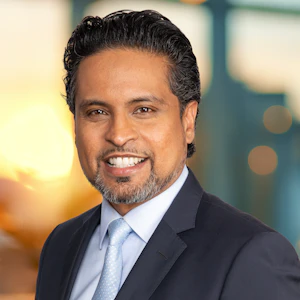
Salman Khan
Salman Khan
Prior to joining Marathon, Salman Khan served as Chief Financial Officer for Verb Technology Company Inc., a Nasdaq listed leading provider of interactive video-based software-as-a-service applications and an e-commerce platform and played a pivotal role in selling the core business of the company. Before joining Verb, Salman served in various senior executive level positions at Occidental Petroleum Corporation and its spinoff, California Resources Corporation, including director of renewable energy, Director of Corporate Development, Director of Technical Accounting and Financial Reporting, and Business Division Controller and Chief Financial Officer. Salman also spent eight years at major accounting firms including Arthur Andersen, PricewaterhouseCoopers and Ernst & Young, where he served domestic and international clients in the technology, media, telecommunications, entertainment, and biotechnology industries. Salman holds a Master in Business Administration from the University of Michigan, Ross School of Business and is a licensed chartered certified accountant (UK).
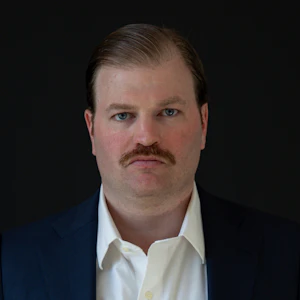
Rory Murray
Rory Murray

Matt Williams
Matt Williams
Prior to joining Luxor, Matt was the Managing Director of Technology Strategy at NFA. Matt also spent time at CME Group as Director of Market Structure and Strategic Investments, helping to lead CME Group's go-to-market strategy for the launch of Bitcoin Futures. He started his career as an Energy trader in the Natural Gas and Crude Oil markets. Matt also sits on the Board of Directors at Bitnomial Exchange, as well as the Advisory Committee for KOR Financial, and is a Strategic Advisor for Sphinx Exchange.
Session
Overview
Anthony Power moderated a discussion with Rory Murray of CleanSpark, Matt Williams of Luxor Technology, and Salman Khan of MARA on how Bitcoin miners are allocating scarce resources across energy, compute, and Bitcoin treasury assets.
The panel focused on the growing importance of power access and site control as miners evaluate Bitcoin mining, high performance computing, and hybrid strategies. Speakers emphasized that low-cost, energized power has become a key strategic asset, while HPC demand is changing how public mining companies and investors value energy infrastructure.
The conversation also covered Bitcoin balance sheet strategy, including HODLing, selective sales, borrowing against Bitcoin, yield opportunities, counterparty risk, and treasury management. MARA and CleanSpark described Bitcoin as both a long-term asset and a source of capital allocation flexibility, while Luxor discussed financial products and infrastructure services for miners moving into both Bitcoin and compute markets.
Good morning, everyone. My name is Anthony Power. I'm the CEO of Power Analysis, and I'd like to welcome a strong panel to the stage today, starting with Rory. If you can introduce yourself and then move on to Matt and Salman.
Hi. Thank you. Great to be here, and thanks to all the hosts and Anthony for moderating. I'm Rory Murray, the vice president of digital asset management at CleanSpark. We're an energy infrastructure company and compute company. Sometimes we turn that compute into Bitcoin, and increasingly we're expanding into the HPC market. I lead our digital asset treasury management function, which essentially means Bitcoin treasury. Anything that touches that, I manage the custodial relationships, our spot sales program, run a derivatives overlay, and deal with anything Bitcoin credit and Bitcoin-backed lending related.
Thanks for paying for everything, Rory. All the seats and everything.
You're actually very welcome.
Does anyone else feel like they need sunglasses up here? Hello, everyone. My name is Matt Williams. I'm the head of financial services at Luxor. Luxor is an energy infrastructure company for miners and data centers in general. I run our mining pool, our energy business, and our derivatives function. More recently, we've been focused on helping miners expand into either growing their mining operations or expanding into HPC as well.
Very good. Well, it looks like there's a fan following for Rory, for sure. Salman Khan, chief financial officer from MARA Holdings. MARA is a digital infrastructure company and one of the largest Bitcoin miners. We've got global operations. We operate in multiple countries, and we are at the intersection of owning two gigawatts of capacity at one of the lowest prices per megawatt hour. We're in the transition space from Bitcoin mining to HPC, while we also hold a significant amount of Bitcoin on our balance sheet. Very excited to be here today.
Thank you. The topic for today is allocating scarce assets: energy, compute, and Bitcoin. And we've got three companies here that know all about that topic. To start us off, Rory, what is the scarce asset in mining today? Is it capital, energy, or compute capacity?
I think the scarce asset is still very clearly land and power, and specifically power. Obviously, the land around it is always a concern, but getting access to that power is the key. We have these conversations all the time. I can't profess that it is my main mandate on a day-to-day basis, but obviously we're all hands on deck right now with it, and it's core to what we do.
We have these conversations constantly. Is it tapering off? Is it real? Is it durable? Is it sustainable? It is relentless. It is truly relentless from all corners. It is global, domestic, small, medium, and large, hyperscale on down. It is one of the most awesome things I've ever experienced, and I mean awesome in the classic sense of the word. I feel very fortunate to be a part of the ride.
I always wanted to be part of a big global movement that helped create better lives for all the stakeholders involved. I think this is a vehicle and an opportunity to do that, both for the American domestic economy and all the stakeholders that are part of it.
From your position watching this space, what are you seeing?
I echo what Rory is saying. If you walk around here and you're talking to miners, or really anyone in the data center space, and you ask them what they're working on, it's finding sites. It is just a land grab. People are looking at greenfield, brownfield, turnkey, whatever. People are paying crazy dollars for megawatts.
It's interesting to me. When I first started at Luxor four years ago, people were looking at sites that were just a couple of megawatts. Then you got to 10 megawatts and that was a big site. Then all of a sudden it was 100 megawatts. People were talking about gigawatt sites, and we've kind of come back now. We're seeing people take anything, even for HPC. Twenty, 30, 40, 50 megawatts are still very interesting.
We never really intended to get into the sites business at Luxor, but we are constantly getting asked, hey, do you know anyone selling? Or, hey, I have this site, can you help me sell it? So yeah, I totally echo what he's saying. It's just crazy.
Before you answer, Salman, I was fortunate to go to my first conference in London just over four years ago, and the very first person I met in the industry was your boss, Fred. We had a great conversation about the strategy MARA was doing at the time. I found the theory of that strategy to be workable: the asset-light strategy, putting all your money into money machines through a hosted business model.
But that seems to have changed now. You've started buying your own sites, and with that, I understand you are potentially going to two gigawatts. Are you on the same lines as our two previous speakers in terms of power being that definitive asset to try to achieve?
We've said this for a long time now: electrons are the new oil. They're scarce. They're pocketed in different locations. They're strategic and political in nature. As the rest of the group talked about, it's important to have low power cost energized yesterday. People don't want to wait for interconnect studies and wait three, four, or five years for this energy to be available.
We stopped asking ourselves the question of whether we should mine Bitcoin or whether we should do HPC. The bigger question is how can we acquire as many electrons as we can in locations that are more attractive for us and that could be used to monetize and create value for our stockholders?
So to answer your question, yes, absolutely. MARA went through its own evolution of asset light. We became one of the largest Bitcoin miners as a result of that strategy, but we did not stop there. We went out and started buying low power cost, which is one of the lowest in the sector, at around four cents per kilowatt hour, with two gigawatts of capacity and about 70% owned and operated.
That did not happen in a vacuum. Last halving, we were able to acquire more than a gigawatt of capacity. If you had built that capacity yourself, it would have cost you 60% more than what we paid. So the acquisition model has worked out very well for us.
From here, it's an evolving industry. Bitcoin mining taught us a lot of lessons across the board: how to operate, how to be scrappy, and how to minimize your costs. That's going to be important in the HPC space because right now people are throwing money at sites, but there will come a time where operating costs are going to be important. Owning and operating the lowest-cost operations that could be useful on a cost-per-token basis, as it used to be cost per Bitcoin, is going to be important going forward.
That's a great segue. We'll start with you, Salman, and then move to Rory. In today's business model for all three of you, are we seeing energy become more valuable than Bitcoin itself?
Well, yes and no. Bitcoin has its own unique characteristics. It's limited in supply, and you've seen the rates of return with it. But in order to get to Bitcoin, you need energy as a miner, unless you're a DAT. That's a different story. If you raise capital and buy Bitcoin from that, that's a completely different strategy.
As we have said many times before, MARA is not a DAT. We are an operator. We like to buy electrons, operate them, produce Bitcoin, hold it on the balance sheet as an investment, and monetize at the right time for the right opportunities.
Bitcoin keeps giving us great rates of return over a long period of time, so it's an asset class that has its own unique position. With energy assets, what you get is option value to either produce Bitcoin at a lower cost than what you could buy it for in the market, depending on market conditions, while also giving you four to five times better EBITDA versus Bitcoin mining in today's price environment.
Energy is at the core of our economic triad, as we call it. Those electrons and megawatts are really important to secure and have available to either mine Bitcoin. We like mining Bitcoin. We are still close to 70 exahash, and we like to mine Bitcoin in different price environments because that gives us that option value. But then that upside on the HPC side is icing on the cake for our stockholders.
I would gently push back on the framing a little bit. I don't think it's either-or. I think it's both-and.
I go back to two months ago when we were sitting in the basement of this same hotel, resort, and casino having our executive leadership retreat. We were at a critical point in the evolution of this entire space. While I absolutely love my job, I've been in Bitcoin for over a decade, and I think it's the greatest global emerging monetary alternative we've ever seen, I really wanted to challenge our team to define why it is that.
To step back a minute, we've been very clear that we are maintaining our commitment to Bitcoin and will continue to do that. That starts with our CEO, Matt Schultz, goes to our president and CFO, Gary, and percolates throughout the entire team. But I really wanted to take that moment to challenge us to say, yes, we are committed to Bitcoin, but why?
For us, I think the answer we came to as a group was: what does that unlock? One, it has been our traditional access to land and power for a long time. We started as a distributed energy company basically turning beetle dung into power for the U.S. military, but that's a whole other story. It has been in our DNA for a long time now.
For about five or six years, that has meant access to land and power. We have 13,523 Bitcoin on the balance sheet, but who's counting. We also have over 300,000 ASIC machines and 1.8 gigawatts of power under contract.
What Bitcoin does is, one, if you're just holding assets on your balance sheet in USD, you're generally not going to hold $1 billion of USD on your balance sheet, at least relative to your other capital stack. With Bitcoin, you're able to hold that because there is upside optionality. Tomorrow or the next day, who knows where the Bitcoin price is going to be? But we believe in a global technological adoption curve over time, and we think number is going to go up over a reasonable period of time.
Second, you can borrow against it. You can finance these high-ROE and high-ROIC projects with, let's be honest, dirty depreciating fiat. You can do that by putting an appreciating currency up as collateral, maintain the upside optionality in that collateral and that currency, and then finance these high-risk projects.
The last piece is I really do believe in what Saylor said: volatility is vitality. Bitcoin does not have an organic interest rate, and there is no free lunch in the market. There is no riskless yield. But that being said, if you can marry the production of Bitcoin into optimizing the total return you can get on that Bitcoin, and turn it into something while we still have to pay salaries, insurance, rent, and all that kind of stuff in USD, you can get a little bit more margin out of it.
This is a game of inches, and that additional margin is a massively compounding asset against your competitors over time. Taking the Bitcoin, holding the optionality on the balance sheet, funding your business with it, and optimizing a little more margin across the Bitcoin stack allows you to have a competitive advantage. We think some of our competitors are being a little shortsighted by letting that incredible asset go a little bit too early.
I think Rory just answered the next 10 questions. I don't even know what to say.
I'm going to take it back a few steps. I agree, and I want to come back to some of the points you made, but taking it back to your original question, what has been interesting from my viewpoint is going back four years ago, my introduction to the mining community. Everyone was very passionate about mining. Miners were really evolving the energy landscape, especially in ERCOT, kind of by necessity. With hash price declining, you have to be much more cognizant of energy prices and how you lower your dollars per megawatt hour.
Miners have been really good about that. Flexible load has been a really interesting thing to watch from my perspective. In the early days, everyone was talking about Bitcoin and all the great things Bitcoin does, and we were mining to be a participant in that. There are people who have stayed true to it. The people on this stage have stayed true to that thesis.
But what I've seen, from a slightly cynical viewpoint, is that for some people it's not about Bitcoin. It's about how many dollars per megawatt hour you can get, whether that is Bitcoin or HPC. What we're seeing in reality is that the dollars per megawatt hour are much higher for HPC. It's multiples more.
It's a much more predictable model. As I said before, I can't tell you the Bitcoin price in two minutes' time, never mind tomorrow, next month, or next year. That's the volatility. That's the type of asset class it is. What I do expect is, I've never sold any satoshis yet, and I hope the line it has been traveling over the last 15 years continues to travel over the next 15 years through to retirement.
The reason I ask that question is that we've got CleanSpark and MARA on the panel. If we go back two years ago, before we saw some of these companies transition into that space, by market capitalization these were the two biggest companies out there, and they were considerably bigger than the rest of the pack. Since we've seen announcements of power going toward HPC, the market has determined that the power assets are effectively more valuable than Bitcoin. You now see a string of companies with signed contracts at the top end of the market capitalization scale.
So that was the reason for that question. Matt, knowing what we spoke about already, are miners becoming energy companies, compute providers, or are they still effectively Bitcoin mining companies?
If you talk to 10 different mining companies, you're going to get 10 different answers, so grouping them together is a pretty tough challenge in my opinion. Some people have stayed true to using energy and turning electrons into Bitcoin, and some are just asking what dollars they can get for those electrons.
I think it's a pretty wide mix of miners. What's interesting to me is how lucky the miners have gotten. If you think about it, not from a mining perspective, it's been a suffer fest to be a miner for a long time. Then you're doing all these creative things, expanding into these massive data centers, doing really smart things with energy, and lowering your power costs. Out of nowhere, this massive demand for HPC explodes, and you're sitting on these massive assets that everybody wants.
Now you've got Google and Amazon and hyperscalers banging on your door saying, I'll give you these long offtakes at massive premiums. It's right place, right time. Now miners have this really great opportunity to say, what am I going to do with these great energy assets? Am I going to go straight into HPC? Am I going to stick with Bitcoin mining? Am I going to do a hybrid approach, which personally I think is the best way to go? They're in a good position. You're right, it has been a suffer fest. They haven't been lucky, but I think they are now.
It's not luck. I talked earlier, so I want to kick it back to Salman in a second, but I want to address that. We didn't get lucky. We were willing to take a stance that was unbelievably contrarian at a time when every political entity, every local entity, and every person in your family was standing against you.
At least at CleanSpark, we bet on America. We owned domestic assets. We stayed local despite the antagonism of the environment. We stuck it out. We showed ingenuity. We hired locally, we invested in local communities, and we toughed it out and ate ramen for five-plus years when nobody else believed in what we were doing. So no, I don't think we got lucky. I think we made a bet on ourselves and we made a bet on America, and we saw that through.
I did not mean to offend you with the luck part. I agree with what you said. You guys and the mining community have been amazing, and the ingenuity and the ramen eating has been amazing. The luck I meant is the demand coming from HPC and your ability to be in the right place at the right time because of the hard work you put into it.
Sure. You know I love you.
There are a couple of realities to think about. We're at the Bitcoin conference. We all love Bitcoin. There's a reason we all are here. We happen to be Bitcoin miners, and all of us hold Bitcoin on our balance sheets. MARA holds a pretty significant chunk of Bitcoin on our balance sheet.
The challenge has been the institutional adoption that we all thought would happen over the years. Instead, Bitcoin miners and investors are forcing miners, all of us, to look at alternative uses of the electrons, as Matt mentioned. Despite our personal beliefs and love around Bitcoin, the market is not giving that credit for growing hash rate because global hash rate is continuing to grow and making it more difficult.
Talking about luck, obviously the majority of Bitcoin miners wanted to be Bitcoin miners. We all grew to be Bitcoin miners. But there is use of those electrons that is way more valuable today. The market is giving more value to it, and I hate to say that, but that's the reality.
We've got CleanSpark and MARA on stage, and I'm going to say they are among the last true blue Bitcoin miners out there, because the majority of the 30-plus public miners started to make that decision a while ago. You've both got two of the largest operational hash rates out there. Rory, if you had today the ability to grow one more exahash, where is that going to be directed? Is it going to be directed to Bitcoin mining, or is it going to be directed to high performance compute?
Yes. Let me address that. These are not loads that fundamentally compete with each other. Particularly right now, when there is a global race for training, we can talk about inference and inference at the edge, what that is going to look like, open source models, Mac minis, and all of that. But right now what you're looking for are 250-megawatt-plus, top-level nameplate capacity sites, if not larger, about 100 miles outside of an NFL city that can be turned into large campuses. That's where the AI side is most focused at the moment.
With Bitcoin mining, it has always existed at the edges. It has existed in places where the transmission has not been fully built out, where there has been overbuilding locally. The classic example is they were going to build a hospital. It was told to the local county that they were going to get this big spending project. The utility goes out there and gets approval. In order to build the hospital, the utility starts on transformers. It turns out the hospital ends up getting moved one district over, and suddenly the ratepayer is left paying this higher base for overbuilt capacity. That's where Bitcoin mining has thrived.
For us, we are monetizing megawatts intelligently. We have sites that have great profiles for HPC, and we're seeing a lot of demand for that. We have sites that I think are going to continue to be great sites for Bitcoin mining. We have Duncan Poe, who runs our energy acquisition project, and he's looking at one-gigawatt campuses. He's looking at 25-megawatt bolt-ons out in the middle of nowhere.
I think what you're going to see is, once again, Bitcoin mining is going to find its way into the crevices and the holes, all the little ways it soaks up power, while these other assets we've been sitting on are just as valuable for these other things. I'm not here to be a shill for CleanSpark. I happen to really believe in the mission. I think we're incredibly well positioned, but I don't think we're the only ones. MARA is very well positioned, and quite frankly, others in the space are as well.
A couple of things to think about from an investor perspective: none of the Bitcoin miners have experience transitioning into AI and HPC. I say that respectfully. There are people who have more experience than others, but there are gaps. Tier one data centers are very different than tier three and tier four data centers. We're an apple and we're all trying to become an orange, and it takes multiple steps to get there.
The way MARA has addressed this is we've done our own SWOT analysis, looked inward instead of looking at others, and been hard on ourselves to see what our strengths and weaknesses are. MARA has been extremely good at acquiring low-cost power, integrating that into operations, and operating tier one data centers in very attractive locations and large-scale sites. These are 100- to 300-megawatt sites.
What Bitcoin miners don't have is experience dealing with customers. We don't have a customer. Our customer is arguably the network, or we produce Bitcoin, hold it on the balance sheet, or sell it depending on market conditions. We don't know how to deal with big tech customers the way the HPC space operates. Miners don't have the experience of building tier three and tier four data centers. Miners also don't have the experience of delivering EPC contracts on a timely basis.
These contracts are very one-sided because big tech knows how to keep you in a box. I'm just outlining things that are public information. If you look at any contracts, these are tough contracts to negotiate and tough contracts to comply with. Bitcoin miners have zero experience going through this exercise.
The way MARA addressed this is we were very clear from the beginning. We like HPC and we like the cash flow model, but we have gaps, like any other miner. We have addressed that by entering into a partnership with Starwood. Many people don't know Starwood already has operating capacity of seven to eight gigawatts of HPC, with existing customer relationships with Google, Amazon, and big investment-grade counterparties. They have an EPC company. They know how to execute.
We're not talking wishful things that we will acquire something. We have more than one gigawatt of capacity already identified that is attractive for HPC and can be expanded to 2.5 gigawatts. Everything is lined up. It's just a matter of time. Starwood has the capital commitments and requirements taken care of, and that reduces MARA's dilution and MARA's requirement to invest in these projects.
We're very pleased with the step-by-step approach. Some people may call it a conservative approach, but from our perspective, we are taking one step at a time and making sure that it is more predictable and achievable.
Salman made some really good points there. I've worked on some really big contracts as a qualified accountant in the UK, and it's great when you announce these contracts. What I'm waiting to see in 12 or 18 months' time is the output of those contracts. They will have a payment mechanism for delivery, and it's great that we're seeing transparency from all the public miners who signed these 10 or 15 billion dollar deals over a period of time. But what are the real revenues? Are they going to be close to 75% or 80% net operating income? Or once penalties start factoring in, could that be a challenge to some of their profit?
The penalties can be huge, and in our contract the penalties reside with Starwood, not us.
From Matt's perspective, Luxor obviously started the journey in the Bitcoin mining space, but you now have moved significant products into HPC. What are you seeing from your business? What's growing quicker? Is it HPC, or is the Bitcoin part of the industry still growing as quickly as it was?
HPC is growing way quicker. There's no doubt about that. It's an easy question.
For us, our network and our customers are miners. As our customers are transitioning into HPC or diversifying into it, we want to be part of that story too. Luxor does a lot of things for miners. We sell hardware, we operate the pool, we do financing, and I run the derivatives desk. Not all of that translates into the HPC world, but we are starting to do GPU brokerage, so we're selling GPUs to miners. We're also helping AI data centers with offtakes, and we're exploring doing compute derivatives as well, similar to the hash rate derivatives that we built.
For us, we want to evolve with our customers and friends in the space, and we think that's our best way of participating.
Now we'll come on to the topic of Bitcoin itself as a treasury asset. Throughout 2021 all the way through to 2025, we've got two companies here that were able to grow their HODL continuously through that period. CleanSpark sold at the highs in 2021, then started to rebuild that HODL at the lows and had a really good strategy in place for delivering value.
MARA just literally saved every Bitcoin for a number of years and grew. If you discount Strategy, which is probably in a whole position on their own, MARA held that second spot for a long time until very recently. You've started to utilize some of that Bitcoin now. What's your view now in determining whether you're going to HODL Bitcoin or utilize Bitcoin? What's the decision-making process like in the company?
It's a capital allocation decision. Bitcoin has been returning an amazing rate of return, depending on the period of time that you pick. We have built that over a longer duration of time. Most of it has been mined, and there has been some that we've acquired. Recently we sold some to do balance sheet management.
As a public corporation, we love Bitcoin, but we also have a fiduciary responsibility to our stockholders. We saw an opportunity to buy back bonds at a discount that, if you factor it in, gave us a Bitcoin average price of $80,000 per coin that we sold at. Remember, before the halving, our mining operations were mining Bitcoin at $25,000 per coin. When you think about this, it's a capital source that has been giving us amazing rates of return.
As a capital allocator, it's a good problem to have because now you can look at the other investments MARA has to make and what sources of capital are available to us. For example, HPC is typically 80% funded through debt financing. There's ample capital available there. In our partnership with Starwood, if I take an example of a 300-megawatt capacity site that we drop into that partnership, when they win the customer, we get a value attributed. Let's say in this example we get a valuation of $250 million to $350 million depending on the site as a credit in the partnership.
Then we also spend pre-development dollars into it, let's say $50 million. Our cash exposure is fairly low. Starwood has to catch up to our partnership to earn that 50%. In order to maintain that 50%, in this example, we have to spend probably $50 million more. From a dilution standpoint, it's an amazing rate of return, and the exit opportunities are multiples ahead versus what we could create in value with Bitcoin mining or holding Bitcoin on the balance sheet, depending on the scenarios.
In this case, we don't have to sell our Bitcoin to do this. But if there are opportunities where there is a rate of return better than Bitcoin that we've seen historically, we will be compelled to look into that. As of now, we proudly continue to hold Bitcoin on our balance sheet, and we intend to use that for capital appreciation. While we're waiting for the alpha and beta, we want to have both. We want the price appreciation, but we'd also like to see some yield generation around that.
To quickly touch on that, with this massive amount of Bitcoin on the balance sheet, when you have a smaller amount of Bitcoin, you can create yield by taking risk. The risk is real. When you look at counterparty risk, we have to be careful when we give Bitcoin to a counterparty. We expect to get it back at some point when we want it back. That's where the market hasn't matured enough, where you can say MARA, with this massive amount of Bitcoin, or MicroStrategy, or CleanSpark, can lend out Bitcoin to somebody and expect to get it back. There are no investment-grade counterparties, or the majority of counterparties are not investment grade. The rating agencies haven't caught up, except for one or two. It's a problem that exists consistently, and we will continue to challenge our decisions.
From your perspective, what is Luxor providing in the space in terms of helping some of these companies manage that Bitcoin? Are there any financial techniques that you're applying?
There are two things. I'll piggyback on your comment because we have a yield instrument. We go out and talk to miners and say, if you want to give us Bitcoin, we'll lend it to other miners. Those miners will buy machines or infrastructure, put hash rate on our pool, and then pay back the lender through the pool on a daily basis. We do have what I like to call a native yield instrument. I think it's the only one that exists, and we're doing massive size on these too.
Before we run out of time, I want to give Rory credit because I know he's doing a lot of work on the treasury management side of things. From my perspective over the last four years, that was something sorely lacking among miners: effective treasury management. Not just sitting on a HODL and doing nothing with it, but actually putting it to work, whether through using it as collateral for a loan, getting yield, trading options on it, or whatever.
I know CleanSpark is doing a lot of work there. It's exciting. I know MARA does too, so I'm excited to see the space finally evolve. Not everyone's doing it. There are still quite a few miners that I think are being a little bit irresponsible with their HODL, but these two definitely are doing the work, and I'm excited to see that. For me, the evolution of that has been great to watch.
Thanks. I appreciate that. Like I said backstage, we very much appreciate it. I think our two firms are the ones that have blazed the most trail in this way. We have our own take on it, and we do believe we continue to be at the tip of the spear on this. We continue to evolve in different ways.
To address the original question, we are always 100% laser focused on diligent, rigorous capital stewardship, optimization, and efficiency. One thing is that we've evolved our stance. CleanSpark, and I can take no credit for it, was unbelievable about selling toward the top of the last cycle and starting to rehydrate that HODL toward the bottom of this one.
When I came on, what we talked about was how to take that contrarian way to approach things that's in our DNA and systematize it onto our balance sheet. So we do a whole bunch of different stuff. I think you're going to see more variability in the HODL over time, because as the options strategies become more varied, there are going to be little ups and downs here and there. You're going to see different instruments have different effects.
Overall, we are committed to Bitcoin, but to the degree that we can use it to ultimately drive more funding to the highest-return projects, more shareholder value, and more capital assets, we're going to go wherever the returns are highest.
This conversation could probably have carried on for another two hours. I don't think I got through half the questions, but I'm hoping you all gained a little bit of understanding from a great panel in front of me. Please show some appreciation for the other three speakers. Thank you.
Similar
Sessions
Allocating Scarce Assets: Energy, Compute, & Bitcoin
Anthony Power
Anthony Power
Salman Khan
Salman Khan
Prior to joining Marathon, Salman Khan served as Chief Financial Officer for Verb Technology Company Inc., a Nasdaq listed leading provider of interactive video-based software-as-a-service applications and an e-commerce platform and played a pivotal role in selling the core business of the company. Before joining Verb, Salman served in various senior executive level positions at Occidental Petroleum Corporation and its spinoff, California Resources Corporation, including director of renewable energy, Director of Corporate Development, Director of Technical Accounting and Financial Reporting, and Business Division Controller and Chief Financial Officer. Salman also spent eight years at major accounting firms including Arthur Andersen, PricewaterhouseCoopers and Ernst & Young, where he served domestic and international clients in the technology, media, telecommunications, entertainment, and biotechnology industries. Salman holds a Master in Business Administration from the University of Michigan, Ross School of Business and is a licensed chartered certified accountant (UK).
Rory Murray
Rory Murray
Matt Williams
Matt Williams
Prior to joining Luxor, Matt was the Managing Director of Technology Strategy at NFA. Matt also spent time at CME Group as Director of Market Structure and Strategic Investments, helping to lead CME Group's go-to-market strategy for the launch of Bitcoin Futures. He started his career as an Energy trader in the Natural Gas and Crude Oil markets. Matt also sits on the Board of Directors at Bitnomial Exchange, as well as the Advisory Committee for KOR Financial, and is a Strategic Advisor for Sphinx Exchange.
Allocating Scarce Assets: Energy, Compute, & Bitcoin
Speakers/Moderators
Anthony Power
Anthony Power
Salman Khan
Salman Khan
Prior to joining Marathon, Salman Khan served as Chief Financial Officer for Verb Technology Company Inc., a Nasdaq listed leading provider of interactive video-based software-as-a-service applications and an e-commerce platform and played a pivotal role in selling the core business of the company. Before joining Verb, Salman served in various senior executive level positions at Occidental Petroleum Corporation and its spinoff, California Resources Corporation, including director of renewable energy, Director of Corporate Development, Director of Technical Accounting and Financial Reporting, and Business Division Controller and Chief Financial Officer. Salman also spent eight years at major accounting firms including Arthur Andersen, PricewaterhouseCoopers and Ernst & Young, where he served domestic and international clients in the technology, media, telecommunications, entertainment, and biotechnology industries. Salman holds a Master in Business Administration from the University of Michigan, Ross School of Business and is a licensed chartered certified accountant (UK).
Rory Murray
Rory Murray
Matt Williams
Matt Williams
Prior to joining Luxor, Matt was the Managing Director of Technology Strategy at NFA. Matt also spent time at CME Group as Director of Market Structure and Strategic Investments, helping to lead CME Group's go-to-market strategy for the launch of Bitcoin Futures. He started his career as an Energy trader in the Natural Gas and Crude Oil markets. Matt also sits on the Board of Directors at Bitnomial Exchange, as well as the Advisory Committee for KOR Financial, and is a Strategic Advisor for Sphinx Exchange.
Other
Speakers
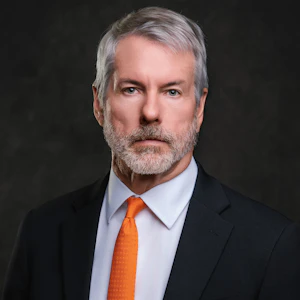
Michael Saylor
Michael Saylor
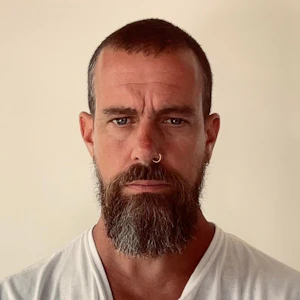
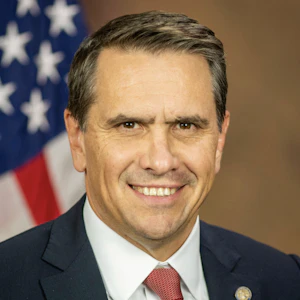
Todd Blanche
Todd Blanche
Biography of Deputy Attorney General Todd Blanche
The Honorable Todd Blanche is the 40th Deputy Attorney General of the United States, overseeing the work of the 115,000 dedicated employees who fulfill the Department of Justice’s mission at Main Justice, the FBI, DEA, U.S. Marshals, ATF, and 93 U.S. Attorney’s Offices.
Todd began his career at the Department where he served for over fifteen years in a variety of capacities, including as a contractor, a paralegal in the Criminal Division, and at the United States Attorney’s office for the Southern District of New York where he eventually became an AUSA and later a supervisor.
After leaving the Department, Todd worked as a criminal defense attorney that included representing President Donald Trump in three of the criminal cases brought against him in 2023 and 2024.
Following President Trump’s historic return to the White House, the President appointed Todd to work alongside Attorney General Pam Bondi to make America safe again. At the DOJ, Todd is working tirelessly to implement President Trump’s priorities that include confronting illegal protecting American businesses from fraud.
Todd has been married to his wonderful wife Kristine for nearly thirty years, is a father and grandfather.

Paul Atkins
Paul Atkins
Prior to returning to the SEC, Chairman Atkins was most recently chief executive of Patomak Global Partners, a company he founded in 2009. Chairman Atkins helped lead efforts to develop best practices for the digital asset sector. He served as an independent director and non-executive chairman of the board of BATS Global Markets, Inc. from 2012 to 2015.
Chairman Atkins was appointed by President George W. Bush to serve as a Commissioner of the SEC from 2002 to 2008. During his tenure, he advocated for transparency, consistency, and the use of cost-benefit analysis at the agency. Chairman Atkins also represented the SEC at meetings of the President’s Working Group on Financial Markets and the U.S.-EU Transatlantic Economic Council. From 2009 to 2010, he was appointed a member of the Congressional Oversight Panel for the Troubled Asset Relief Program.
Before serving as an SEC Commissioner, Chairman Atkins was a consultant on securities and investment management industry matters, especially regarding issues of strategy, regulatory compliance, risk management, new product development, and organizational control.
From 1990 to 1994, Chairman Atkins served on the staff of two chairmen of the SEC, Richard C. Breeden and Arthur Levitt, ultimately as chief of staff and counselor, respectively. He received the SEC’s 1992 Law and Policy Award for work regarding corporate governance matters.
Chairman Atkins began his career as a lawyer in New York, focusing on a wide range of corporate transactions for U.S. and foreign clients, including public and private securities offerings and mergers and acquisitions. He was resident for 2½ years in his firm's Paris office and admitted as conseil juridique in France.
A member of the New York and Florida bars, Chairman Atkins received his J.D. from Vanderbilt University School of Law in 1983 and was Senior Student Writing Editor of the Vanderbilt Law Review. He received his A.B., Phi Beta Kappa, from Wofford College in 1980.
Originally from Lillington, North Carolina, Chairman Atkins grew up in Tampa, Florida. He and his wife Sarah have three sons.

Mike Selig
Mike Selig
Chairman Selig brings to the role deep public and private sector experience working with a wide range of stakeholders across agriculture, energy, financial, and digital asset industries, which rely upon and operate in CFTC-regulated markets.
Prior to his leadership at the CFTC, Chairman Selig most recently served as chief counsel of the Securities and Exchange Commission’s Crypto Task Force and senior advisor to SEC Chairman Paul S. Atkins. In this role, Chairman Selig helped to develop a clear regulatory framework for digital asset securities markets, harmonize the SEC and CFTC regulatory regimes, modernize the agency’s rules to reflect new and emerging technologies, and put an end to regulation by enforcement. He also participated in the President’s Working Group on Digital Asset Markets and contributed to its report on “Strengthening American Leadership in Digital Financial Technology.”
Prior to government service, Chairman Selig was a partner at an international law firm, focusing on derivatives and securities regulatory matters. During his years in private practice, he represented a broad range of clients subject to regulation by the CFTC, including commercial end users, futures commission merchants, commodity trading advisors, swap dealers, designated contract markets, derivatives clearing organizations, and digital asset firms. Chairman Selig advised clients on compliance with the Commodity Exchange Act and the CFTC’s rules and regulations thereunder, including in connection with registration applications and obligations, enforcement matters, and complex transactions.
Chairman Selig earned his law degree from The George Washington University Law School and was articles editor of The George Washington Law Review. He received his undergraduate degree from Florida State University.

David Bailey
David Bailey

Eric Trump
Eric Trump
Mr. Trump also serves as Executive Vice President of The Trump Organization, where he oversees the global management and operations of the Trump family’s extensive real estate portfolio. This includes Trump Hotels, Trump Golf, commercial and residential real estate, Trump Estates, and Trump Winery. Known for his hands-on leadership and strong market instincts, he has played a key role in expanding the company’s presence across major U.S. and international markets.
A globally recognized business leader and public figure, Mr. Trump is a prominent advocate for Bitcoin and decentralized finance. He is a co-founder of World Liberty Financial, a decentralized finance (DeFi) platform, and serves on the Board of Advisors of Metaplanet, Japan’s largest corporate holder of Bitcoin.
Beyond his business activities, Mr. Trump has helped raise more than $50 million for St. Jude Children’s Research Hospital in the fight against pediatric cancer, a philanthropic mission he began at age 21.
Mr. Trump earned a degree in Finance and Management from Georgetown University. He currently resides in Florida with his wife, Lara, and their two children. He is also the author of Under Siege, his memoir published in October 2025.

Jack Mallers
Jack Mallers
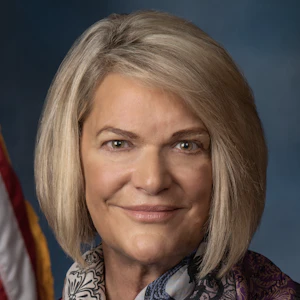
Cynthia Lummis
Cynthia Lummis
As the first-ever Chair of the Senate Banking Subcommittee on Digital Assets, Senator Lummis is the architect of the legislative framework shaping America's digital asset future. She introduced the landmark Lummis-Gillibrand Responsible Financial Innovation Act, the first comprehensive bipartisan crypto regulatory framework in Senate history. She co-authored the GENIUS Act — the first federal stablecoin law ever enacted — and introduced the BITCOIN Act, which would establish a U.S. strategic Bitcoin reserve of up to one million BTC. She is leading the Clarity Act, which will bring long-overdue regulatory certainty to the digital asset industry. She has also championed digital asset tax reform, including a de minimis exemption for small transactions and equal tax treatment for miners and stakers.
Known as Congress' "Crypto Queen," Senator Lummis represents Wyoming — a state she has helped build into one of the most digital asset-friendly regulatory environments in the nation. Before serving in the Senate, she served 14 years in the Wyoming Legislature, eight years as Wyoming State Treasurer, and eight years in the U.S. House. She is a three-time graduate of the University of Wyoming.
Her work represents a crucial bridge between traditional financial systems and the emerging digital economy, ensuring America leads the world in financial innovation while protecting the individual freedoms that define it.
Adam Back
Adam Back
Amy Oldenburg
Amy Oldenburg
David Marcus
David Marcus

Matt Schultz
Matt Schultz
Fred Thiel
Fred Thiel
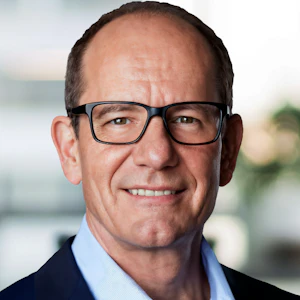
Throughout his career, Mr. Thiel has consistently driven rapid growth and created substantial shareholder value. Prior to MARA, Mr. Thiel served as the CEO of two other public companies, Local Corporation (NASDAQ: LOCM) and Lantronix, Inc (NASDAQ: LTRX). He has successfully raised billions in equity and debt through private and public offerings, led companies through IPOs, executed high-value exits to strategic and financial acquirers, and implemented effective M&A and roll-up strategies.
Mr. Thiel attended the Stockholm School of Economics and executive classes at Harvard Business School, and is fluent in English, Spanish, Swedish, and French. Mr. Thiel is the Chairman of the Board for Oden Technology, Inc. and is active in Young Presidents’ Organization where he has led initiatives in both the FinTech and Technology Networks.
A recognized voice in the industry, Fred frequently shares his insights on energy and technology with major media outlets like Bloomberg TV, CNBC, and FOX Business, contributing to vital discussions about the future of these sectors.
Tim Draper
Tim Draper
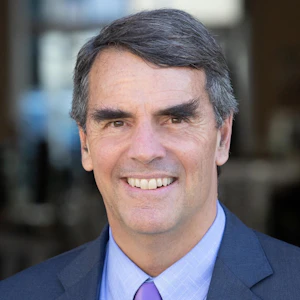
He is a supporter and global thought leader for entrepreneurs everywhere, and is a leading spokesperson for Bitcoin and decentralization, having won the Bitcoin US Marshall’s auction in 2014, invested in over 50 crypto companies, and led investments in Coinbase, Ledger, Tezos, and Bancor, among others.

Afroman
Afroman