Upgrading Wallets for Users from Now to 2140
Speakers/Moderators

Hodl Dee
Hodl Dee

Bastien Taquet
Bastien Taquet
I like building things that people can hold in their hands and enjoy using — driven by UX/UI and a curiosity for new technologies. Somewhere between libertarian ideals and entrepreneurial energy, my journey is about creating simple, secure, and open ways for anyone to interact with Bitcoin.

Session
Overview
Hodl Dee of Coinkite moderated a discussion with Roy Sheinfeld, Ben Kaufman, and Bastien Taquet on how Bitcoin wallets may evolve from today through the far future. The panel focused on seed phrases, passkeys, trusted execution environments, hardware wallets, and the trade-offs between usability and self custody.
A major theme was that seed phrases remain important for portability and long-term ownership, even as wallets experiment with easier backup methods for mainstream users. The speakers emphasized that different wallet designs fit different use cases: daily spending, larger savings, inheritance, and institutional-style security each require different balances of convenience and protection.
The conversation also covered multisig, Miniscript, time locks, inheritance planning, and the risks of depending on specific software over decades. The panelists discussed how AI agents and policy-based signing could interact with Bitcoin wallets, while stressing caution around letting automated systems manage meaningful funds.
For Lightning and layer two systems, the panel described a future with multiple subnetworks such as Spark, Ark, Liquid-based approaches, and other models with different trust assumptions. Lightning was framed less as the only end-user payment channel system and more as a potential interoperability layer connecting many Bitcoin payment environments.
Thanks for coming today. I appreciate you being here. Our topic today is upgrading wallets 100 to 120 years into the future. Today we have Roy, Ben, and Bastien. I go by Dee, and I work for Coinkite. I'm the support specialist there. We sell the COLDCARD Q, Mk4, Blockclock, Satscard, Tapsigner, things like that.
My name is Roy. I'm the CEO of Breez, and we do Lightning stuff.
My name is Ben Kaufman. I work on wallets. I do it at Synonym.
My name is Bastien. I'm the CEO of Satochip, and we provide a hardware solution based on smart cards.
Awesome. Maybe we'll start on L1, and then we can progress to Lightning, L2, and the future. I know the last panel was talking about single sig and multisig, so it might be a little repetitive, but we'll have fresh ideas from other people here. In terms of seed words, are those still good? I see a lot of people trying to push for social backups and other things like that. Do you think seed backups are going to last into the future? What is a pro of them, and what are some pitfalls?
Let's talk about the present before talking about the future. I think we're seeing new technologies. From our experience, we're B2B, so our partners use our software to build wallets. Seed phrases are still something that block Bitcoin adoption. We see that across the board. The more mainstream the app, the more complaints we get from partners asking us what a better solution is than exposing seed phrases to end users.
It's definitely an adoption problem for Bitcoin, not just layer one, by the way. Lightning and other L2s also interface with seed phrases, so it's a hard problem to solve. In the last year, I think there are two technologies that emerged that mitigate the seed aspect of interacting with Bitcoin. One is a trusted execution environment. There are solutions like Privy and Turnkey, where you have a secure enclave in the cloud. The seed is secured there, and you interface using Web2 authentication methods to the trusted execution environment. Users don't need to save the seed. They just interact with a cloud component where the seed is actually stored. That's one solution that is highly popular, and solutions like Polymarket and MetaMask are interfacing with secure enclaves.
Another solution that I personally like even better is passkeys. Passkeys are the new way of authenticating on the web, aimed at replacing passwords. Now there is a standard across WebAuthn where you can derive a deterministic key from passkeys. I think that really helps. It's a way to authenticate in your wallet using biometrics or whatever other unique identity you have. You can use a hardware wallet, YubiKeys, or any standard method. You can derive a deterministic key and you don't need to remember your seed. The underlying provider helps with that, so you can use Google Password Manager, iCloud passkeys, Proton, or any authentication provider. I think this is something that really helps with mainstream wallets. Lots of options there.
I agree that using seed phrases as the main option for backups is not really ideal. It's not something we want for the long term, but I still think it's very useful that they are there. Maybe we want to do passkeys, or we want to do TEEs for the main backups for users, but at least having the option for users to export their seed is still extremely important. It is definitely the best way if you want to unlock yourself from a single wallet and be able to move around, and not have to trust that some server or something will still be there in the future.
For certain use cases, even the majority, using TEEs, passkeys, cloud backups, or whatever can be very good, but it cannot really replace the seed. It's more of a complementary way, or maybe even the main way, but the seed phrases need to still be there and need to be accessible for the user. Especially now, interoperability is really bad between providers. There is no interoperability between these, and even export and import of passkeys is very weak.
It's a new protocol, so it's just getting started. At least with Android 17 coming out, I think we'll see Google supporting import and export, and I think Apple will follow suit, but it takes time.
I think we've been ingrained in self custody that we want our keys fully offline. Obviously, there is a middle ground where you can have your hoard offline, but you can still interact with passkeys and other things online that maybe have a smaller amount of funds. Do you agree with that framing, or do you think we fully go from offline key storage to passkeys?
Passkeys can be offline. For example, you can have a YubiKey. You can have your seed on a key, on a physical device, and you can use passkeys as well. There are multiple options. I'm happy that we are in a place where we have new technology. Secure enclaves are also kind of new in terms of trust. We haven't trusted secure enclaves until the last year or so. These technologies are opening us to more and more options. But I agree with Ben: in the current state of things, people still need to store their seeds.
Yes, absolutely. I'm a big fan of seed phrases, or seed words. Whether it's 12 or 24 words, having multiple backups especially is incredibly important, and eliminating those single points of failure. I was a hard seed advocate throughout my career in Bitcoin. I just didn't understand the issue with the seed. I still don't, personally, but as I'm interfacing with more and more mainstream users, it's definitely an issue. I can't argue with people's feedback and what people are telling me about seeds.
We're also competing with ETFs and treasury companies, where you one-click buy their paper IOU stock and don't have to secure anything. Making it more convenient while remaining secure is obviously our goal, and it helps other people with that passion.
It's a good point regarding the ETF. People can buy bitcoin online, but if you really want to own your bitcoin, you need access to your keys, and it's protected by your seed phrase. It's very important to keep the seed phrase for the long run. But as Roy said, we need to find tools that allow people to easily manage the seed. It could be through passkeys, tokens, or any other solution that will allow people to quickly and easily back up their seed phrase without even knowing they are using a seed phrase. That might be the goal for the next decade.
The goal is how do you keep grandma secure? How can it be as easy as possible for grandma so she doesn't need to stamp seeds into a steel plate or write them down and make sure she doesn't lose them? I like to recommend BIP85. I think BIP85 is awesome for people like us who are more power users. If grandma is just getting started, or your friend is getting started, there are trade-offs with being an Uncle Jim. You can give them the seed words and then you have their backup. If they lose it, you can still recover it for them. But hopefully you tell them that you have that backup for them, so they're not blindsided in case you go rogue. Those are all important factors with self custody and stamping things into physical backups, and not having single points of failure.
Let's move into multisig. I know the previous panel was talking about single sig versus multisig. Where do you stand on multisig, or does this passkey option help solve that issue?
I think it depends on the use case. I'm mostly focused on the daily spending use case: low amounts, high frequency, high velocity. Multisig in that regard, I'm not sure it makes sense, because basically we're trying to replace your leather wallet with another hot wallet. There are definitely use cases where it does make sense, but I think that's for higher amounts of Bitcoin than your daily spending.
You want one key signing things. You don't want to have to go look for a bunch of keys. You want to tap to pay, basically. Where is the multisig when you tap to pay?
Yes. But if you're holding a substantial amount, you do want to protect it. Multisig is definitely one of the best ways to protect your bitcoin. It's great, but it's still quite complex to set up for a beginner. If you jump into Bitcoin, you don't do multisig the first time. User experience is very important. If you own bitcoin or want to pay with bitcoin, in both cases you need to find a reliable solution that is really easy to set up and use. I think multisig is currently the best solution by far to secure Bitcoin, but still complex to set up, and it also brings more information to back up: descriptors, seed phrases, and so on. It's not very easy to set up.
In my mind, I was mostly thinking of the Bitkey use case, where there is an entity that is a cosigner. There are other options like Casa and Unchained that also offer those custody models and things like that. I do lean a little more toward Unchained because you can export your stuff out of their app and use it with other things, and you're not locked into their ecosystem as much. But of course, the ease of use for some other options is definitely beneficial for people like grandma, who just want a quick one tap.
Ben worked on a project that tried to do social multisig, so I think that was an interesting experiment.
I would say multisig is super important, and I've been working on it for quite a while in previous projects. It's not for everyone in every situation. There are tools for everything. You don't need a huge vault for $100, and you don't need multisig for small amounts. It is a spectrum of what you need and what you have. You may want a single seed for stuff that you use day to day, and then multisig for large amounts. It really depends on your situation. It's a spectrum of the right solution for the right situation.
There are a lot of products that offer different things on that spectrum. We have a Tapsigner at Coinkite that's kind of a blind signer. Maybe you're traveling with it and don't want to bring a COLDCARD Q in your pocket. You want to have something in your wallet. You tap it, you have that PIN on there, and you can sign funds easily. But it doesn't have a screen on it, so you're taking that trade-off of blind signing and trusting that app, rather than viewing all the transaction information on that screen.
It's always about trying to balance security and convenience for the right case. For daily spending, you want a lot of convenience, and security is not the highest concern. But if you're talking about your main stack, then of course security is the most important. If it takes time to spend, or it's complicated, that's usually by design.
Is there a way to maintain security while having more convenience? Where do you draw the line, or where do you think the best middle ground is in 50 years?
You always want the most secure and convenient wallet. You don't want to compromise on either as much as possible, but eventually there is a trade-off between them. I don't think you can do one wallet that will be for both. You want multiple wallets because you have multiple situations. You have the wallet in your pocket, you have your bank account, you have a savings or investment account, and sometimes you have a physical vault for cash. It's the same situation with Bitcoin. You want multiple options depending on what you do.
Maybe let's go back to 2140 a little bit. People love to talk about inheritance and time locks: locking up your funds for a certain amount of years so that even if someone comes to your house, there is no way for you to sign that transaction unless you sign it and then broadcast it five years in the future, or ten years in the future. How do you see that evolving? Do you see it being talked about more? Where do you stand on time locks and inheritance, and how to best manage that?
I don't have something intelligent to say about it, just my personal view. I can't trust any software long term. For those types of use cases, where you're talking 20 or 30 years ahead, I can't be dependent on software. For me, I'm completely analog when it comes to inheritance.
I agree that you shouldn't depend on a specific software. But the good thing is that Bitcoin has time locks built into its script. Now we also have standards. We have Miniscript, for example, to easily represent it. You don't need to trust a single software. You have standards defined, and you trust Bitcoin itself, so you don't need to change your trust assumptions. It was more of a struggle before Miniscript. It was still doable, but without good standards for it, it was a struggle. Now it's possible. I wouldn't say easy, but it is definitely achievable for anyone who wants to do that and has enough funds that they need a proper inheritance plan.
I was mostly referring to the lower barrier of entry. I don't know what the skills of my grandchildren will be.
I guess it's more like you have a multisig scenario and you're using Miniscript so that in the future they only need one key to sign. But for 20 years, they're going to need two out of three, and then it decays into a single sig or one-signature option. That might be a good way to future-proof them a little bit and have something to fall back to if you're gone or they can't find something.
Even if you have the underlying solution with Miniscript and a solution that will be here in ten years, you still need to be sure that your children will be able to sign with something. It's not only about the way you can time-lock your bitcoin, but also whether they will be able to sign something in ten years. It's important to have the tools to let them easily sign the needed transaction.
You need to make sure that you have a plan, both a technical plan so that the bitcoin will be accessible, and a social plan. You need the actual legal title transferred to them so there is no dispute about who the bitcoin should legally go to after you're gone. You should make sure they understand how they can access it. You need to leave clear instructions and make sure they are future-proof, so they don't depend on, go to this company, and then that company doesn't exist anymore and they have a problem. You need something future-proof. It might not be the easiest, but I do think it's very doable by now.
As you said, a future-proof solution is the key.
I've seen more recently that there are a lot of Lightning apps, or even L1 apps like Nunchuk, integrating AI agents into spending your bitcoin for you. Maybe you have a threshold: you're only allowed to spend a million sats a month, or something like that. Nunchuk released something with COLDCARD where you can sign via HSM, where the seed lives offline. It confirms with your COLDCARD via USB and signs a transaction according to that threshold and policy, whatever you set. What are your thoughts on those AI agents integrating with hardware wallets and seed phrases? How do you see that evolving?
We're definitely seeing more and more human interactions being delegated to AI. I think this trend is just going to get stronger and stronger as time goes by. In 2140, maybe we won't do anything and everything will be done for us by AI. That's a very plausible scenario. I don't think it's going away. It's not just money applications; any application will be more and more agent-friendly. I think it's challenging in Bitcoin because currently you need an application-level solution, and you're dependent on yet another middleware and not on the protocol itself. Hopefully we'll have more opcodes baked into Bitcoin that allow us more flexibility, more control, and more power on the Bitcoin Script level. That would enable AI accessibility in a much more secure way.
Like you're saying, these things can interact with smaller amounts of funds. Even if something went wrong, in the worst-case scenario you're not losing your entire hoard.
If we're looking 100 years ahead, the agency will shift from humans to AI. That's the inherent assumption I'm working on. If that's the case, technology needs to accommodate that, and I don't think we have great solutions in Bitcoin right now.
Self custody advocates are maybe skeptical of that because maybe they're not all coders and they have to lean on these things. They might say, I know they're safe only because you told me they're safe. Gaining that trust over time will help as well. Do you want to touch on anything?
I think AI will be part of the next decade, for sure, even for hardware. But as Roy said, I share his vision. I really don't like to have many layers of software on top of everything, because in 15 years or 50 years maybe it won't be working anymore. If we go ahead, we might say maybe the ultimate thing is the seed phrase, because it will work until the end of Bitcoin mining. We need to find the solution. We will see hardware wallets evolve, and solutions will embrace AI and things like that. But for people, the simplest way to own bitcoin is to have the seed phrase.
For now, I'll just keep everything offline except something small that AI can play with. In 50 or 100 years, sure, it's very possible that AI will manage all of it. It definitely seems possible, even likely. But for the next ten years, I don't think I want it to touch anything that is important to me.
You don't want to be the guinea pig.
I don't want to be the one that jumps first.
In regard to Lightning wallets, how do you see those evolving? It's similar to the AI agent thing. Semi-recently, we've had splicing into channels. Channel management is a big topic. People don't want to do it; they just want it to happen in the background. How do you see that evolving and becoming more convenient and easy for people?
For a while, Lightning was the only second layer that we had in order to scale Bitcoin. When we said Lightning, we were actually talking about payment channels. In the last year or so, there are new layer two technologies that came into Bitcoin: Spark, Ark, garbled circuits, and next-generation BitVM solutions. For the present and the foreseeable future, we see a future where you have multiple subnetworks with different trust profiles, like Spark, but even custodial stuff like Cashu and Fedi and other types of solutions. Lightning is evolving from an implementation layer payment channel to the interoperability layer between these multiple subnetworks.
At Breez, we support three flavors of Lightning. We have one built on top of native Lightning, one built on top of Liquid, and one built on top of Spark. We might add Ark. That's the future we see: Lightning as a payment channel is no longer the best tool for the job when it comes to the last-mile solution, meaning it won't serve end users directly. We'll have different trust profiles, multiple subnetworks, all interoperable via the Lightning Network.
So the end users sit in the city, and Lightning is the road or highway.
I don't have much to add. I want to be a bit controversial, but I mostly agree with Roy on that. Having multiple networks that are more comfortable right now than using Lightning, which is quite difficult if you want to do it in a non-custodial way, is very interesting. For people who really need decentralization and really want to be completely censorship resistant, using Lightning and taking the extra effort makes sense. It's important that we'll have it. But for the majority, who just want to do payments of small amounts and are usually okay with different trade-offs, having other options like Ark and Spark is a very good way to solve it.
I think native Lightning will also get easier because people are now accustomed to interacting with the cloud and owning a piece of the cloud. With AI interactions, basically you're building software that gets deployed to a cloud, and that was a major barrier of entry to normal users. The more AI functionality and interaction users have, the easier it will be for them to run Lightning software in the cloud.
Awesome. I want to thank you for coming out today, and thank you to the audience for taking time to listen to us up here on stage. Thanks.
Similar
Sessions
Paper Bitcoin Summer or Self-Custody Spring?
Nico Moran
Nico Moran
His mission is to guide people to thrive in an ever-growing future towards individuals claiming back full financial sovereignty through Bitcoin.


Chris Seedor
Chris Seedor
Paper Bitcoin Summer or Self-Custody Spring?
Speakers/Moderators
Nico Moran
Nico Moran
His mission is to guide people to thrive in an ever-growing future towards individuals claiming back full financial sovereignty through Bitcoin.
Chris Seedor
Chris Seedor
Upgrading Wallets for Users from Now to 2140
Hodl Dee
Hodl Dee
Bastien Taquet
Bastien Taquet
I like building things that people can hold in their hands and enjoy using — driven by UX/UI and a curiosity for new technologies. Somewhere between libertarian ideals and entrepreneurial energy, my journey is about creating simple, secure, and open ways for anyone to interact with Bitcoin.
Upgrading Wallets for Users from Now to 2140
Speakers/Moderators
Hodl Dee
Hodl Dee
Bastien Taquet
Bastien Taquet
I like building things that people can hold in their hands and enjoy using — driven by UX/UI and a curiosity for new technologies. Somewhere between libertarian ideals and entrepreneurial energy, my journey is about creating simple, secure, and open ways for anyone to interact with Bitcoin.
Other
Speakers

Michael Saylor
Michael Saylor
Todd Blanche
Todd Blanche
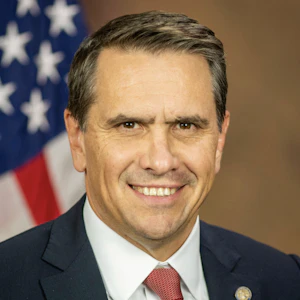
Biography of Deputy Attorney General Todd Blanche
The Honorable Todd Blanche is the 40th Deputy Attorney General of the United States, overseeing the work of the 115,000 dedicated employees who fulfill the Department of Justice’s mission at Main Justice, the FBI, DEA, U.S. Marshals, ATF, and 93 U.S. Attorney’s Offices.
Todd began his career at the Department where he served for over fifteen years in a variety of capacities, including as a contractor, a paralegal in the Criminal Division, and at the United States Attorney’s office for the Southern District of New York where he eventually became an AUSA and later a supervisor.
After leaving the Department, Todd worked as a criminal defense attorney that included representing President Donald Trump in three of the criminal cases brought against him in 2023 and 2024.
Following President Trump’s historic return to the White House, the President appointed Todd to work alongside Attorney General Pam Bondi to make America safe again. At the DOJ, Todd is working tirelessly to implement President Trump’s priorities that include confronting illegal protecting American businesses from fraud.
Todd has been married to his wonderful wife Kristine for nearly thirty years, is a father and grandfather.

Paul Atkins
Paul Atkins
Prior to returning to the SEC, Chairman Atkins was most recently chief executive of Patomak Global Partners, a company he founded in 2009. Chairman Atkins helped lead efforts to develop best practices for the digital asset sector. He served as an independent director and non-executive chairman of the board of BATS Global Markets, Inc. from 2012 to 2015.
Chairman Atkins was appointed by President George W. Bush to serve as a Commissioner of the SEC from 2002 to 2008. During his tenure, he advocated for transparency, consistency, and the use of cost-benefit analysis at the agency. Chairman Atkins also represented the SEC at meetings of the President’s Working Group on Financial Markets and the U.S.-EU Transatlantic Economic Council. From 2009 to 2010, he was appointed a member of the Congressional Oversight Panel for the Troubled Asset Relief Program.
Before serving as an SEC Commissioner, Chairman Atkins was a consultant on securities and investment management industry matters, especially regarding issues of strategy, regulatory compliance, risk management, new product development, and organizational control.
From 1990 to 1994, Chairman Atkins served on the staff of two chairmen of the SEC, Richard C. Breeden and Arthur Levitt, ultimately as chief of staff and counselor, respectively. He received the SEC’s 1992 Law and Policy Award for work regarding corporate governance matters.
Chairman Atkins began his career as a lawyer in New York, focusing on a wide range of corporate transactions for U.S. and foreign clients, including public and private securities offerings and mergers and acquisitions. He was resident for 2½ years in his firm's Paris office and admitted as conseil juridique in France.
A member of the New York and Florida bars, Chairman Atkins received his J.D. from Vanderbilt University School of Law in 1983 and was Senior Student Writing Editor of the Vanderbilt Law Review. He received his A.B., Phi Beta Kappa, from Wofford College in 1980.
Originally from Lillington, North Carolina, Chairman Atkins grew up in Tampa, Florida. He and his wife Sarah have three sons.

Mike Selig
Mike Selig
Chairman Selig brings to the role deep public and private sector experience working with a wide range of stakeholders across agriculture, energy, financial, and digital asset industries, which rely upon and operate in CFTC-regulated markets.
Prior to his leadership at the CFTC, Chairman Selig most recently served as chief counsel of the Securities and Exchange Commission’s Crypto Task Force and senior advisor to SEC Chairman Paul S. Atkins. In this role, Chairman Selig helped to develop a clear regulatory framework for digital asset securities markets, harmonize the SEC and CFTC regulatory regimes, modernize the agency’s rules to reflect new and emerging technologies, and put an end to regulation by enforcement. He also participated in the President’s Working Group on Digital Asset Markets and contributed to its report on “Strengthening American Leadership in Digital Financial Technology.”
Prior to government service, Chairman Selig was a partner at an international law firm, focusing on derivatives and securities regulatory matters. During his years in private practice, he represented a broad range of clients subject to regulation by the CFTC, including commercial end users, futures commission merchants, commodity trading advisors, swap dealers, designated contract markets, derivatives clearing organizations, and digital asset firms. Chairman Selig advised clients on compliance with the Commodity Exchange Act and the CFTC’s rules and regulations thereunder, including in connection with registration applications and obligations, enforcement matters, and complex transactions.
Chairman Selig earned his law degree from The George Washington University Law School and was articles editor of The George Washington Law Review. He received his undergraduate degree from Florida State University.

David Bailey
David Bailey

Eric Trump
Eric Trump
Mr. Trump also serves as Executive Vice President of The Trump Organization, where he oversees the global management and operations of the Trump family’s extensive real estate portfolio. This includes Trump Hotels, Trump Golf, commercial and residential real estate, Trump Estates, and Trump Winery. Known for his hands-on leadership and strong market instincts, he has played a key role in expanding the company’s presence across major U.S. and international markets.
A globally recognized business leader and public figure, Mr. Trump is a prominent advocate for Bitcoin and decentralized finance. He is a co-founder of World Liberty Financial, a decentralized finance (DeFi) platform, and serves on the Board of Advisors of Metaplanet, Japan’s largest corporate holder of Bitcoin.
Beyond his business activities, Mr. Trump has helped raise more than $50 million for St. Jude Children’s Research Hospital in the fight against pediatric cancer, a philanthropic mission he began at age 21.
Mr. Trump earned a degree in Finance and Management from Georgetown University. He currently resides in Florida with his wife, Lara, and their two children. He is also the author of Under Siege, his memoir published in October 2025.

Jack Mallers
Jack Mallers
Cynthia Lummis
Cynthia Lummis
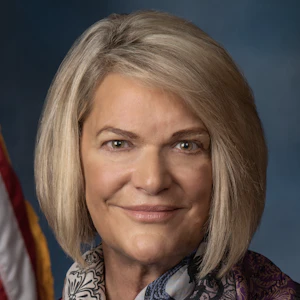
As the first-ever Chair of the Senate Banking Subcommittee on Digital Assets, Senator Lummis is the architect of the legislative framework shaping America's digital asset future. She introduced the landmark Lummis-Gillibrand Responsible Financial Innovation Act, the first comprehensive bipartisan crypto regulatory framework in Senate history. She co-authored the GENIUS Act — the first federal stablecoin law ever enacted — and introduced the BITCOIN Act, which would establish a U.S. strategic Bitcoin reserve of up to one million BTC. She is leading the Clarity Act, which will bring long-overdue regulatory certainty to the digital asset industry. She has also championed digital asset tax reform, including a de minimis exemption for small transactions and equal tax treatment for miners and stakers.
Known as Congress' "Crypto Queen," Senator Lummis represents Wyoming — a state she has helped build into one of the most digital asset-friendly regulatory environments in the nation. Before serving in the Senate, she served 14 years in the Wyoming Legislature, eight years as Wyoming State Treasurer, and eight years in the U.S. House. She is a three-time graduate of the University of Wyoming.
Her work represents a crucial bridge between traditional financial systems and the emerging digital economy, ensuring America leads the world in financial innovation while protecting the individual freedoms that define it.

Adam Back
Adam Back
Amy Oldenburg
Amy Oldenburg
David Marcus
David Marcus

Matt Schultz
Matt Schultz
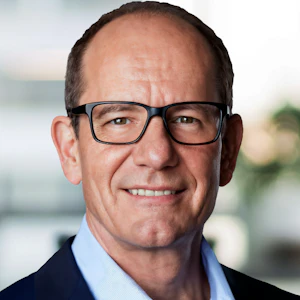
Fred Thiel
Fred Thiel
Throughout his career, Mr. Thiel has consistently driven rapid growth and created substantial shareholder value. Prior to MARA, Mr. Thiel served as the CEO of two other public companies, Local Corporation (NASDAQ: LOCM) and Lantronix, Inc (NASDAQ: LTRX). He has successfully raised billions in equity and debt through private and public offerings, led companies through IPOs, executed high-value exits to strategic and financial acquirers, and implemented effective M&A and roll-up strategies.
Mr. Thiel attended the Stockholm School of Economics and executive classes at Harvard Business School, and is fluent in English, Spanish, Swedish, and French. Mr. Thiel is the Chairman of the Board for Oden Technology, Inc. and is active in Young Presidents’ Organization where he has led initiatives in both the FinTech and Technology Networks.
A recognized voice in the industry, Fred frequently shares his insights on energy and technology with major media outlets like Bloomberg TV, CNBC, and FOX Business, contributing to vital discussions about the future of these sectors.
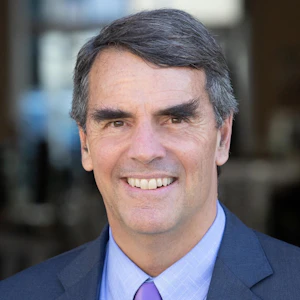
Tim Draper
Tim Draper
He is a supporter and global thought leader for entrepreneurs everywhere, and is a leading spokesperson for Bitcoin and decentralization, having won the Bitcoin US Marshall’s auction in 2014, invested in over 50 crypto companies, and led investments in Coinbase, Ledger, Tezos, and Bancor, among others.

Afroman
Afroman