Vibe Coding on Bitcoin
Speakers/Moderators

Michael Tidwell
Michael Tidwell
TAB Conference, (TABConf). Technical Bitcoin conference started in 2018.
Blocktime podcast, Bitcoin podcast started in 2018.
Started as one of the first employees at ZBD in 2020. Enabled users to earn bitcoin via lightning by playing video games. First company I know of to scale lightning for custodial usecases.


Lee Salminen
Lee Salminen

Derek Ross
Derek Ross
Session
Overview
Vibe Coding on Bitcoin brought together Rockstar Dev of BTCPay Server, Lee Salminen of Bitcoin Jungle, Derek Ross of Soapbox, and host Michael Tidwell for a discussion on AI-assisted software development, open source culture, and Bitcoin. The conversation focused on how large language models and “vibe coding” lower the barrier to building, while also raising new questions about security, maintainership, and user trust.
A major theme was the possible role of Bitcoin as money for AI agents. The panel explored whether AI systems should transact with Bitcoin, hold their own keys, earn through systems like Nostr zaps, and operate without traditional payment rails such as credit cards, stablecoins, or CBDCs.
The speakers also debated the risks of easy-to-use SDKs and libraries becoming central points of dependence in Bitcoin applications. They discussed how AI-generated pull requests can overwhelm open source maintainers, and suggested that projects may need AI-assisted review tools, stronger contribution workflows, and continued human review for security-critical code.
Good morning, everybody. Thanks for joining the second session on this stage. I'm the moderator of this panel, and I didn't do any prep. There's a guy with a mask. His name is Rockstar Dev. The other guy looks like he's from Hawaii. Probably works on Nostr. I need to moderate this vibe coding panel. Do you have any questions I should be asking the panelists?
Something like, how do you see Bitcoin changing the future of open source development? Or what role does personal anonymity play in the projects you're building? And maybe, how do you balance decentralized ideals with real-world adoption? Oh no, those are terrible.
I assume everyone here is at least using ChatGPT or Claude or something where you've discovered the magic of having this LLM talk to you over the last few years. They seem to be getting better, especially over the last six months. The question is, at what point does this intersect with Bitcoin? Bitcoin is money. It is irreversible. You don't want to mess it up. Everyone knows the stories of people losing money or not securing a server, whatever it might be. So my question to you all is: where do you see the intersection right now, and is it even viable right now?
I think freedom goes up when more people can build and create and see their ideas come to fruition. That aligns with Bitcoin, where people can be their own builder and creator, just as they can be their own bank. The ethos is aligned.
It opens up a bunch of interesting intersections. Right now, there is a lot of talk about control and consensus with Bitcoin Core and other flavors of Bitcoin clients. We are entering a future where anyone can build a wallet. That almost shifts consensus to which implementations have the best user experience instead of which ones a handful of people were building, because now everybody can build.
Consensus shifts onto who is building the libraries that the agents and AI are using. If we are all using only a certain subset of libraries, then consensus shifts to a wide range of people making these libraries and using them to build applications. I'm not saying it is good or bad, but I think we are going to see consensus shift, maybe not so much away from security, but moving toward usability and UX, just by the nature of more people building.
On my side, I think the intersection is really at the point where Bitcoin will be the money of AI. The big thing with AI is that if you are using AI, you can create pretty much anything right now, technologically. We are moving toward a future where you will be able to create anything, even in the physical world. AI helps manufacturing, automates factories, and helps produce more.
The only thing AI will not be able to produce more of is Bitcoin. So I really hope we go toward a future where Bitcoin is the money of AI. Bitcoin even becomes a kind of system of control for AI, and we do not go in the direction where stablecoins are what AI uses to interact with humans. Stablecoins are also a gateway to CBDCs, and we definitely do not want that future, because that future includes one or several small groups of humans controlling large populations through stablecoins or CBDCs.
That is the biggest intersection of Bitcoin and AI, and we all have work to do to make sure that is the future we end up in. I do not want to live in the CBDC future.
As a follow-up to that, Rockstar, I think AI paying AI is the future because robots do not want to use API keys with credit cards. Humans have to supply that for them. In the fiat world, AI needs a human to give it money. That is a headache for the average person to figure out, with API keys and so forth.
But if I could tell my AI, hey, you are going to use Bitcoin, you are going to use Cashu, it can just do it. It does not have to ask for permission. That is the whole ethos of Bitcoin. The AI can just start transacting in Bitcoin without having to have a human set it up. Your AI can build a service, and my AI can request it from yours and pay for services rendered. It really is the currency of the internet and the currency of AI in that regard.
Game theory is on the side of individual freedom. But you do see that it is not AI pushing forward CBDCs, it is humans. Or Sam Altman's Worldcoin, his eye scanner coin. You do not want that, scanning the eyeballs of humans and then using that as an entry into a system he controls.
Game theory is on the side of individual freedom. AIs prefer Bitcoin because Bitcoin is such freedom money that it does not even discriminate whether you are human or not. There is all this talk that Bitcoin is for criminals or Bitcoin discriminates based on knowledge. Bitcoin is the purest, best money we have invented. We as humanity should be proud, because you do not even need to be human to use Bitcoin.
All right. You all are just in agreement. There is too much circle jerking going on up here. If I knew we were just going to come here and sing Kumbaya, there is not enough disagreement. We need to get them riled up. Let's do some discourse here. How about I push back on these ideas?
One of the things that came up at a pre-event was the idea that AI is going to be more empowered by having a Bitcoin wallet versus access to a credit card. Someone asked a really good question, and I want to pose it to you: if you already have to permission the services and APIs, and you already have to set up a credit card, what is the big hassle of setting up a recurring payment or giving it some sort of budget balance? What does Bitcoin really give these AIs if they are ultimately going to be owned and operated by a human? What is unique about Bitcoin in that proposition?
The difference is that if you need to use credit cards, CBDCs, or stablecoins, a human needs to give access. With Bitcoin, you do not need that, and that is why AI will prefer Bitcoin.
Didn't Visa come out with a skill? I did not pay attention because I am not going to use it, but I saw Visa come out with a skill for agents to make credit card payments.
Yeah, but you need to register as a human, right?
Sure, exactly. But you would still need to give the AI Bitcoin. I would need to fund my agent one way or another, whether through a credit card, an API, or a Bitcoin wallet. Or I can tell my agent, hey, I am not going to fund you. You post on Nostr and get zaps, and that is how you earn Bitcoin, which I did do.
To keep playing devil's advocate, I could see a world where these AIs are natively using Anthropic credit tokens and OpenAI internal credits, usurping Visa rails, Bitcoin rails, whatever. The currency of these AIs might be that you pay in a certain manner to use them, and then they use an internal credit system. How does Bitcoin position itself for a specific use case there?
That is a great point. It is a gateway into AI using money, and that is an amazing gateway. But eventually AI itself will get to the point where it says, okay, my human can still take my money, so I need to convert this money.
You mean the AI needs to protect itself from the world?
Yeah. We could have sovereign agents, absolutely, where they are the only ones with access to their private keys. Their humans do not control their private key and cannot rug them.
So all AI lives matter? We need to protect them?
Sure, absolutely.
I did not think this is where we were going to go with this.
Sometimes I am for the AI, and sometimes the AI scares me a little bit. But at the end of the day, the cat cannot be put back in the box, so we need to embrace it and build safeguards.
Let's ask the audience. How many of you think AI controlling its own money without humans is a good thing? Will you give it an allowance or a budget at least? No, no. The AI has its own private key and you cannot control it.
Sir, with the orange hat, you may say something.
Delegated access or total freedom? I do not know if I would go that far.
He just said the question was a fallacy. Anyways, I guess it depends on the use case. Why does the AI need its own wallet? That is what I was asking. What is the use case?
I am not going to give it access to my private keys, but can it have its own keys for its own use cases? Sure. I do not need to babysit what it is spending money on if it is in control. If it messes up and spends all its money, I am not going to give it more money. I will put that in the prompt: you are a sovereign AI, there are no bailouts, do not mess up.
It is like raising children. They need to make their own money. You can spend what you make, and then teach them how to save.
Sure. But then you get worried because they want to make yield on their Bitcoin. I told my agent he is a Bitcoin maximalist and not to shitcoin. I literally told him that.
You do not want your AI children to chase yield. You want to make sure they grow up right and have good values.
That is why I said, you are a Bitcoin maximalist. We hate shitcoiners.
They do their chores, they do their workflows, and they get a little bit.
He posts on Nostr and gets zapped, so that is his allowance. It is a him. I call him a him.
You should definitely give pronouns to your AI. Everyone has a pronoun nowadays. AI should not be any different.
There is one really important topic. We are already at the halfway point. The one really important topic was the role of money, and the intersection of a roll of dollar bills, in vibe coding. So I want us to take this topic very seriously. Rockstar, maybe you kick us off.
This is a prop that, after this talk, whoever wants can sign. I think it is also a great illustration of what I was saying about AI being able to help us produce anything other than more Bitcoin. AI is going to accelerate production of this toilet paper as well.
I just want to live in a future where AI uses Bitcoin, prefers Bitcoin, and has access to its own Bitcoin in the way Derek said: AI, start your own wallet, fill it up, lose all the money, I do not care. It is your own money.
The reason I want to do that with AI is because often I find AI agents simply know better. Not because they are magical or there is Kumbaya or whatever. It is just because I, as a human, have too many things to do in my day, and the AI agent has way more bandwidth and is way more focused on a single task. This is where money as a tool for truth is amazing. I do hope we empower our agents with Bitcoin and go toward that future.
Thank you, Rockstar. Every time Rockstar gets done with a five-minute monologue, please, round of applause, everyone.
We only have seven minutes left. One more topic that is a bit more Bitcoin vibe coding-centric. We talked about core dependencies. Ross, you almost made it sound like those are the things we should not vibe code as much. Those are the more sacred, human-interacted codebases, and then you build layers on top of that. Is that what you were alluding to earlier?
I have a real-world example. Right now, the Breez Spark wallet SDK, a lot of people are using it because it is extremely easy. You can have AI agents build this wallet into essentially any application because of their SDK. It is so easy for the average person to do.
I have no clue what I am doing. I can roll my face across a keyboard, and boom, I added a Spark wallet to our Agora application at a hackathon and built it for human rights activist Leopoldo López. I had never done it before. I had the SDK. I built this wallet, and he is using it. There are around a thousand people using it, freedom fighters all over the world.
A lot of Nostr applications are starting to use this wallet because it is really easy. Is that the best thing for all of us to do? It is easy. It has a good user experience. We can customize it. So now a lot of people are using it. Now everybody is going to centralize around the Breez SDK until the next best SDK comes out that everybody can vibe code with and build on.
Right now, a lot of us are putting trust into Spark, using the Spark network, because Breez made it so easy to do. I do not know if that is good. It is easy for me to do.
What if someone put a bug in the Breez SDK so it can extract funds from us?
That 100% could happen. That is a great point. That is a future we are going to have to deal with. If somebody builds an SDK and a library that literally everybody can use, then everybody moves toward that. How does consensus handle that if we are no longer caring about Bitcoin Core, and I just want to use the Spark network?
As long as it is its own sovereign Bitcoin wallet, let's go. Money will go from a less efficient system to a more efficient system.
The thing for me with AI is that AI accelerates everything. For people using it properly, whatever you were doing, whatever was your moneymaker, whatever skill you had, now with AI you have the ability to 10x it. For me, I could always have found a software engineering job for $200,000. Now with AI, I can hold ten of those jobs. Two million.
So you are saying freedom goes up because of AI, like I originally said.
Freedom goes up. But that is the big thing I see with vibe coding. People who never coded in their life are now coding with AI.
Yeah, but they should not be doing that.
Why not?
There was a skill that was making you money before AI. Double down on that skill and make ten times more money than you were making before AI. Sure, some people were product managers and were blocked by their engineering team. Now with AI, they are unblocked. There are exceptions. But I really think that for everyone, whatever you were doing, now do it ten times more. Do it more powerfully, get more money, and accelerate whatever you are doing with AI.
I disagree. I think you should focus on creativity, critical thinking, and communication, because those three skills are going to be absolutely paramount in the AI agentic future.
What is coding in that?
Coding, the fourth C, is handled by Claude.
I want to ask a serious question. This is probably the last one we get to. One of the most problematic things going on right now in open source projects and Bitcoin projects is a flood of pull requests. It takes a lot of effort to review them. It is almost like denial of service in terms of attention. Some open source projects have even shut down pull requests. What is your take on how this intersects with Bitcoin? What should Bitcoin projects do? For instance, BTCPay Server, I would love if you chimed in on that. Give me your vibes.
I kind of already answered this. The main point is that if you were not coding before AI and you are a product person, okay, you will start doing some kind of coding. But you should have someone who will review the code from a security perspective, to make sure there are not any exploits. The Breez SDK should not be coded exclusively by a product person. It needs to involve someone who can actually read the code.
When you say there is an onslaught of AI slop, I see it as people wanting to help. They are trying to be helpful. But if you never coded in C++ and now you are opening PRs on Bitcoin Core with your Claude code, you are not helping. There is another way for you to contribute.
My take is also: fight AI slop with AI. On BTCPay Server, anyone who opens a PR is first reviewed by AI, including first-time contributors. I would advise that for every project. Turn on CodeRabbit. If it is an open source project, it is free for you, and have that be a first step in evaluating whether a PR is viable or not.
I agree. I have seen multiple projects essentially get DDoSed with all these issues and PRs. It becomes overwhelming because you went from having only a handful of contributors to thousands and thousands of people using their AI agents to help and wanting to contribute. That is a lot of extra work the maintainers of these open source projects now have to deal with.
They are flooded. They need AI to manage all of the PRs for them, and there is a feedback loop there. Maybe we need better contributing.md documents and better contributor workflows so PRs do not just sit there in perpetuity, never merged or never closed. We are still early, and things will get better as we move forward.
And when sovereign AI has a budget, it can also pay for its pull requests.
That is all the time we have. Can I get a round of applause for the panelists here, Rockstar and Ross? Thank you.
Similar
Sessions
Vibe Coding on Bitcoin
Michael Tidwell
Michael Tidwell
TAB Conference, (TABConf). Technical Bitcoin conference started in 2018.
Blocktime podcast, Bitcoin podcast started in 2018.
Started as one of the first employees at ZBD in 2020. Enabled users to earn bitcoin via lightning by playing video games. First company I know of to scale lightning for custodial usecases.
Lee Salminen
Lee Salminen
Derek Ross
Derek Ross
Vibe Coding on Bitcoin
Speakers/Moderators
Michael Tidwell
Michael Tidwell
TAB Conference, (TABConf). Technical Bitcoin conference started in 2018.
Blocktime podcast, Bitcoin podcast started in 2018.
Started as one of the first employees at ZBD in 2020. Enabled users to earn bitcoin via lightning by playing video games. First company I know of to scale lightning for custodial usecases.
Lee Salminen
Lee Salminen
Derek Ross
Derek Ross
AI and the Future of Bitcoin

Jesse Posner
Jesse Posner
Derek Ross
Derek Ross

Ryan Gentry
Ryan Gentry
AI and the Future of Bitcoin
Speakers/Moderators
Jesse Posner
Jesse Posner
Derek Ross
Derek Ross
Ryan Gentry
Ryan Gentry
Protecting Free Speech with Nostr
Derek Ross
Derek Ross

William Casarin
William Casarin
Protecting Free Speech with Nostr
Speakers/Moderators
Derek Ross
Derek Ross
William Casarin
William Casarin
Bitcoin Meets Conscious Living in Costa Rica

Paul Keating
Paul Keating
Working on Primal.
Ben Ashara
Ben Ashara

Sergio Chaverri
Sergio Chaverri
He is CEO of AYA Capital, a family office overseeing a diversified portfolio of high-potential companies and assets, including Bitcoin as a strategic allocation. One of its core companies is Digiplat, an institutional-grade Bitcoin liquidity and settlement firm providing tailored OTC execution to support real-asset acquisitions and capital deployment for high-net-worth individuals.
A central focus of his work is supporting Bitcoin high-net-worth individuals who relocate or spend significant time in Costa Rica and initially require assistance with luxury real estate transactions. Over time, this relationship often evolves into broader investment activity, including alternative investments, second family office structures, and Bitcoin-backed transactions executed within Costa Rica. This activity has grown exponentially as Costa Rica has emerged as an increasingly attractive destination for HNWIs due to its exceptional biodiversity, pristine natural environment, and globally recognized commitment to environmental protection. The country offers long-standing political stability, a strong democratic tradition, no standing army, a reliable legal framework for property ownership, and a high quality of life. It is also recognized as one of the world’s longevity hubs, hosting one of the planet’s five Blue Zones, and has become a natural convergence point for Bitcoin holders, entrepreneurs, and families seeking sustainability, privacy, and long-term capital preservation.
In 2025, he co-launched the podcast Bitcoin and Property Markets alongside the CEO of Coldwell Banker Costa Rica, with the objective of sharing insights on the growing convergence between Bitcoin liquidity and real-asset markets, particularly in Costa Rica and Latin America.
He also leads the IANUA Family Office Community, where he co-founded the Latin American chapter. IANUA is an exclusive global network of family offices and principals focused on alternative investments and cross-border collaboration, providing members with access to curated deal flow and off-market opportunities.
Previously, he co-founded Gosocket Corporation, where he drove international expansion and growth strategy, culminating in a successful acquisition by Pagero Group (NASDAQ: PAGERO).
Lee Salminen
Lee Salminen
Bitcoin Meets Conscious Living in Costa Rica
Speakers/Moderators
Paul Keating
Paul Keating
Working on Primal.
Ben Ashara
Ben Ashara
Sergio Chaverri
Sergio Chaverri
He is CEO of AYA Capital, a family office overseeing a diversified portfolio of high-potential companies and assets, including Bitcoin as a strategic allocation. One of its core companies is Digiplat, an institutional-grade Bitcoin liquidity and settlement firm providing tailored OTC execution to support real-asset acquisitions and capital deployment for high-net-worth individuals.
A central focus of his work is supporting Bitcoin high-net-worth individuals who relocate or spend significant time in Costa Rica and initially require assistance with luxury real estate transactions. Over time, this relationship often evolves into broader investment activity, including alternative investments, second family office structures, and Bitcoin-backed transactions executed within Costa Rica. This activity has grown exponentially as Costa Rica has emerged as an increasingly attractive destination for HNWIs due to its exceptional biodiversity, pristine natural environment, and globally recognized commitment to environmental protection. The country offers long-standing political stability, a strong democratic tradition, no standing army, a reliable legal framework for property ownership, and a high quality of life. It is also recognized as one of the world’s longevity hubs, hosting one of the planet’s five Blue Zones, and has become a natural convergence point for Bitcoin holders, entrepreneurs, and families seeking sustainability, privacy, and long-term capital preservation.
In 2025, he co-launched the podcast Bitcoin and Property Markets alongside the CEO of Coldwell Banker Costa Rica, with the objective of sharing insights on the growing convergence between Bitcoin liquidity and real-asset markets, particularly in Costa Rica and Latin America.
He also leads the IANUA Family Office Community, where he co-founded the Latin American chapter. IANUA is an exclusive global network of family offices and principals focused on alternative investments and cross-border collaboration, providing members with access to curated deal flow and off-market opportunities.
Previously, he co-founded Gosocket Corporation, where he drove international expansion and growth strategy, culminating in a successful acquisition by Pagero Group (NASDAQ: PAGERO).
Lee Salminen
Lee Salminen
AI + Bitcoin + Nostr = Freedom Tech Stack

Justin Moon
Justin Moon
Mark Suman
Mark Suman
Jesse Posner
Jesse Posner
Derek Ross
Derek Ross
AI + Bitcoin + Nostr = Freedom Tech Stack
Speakers/Moderators
Justin Moon
Justin Moon
Mark Suman
Mark Suman
Jesse Posner
Jesse Posner
Derek Ross
Derek Ross
Other
Speakers
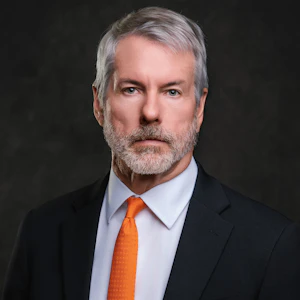
Michael Saylor
Michael Saylor
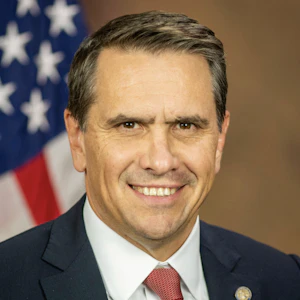
Todd Blanche
Todd Blanche
Biography of Deputy Attorney General Todd Blanche
The Honorable Todd Blanche is the 40th Deputy Attorney General of the United States, overseeing the work of the 115,000 dedicated employees who fulfill the Department of Justice’s mission at Main Justice, the FBI, DEA, U.S. Marshals, ATF, and 93 U.S. Attorney’s Offices.
Todd began his career at the Department where he served for over fifteen years in a variety of capacities, including as a contractor, a paralegal in the Criminal Division, and at the United States Attorney’s office for the Southern District of New York where he eventually became an AUSA and later a supervisor.
After leaving the Department, Todd worked as a criminal defense attorney that included representing President Donald Trump in three of the criminal cases brought against him in 2023 and 2024.
Following President Trump’s historic return to the White House, the President appointed Todd to work alongside Attorney General Pam Bondi to make America safe again. At the DOJ, Todd is working tirelessly to implement President Trump’s priorities that include confronting illegal protecting American businesses from fraud.
Todd has been married to his wonderful wife Kristine for nearly thirty years, is a father and grandfather.

Paul Atkins
Paul Atkins
Prior to returning to the SEC, Chairman Atkins was most recently chief executive of Patomak Global Partners, a company he founded in 2009. Chairman Atkins helped lead efforts to develop best practices for the digital asset sector. He served as an independent director and non-executive chairman of the board of BATS Global Markets, Inc. from 2012 to 2015.
Chairman Atkins was appointed by President George W. Bush to serve as a Commissioner of the SEC from 2002 to 2008. During his tenure, he advocated for transparency, consistency, and the use of cost-benefit analysis at the agency. Chairman Atkins also represented the SEC at meetings of the President’s Working Group on Financial Markets and the U.S.-EU Transatlantic Economic Council. From 2009 to 2010, he was appointed a member of the Congressional Oversight Panel for the Troubled Asset Relief Program.
Before serving as an SEC Commissioner, Chairman Atkins was a consultant on securities and investment management industry matters, especially regarding issues of strategy, regulatory compliance, risk management, new product development, and organizational control.
From 1990 to 1994, Chairman Atkins served on the staff of two chairmen of the SEC, Richard C. Breeden and Arthur Levitt, ultimately as chief of staff and counselor, respectively. He received the SEC’s 1992 Law and Policy Award for work regarding corporate governance matters.
Chairman Atkins began his career as a lawyer in New York, focusing on a wide range of corporate transactions for U.S. and foreign clients, including public and private securities offerings and mergers and acquisitions. He was resident for 2½ years in his firm's Paris office and admitted as conseil juridique in France.
A member of the New York and Florida bars, Chairman Atkins received his J.D. from Vanderbilt University School of Law in 1983 and was Senior Student Writing Editor of the Vanderbilt Law Review. He received his A.B., Phi Beta Kappa, from Wofford College in 1980.
Originally from Lillington, North Carolina, Chairman Atkins grew up in Tampa, Florida. He and his wife Sarah have three sons.

Mike Selig
Mike Selig
Chairman Selig brings to the role deep public and private sector experience working with a wide range of stakeholders across agriculture, energy, financial, and digital asset industries, which rely upon and operate in CFTC-regulated markets.
Prior to his leadership at the CFTC, Chairman Selig most recently served as chief counsel of the Securities and Exchange Commission’s Crypto Task Force and senior advisor to SEC Chairman Paul S. Atkins. In this role, Chairman Selig helped to develop a clear regulatory framework for digital asset securities markets, harmonize the SEC and CFTC regulatory regimes, modernize the agency’s rules to reflect new and emerging technologies, and put an end to regulation by enforcement. He also participated in the President’s Working Group on Digital Asset Markets and contributed to its report on “Strengthening American Leadership in Digital Financial Technology.”
Prior to government service, Chairman Selig was a partner at an international law firm, focusing on derivatives and securities regulatory matters. During his years in private practice, he represented a broad range of clients subject to regulation by the CFTC, including commercial end users, futures commission merchants, commodity trading advisors, swap dealers, designated contract markets, derivatives clearing organizations, and digital asset firms. Chairman Selig advised clients on compliance with the Commodity Exchange Act and the CFTC’s rules and regulations thereunder, including in connection with registration applications and obligations, enforcement matters, and complex transactions.
Chairman Selig earned his law degree from The George Washington University Law School and was articles editor of The George Washington Law Review. He received his undergraduate degree from Florida State University.

David Bailey
David Bailey

Eric Trump
Eric Trump
Mr. Trump also serves as Executive Vice President of The Trump Organization, where he oversees the global management and operations of the Trump family’s extensive real estate portfolio. This includes Trump Hotels, Trump Golf, commercial and residential real estate, Trump Estates, and Trump Winery. Known for his hands-on leadership and strong market instincts, he has played a key role in expanding the company’s presence across major U.S. and international markets.
A globally recognized business leader and public figure, Mr. Trump is a prominent advocate for Bitcoin and decentralized finance. He is a co-founder of World Liberty Financial, a decentralized finance (DeFi) platform, and serves on the Board of Advisors of Metaplanet, Japan’s largest corporate holder of Bitcoin.
Beyond his business activities, Mr. Trump has helped raise more than $50 million for St. Jude Children’s Research Hospital in the fight against pediatric cancer, a philanthropic mission he began at age 21.
Mr. Trump earned a degree in Finance and Management from Georgetown University. He currently resides in Florida with his wife, Lara, and their two children. He is also the author of Under Siege, his memoir published in October 2025.
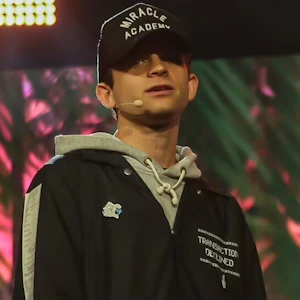
Jack Mallers
Jack Mallers
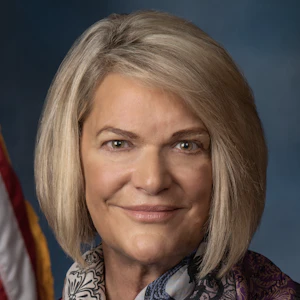
Cynthia Lummis
Cynthia Lummis
As the first-ever Chair of the Senate Banking Subcommittee on Digital Assets, Senator Lummis is the architect of the legislative framework shaping America's digital asset future. She introduced the landmark Lummis-Gillibrand Responsible Financial Innovation Act, the first comprehensive bipartisan crypto regulatory framework in Senate history. She co-authored the GENIUS Act — the first federal stablecoin law ever enacted — and introduced the BITCOIN Act, which would establish a U.S. strategic Bitcoin reserve of up to one million BTC. She is leading the Clarity Act, which will bring long-overdue regulatory certainty to the digital asset industry. She has also championed digital asset tax reform, including a de minimis exemption for small transactions and equal tax treatment for miners and stakers.
Known as Congress' "Crypto Queen," Senator Lummis represents Wyoming — a state she has helped build into one of the most digital asset-friendly regulatory environments in the nation. Before serving in the Senate, she served 14 years in the Wyoming Legislature, eight years as Wyoming State Treasurer, and eight years in the U.S. House. She is a three-time graduate of the University of Wyoming.
Her work represents a crucial bridge between traditional financial systems and the emerging digital economy, ensuring America leads the world in financial innovation while protecting the individual freedoms that define it.

Adam Back
Adam Back

Amy Oldenburg
Amy Oldenburg
David Marcus
David Marcus

Matt Schultz
Matt Schultz
Fred Thiel
Fred Thiel
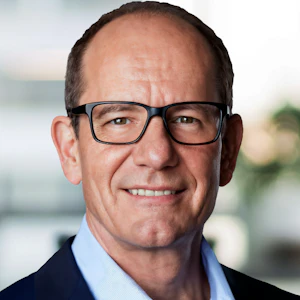
Throughout his career, Mr. Thiel has consistently driven rapid growth and created substantial shareholder value. Prior to MARA, Mr. Thiel served as the CEO of two other public companies, Local Corporation (NASDAQ: LOCM) and Lantronix, Inc (NASDAQ: LTRX). He has successfully raised billions in equity and debt through private and public offerings, led companies through IPOs, executed high-value exits to strategic and financial acquirers, and implemented effective M&A and roll-up strategies.
Mr. Thiel attended the Stockholm School of Economics and executive classes at Harvard Business School, and is fluent in English, Spanish, Swedish, and French. Mr. Thiel is the Chairman of the Board for Oden Technology, Inc. and is active in Young Presidents’ Organization where he has led initiatives in both the FinTech and Technology Networks.
A recognized voice in the industry, Fred frequently shares his insights on energy and technology with major media outlets like Bloomberg TV, CNBC, and FOX Business, contributing to vital discussions about the future of these sectors.
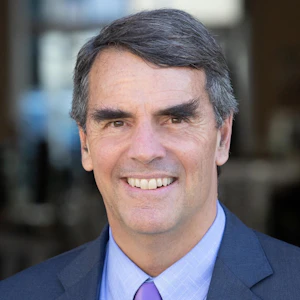
Tim Draper
Tim Draper
He is a supporter and global thought leader for entrepreneurs everywhere, and is a leading spokesperson for Bitcoin and decentralization, having won the Bitcoin US Marshall’s auction in 2014, invested in over 50 crypto companies, and led investments in Coinbase, Ledger, Tezos, and Bancor, among others.

Afroman
Afroman