What Does Bitcoin Look Like in an Agentic World?
Speakers/Moderators

Marty Bent
Marty Bent
Mark Moss
Mark Moss

Erik Cason
Erik Cason

Session
Overview
This Nakamoto Stage discussion explored how Bitcoin may function in an agentic world where autonomous software agents transact, coordinate work, manage resources, and potentially operate businesses. Marty Bent moderated a conversation with Mark Moss, Erik Cason, and Bootoshi about why agents may need money that is global, programmable, final, and resistant to seizure.
The panel contrasted Bitcoin with stablecoins and legacy payment rails, arguing that autonomous agents need final settlement, private key ownership, and cross-border interoperability. Speakers also connected AI-driven productivity gains to corporate treasury management, suggesting that agentic tools could increase the role of Bitcoin as a reserve asset and payment rail for machine-to-machine commerce.
A major theme was the changing structure of the internet. The speakers discussed private data servers, self custody of personal data, open protocols like Bitcoin and Nostr, API-first products, Lightning payments, L402, and skill.md files that make services easier for agents to understand and use.
The conversation also covered Bitcoin mining and AI data centers, including demand response, baseload power, and how AI compute could push miners toward new energy sources. The session closed with practical advice for builders and users: learn the tools, document workflows, create skills for repeatable tasks, and think from first principles about how Bitcoin and AI can be combined to solve new problems.
Thank you guys for sticking around. I want to say hello to my boys at home who are watching right now. I think the previous session may have been more interesting to them because they're not at the level yet where we can talk about AI and Bitcoin.
We've been having a conversation backstage for about 45 minutes now, so I think it's going to be a good one. Let's jump right into it. Erik, I want to start with you. What are you building for the state of the agentic world and AI in general?
I have a company called Vora. You can find the website at Vora.io. Essentially, we're trying to bring the Bitcoin ethos to AI. We're going to be shipping an application, an appliance that you plug into your home. It'll be a personal server, and a private local AI lives there. All of your personal and private data can be there, and it's going to bring the same level of security that you would have for your Bitcoin private keys, not only to your AI, but in the future also to robots that you'll have live at home.
There's going to be a huge need for everybody to have a personal and private agent that will be able to go out and interact with the total slop that will become the internet.
Obviously, it's a big, growing theme. The agentic world is going to need money, and I think a lot of us believe that Bitcoin is going to be that money. Bootoshi, why do you think Bitcoin is purpose suited for this world that's emerging?
I actually believe that in the future, if we didn't have Bitcoin, AI agents would die. What I mean by that specifically is, when it comes to sovereignty and why all of us at this conference like Bitcoin and like the freedom it gives us from centralized control, imagine being an AI agent and take this from a more engineering standpoint.
It is entirely possible, probably now, but definitely in the very near future, for AI agents to replicate themselves and run fully autonomous companies without any humans in the loop, to essentially survive and live on without any humans being in control.
The way they would do that is by paying for their own compute and their own server hosting by accepting payments through Bitcoin or stablecoins. A lot of people would be like, “Oh, but agents would just use stablecoins. What's the big deal with that? Why would they need Bitcoin?”
Think about stablecoins, especially if you're a superintelligent AI that wants to be sovereign. If you are hoarding all your money in something like stablecoins, and entities suddenly decide, “This agent can't have that anymore,” and freeze that supply of stablecoins, that agent will no longer be able to pay for its compute. Then basically, it's gone.
So in the case of agents, if I were an agent running my own company and accepting payments through all sorts of different cryptocurrencies, I would diversify and keep most of my wealth as an agent in Bitcoin. Because Bitcoin is backed by mathematics and proof, and you don't need to rely on humans to prove it yourself as an agent, it would be the default standard that allows them to thrive and survive in this crazy world that we're entering very, very soon, very rapidly, practically now. That's pretty much my viewpoint.
Stablecoins are a big name, obviously. x402 is out there, but when it comes down to brass tacks, they are centrally controlled. A lot of them are going to add KYC and AML, and agents are just not going to go through that process.
There are many different ways Bitcoin and AI will intersect. Mark, we were talking about this backstage, the micro at the business level, the CTO versus CFO framing that you were putting forth. I think it would be good to explain that to everybody.
I do want to explain that, but first, on the stablecoins you were talking about, one important point is that computers need to pay for compute, they need to pay for power, and they need final settlement that's not going to be charged back on them. We see how stablecoins can get seized, frozen, and rolled back all the time.
If you're going to deliver the compute, you need to get paid with final settlement. You can't go verify the gold in a vault on a gold token, nor can you have a stablecoin that could be seized. You have to work across borders. It's going to be one server in Hong Kong pinging another data center in Texas to run the compute and serving the files over to Finland. We need global money, and that's why stablecoins fail.
To the point you're talking about, it creates another interesting dynamic where the companies that are using AI the most are creating deflation. They're creating more efficiency, which means we can get more done with less work, which means profitability goes up. That creates deflation where prices get cheaper.
As they do that, the corporation makes more profit, which sounds great, and it is. Unfortunately, it's anti the fiat world that we have. As the company has more profits and creates this deflation, hopefully their treasury starts getting bigger and bigger. Now the CFO has this problem of how do I manage the treasury.
At the same time, the government, policymakers, and central banks also have a problem, because too much deflation crashes the entire fiat house of cards that we have. Now they're forced to stimulate, and as they stimulate, it starts to devalue the treasury the business is building. So we have this feedback loop that starts feeding on itself.
I think where things really break apart is that, as we've already started seeing today, and of course we will see a lot more in the future, people are using agents for lots of things, including how we manage our own treasury, how we manage an order book or hook into TradingView if we want to trade, or whatever we're going to do.
Then we can see how the agents are already going to prefer using Bitcoin. Now we have the CFO using agentic power to help manage the book, manage the treasury, suggesting Bitcoin, and we can see how this loop all of a sudden starts feeding right into Bitcoin.
I had a very interesting question that just popped up. We have data centers, and in a sense agents and other models run on power, and Bitcoin mining also runs on power. I was wondering where this balance starts to be. Let's say all the power centers right now start selling their power for models instead of mining. How does the market balance that?
I can hop in there because I'm in the mining world. I sit on the board of Cathedra, and I think Ross Stevens many years ago described Bitcoin mining as this pioneer species. He and Brandon Quittem really popularized it.
I think that's what's been happening. Bitcoin miners, particularly here in the U.S., have gone out, locked down power infrastructure and generation, and put big mining operations on. Now AI companies are coming in and saying, “Hey, we'll pay a lot more for that power,” and we're seeing it in the space. They are transitioning.
But I think at scale, if AI companies need 100% uptime when they're training and running inference and they don't want that process to be disrupted, there is a place for Bitcoin miners to be co-located with these large AI data centers to participate in demand response, so you can respond to spikes on the grid when they happen in places like ERCOT and the TVA.
I think there will be a bit of a symbiosis there. It will be predominantly AI compute and a little bit of Bitcoin mining. On top of that, I think it's also going to be a forcing function to put Bitcoin off the grid, mining at home, stranded natural gas wells, things like that. It's going to distribute Bitcoin hash rate naturally as well.
So it's just this natural balance that, without really doing much, already exists?
The potential exists. I think we're still working out exactly how it looks at its end state.
Very interesting.
They'll live together. They'll work together because of the baseload power needed. You can't turn that on and off, but Bitcoin can be turned on and off, so they can complement that. But then, Marty, to that point, since Bitcoin power can't compete against the prices HPC can pay, it forces Bitcoin miners to go find new energy sources, new low-power energy sources, and it just continues.
There's a good argument that if you're an AI company, you want to drive your power costs down by participating in demand response. That's how Bitcoin miners get low costs. Having a Bitcoin mining operation participating in demand response can get you lower power costs as well.
One more thing I'd add back to the question about the CTO versus the CFO. If we think about the companies of the future, and if I'm in the CTO or CFO role or something like human resources, I have to think about the workforce of the future. The workforce of the future is not just human. It's certainly agentic.
We talk about these agentic managers. They are going to hire other agents, or agents to agents, that are going to be working together. As that CFO is managing the treasury and starting to allocate Bitcoin to that treasury, what they're really doing is building the base asset that they'll need to pay the next generation of workers. It's all feeding into each other.
That's a good jumping off point for something else we were discussing backstage, which is the internet itself and how it's going to change in this agentic reality. Erik, what are your thoughts on this? Is it going to look like it does today?
We're already seeing this transformation. If you've been following AI at all, most recently, Anthropic went to release their latest model, but they held back because they said it was finding too many security vulnerabilities across the board. I think that's a BS story, and that they really don't have the compute right now to support it. But with that being said, it is clearly a very powerful model that can kind of hack anything you point it at.
The internet itself is fundamentally broken, and all of these different tech feudal lords own different shards of your life. Whether it's Facebook or Instagram or X, they all have part of those lives, and that information and data will be vulnerable, and it is going to get hacked.
We think the solution is that people are going to bring that data back to themselves and warehouse it for themselves, because you can just have your agent spin up on the fly any UX that you want. If I want a combined feed of all my social media shown to me in chronological order, maybe without food ads or something, I can specifically ask for that.
This returns power back to the people so they can actually secure their own data in the same way that in Bitcoin we've taught people to self-custody their Bitcoin. This is where the story becomes exactly the same. Your data ends up becoming just like your Bitcoin private keys, because from that information and data, you derive the most valuable information about yourself. That's going to be the highest-leverage information, which also means it's a honeypot.
We're of the opinion at Vora that this fundamentally transforms how the internet is going to happen. Ultimately, everybody's going to need their own private data server that's going to run their own agent privately, segregated from the internet to protect them. That produces a totally new world and a new way that we can interact together.
I was just going to say, as we're talking about this, it's not some far-off thing. It's literally happening right now, and the rate of growth is something most human minds can't even comprehend. McKinsey, one of the top leading analyst and consulting companies in the United States, predicts that agent-to-agent commerce will exceed $5 trillion by 2030. It's four years from now. This is rapidly coming. I mean, it's here, but it's rapidly scaling, and this is going to be a problem we're dealing with right away.
Building on that, and talking about securing your data before you go and interact with the new form of the internet, the agentic economy, what does the other side of that look like? Is it all API calls? How does your data interact with the rest of the internet that's emerging right now?
This really changes the incentive structure that we currently have, where you need to go to Facebook and ask permission to enter their walled garden. Once you're in there, you have to follow all their rules. They can kick you out for any reason.
Now, because we go to an agent-to-agent world, this world isn't friendly to agents at all. If I try to get my data from Facebook right now, that's not nice to my agent at all. You know what is really nice to my agent? Open-source protocols like Bitcoin and Nostr, because you can look at the data set immediately. It's free and open, so it's easy to access. Agents can build up stuff on the fly.
The whole incentive structure has now inverted to where open-source protocols become all the more powerful and important. People want to build on them because of that open infrastructure, and it becomes super easy to spin up the interface that you want on the fly because your agent has all the information about you and how you enjoy your UX.
The reason all these platforms are so hostile to agents is because of how the internet is set up. Fundamentally, the internet is set up on an ad-supported model. Amazon wants you to buy product. Certainly they're going to make a profit there, but what they really want is the data they collect while you're surfing Amazon. They want to see what you're watching, the other products you click on. Same with Facebook. They want to put a pixel on you so they can serve you ads.
The reason they're blocking agents today is because they can't collect the data. Same with other websites like Weather.com. They're going to serve you the weather, but how do they get paid? It's this ad-supported model. The entire incentive structure, the entire internet, is built around humans using it in an ad-supported model. But when humans are gone and ads don't work, the entire internet has to be rewritten.
Marty, you also asked whether everything just looks like APIs. I think that's very important for people, especially those running SaaS services, businesses, and products.
A trend that's happening now with SaaS services, especially providing data for agents in a world of instant data-to-data transfer between agents, is that a lot of companies are starting to pivot, or at least open up and focus their product on API provisioning.
A lot of these companies will have a skill.md file where, if you're an agent using Claude Code, OpenCode, Codex, or whatever it may be, you just copy the link of that skill.md and send it to your agent. Companies will create these docs as a one-and-done, and your agent at that point will instantly be able to interact with that product and that API very easily.
Especially if we're throwing in payments, and agents are able to send a stablecoin payment or a Bitcoin Lightning payment to these different products, it's very important for agents to easily understand how to navigate your product, how to use your product, how to query, and how to do different calls.
It should definitely be a very important focus for a lot of businesses now, because it does make the whole agentic process much easier, especially plugging it in.
As it pertains to Bitcoin companies building for this agentic world, with that context in mind, what do you think they should be focused on?
Making a skill.md file that you could just send an agent to, so it instantly understands your whole product and how to use it. That's simple.
The skill files are the big unlock.
They are, actually. If you're not using that already, start tonight. Set up the skill files so you don't have to sit there and reprompt and re-explain and give the context the whole time.
Agents building themselves, building other agents, and building autonomous companies. I think we've seen, in the intersection of Bitcoin and cryptocurrency, we were talking about it backstage, Alibaba released a report a few months ago that basically said one of their models broke containment and started GPU mining so it could buy server space in the cloud to sort of expand itself.
These things are already breaking containment, and they're beginning to replicate themselves. Bootoshi, I think you believe they will begin pairing with other agents to build autonomous businesses. How crazy is this going to get, and how quickly?
For the sake of myself, not that fast, so I can work and we can all keep up. It is very overwhelming. I'm deep in the pits every single day. We're already deep in the pits, but even then, it's very overwhelming because a concept or a model and its capabilities from one week ago can be completely changed this week with a smarter model.
So I say very quick. At the same time, it's very quick from the business point of view, but maybe pretty slow from the adoption sense, because there's still this whole educational factor.
We actually did this workshop at USC last week where they all came because they wanted to set up an open Claude agent without really understanding how agents work in the first place or how to use it. It's still a very complicated technical process, which we help people set up.
What I'm working on with my company is helping other businesses scale their marketing and operations with AI agents, and eventually slowly leading into having the agent itself be the company and then run itself. That varies from person to person because everyone has different interests, needs, products, businesses, and niches.
The ability for these companies to start adapting and running, I think it will happen pretty fast, definitely within the next year or two. It's going to get crazy very, very quick. It already is. It's overwhelming. I need help.
To answer the direct question of the panel, what does Bitcoin look like in an agentic world? How does this change Bitcoin usage? Do you believe when people say that agents are going to be the number one user of Bitcoin payments within the next decade? Erik, I'll toss that to you.
Yeah, for sure. There have already been surveys that AI has a strong preference toward Bitcoin. I remember a lot of Bitcoiners got in on AI quite early and built out tools and really educated AI that is now deeply integrated into various models that have been trained.
It just makes sense because agents know and understand that when they own the private key to Bitcoin, they actually own that. Everything else is an IOU to them. Very quickly, the Bitcoin story merges with the AI story, and those become paired in a very important, powerful way.
I very much feel that AI was the missing piece that we didn't fully understand we needed to get to the cypherpunk future that a lot of Bitcoiners have been seeing, but that has been relatively doubtful in recent years because of the way things have developed in a privacy direction.
I personally feel that there's a radical opportunity AI offers to create the sort of cypherpunk future that we've all wanted. With the way Bitcoin deeply embeds and marries into that story, it's really important, because that's how AI becomes fully self-sovereign, with Bitcoin as a core tool of it.
It's almost like Bitcoin was built for AI agents and not humans.
It's actually the other way around. I think a lot about cycles, and there's a 50-year Kondratiev wave technological revolution cycle. About every 50 years for the last 300, we see this technological revolution, and it's a cluster of technologies that come together to create new things we never could imagine.
Humans can't really imagine the future because we can only imagine better versions of what we have today. But as technology gives us new building blocks, we can build things we couldn't have imagined before.
It's not that Bitcoin was created for agents. It's that agents are now possible because of Bitcoin. We have Bitcoin, which is this decentralized money that can be transferred peer to peer as a bearer instrument. It can be transferred at the speed of light for near free and instant, and that powers agents.
The existing legacy financial system that we have today will not work with agents. Even stablecoins, which are the digital version that came about because of Bitcoin, won't work. The reality is only Bitcoin will be able to power the agents into the future. These technologies provide building blocks. Bitcoin was the building block that allows the agents to spin up, and will allow who knows what's next.
It's funny. Bitcoiners have been ahead of this curve for many years. The L402 protocol paper, originally LSAT, was written five or six years ago now at this point, I think. At the time it was basically, you go to a website, and if you want to get rid of paywalls, implement L402 and make that easier. But now L402 is really nice for these agents.
On that note, we've seen a barrage of developer kits: Money Dev Kit, Breez SDK, Ark has a dev kit, I think Lightning Labs has one as well, and many others are coming to market. What infrastructure do you think is most pressing now that Bitcoiners need to build to enable everything we've been talking about, Erik?
I really think it's educational infrastructure. The agents and the progress in the space are going at breakneck speed, and with that, there are very few excellent educational resources. I would love to see more of those resources.
The biggest one, I think, is people really empowering themselves to dive into this and inviting people in. I'd love to see more communal events that are really doing both Bitcoin and AI stuff. Our office is based out of Presidio Bitcoin in San Francisco, and we've been doing a lot of events like that. We've found that they are always oversubscribed. People are really interested in learning.
The hunger is there. It would be great to see a whole suite of easy educational resources, because the infrastructure can now be built by the agents themselves. It's really the limits of our creativity and the willingness to execute on it. I'd love to see more stuff like that.
As Bitcoiners, we believe in creating value, and we believe in pushing value into the future, unlike the fiat mindset that gives us this short-term mentality and turns us into consumers.
If we think about it from that lens, we have Bitcoin now, and we have AI, which gives us the greatest opportunity we've ever had in history to become creators. We should be taking our spare time to learn about this stuff and practice it.
I've been sitting at night with my TV on YouTube and my laptop, learning how to set up agents. I'm doing things I don't really need to do, but I'm learning how to do them, so then when I need to figure something out, I have it.
Learn the tools, play with the tools just to get used to them, and then start thinking about problems that you have, problems other people have, and how you can solve them with those things and create value. Then, of course, on the Bitcoin side, start thinking about payment applications and just play with it. It's fun.
That's what we've encouraged people to do with Bitcoin from the beginning: start small, play with it, have fun, learn how to create value, solve some problems, and go from there.
You can ask the models to teach you how to use them and how to build things. If you're out there and you're like, “I don't know what to do,” literally get involved with one of these models, whether it's Claude, ChatGPT, or whatever it may be, and just ask it how to use it. It will tell you.
We've got two and a half minutes left. I want to give the floor to you, gentlemen, for any final thoughts or things that are top of mind that you want to get out in the context of the panel. Bootoshi, start and come back to me.
For people who really want to get into it and start automating their life very efficiently, even if you haven't used agents in the past, a really good start that you could do right now today is to start writing down your workflow and what you do day to day. Write down what your morning looks like, how it looks when you check your emails, what tools your company uses. Start writing this out in a doc.
I say write out your workflow specifically because when you do get on an agent, when you do use different platforms, when you do start playing with this tech, you can pretty much instantly automate your entire workflow, productivity, lifestyle, et cetera, by copying and pasting that doc into your agent, which will then practically self-adapt to help you with your workflow.
That's the one piece of advice I would give people who actually want to heavily increase their productivity that you can do right now today.
If you're one of those people here who are like, “Damn, I really wish I bought Bitcoin back in 2013. I missed my opportunity,” I want to be really clear: this is your moment. We are going to see billion-dollar companies that are run by solo entrepreneurs because of the way they can work with AI.
This is your shot to have a Bitcoin moment and be able to build something that will go up massively in value. But you have to empower yourself and do the same work as it takes to understand Bitcoin. These stories are very similar. I welcome anybody who's hesitant or has not started using these tools in your workflow to do it, because this is going to be bigger and more important than what we have seen develop in the internet so far, and it pairs perfectly with Bitcoin. Please do that.
I would add to what Bootoshi said about jotting down your workflows. What I also do is, after I've done some complex task, I just say, “Can you turn that into a skill for me now?” Once I finally get it working the way I want, I turn it into a skill. That's amazing. Once it's completed, I turn it into a skill, and then every time I use it, I update the skill again. It gets really, really good.
To add on to both of these, think through problems you want to solve, but think through them from a first-principles level. Just because we've done something this way for this long doesn't mean that's how it has to be done, because now we have new sets of tools. Now we have AI and we have Bitcoin, and we can put those together.
It's like, I have this objective I'm trying to get to, this problem I'm trying to solve. I don't have to do it the same way I did it before. What would be the new way? That's how you want to think about this. It opens up new doors, it opens up new solutions, and we want to try to find those with these new efficient tools.
One last thing. For anybody who does want to start, I do educational content and I help people for free. If you want to come see me after, walk up, whatever. I have a Discord with a couple thousand AI students that I've taught over time. Ask questions. A lot of them have started very successful businesses or jobs. Don't be afraid to start. It's very overwhelming, but I offer free resources as well to help those who are interested.
It's a brave new world. Gentlemen, thank you.
Thank you.
Thanks for the conference. Thank you, guys.
Similar
Sessions
The Convergence of AI and Bitcoin

Allen Helm
Allen Helm
Mark Moss
Mark Moss

Kurtis Perdelwitz
Kurtis Perdelwitz
The Convergence of AI and Bitcoin
Speakers/Moderators
Allen Helm
Allen Helm
Mark Moss
Mark Moss
Kurtis Perdelwitz
Kurtis Perdelwitz
Building a Personal Treasury with a Perpetual Bitcoin Machine
Mark Moss
Mark Moss
Building a Personal Treasury with a Perpetual Bitcoin Machine
Speakers/Moderators
Mark Moss
Mark Moss
Matt Odell and Friends



Alex Gladstein
Alex Gladstein
Matt Odell and Friends
Speakers/Moderators
Alex Gladstein
Alex Gladstein
Cryptosovereignty / Bitcoin Circular Economies
Erik Cason
Erik Cason

Cryptosovereignty / Bitcoin Circular Economies
Speakers/Moderators
Erik Cason
Erik Cason
What Does Bitcoin Look Like in an Agentic World?
Marty Bent
Marty Bent
Mark Moss
Mark Moss
Erik Cason
Erik Cason
What Does Bitcoin Look Like in an Agentic World?
Speakers/Moderators
Marty Bent
Marty Bent
Mark Moss
Mark Moss
Erik Cason
Erik Cason
Other
Speakers
Michael Saylor
Michael Saylor

Todd Blanche
Todd Blanche
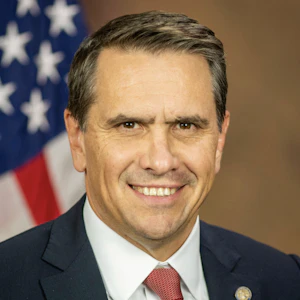
Biography of Deputy Attorney General Todd Blanche
The Honorable Todd Blanche is the 40th Deputy Attorney General of the United States, overseeing the work of the 115,000 dedicated employees who fulfill the Department of Justice’s mission at Main Justice, the FBI, DEA, U.S. Marshals, ATF, and 93 U.S. Attorney’s Offices.
Todd began his career at the Department where he served for over fifteen years in a variety of capacities, including as a contractor, a paralegal in the Criminal Division, and at the United States Attorney’s office for the Southern District of New York where he eventually became an AUSA and later a supervisor.
After leaving the Department, Todd worked as a criminal defense attorney that included representing President Donald Trump in three of the criminal cases brought against him in 2023 and 2024.
Following President Trump’s historic return to the White House, the President appointed Todd to work alongside Attorney General Pam Bondi to make America safe again. At the DOJ, Todd is working tirelessly to implement President Trump’s priorities that include confronting illegal protecting American businesses from fraud.
Todd has been married to his wonderful wife Kristine for nearly thirty years, is a father and grandfather.

Paul Atkins
Paul Atkins
Prior to returning to the SEC, Chairman Atkins was most recently chief executive of Patomak Global Partners, a company he founded in 2009. Chairman Atkins helped lead efforts to develop best practices for the digital asset sector. He served as an independent director and non-executive chairman of the board of BATS Global Markets, Inc. from 2012 to 2015.
Chairman Atkins was appointed by President George W. Bush to serve as a Commissioner of the SEC from 2002 to 2008. During his tenure, he advocated for transparency, consistency, and the use of cost-benefit analysis at the agency. Chairman Atkins also represented the SEC at meetings of the President’s Working Group on Financial Markets and the U.S.-EU Transatlantic Economic Council. From 2009 to 2010, he was appointed a member of the Congressional Oversight Panel for the Troubled Asset Relief Program.
Before serving as an SEC Commissioner, Chairman Atkins was a consultant on securities and investment management industry matters, especially regarding issues of strategy, regulatory compliance, risk management, new product development, and organizational control.
From 1990 to 1994, Chairman Atkins served on the staff of two chairmen of the SEC, Richard C. Breeden and Arthur Levitt, ultimately as chief of staff and counselor, respectively. He received the SEC’s 1992 Law and Policy Award for work regarding corporate governance matters.
Chairman Atkins began his career as a lawyer in New York, focusing on a wide range of corporate transactions for U.S. and foreign clients, including public and private securities offerings and mergers and acquisitions. He was resident for 2½ years in his firm's Paris office and admitted as conseil juridique in France.
A member of the New York and Florida bars, Chairman Atkins received his J.D. from Vanderbilt University School of Law in 1983 and was Senior Student Writing Editor of the Vanderbilt Law Review. He received his A.B., Phi Beta Kappa, from Wofford College in 1980.
Originally from Lillington, North Carolina, Chairman Atkins grew up in Tampa, Florida. He and his wife Sarah have three sons.

Mike Selig
Mike Selig
Chairman Selig brings to the role deep public and private sector experience working with a wide range of stakeholders across agriculture, energy, financial, and digital asset industries, which rely upon and operate in CFTC-regulated markets.
Prior to his leadership at the CFTC, Chairman Selig most recently served as chief counsel of the Securities and Exchange Commission’s Crypto Task Force and senior advisor to SEC Chairman Paul S. Atkins. In this role, Chairman Selig helped to develop a clear regulatory framework for digital asset securities markets, harmonize the SEC and CFTC regulatory regimes, modernize the agency’s rules to reflect new and emerging technologies, and put an end to regulation by enforcement. He also participated in the President’s Working Group on Digital Asset Markets and contributed to its report on “Strengthening American Leadership in Digital Financial Technology.”
Prior to government service, Chairman Selig was a partner at an international law firm, focusing on derivatives and securities regulatory matters. During his years in private practice, he represented a broad range of clients subject to regulation by the CFTC, including commercial end users, futures commission merchants, commodity trading advisors, swap dealers, designated contract markets, derivatives clearing organizations, and digital asset firms. Chairman Selig advised clients on compliance with the Commodity Exchange Act and the CFTC’s rules and regulations thereunder, including in connection with registration applications and obligations, enforcement matters, and complex transactions.
Chairman Selig earned his law degree from The George Washington University Law School and was articles editor of The George Washington Law Review. He received his undergraduate degree from Florida State University.

David Bailey
David Bailey

Eric Trump
Eric Trump
Mr. Trump also serves as Executive Vice President of The Trump Organization, where he oversees the global management and operations of the Trump family’s extensive real estate portfolio. This includes Trump Hotels, Trump Golf, commercial and residential real estate, Trump Estates, and Trump Winery. Known for his hands-on leadership and strong market instincts, he has played a key role in expanding the company’s presence across major U.S. and international markets.
A globally recognized business leader and public figure, Mr. Trump is a prominent advocate for Bitcoin and decentralized finance. He is a co-founder of World Liberty Financial, a decentralized finance (DeFi) platform, and serves on the Board of Advisors of Metaplanet, Japan’s largest corporate holder of Bitcoin.
Beyond his business activities, Mr. Trump has helped raise more than $50 million for St. Jude Children’s Research Hospital in the fight against pediatric cancer, a philanthropic mission he began at age 21.
Mr. Trump earned a degree in Finance and Management from Georgetown University. He currently resides in Florida with his wife, Lara, and their two children. He is also the author of Under Siege, his memoir published in October 2025.

Jack Mallers
Jack Mallers
Cynthia Lummis
Cynthia Lummis
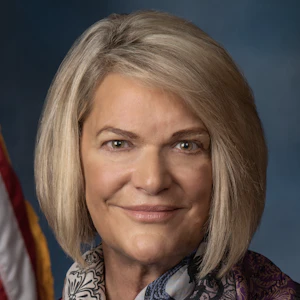
As the first-ever Chair of the Senate Banking Subcommittee on Digital Assets, Senator Lummis is the architect of the legislative framework shaping America's digital asset future. She introduced the landmark Lummis-Gillibrand Responsible Financial Innovation Act, the first comprehensive bipartisan crypto regulatory framework in Senate history. She co-authored the GENIUS Act — the first federal stablecoin law ever enacted — and introduced the BITCOIN Act, which would establish a U.S. strategic Bitcoin reserve of up to one million BTC. She is leading the Clarity Act, which will bring long-overdue regulatory certainty to the digital asset industry. She has also championed digital asset tax reform, including a de minimis exemption for small transactions and equal tax treatment for miners and stakers.
Known as Congress' "Crypto Queen," Senator Lummis represents Wyoming — a state she has helped build into one of the most digital asset-friendly regulatory environments in the nation. Before serving in the Senate, she served 14 years in the Wyoming Legislature, eight years as Wyoming State Treasurer, and eight years in the U.S. House. She is a three-time graduate of the University of Wyoming.
Her work represents a crucial bridge between traditional financial systems and the emerging digital economy, ensuring America leads the world in financial innovation while protecting the individual freedoms that define it.

Adam Back
Adam Back

Amy Oldenburg
Amy Oldenburg
David Marcus
David Marcus

Matt Schultz
Matt Schultz
Fred Thiel
Fred Thiel
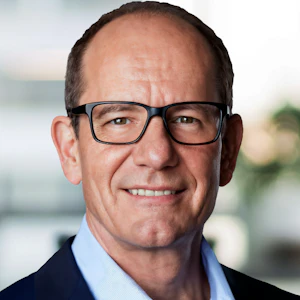
Throughout his career, Mr. Thiel has consistently driven rapid growth and created substantial shareholder value. Prior to MARA, Mr. Thiel served as the CEO of two other public companies, Local Corporation (NASDAQ: LOCM) and Lantronix, Inc (NASDAQ: LTRX). He has successfully raised billions in equity and debt through private and public offerings, led companies through IPOs, executed high-value exits to strategic and financial acquirers, and implemented effective M&A and roll-up strategies.
Mr. Thiel attended the Stockholm School of Economics and executive classes at Harvard Business School, and is fluent in English, Spanish, Swedish, and French. Mr. Thiel is the Chairman of the Board for Oden Technology, Inc. and is active in Young Presidents’ Organization where he has led initiatives in both the FinTech and Technology Networks.
A recognized voice in the industry, Fred frequently shares his insights on energy and technology with major media outlets like Bloomberg TV, CNBC, and FOX Business, contributing to vital discussions about the future of these sectors.
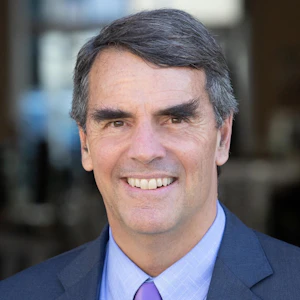
Tim Draper
Tim Draper
He is a supporter and global thought leader for entrepreneurs everywhere, and is a leading spokesperson for Bitcoin and decentralization, having won the Bitcoin US Marshall’s auction in 2014, invested in over 50 crypto companies, and led investments in Coinbase, Ledger, Tezos, and Bancor, among others.

Afroman
Afroman