What Makes a Bitcoin Treasury Company Successful?
Speakers/Moderators
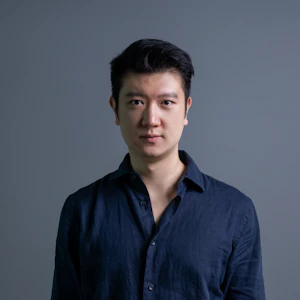
Jason Fang
Jason Fang
Jason currently serves as Chairman & Co-CEO of Asia Strategy (NASDAQ: SORA), Chairman of Bitplanet Inc. (KOSDAQ: 049470), Chairman of Moon Inc. (HKG: 1723), and was previously a board member of Metaplanet (TYO: 3350), dubbed the “MicroStrategy of Japan.” These roles place Jason at the center of a growing movement to institutionalize Bitcoin across the region.
Earlier in his career, Jason was an investor at Fenbushi Capital and contributed to Ethereum research at Wanxiang Blockchain Labs. With a background in economics, business law, and experience as a full-stack iOS developer, he brings rare technical and financial fluency to his work in driving institutional crypto adoption.
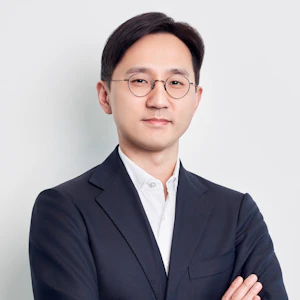
Paul Lee
Paul Lee
Bitplanet is a KOSDAQ-listed Operating DAT built on Bitcoin as treasury. Through Bitcoin mining and related AI energy infrastructure, the company generates sustainable cash flow with a compliance-led approach and disciplined capital allocation. Bitplanet is purpose-built to create long-term value within the Bitcoin economy.

Session
Overview
Jason Fang of Sora Ventures moderated a discussion with Amanda Fabiano of Nakamoto Inc. and Paul Lee of Bitplanet on what makes a Bitcoin treasury company durable beyond simply holding Bitcoin on its balance sheet. The conversation focused on how the market shifted after a correction, and why investors are now paying closer attention to operating performance, cash flow, governance, and management consistency.
Fabiano described Nakamoto as a Bitcoin operating company with a treasury foundation, arguing that companies with operating businesses should be evaluated using traditional business metrics alongside Bitcoin-related measures. Lee emphasized that in markets like Korea, where financial engineering and regulation are more restrictive, a Bitcoin treasury company must be strong as a conventional company, with revenue, cash flow, management capability, and defensible infrastructure.
The panel also explored institutional adoption and regional differences. Korea was discussed as a market with strong demand for Bitcoin exposure but limited direct institutional access to crypto exchanges, creating an opportunity for public Bitcoin treasury companies to serve as an access channel. The speakers agreed that bear markets can be productive periods for building businesses, evaluating management quality, and separating long-term operators from short-term market participants.
Good afternoon. This is very exciting because last year when we were here, it was all about Bitcoin treasury. This year, the market has obviously gone through a bit of a cycle correction, but we're still here talking about Bitcoin treasury. Things are very different now.
My name is Jason. I'm the founder and managing partner at Sora Ventures. We've been investing in Bitcoin since the early days of Metaplanet. We were one of the earliest investors with Amanda there. Then we did Hong Kong, Thailand, Korea, Taiwan, and we had one on Nasdaq. So we've been in this space for some time. I'll let Amanda introduce herself.
Hi, I'm Amanda Fabiano. I'm COO of Nakamoto. Nakamoto is a Bitcoin operating company with a treasury foundation. We own Bitcoin Inc., which is where we're all at today. We also own UTXO. Before being at Nakamoto, I was in the mining space. I had an advisory firm, I was the head of mining at Galaxy, and I was also the director of Bitcoin mining at Fidelity.
Hi everyone. My name is Paul Lee. I'm the CEO of Bitplanet. Before Bitplanet, I did a bunch of stuff. I started at Lehman Brothers in 2007, so the timing was pretty impeccable there. If you're old enough to remember guys carrying boxes out of the Lehman office, I was one of them.
After the financial crisis, I became a lawyer. I practiced as a corporate lawyer for about five years. I was fortunate to represent Galaxy and Grayscale in their early days, around 2017. That's when I first discovered Bitcoin. Then I started my own fund as a solo GP. I worked on my own fund for about four years in the infrastructure, stablecoin, and Bitcoin infrastructure space.
In 2025, last year, exactly here in Vegas, I met Jason. I always had this aspiration of building a Bitcoin treasury company in Korea because I think Bitcoin is such an important asset, especially for Koreans, given their very unique macroeconomic and geopolitical setup. That was my dream. I met Jason, and he had his vision across Asia. We hit it off right away. We found that we were very aligned and looking in the same direction.
We started Bitplanet last September. It's been a fun ride. Bitplanet is a public company in Korea. We are listed on the KOSDAQ market. We have about 150 employees. We are in the SI business, the system integration business. We have about $25 million to $30 million of revenue per year. It's a cash flow positive business, and it's a growing business because a lot of our clients are rebuilding their IT infrastructure in the face of AI. We have 300 Bitcoin, and I can say at this point pretty safely that we are the only Korean company that is growing our Bitcoin stack.
This is very interesting because we have two panelists here, one in the U.S. and one in Asia. More importantly, these two companies are continuously finding ways to grow the company, whether that is accumulating more Bitcoin or accumulating more cash flow. Obviously, we have been in a phase where things have changed quite a bit in our industry. Amanda and Paul, I want to get your perspective on the things you care more about today versus last year. What do you value today versus last year? What have you learned, and how do you define success moving forward?
Being a public company is a very different thing than being a private company. The way you are looked at and judged is totally different. We merged into a healthcare business, and when you look back at the financials of our company, the trailing 12-month financials were a healthcare business. When you go to value us and try to look at our track record, it doesn't really reflect the company that we are today.
We are heads down and focused on working on the operating companies, having them be cash flow generating, and being able, in a quarter or two quarters, to have our financials tell the story of Nakamoto. Nakamoto has only been around for seven months, believe it or not. This transition to being a public company has happened at the same time as markets completely crashing. I think it's going to take a little bit for our story to be understood by the public.
My thing is consistency with what we're doing and having that be our focus. That's the operator perspective of where I think things are going. I also think you'll start to see some of the other companies have more of a focus on IR too, because what differentiates you from someone else that's just holding Bitcoin on the balance sheet?
Paul, what about you? You guys are in Asia, with a different environment and different regulation. What is valuable for you moving forward, and how do you value yourself compared to what you saw last year?
I share a lot of the things Amanda just said. My thesis is that a strong Bitcoin treasury company is, at the end of the day, a strong company. You have to strive to be a strong company in a traditional sense. Do you have growing revenue? Do you have positive cash flow? Do you have a strong management team? What is your ROE? What is your ROA? You have to look at all these things.
Just looking at Bitcoin in a silo as your balance sheet asset and making that the end story of your company does not work, unless you have 800,000 Bitcoin like Strategy. It does not work, especially in places like Korea where financial engineering and financial regulations are much more rigid. There is not a lot you can do in terms of financial engineering. For example, trading at a premium, issuing a lot of debt or equity, buying a lot of Bitcoin, and creating that flywheel does not work.
When I look at a company, I think the same framework applies. Every company has an income statement and a balance sheet, and both are very important. On the balance sheet side, treasury management and capital allocation are very important. On the income statement side, P&L, revenue, and cash flow are important. I think the hardest part, and the challenge ahead for all Bitcoin treasury companies, is building productive infrastructure that connects your Bitcoin treasury with your income story in a synergistic and seamless way.
What is interesting about this bear market is that there is a lot more smart money out there. Historically, if prices went through a correction, people would get really negative and try to exit. This bear market is interesting because a lot of our listed companies went through a correction, and people are coming and knocking on doors asking, can we invest with you, can we merge with you, can we do something with you?
That is the part people don't understand. If you're in the public market, there are a lot of opportunities to do things even after a correction. Amanda, you've obviously come from both sides, private and public. What is something you find exciting that maybe from the outside people don't really see, but from operating it, keeps you excited every day?
In my opinion, bear markets are the best for building actual businesses. In a bull market, there are a lot of things coming at you and there is so much noise. There is a lot of signal in a bear market. My favorite thing is finding the people who have been building things and figuring out how we can work with them, invest in them, or even hire them. We're looking at M&A, we're looking at different companies, and we're looking at our company and asking, what are the best products we can build in the verticals we already have?
It's sad when price is down, but I think there is a massive amount of opportunity. You'll continue to see more people learn about it, and there are not a lot of tourists when price is down. I do agree with you that the institutional side of things has continued to grow. We are not in the first or second cycle. Even in the last cycle, we had all the miners go public. A lot of institutional capital and banks had to learn a little bit more about Bitcoin because there were 21-plus public miners that went public in the 2021 timeframe.
Last year, you saw this wave of what were called digital asset treasury companies going public. The initial group of analysts and IR people knew a little bit about Bitcoin because of the miners. Now you're seeing some of those same analysts cover the digital asset treasury companies and more. I think you'll continue to see adoption.
Yesterday we hosted Day at Nakamoto, which really showed the flywheel of all the companies that we have. We had something like 15 to 20 banks show up to talk to Bitcoin companies, learn about what they're building, and see how they could service those companies. I do think there is more intersection of traditional finance and Bitcoin.
I was on a panel yesterday with someone from Kraken, and he said that it is a little bit easier for Bitcoin companies like Kraken to learn traditional finance than it is for traditional finance to learn about Bitcoin. I thought that was a really interesting take and also really true, because the risk frameworks that traditional banks have don't allow them to move as quickly as a Kraken of the world. That will be interesting to keep an eye on, the Krakens of the world and what they're doing in the next cycle, and how that ends up being perceived by the public markets.
Speaking about institutional adoption, Korea is very interesting too. For those who don't know, in the U.S. you can buy Bitcoin, and that sort of freedom is really a luxury in Asia. In Asia, a lot of these public companies are trying to figure out how to onboard institutions. For example, in Korea, even though Korean exchanges have some of the highest volumes in the world, institutions actually cannot trade. It is very difficult for institutions to even buy Bitcoin, because the minute you ask for a wire to go out and you tell them, hey, we're buying a digital asset, they are going to block it.
Maybe we can learn from Paul's perspective on how Korea is different from other markets, and how this market has allowed a lot of institutions to enter into Bitcoin through Bitplanet.
Korea is a very interesting market. There is definitely a lot of latent demand from institutions to have exposure to Bitcoin. As Jason mentioned, it is legally impossible for these institutions to open an account with crypto exchanges like Upbit. So there is a set of opportunities for us to be that access channel, for these institutions to hold Bitcoin through us.
More broadly, there are definitely a set of challenges and opportunities operating a Bitcoin treasury company in Korea. The challenges are many. To level set, the regulatory regime in Korea is very different from that of the U.S. It is a positive regulatory regime, which means unless something is explicitly stated in the law, regulation, or code, you cannot do it. That is the other way around in the U.S. I am overgeneralizing here.
In Korean law, there are specific things that are listed as financial products. Bitcoin is obviously not one of them. There are pros and cons to that approach. The pro is that it always provides very clear guidance on what you can do and what you cannot do. The downside is that whenever there is a new technology or innovation, especially on the fintech side, it gets stifled. People just cannot do it because it is not specifically stated in the regulation. It takes forever for the legislature and Congress to take action. Bitcoin is in that gray area right now.
That presents a lot of challenges for Bitcoin treasury companies, starting with just buying Bitcoin. How are we going to handle it accounting-wise, tax-wise, with public disclosure and filings? From Bitplanet's side, we spent a lot of time building defensible infrastructure that spans all the way from internal governance to custody and public filing. That's one of the challenges we're trying to solve as we go.
The opportunity is that if we solve this right, if we do this the right way, we are going to be the category definer. We are going to be the only company doing what we're doing. Korea is the 12th largest economy in the world. It has the eighth largest equity market in the world. To be able to do that, and to be able to do that alone, is actually a huge advantage and personally means a lot to me as I work on this.
I think that's important because the evolution of how people hold and buy Bitcoin has changed quite a bit. Ten years ago, if you wanted to obtain Bitcoin, you had to mine Bitcoin. Then you had crypto exchanges that allowed people to buy Bitcoin in the form of tokens. Now people are going to be buying Bitcoin mostly through securities. I have a lot of friends who never bought Bitcoin before, and their first Bitcoin exposure is through our shares.
A lot of people are asking, if we're investing into Bitcoin, are we investing into Bitcoin treasury? Last year, I think the standard metric was NAV, or how many Bitcoin you have. But as we went through that huge correction, we realized as investors that it's not necessarily about how much capital you raise. It's more about the consistency you show throughout the year. Are you still buying Bitcoin on a monthly basis? Are you still able to buy Bitcoin on a monthly basis?
From our fund's perspective, we care a lot about these things. But I know the U.S. and Asian markets are different. More importantly, Amanda's company is in a position where they can do a lot more things because they did it early and made it clear that they can invest in other things. You mentioned potential M&A. Are you able to share, in your opinion, what are some new ways the audience should evaluate Bitcoin treasury companies in the U.S. today?
We are an operating company with a treasury, so I think we're in a little bit of a different bucket than just a treasury. We obviously want to grow our Bitcoin stack because we believe in Bitcoin, but we also have these operating businesses. The questions we ask ourselves are, do we think our investment in the operating businesses is going to outperform Bitcoin? You have to think about that across different time horizons.
If you're doing M&A, for example, your time horizon is going to be much longer. You have to integrate the business, make it work, and grow it. Whereas you can just buy Bitcoin and hold it, and you have your idea of where you think Bitcoin is going to go. From the beginning, we took the approach that we were going to have operating businesses. From our perspective, things like Bitcoin per share may not be the perfect metric for us.
Not to tie it back to mining, but when miners first came out, there were 35 different metrics, like cost to mine a Bitcoin. If you look back, they all did it differently. Sometimes it was electricity costs, sometimes it was all-in cost, sometimes they were removing certain costs. I think we're in that same phase right now, where it's like, how do you figure out which one of these companies is good? Everyone kind of defaulted to NAV and Bitcoin per share, but that doesn't really work across the board as these companies grow into different things.
If you have operating companies within a Bitcoin company, you should judge them as operating businesses, using very traditional metrics. When we think about institutional growth, institutional adoption, banks, and investment banks, they are going to look at you through the lens they use for every other business. Sometimes in Bitcoin, we try to get cute with metrics. If it is an operating business and it has a treasury, let's use metrics that everyone else knows, especially as we're trying to gain more institutional adoption.
That makes a lot of sense, and I actually prefer that as well.
I just want to add that I 100% agree with Amanda on the metrics. If you are considering investing in Bitcoin treasury companies, especially outside of the U.S., you have to look at the management. I cannot stress that enough: management's reputation and management's track record. There are a lot of small-cap companies that are just trying to chase this hot thing. Whenever we have a bear market like this, they move on to the next thing, and they are not doing what they promised to do.
When you want to invest in a Bitcoin treasury company, look at management. Don't look at how many followers they have on X. Don't look at whether they appeared on TV. You have to see if they have been consistent over the past many years in what they said about Bitcoin, and if they are willing to follow through on what they promised to do long term. Of course, you also have to look at the investors of the company and whether they are supportive of the long-term vision.
We're out of time. Thank you so much for coming. Thank you, Paul. Thank you, Amanda. Thanks for coming.
Similar
Sessions
Bitcoin Treasuries Over the Next Decade

George Mekhail
George Mekhail

Jeremy Almond
Jeremy Almond
Jeremy has played a leading role in shaping the commercial DeFi movement. Paystand is the only company at this scale using Bitcoin to move enterprise payments, eliminate transaction fees, and automate financial operations through blockchain infrastructure. With nearly 300 employees and over $90 million raised from leading investors, Paystand continues expanding its financial network through strategic acquisitions, including Bitwage, a pioneer in global Bitcoin payroll and cross-border payments. Paystand has been featured in Forbes, recognized five times on the Inc. 5000 list, and is widely considered one of the fintech leaders building the next generation of financial infrastructure.
Through Paystand.org, Jeremy also leads one of the largest philanthropic efforts advancing Bitcoin in the real world, supporting NGOs that are building circular economies across the globe. He has spoken at major events including Money20/20, Montgomery Securities in Santa Monica, Unconference by Mi Primer Bitcoin in Nashville, and Bitcoin Medellín, and serves on the Board of Advisors for Mi Primer Bitcoin. A former Forbes contributor, Jeremy operates at the intersection of software, sovereignty, and scale—building a world where economic freedom is the default, not the exception.
LinkedIn: https://www.linkedin.com/in/jeremyalmond/

Bitcoin Treasuries Over the Next Decade
Speakers/Moderators
George Mekhail
George Mekhail
Jeremy Almond
Jeremy Almond
Jeremy has played a leading role in shaping the commercial DeFi movement. Paystand is the only company at this scale using Bitcoin to move enterprise payments, eliminate transaction fees, and automate financial operations through blockchain infrastructure. With nearly 300 employees and over $90 million raised from leading investors, Paystand continues expanding its financial network through strategic acquisitions, including Bitwage, a pioneer in global Bitcoin payroll and cross-border payments. Paystand has been featured in Forbes, recognized five times on the Inc. 5000 list, and is widely considered one of the fintech leaders building the next generation of financial infrastructure.
Through Paystand.org, Jeremy also leads one of the largest philanthropic efforts advancing Bitcoin in the real world, supporting NGOs that are building circular economies across the globe. He has spoken at major events including Money20/20, Montgomery Securities in Santa Monica, Unconference by Mi Primer Bitcoin in Nashville, and Bitcoin Medellín, and serves on the Board of Advisors for Mi Primer Bitcoin. A former Forbes contributor, Jeremy operates at the intersection of software, sovereignty, and scale—building a world where economic freedom is the default, not the exception.
LinkedIn: https://www.linkedin.com/in/jeremyalmond/
Incentive Alignment: Theory vs. Practice

Ryan Gentry
Ryan Gentry
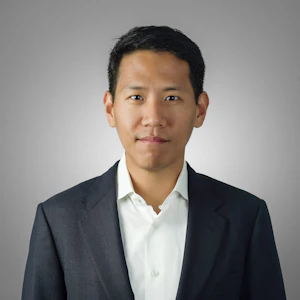
Jeff Park
Jeff Park
Before joining ProCap Financial, Mr. Park was the Head of Alpha Strategies and Portfolio Manager at Bitwise Asset Management, one of the world’s largest crypto-specialist asset managers. Prior to Bitwise, he was a Partner at Corbin Capital Partners, a multi-billion alternative asset management firm that specializes in multi-strategy hedge fund and opportunistic credit investing, where he led the firm’s digital asset investing efforts.
He is a graduate of Stanford University with a B.A. in Economics and International Relations.
Incentive Alignment: Theory vs. Practice
Speakers/Moderators
Ryan Gentry
Ryan Gentry
Jeff Park
Jeff Park
Before joining ProCap Financial, Mr. Park was the Head of Alpha Strategies and Portfolio Manager at Bitwise Asset Management, one of the world’s largest crypto-specialist asset managers. Prior to Bitwise, he was a Partner at Corbin Capital Partners, a multi-billion alternative asset management firm that specializes in multi-strategy hedge fund and opportunistic credit investing, where he led the firm’s digital asset investing efforts.
He is a graduate of Stanford University with a B.A. in Economics and International Relations.
What Makes a Bitcoin Treasury Company Successful?
Jason Fang
Jason Fang
Jason currently serves as Chairman & Co-CEO of Asia Strategy (NASDAQ: SORA), Chairman of Bitplanet Inc. (KOSDAQ: 049470), Chairman of Moon Inc. (HKG: 1723), and was previously a board member of Metaplanet (TYO: 3350), dubbed the “MicroStrategy of Japan.” These roles place Jason at the center of a growing movement to institutionalize Bitcoin across the region.
Earlier in his career, Jason was an investor at Fenbushi Capital and contributed to Ethereum research at Wanxiang Blockchain Labs. With a background in economics, business law, and experience as a full-stack iOS developer, he brings rare technical and financial fluency to his work in driving institutional crypto adoption.
Paul Lee
Paul Lee
Bitplanet is a KOSDAQ-listed Operating DAT built on Bitcoin as treasury. Through Bitcoin mining and related AI energy infrastructure, the company generates sustainable cash flow with a compliance-led approach and disciplined capital allocation. Bitplanet is purpose-built to create long-term value within the Bitcoin economy.
What Makes a Bitcoin Treasury Company Successful?
Speakers/Moderators
Jason Fang
Jason Fang
Jason currently serves as Chairman & Co-CEO of Asia Strategy (NASDAQ: SORA), Chairman of Bitplanet Inc. (KOSDAQ: 049470), Chairman of Moon Inc. (HKG: 1723), and was previously a board member of Metaplanet (TYO: 3350), dubbed the “MicroStrategy of Japan.” These roles place Jason at the center of a growing movement to institutionalize Bitcoin across the region.
Earlier in his career, Jason was an investor at Fenbushi Capital and contributed to Ethereum research at Wanxiang Blockchain Labs. With a background in economics, business law, and experience as a full-stack iOS developer, he brings rare technical and financial fluency to his work in driving institutional crypto adoption.
Paul Lee
Paul Lee
Bitplanet is a KOSDAQ-listed Operating DAT built on Bitcoin as treasury. Through Bitcoin mining and related AI energy infrastructure, the company generates sustainable cash flow with a compliance-led approach and disciplined capital allocation. Bitplanet is purpose-built to create long-term value within the Bitcoin economy.
Other
Speakers
Michael Saylor
Michael Saylor
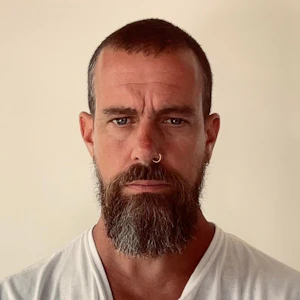
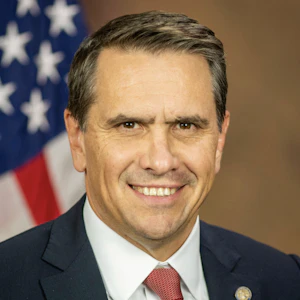
Todd Blanche
Todd Blanche
Biography of Deputy Attorney General Todd Blanche
The Honorable Todd Blanche is the 40th Deputy Attorney General of the United States, overseeing the work of the 115,000 dedicated employees who fulfill the Department of Justice’s mission at Main Justice, the FBI, DEA, U.S. Marshals, ATF, and 93 U.S. Attorney’s Offices.
Todd began his career at the Department where he served for over fifteen years in a variety of capacities, including as a contractor, a paralegal in the Criminal Division, and at the United States Attorney’s office for the Southern District of New York where he eventually became an AUSA and later a supervisor.
After leaving the Department, Todd worked as a criminal defense attorney that included representing President Donald Trump in three of the criminal cases brought against him in 2023 and 2024.
Following President Trump’s historic return to the White House, the President appointed Todd to work alongside Attorney General Pam Bondi to make America safe again. At the DOJ, Todd is working tirelessly to implement President Trump’s priorities that include confronting illegal protecting American businesses from fraud.
Todd has been married to his wonderful wife Kristine for nearly thirty years, is a father and grandfather.

Paul Atkins
Paul Atkins
Prior to returning to the SEC, Chairman Atkins was most recently chief executive of Patomak Global Partners, a company he founded in 2009. Chairman Atkins helped lead efforts to develop best practices for the digital asset sector. He served as an independent director and non-executive chairman of the board of BATS Global Markets, Inc. from 2012 to 2015.
Chairman Atkins was appointed by President George W. Bush to serve as a Commissioner of the SEC from 2002 to 2008. During his tenure, he advocated for transparency, consistency, and the use of cost-benefit analysis at the agency. Chairman Atkins also represented the SEC at meetings of the President’s Working Group on Financial Markets and the U.S.-EU Transatlantic Economic Council. From 2009 to 2010, he was appointed a member of the Congressional Oversight Panel for the Troubled Asset Relief Program.
Before serving as an SEC Commissioner, Chairman Atkins was a consultant on securities and investment management industry matters, especially regarding issues of strategy, regulatory compliance, risk management, new product development, and organizational control.
From 1990 to 1994, Chairman Atkins served on the staff of two chairmen of the SEC, Richard C. Breeden and Arthur Levitt, ultimately as chief of staff and counselor, respectively. He received the SEC’s 1992 Law and Policy Award for work regarding corporate governance matters.
Chairman Atkins began his career as a lawyer in New York, focusing on a wide range of corporate transactions for U.S. and foreign clients, including public and private securities offerings and mergers and acquisitions. He was resident for 2½ years in his firm's Paris office and admitted as conseil juridique in France.
A member of the New York and Florida bars, Chairman Atkins received his J.D. from Vanderbilt University School of Law in 1983 and was Senior Student Writing Editor of the Vanderbilt Law Review. He received his A.B., Phi Beta Kappa, from Wofford College in 1980.
Originally from Lillington, North Carolina, Chairman Atkins grew up in Tampa, Florida. He and his wife Sarah have three sons.

Mike Selig
Mike Selig
Chairman Selig brings to the role deep public and private sector experience working with a wide range of stakeholders across agriculture, energy, financial, and digital asset industries, which rely upon and operate in CFTC-regulated markets.
Prior to his leadership at the CFTC, Chairman Selig most recently served as chief counsel of the Securities and Exchange Commission’s Crypto Task Force and senior advisor to SEC Chairman Paul S. Atkins. In this role, Chairman Selig helped to develop a clear regulatory framework for digital asset securities markets, harmonize the SEC and CFTC regulatory regimes, modernize the agency’s rules to reflect new and emerging technologies, and put an end to regulation by enforcement. He also participated in the President’s Working Group on Digital Asset Markets and contributed to its report on “Strengthening American Leadership in Digital Financial Technology.”
Prior to government service, Chairman Selig was a partner at an international law firm, focusing on derivatives and securities regulatory matters. During his years in private practice, he represented a broad range of clients subject to regulation by the CFTC, including commercial end users, futures commission merchants, commodity trading advisors, swap dealers, designated contract markets, derivatives clearing organizations, and digital asset firms. Chairman Selig advised clients on compliance with the Commodity Exchange Act and the CFTC’s rules and regulations thereunder, including in connection with registration applications and obligations, enforcement matters, and complex transactions.
Chairman Selig earned his law degree from The George Washington University Law School and was articles editor of The George Washington Law Review. He received his undergraduate degree from Florida State University.

David Bailey
David Bailey

Eric Trump
Eric Trump
Mr. Trump also serves as Executive Vice President of The Trump Organization, where he oversees the global management and operations of the Trump family’s extensive real estate portfolio. This includes Trump Hotels, Trump Golf, commercial and residential real estate, Trump Estates, and Trump Winery. Known for his hands-on leadership and strong market instincts, he has played a key role in expanding the company’s presence across major U.S. and international markets.
A globally recognized business leader and public figure, Mr. Trump is a prominent advocate for Bitcoin and decentralized finance. He is a co-founder of World Liberty Financial, a decentralized finance (DeFi) platform, and serves on the Board of Advisors of Metaplanet, Japan’s largest corporate holder of Bitcoin.
Beyond his business activities, Mr. Trump has helped raise more than $50 million for St. Jude Children’s Research Hospital in the fight against pediatric cancer, a philanthropic mission he began at age 21.
Mr. Trump earned a degree in Finance and Management from Georgetown University. He currently resides in Florida with his wife, Lara, and their two children. He is also the author of Under Siege, his memoir published in October 2025.

Jack Mallers
Jack Mallers
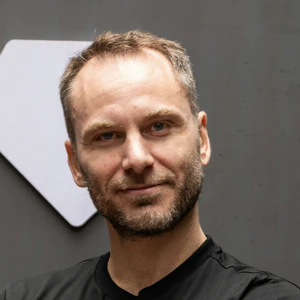
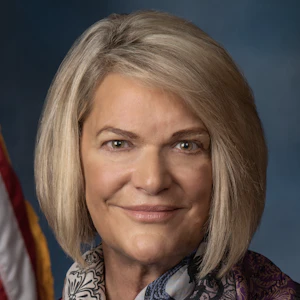
Cynthia Lummis
Cynthia Lummis
As the first-ever Chair of the Senate Banking Subcommittee on Digital Assets, Senator Lummis is the architect of the legislative framework shaping America's digital asset future. She introduced the landmark Lummis-Gillibrand Responsible Financial Innovation Act, the first comprehensive bipartisan crypto regulatory framework in Senate history. She co-authored the GENIUS Act — the first federal stablecoin law ever enacted — and introduced the BITCOIN Act, which would establish a U.S. strategic Bitcoin reserve of up to one million BTC. She is leading the Clarity Act, which will bring long-overdue regulatory certainty to the digital asset industry. She has also championed digital asset tax reform, including a de minimis exemption for small transactions and equal tax treatment for miners and stakers.
Known as Congress' "Crypto Queen," Senator Lummis represents Wyoming — a state she has helped build into one of the most digital asset-friendly regulatory environments in the nation. Before serving in the Senate, she served 14 years in the Wyoming Legislature, eight years as Wyoming State Treasurer, and eight years in the U.S. House. She is a three-time graduate of the University of Wyoming.
Her work represents a crucial bridge between traditional financial systems and the emerging digital economy, ensuring America leads the world in financial innovation while protecting the individual freedoms that define it.

Adam Back
Adam Back

Amy Oldenburg
Amy Oldenburg

David Marcus
David Marcus

Matt Schultz
Matt Schultz
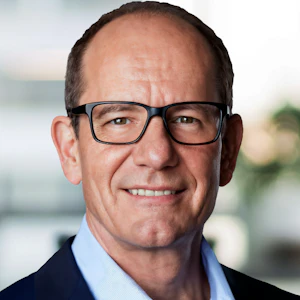
Fred Thiel
Fred Thiel
Throughout his career, Mr. Thiel has consistently driven rapid growth and created substantial shareholder value. Prior to MARA, Mr. Thiel served as the CEO of two other public companies, Local Corporation (NASDAQ: LOCM) and Lantronix, Inc (NASDAQ: LTRX). He has successfully raised billions in equity and debt through private and public offerings, led companies through IPOs, executed high-value exits to strategic and financial acquirers, and implemented effective M&A and roll-up strategies.
Mr. Thiel attended the Stockholm School of Economics and executive classes at Harvard Business School, and is fluent in English, Spanish, Swedish, and French. Mr. Thiel is the Chairman of the Board for Oden Technology, Inc. and is active in Young Presidents’ Organization where he has led initiatives in both the FinTech and Technology Networks.
A recognized voice in the industry, Fred frequently shares his insights on energy and technology with major media outlets like Bloomberg TV, CNBC, and FOX Business, contributing to vital discussions about the future of these sectors.
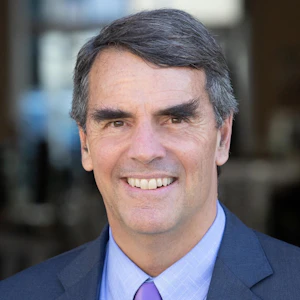
Tim Draper
Tim Draper
He is a supporter and global thought leader for entrepreneurs everywhere, and is a leading spokesperson for Bitcoin and decentralization, having won the Bitcoin US Marshall’s auction in 2014, invested in over 50 crypto companies, and led investments in Coinbase, Ledger, Tezos, and Bancor, among others.

Afroman
Afroman