What's the Price of Freedom? Ask "The Six Billion Dollar Man"
"The Six Billion Dollar Man" is the untold story of the U.S. government’s war on Julian Assange. It won Cannes and a first-ever Golden Globe for Documentary. Yet -- no surprise -- legacy media won't touch it.
Join Jack Dorsey and filmmaker Eugene Jarecki to learn about the groundbreaking new way they’re getting the film out to Bitcoiners only, exclusively at thesixbilliondollarman.com.
Speakers/Moderators
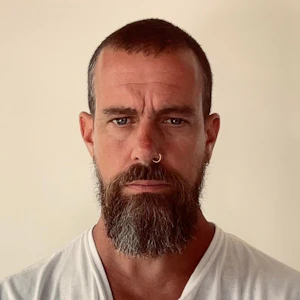
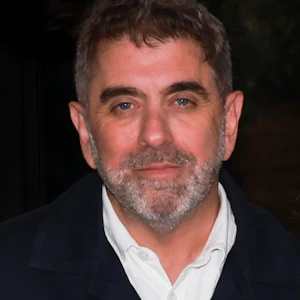
Eugene Jarecki
Eugene Jarecki
Session
Overview
Jack Dorsey and filmmaker Eugene Jarecki discuss The Six Billion Dollar Man: Julian Assange and the Price of Truth, a documentary about Julian Assange and the U.S. government’s campaign against him. Jarecki explains that despite major festival recognition, the film has faced a media and distribution blackout from mainstream outlets and streaming platforms.
The conversation connects WikiLeaks, Bitcoin, and freedom of information. Dorsey highlights how WikiLeaks’ adoption of Bitcoin during the 2011 financial blockade became a meaningful proof of concept for Bitcoin as an open, permissionless money protocol that can route around centralized gatekeepers.
The session also touches on Satoshi Nakamoto’s departure from Bitcoin, Edward Snowden’s relationship with WikiLeaks, surveillance, whistleblowing, and the role of open protocols such as Bitcoin and Nostr. Jarecki and Dorsey frame the film’s Bitcoin-only global watch party as an experiment in community-driven distribution and a way to bypass media censorship.
We must understand the gravity of the situation. We are entering into a state of permanent war, approaching a global surveillance society. It is not a choice. We must link together. We must invent new technological means to fight fire with our own form of fire.
Hello, everybody. Hello, Jack. Good to see you. I am very happy to be here today. I must confess, I am probably the least knowledgeable person about Bitcoin that has ever been on this stage, because I am not a Bitcoin person to begin with. I am a filmmaker, and I made a film about Julian Assange. More importantly, I made a film about what the U.S. government did to destroy Julian Assange.
It is called The Six Billion Dollar Man: Julian Assange and the Price of Truth. And though I do not know anything about Bitcoin, Mr. Dorsey does. It also turned out that what I learned about Jack was that he had a shared passion for Julian Assange and the cause of freedom of information that Assange stands for. What I did not know at the time was that there was an amazing possible harmony between the cause we were fighting for, freedom of information, and the sovereignty of finance that everybody here believes in so strongly.
I made the movie as best I could, and we did really well. We won the Cannes Film Festival with it, and we even won a Golden Globe. We were the first documentary ever to get a Golden Globe. I thought, well, this is great. Now the whole world will see it. We were very proud.
But what we did not expect, and maybe we should have, was that it did not matter what we won. If our narrative did not fit what the media gatekeepers believe is their narrative, we were going to face a media blackout. No streaming platform will touch the film, and no mainstream media outlet will go near it. So I was suddenly faced with a huge problem. Because I had heard that Jack was very sympathetic to the cause of WikiLeaks and Julian Assange, I turned to him and said, Jack, what do we do? How do we get it out to people? What did you say?
Well, first, I was super surprised. Maybe I should not have been surprised, but no one wanted to carry the film. No one wanted to broadcast it any further than where you put it. How many people do you think have seen it in total thus far?
Literally just a couple of festival audiences, the audiences at the Cannes Film Festival, a handful, and then at the Golden Globes. That is a private jury. So people in this room, people watching at home, much of what you are going to see today has never been seen by anybody, honestly.
So many people in the room and many people watching the livestream were here because Bitcoin represents an open protocol for money transmission. It represents routing around the gatekeepers, specifically Visa, Mastercard, the banks, the global banks, and the various reserves around the world. It is a community that I think, like myself, sees Julian and WikiLeaks as heroes. It goes back to the original internet principles of information wanting to be free and open. He stood directly for that, and he sacrificed so much for it.
I saw the film. I thought it was critical that more people saw the film, and I thought there was a resonance with the Bitcoin community, not only in a way to view it, but also in a way to help distribute it as far and as wide as possible.
When Jack told that to me, it was a huge lightbulb that went off because I did not know what to do with the film. He gave me this idea: bring it to the Bitcoin community, because the Bitcoin community once upon a time came to the rescue of WikiLeaks. WikiLeaks accepted Bitcoin in 2011 when the U.S. government blocked payments to WikiLeaks through Mastercard, Visa, the banks, and so on, and it saved WikiLeaks.
But as Jack taught me, it was also a kind of proof of concept for how Bitcoin could promote freedom, which it did in 2011 and allowed people around the world to receive the information that WikiLeaks was sharing. But there I was with a movie. We can see Julian Assange only in absentia. He cannot be in this country. He cannot be in this room right now.
Because the movie was not going to get shown, Jack had suddenly given me a chance to bring everybody into a kind of movement to get this information to the public by getting a group of friends together to help us. That is what we are going to talk about today, this global watch party. But I really want to start by sharing a clip that I put together. It was my best way of reflecting what I was learning from you, Jack, about the merging of WikiLeaks and Bitcoin. Could we play that clip for a moment?
WikiLeaks ought to be charged with treason. That is what they have done.
Wars can be started by lies. Peace can be started by truth.
This was a big problem.
These are anarchists that have the keys to your castle, and you cannot call a locksmith.
Shut it down. Shut it down. This terrorist website, WikiLeaks.
A financial blockade by Visa, Mastercard, and PayPal has destroyed our revenue.
PayPal suspended WikiLeaks’ account after the State Department sent a letter declaring the website illegal.
The banking blockade to stop donations forced WikiLeaks to find an alternate source of funding. So the site became one of the first major organizations to accept Bitcoin to keep fighting.
Now the most interesting thing happening is Bitcoin, the ability to defend against the full might of a superpower.
This is a David versus Goliath battle.
You are going to see that QR code a few times today. It is really the way that you come join us for the idea that Jack gave me, which was a global watch party. It sounded like the coolest thing that we could do, a kind of private pay-per-view just to people in the Bitcoin community.
Jack, you also shared with me some stuff that really moved me because I saw how much it moved you about Satoshi and Julian. You talked about the privacy of Satoshi and what that meant to you in the action he had taken in the world, he or she, or the phantom of Satoshi. Can you talk about the meaning of the two of them to you, and why this captivates you in the way it does?
I think WikiLeaks using Bitcoin out of necessity was incredible because it found an immediate use case at a global scale for something that a lot in the community care deeply about. But it also marked a transition point for Bitcoin, and that is when Satoshi left the project. One of his final messages on BitcoinTalk was around the advancement of WikiLeaks and WikiLeaks using Bitcoin, and I guess it was just a little too close, a little too hot.
I think what is important about Bitcoin, and what I admire about the project so much, is that the founder and the creator walked away. I think it is an extremely selfless act, but also one that speaks to the power of this project and the future of it. If this person were to come back today, it would be incredible, but the project lives on without whoever it is. They built something that was truly resilient. Part of that resilience comes from being able to be selfless about it and walk away from it entirely.
As we think about open protocols, and we think about something as important as money and a protocol for money for the internet, and one that parallels and hits on so many principles behind why we believe the internet is so important and why we believe WikiLeaks and Julian’s work has been so critical, that one moment is a pretty interesting transition point.
When we were together the first time, Jack and I talked about my predicament with the film. It was like, we have a problem. If a film that the public needs to see and wants to see is blocked in this way, what do we do? The truth is, Jack, I think you know this: I was coming to you for money. I was just a filmmaker desperate to get my film out.
So I put my cause before Jack and said, they do not want the public to see this film. If you like it, Jack, I want you to say, I want the public to see this film, so I am going to swagger in and make that happen.
Jack said something very important to me. He said, but then that is just about this film. There is a much bigger community action that can happen here, where the film becomes a gathering point for the Bitcoin community on behalf of the nexus between financial sovereignty and freedom of information. This can become far more than just you, Eugene, and your one-off film, or even the specific story of Julian Assange’s plight and his saga. It can be much, much bigger.
That is what led to where we are now, which is inviting everybody to join us on this wild ride at thesixbilliondollarman.com, where you can sign up for the global watch party. You can learn what we are doing and how you can become a part of it. One of the things you will see, for example, is that if you buy a ticket to the screening, this private event, you actually end up with an official credit on the film. That is not just some token thing so you can impress your date. It is much more than that. It is a real invitation by us to what we believe is an opportunity for all of us to become part of something that is more than just a movie. It is a movement to get around the gatekeepers and defy media censorship.
We will come back to that in a bit. But if I am going to interest you in the movie, I should show you some stuff. Instead of showing you perfected things that the world could see, I brought a couple of things just for this Bitcoin audience, the same audience that we are trying to bring into our mission here. We made a very special, behind-the-scenes glimpse of what we are doing in our editing room. I am going to play the next clip, which has actually never been seen anywhere else in the world and becomes part of what you get to see when you join this movement.
My name is Edward Joseph Snowden. I am no longer 29 years old. I guess I am 38 years old. It has been a long time.
I am not going to be scrambling jets to get a 29-year-old hacker.
The man who leaked secret internet surveillance has disappeared in Hong Kong.
The question is, who is helping him?
The other side of my story that is under-recognized is that WikiLeaks helped me.
I could not really get to the whistleblower who needs help.
I was in Australia at the time, and Julian called. He started talking about Snowden and about how we understood that the whole force of the U.S. government would now be after him. Knowing what that felt like, we obviously wanted to help him.
So he needed us to communicate with him.
I got on the first plane that I could to Hong Kong, where he was.
Go to the help desk and ask them to put out an announcement about Sarah Harrison coming to see you.
I want to get him caught and brought back for trial.
The United States revoked his passport.
Edward Snowden is believed to have just landed in Moscow.
They are approaching now, the authorities.
Stuck for six weeks in the transit zone of Moscow Airport.
The question is, why did I not simply go to WikiLeaks to publish my information? The truth is, I wanted to work with trusted newspapers. But when the government came after me, all of them started running away.
The prime minister instructed The Guardian newspaper to destroy files from the whistleblower Edward Snowden.
But at the same time, I see that WikiLeaks is running toward danger. The safe decision for Sarah would have been to just not get involved.
With the help that we gave Edward Snowden, Julian definitely hurt himself. The U.K. stopped negotiations for Julian to get out of the embassy.
I have an interesting anecdote about my time with Edward Snowden and something it taught me about this process. But Jack, you also have deep admiration for Edward Snowden. Do you want to reflect on that in this context?
We all do. These are two heroes. They believe fundamentally in these technologies and are willing to test them and play with them and teach us all about them. I think it is always important to remember why we are here in the first place and why this technology was even created. It is to help folks like this who are doing things where they have to sacrifice everything. They put everything on the line just to carry a message, a secret, something important that everyone in the world needs to hear because it is life or death. It is about holding our government to account and holding our systems and our corporations to account. Without their voices and without the technologies behind it, and I believe the reason this conference exists in the first place, Edward is a constant reminder, as is Julian. The fact that they came together to work together on something like this, and that it is captured in the film, is pretty incredible to me.
It was interesting for me because we flew to Moscow to interview Edward Snowden, and it was actually, weirdly, the very week that Putin was preparing to invade Ukraine. All of Moscow was insane. We finally got a place where we could film that they did not shut down. We were being followed at every move we made.
He sat down, and as I started to talk to him about Julian Assange, there was a funny thing and then a very poignant thing. The funny thing was that it suddenly dawned on me that it was like interviewing Batman about Superman, because here you have two superheroes in the eyes of many of us. I did not know what Edward Snowden would think of Julian Assange.
That is where it got so very poignant, because here I was seeing Edward Snowden, who is exiled from his native land for telling the truth. At that time, Julian Assange was in prison for telling the truth. I watched the exiled man talk with great love and admiration about Julian Assange, not only telling the true story, as we glimpse in this clip, that WikiLeaks helped Snowden get to Moscow when he was in Hong Kong and used their knowledge of how they had been persecuted to help Edward Snowden make that end run into his safety.
It was also so poignant because Edward reflected on why so many people have been so successfully manipulated by the smear campaign that has happened about Julian Assange. He said, Julian Assange may not be the nicest person in the world, but it would be hard to imagine someone who has done more for the world. Then he said, it is so strange how people have so much trouble getting past the sharp corners of a person.
Then I watched Edward Snowden walk off into the Moscow night, a stateless man, at that time an exile from his own land, once again for telling the truth. It was an incredibly poignant part of our filmmaking process, which is why I wanted to share it with you today.
If it is okay, I will show another clip. You can see I do a lot of talking, and Jack is like Obi-Wan Kenobi on the screen. I say 800 words, Jack says two, and somehow his really resonate beautifully. I am going to show you a clip, which I do not really want to introduce because it is quite ironic given where we are today. I will just show it, and then we will let the chips fall after that.
Shopping. Dining. Entertaining at The Venetian.
When Julian Assange entered our embassy in London, we had to improve the inside of the embassy, to change an office into a bedroom, and to hire a security company to install cameras, to provide security for Julian Assange and the very important visitors he received.
Anytime I was in London, I would visit him.
Is Pamela Anderson in love with the most dangerous man in the world?
Our conversations were fairly innocent, but Julian was always uncomfortable. It seemed like he was aware of something.
My biggest problem is the security staff.
I thought sometimes he might have been a little paranoid, but he knew exactly what was going on.
My name is Aitor Martinez. I am a member of Julian Assange’s legal team. One day I received a call and a person said, you do not know me, but I perfectly know you. I work for the security company at the embassy.
The boss of the security company was called David Morales.
In 2016, Morales traveled to Las Vegas. He attended some kind of security conference, and that is where he made a connection with the head of security for one of the casinos. When David Morales came back from Las Vegas, things began to change. We installed a new server to upload the videos and information we were gathering. But I saw that IP addresses based in the United States were accessing the server. Inside the company, naming the CIA, FBI, or NSA was taboo. We were simply to call them our American friends.
Before I have to make a very rapid exit.
You might have to explain that one a little bit more.
I will.
One of the things we learned that was most shocking about the United States government’s efforts against Julian Assange, and really against all of us, because stopping whistleblowers, stopping publishers, stopping those who seek the truth is stopping all of us from having access to the truth, was that not only was Julian Assange tortured under U.S. guidance while in the Ecuadorian Embassy, which you will learn more about in the film, but he was also secretly spied on.
It just happens that the security company that did the spying on Julian Assange and provided that information to U.S. authorities, listening to his lawyer meetings, for example, so he could never have attorney-client privilege in America, was coordinated out of a casino that is very close to where I am sitting right now. Why that happened, you would have to ask other people, and I may not be alive to tell you in a couple of hours. But it was an amazing part of the story and shows the lengths to which the United States went to operate outside the law in doing what it did.
I want to steer us back for a moment. We have a few minutes left. Jack, do you have any reflections you want to add? I have a sense of what I want to encourage people to do, but I would love to hear from you a bit.
This was a path and idea so that more people could contribute to this project and help crowdfund the movie to the next level. Not only see it as a synchronous global viewing party, but fund it to the next tier of folks that could see it and need to see it, and do so in a way that has some impact on it, leaving your mark.
It is a very interesting and creative way to get a film out. It is a way to start with this one, but it might be something that we see more of in the future, using technologies such as Bitcoin and Nostr, an open protocol for social media and getting information out there without any gatekeepers whatsoever. I think that is rather poetic. For it to work out would be amazing.
For my purposes as a filmmaker and someone who believes in this movement, the idea of a shared movement between freedom of information and financial sovereignty, that those can come together and bring this kind of movie to the public, was a vision Jack gave me. I cannot tell you how inspiring it is for someone like me and my colleagues in the world of trying to seek the truth.
There are no avenues, and so it is left to the community to do it. We cannot trust the power structure. We cannot trust legacy media and those in government that control legacy media. We have to take matters into our own hands, and we need you.
This is not just some movie screening. It is really joining us, joining a movement, and joining us on a project to demonstrate that a movie can bypass media censorship and bring to the public what the public deserves and what the public wants. I thank Jack so very much for his support in that, and I welcome all of you. Please come. The QR code is very helpful to bring you right to where you can join us, and there is also the website, thesixbilliondollarman.com. Thank you so very much. Thank you, Jack, and thank you, Bitcoin 2026.
Thank you all.
Similar
Sessions
What's the Price of Freedom? Ask "The Six Billion Dollar Man"
Eugene Jarecki
Eugene Jarecki
What's the Price of Freedom? Ask "The Six Billion Dollar Man"
"The Six Billion Dollar Man" is the untold story of the U.S. government’s war on Julian Assange. It won Cannes and a first-ever Golden Globe for Documentary. Yet -- no surprise -- legacy media won't touch it.
Join Jack Dorsey and filmmaker Eugene Jarecki to learn about the groundbreaking new way they’re getting the film out to Bitcoiners only, exclusively at thesixbilliondollarman.com.
Speakers/Moderators
Eugene Jarecki
Eugene Jarecki
Other
Speakers
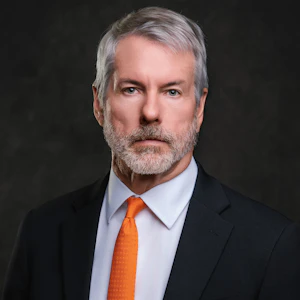
Michael Saylor
Michael Saylor
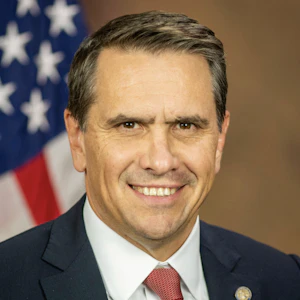
Todd Blanche
Todd Blanche
Biography of Deputy Attorney General Todd Blanche
The Honorable Todd Blanche is the 40th Deputy Attorney General of the United States, overseeing the work of the 115,000 dedicated employees who fulfill the Department of Justice’s mission at Main Justice, the FBI, DEA, U.S. Marshals, ATF, and 93 U.S. Attorney’s Offices.
Todd began his career at the Department where he served for over fifteen years in a variety of capacities, including as a contractor, a paralegal in the Criminal Division, and at the United States Attorney’s office for the Southern District of New York where he eventually became an AUSA and later a supervisor.
After leaving the Department, Todd worked as a criminal defense attorney that included representing President Donald Trump in three of the criminal cases brought against him in 2023 and 2024.
Following President Trump’s historic return to the White House, the President appointed Todd to work alongside Attorney General Pam Bondi to make America safe again. At the DOJ, Todd is working tirelessly to implement President Trump’s priorities that include confronting illegal protecting American businesses from fraud.
Todd has been married to his wonderful wife Kristine for nearly thirty years, is a father and grandfather.
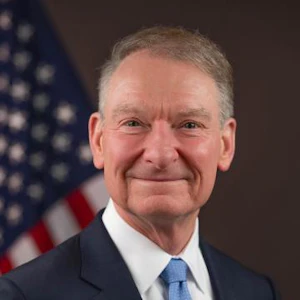
Paul Atkins
Paul Atkins
Prior to returning to the SEC, Chairman Atkins was most recently chief executive of Patomak Global Partners, a company he founded in 2009. Chairman Atkins helped lead efforts to develop best practices for the digital asset sector. He served as an independent director and non-executive chairman of the board of BATS Global Markets, Inc. from 2012 to 2015.
Chairman Atkins was appointed by President George W. Bush to serve as a Commissioner of the SEC from 2002 to 2008. During his tenure, he advocated for transparency, consistency, and the use of cost-benefit analysis at the agency. Chairman Atkins also represented the SEC at meetings of the President’s Working Group on Financial Markets and the U.S.-EU Transatlantic Economic Council. From 2009 to 2010, he was appointed a member of the Congressional Oversight Panel for the Troubled Asset Relief Program.
Before serving as an SEC Commissioner, Chairman Atkins was a consultant on securities and investment management industry matters, especially regarding issues of strategy, regulatory compliance, risk management, new product development, and organizational control.
From 1990 to 1994, Chairman Atkins served on the staff of two chairmen of the SEC, Richard C. Breeden and Arthur Levitt, ultimately as chief of staff and counselor, respectively. He received the SEC’s 1992 Law and Policy Award for work regarding corporate governance matters.
Chairman Atkins began his career as a lawyer in New York, focusing on a wide range of corporate transactions for U.S. and foreign clients, including public and private securities offerings and mergers and acquisitions. He was resident for 2½ years in his firm's Paris office and admitted as conseil juridique in France.
A member of the New York and Florida bars, Chairman Atkins received his J.D. from Vanderbilt University School of Law in 1983 and was Senior Student Writing Editor of the Vanderbilt Law Review. He received his A.B., Phi Beta Kappa, from Wofford College in 1980.
Originally from Lillington, North Carolina, Chairman Atkins grew up in Tampa, Florida. He and his wife Sarah have three sons.

Mike Selig
Mike Selig
Chairman Selig brings to the role deep public and private sector experience working with a wide range of stakeholders across agriculture, energy, financial, and digital asset industries, which rely upon and operate in CFTC-regulated markets.
Prior to his leadership at the CFTC, Chairman Selig most recently served as chief counsel of the Securities and Exchange Commission’s Crypto Task Force and senior advisor to SEC Chairman Paul S. Atkins. In this role, Chairman Selig helped to develop a clear regulatory framework for digital asset securities markets, harmonize the SEC and CFTC regulatory regimes, modernize the agency’s rules to reflect new and emerging technologies, and put an end to regulation by enforcement. He also participated in the President’s Working Group on Digital Asset Markets and contributed to its report on “Strengthening American Leadership in Digital Financial Technology.”
Prior to government service, Chairman Selig was a partner at an international law firm, focusing on derivatives and securities regulatory matters. During his years in private practice, he represented a broad range of clients subject to regulation by the CFTC, including commercial end users, futures commission merchants, commodity trading advisors, swap dealers, designated contract markets, derivatives clearing organizations, and digital asset firms. Chairman Selig advised clients on compliance with the Commodity Exchange Act and the CFTC’s rules and regulations thereunder, including in connection with registration applications and obligations, enforcement matters, and complex transactions.
Chairman Selig earned his law degree from The George Washington University Law School and was articles editor of The George Washington Law Review. He received his undergraduate degree from Florida State University.
David Bailey
David Bailey

Eric Trump
Eric Trump
Mr. Trump also serves as Executive Vice President of The Trump Organization, where he oversees the global management and operations of the Trump family’s extensive real estate portfolio. This includes Trump Hotels, Trump Golf, commercial and residential real estate, Trump Estates, and Trump Winery. Known for his hands-on leadership and strong market instincts, he has played a key role in expanding the company’s presence across major U.S. and international markets.
A globally recognized business leader and public figure, Mr. Trump is a prominent advocate for Bitcoin and decentralized finance. He is a co-founder of World Liberty Financial, a decentralized finance (DeFi) platform, and serves on the Board of Advisors of Metaplanet, Japan’s largest corporate holder of Bitcoin.
Beyond his business activities, Mr. Trump has helped raise more than $50 million for St. Jude Children’s Research Hospital in the fight against pediatric cancer, a philanthropic mission he began at age 21.
Mr. Trump earned a degree in Finance and Management from Georgetown University. He currently resides in Florida with his wife, Lara, and their two children. He is also the author of Under Siege, his memoir published in October 2025.
Jack Mallers
Jack Mallers
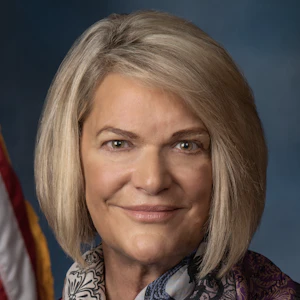
Cynthia Lummis
Cynthia Lummis
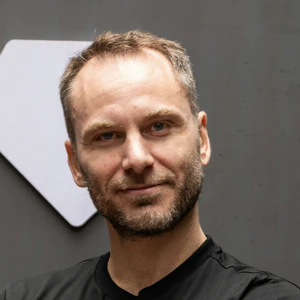
As the first-ever Chair of the Senate Banking Subcommittee on Digital Assets, Senator Lummis is the architect of the legislative framework shaping America's digital asset future. She introduced the landmark Lummis-Gillibrand Responsible Financial Innovation Act, the first comprehensive bipartisan crypto regulatory framework in Senate history. She co-authored the GENIUS Act — the first federal stablecoin law ever enacted — and introduced the BITCOIN Act, which would establish a U.S. strategic Bitcoin reserve of up to one million BTC. She is leading the Clarity Act, which will bring long-overdue regulatory certainty to the digital asset industry. She has also championed digital asset tax reform, including a de minimis exemption for small transactions and equal tax treatment for miners and stakers.
Known as Congress' "Crypto Queen," Senator Lummis represents Wyoming — a state she has helped build into one of the most digital asset-friendly regulatory environments in the nation. Before serving in the Senate, she served 14 years in the Wyoming Legislature, eight years as Wyoming State Treasurer, and eight years in the U.S. House. She is a three-time graduate of the University of Wyoming.
Her work represents a crucial bridge between traditional financial systems and the emerging digital economy, ensuring America leads the world in financial innovation while protecting the individual freedoms that define it.
Adam Back
Adam Back
Amy Oldenburg
Amy Oldenburg
David Marcus
David Marcus

Matt Schultz
Matt Schultz
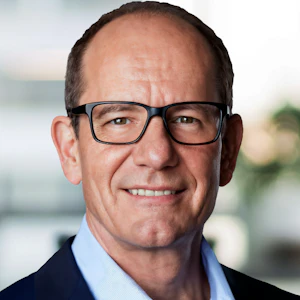
Fred Thiel
Fred Thiel
Throughout his career, Mr. Thiel has consistently driven rapid growth and created substantial shareholder value. Prior to MARA, Mr. Thiel served as the CEO of two other public companies, Local Corporation (NASDAQ: LOCM) and Lantronix, Inc (NASDAQ: LTRX). He has successfully raised billions in equity and debt through private and public offerings, led companies through IPOs, executed high-value exits to strategic and financial acquirers, and implemented effective M&A and roll-up strategies.
Mr. Thiel attended the Stockholm School of Economics and executive classes at Harvard Business School, and is fluent in English, Spanish, Swedish, and French. Mr. Thiel is the Chairman of the Board for Oden Technology, Inc. and is active in Young Presidents’ Organization where he has led initiatives in both the FinTech and Technology Networks.
A recognized voice in the industry, Fred frequently shares his insights on energy and technology with major media outlets like Bloomberg TV, CNBC, and FOX Business, contributing to vital discussions about the future of these sectors.
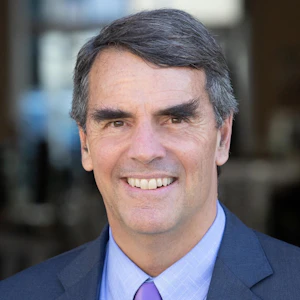
Tim Draper
Tim Draper
He is a supporter and global thought leader for entrepreneurs everywhere, and is a leading spokesperson for Bitcoin and decentralization, having won the Bitcoin US Marshall’s auction in 2014, invested in over 50 crypto companies, and led investments in Coinbase, Ledger, Tezos, and Bancor, among others.
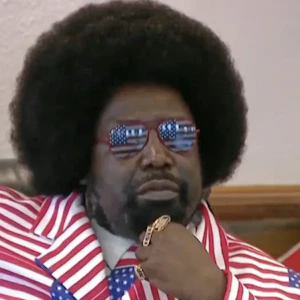
Afroman
Afroman