Why America Must Lead the Global Race for Digital Infrastructure
Speakers/Moderators
Scooter Womack
Scooter Womack
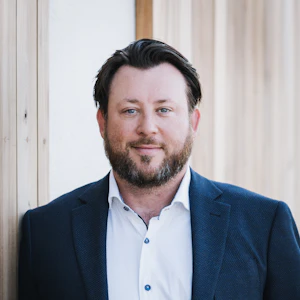
Behind the scenes, Scooter has been instrumental in launching multiple market participants and driving innovation across the ERCOT landscape. His work has enabled organizations to optimize energy usage, reduce costs, and implement sustainable solutions that align with evolving market dynamics.
With a proven track record of success, Scooter combines deep industry knowledge with strategic foresight to deliver measurable results for clients. His leadership continues to influence the future of energy flexibility and resilience in Texas.

Harry Sudock
Harry Sudock
Lisa Hough
Lisa Hough
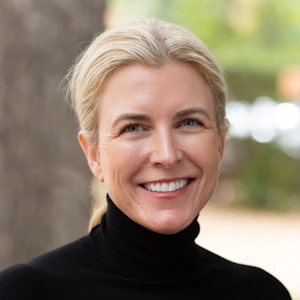
Her strategic fingerprints are on some of the most ambitious projects in the space. She played a catalytic role in architecting a ~2 GW AI campus initiative in West Texas — one of the largest of its kind — and is now driving similarly scaled efforts forward.
A Forbes Leading Voice in Bitcoin, Lisa serves on the Board of Directors of the Bitcoin Today Coalition, is a Founding Board Member of Proof of Workforce — supporting Bitcoin education and adoption for workers, unions, and pension funds — and sits on the Supervisory Board of Paris-based Melanion Digital, associated with a Bitcoin-equity ETF. She also advises Trammell Venture Partners.
Her career began in energy markets at Enron Capital & Trade, Phibro Energy, and PG&E National Energy Group, before moving into Bitcoin at Unchained and Custodia Bank, where she advised institutions on Bitcoin custody and regulatory complexity.

Will Su
Will Su
Prior to BlackRock, Will was a Strategist and Trader at Och-Ziff Capital Management specializing in crude oil, refined products, and broader commodities/equities. Prior to Och-Ziff, Will was a Portfolio Manager and Analyst at Jamison Capital Partners, a commodities-focused hedge fund, leading the firm's Energy derivatives trading and research. Will started his career at Goldman Sachs in the Global Investment Research division covering the Energy sector.
Will graduated with a B.S. from Columbia University, summa cum laude, with a major in Financial Engineering and minors in Economics and Computer Science. He is a CFA Charterholder and a Term Member of the Council on Foreign Relations.
Session
Overview
This panel examined why U.S. leadership in digital infrastructure depends on energy abundance, capital markets, grid development, and the ability to build at speed. Harry Sudock of CleanSpark, Lisa Hough, and Will Su of BlackRock discussed how Bitcoin mining, AI, HPC, and data centers are converging around the same core requirement: reliable and scalable power.
The conversation framed digital infrastructure as both an economic and national security issue. Speakers emphasized the United States’ advantages in natural resources, entrepreneurship, capital formation, and existing energy infrastructure, while warning that permitting delays, weak grid planning, and negative narratives around energy consumption could slow execution.
Bitcoin mining was presented as a strategic part of the broader compute economy, especially because miners can respond flexibly to power market conditions. The panel also compared U.S. development with rapid energy buildout in China and emerging hash rate growth in places such as Ethiopia, arguing that long-term competitiveness will depend on continuing to invest in generation, transmission, and local infrastructure.
I am super, super excited to be joined by these three folks up here. We'll get right into it with some introductions, if they're necessary. We were joking backstage that Harry might drop in from the ceiling since this is his stage and make a grand entrance, but he was modest enough to walk up with us small folk here.
Lisa Hough, who for me is the first lady of Bitcoin, we'll start with you for introductions. For those who somehow don't know the three of you, we'll let you kick it off, Lisa, and get right into it.
Thank you so much for coming. I know it's 4:30 and you probably want to be anywhere else, but thank you very much. I was a gas trader 100 years ago. I led PJM and East Coast trading. We had 4,500 megawatts of generation and a whole bunch of other energy assets. I found Bitcoin about 2018. I started calling myself an expert in Bitcoin mining in 2020. I totally was not, but I started working in Bitcoin and have been here ever since. Now I am developing data center sites.
I'm Harry. I work at CleanSpark. We're a large-scale digital infrastructure developer, a large holder of Bitcoin, and a strong believer in the American backbone for future innovation. I want to pause on some of our introduction and just say that if you asked any of the colonies here in the U.S. whether or not we were too far behind the British to win our independence, they would have said we were too far behind. I don't subscribe to the viewpoint that we're too far behind anything. When strong people have strong wills, they make amazing things happen.
I can't get more patriotic than that, but I'm Will Su. Great to be here. I work at BlackRock, a large asset manager. I am our head of public energy investing, so I've been through this journey for almost two decades. Similar to Lisa, I am a recovering commodities trader, mostly focused on oil and natural gas. BlackRock is on a journey with all of you. We've gone from zero dollars in digital assets under management two years ago to $160 billion. This is not the top of the first inning. This is batting practice. I'm really proud to be here and really look forward to the journey ahead.
Let's jump right into it. I think the question that a lot of us have been asking on the side and in the rooms is whether this is really an AI discussion, really an HPC discussion, or whether that is the wrapper for capital investment in infrastructure. I'm going to start with Harry. I know you guys really lead a lot on infrastructure first and foremost. That's been your ethos at CleanSpark. What are your thoughts? Is this a compute discussion, or is it an infrastructure battle that we're having?
I think we're having a conversation about the American economy fundamentally. Two of the crown jewels of the American economy are our capital markets and our electric system. When you look at the goods and services that we benefit from every day, energy is one of the key inputs that goes into those goods and services. It's the reason why a deflationary cost curve has been available to us as the innovation edge and frontier has continued to be pushed forward. Whether that's from innovation like the internet or innovation like the steam engine, the energy intensity of modern life has been part of what gets pushed forward every time we make that step-function improvement.
Why are we able to keep pushing forward? It's because the U.S. capital markets have been able to capitalize entrepreneurs in such a way that they're able to innovate and push forward to the edge. I view the American energy backbone and the American capital market system as the reason why we've been an innovation leader over the last 150 years. I'd say 250 years, but the first 100 were tricky. Ultimately, why are we going to be successful headed into the future? It's because we're going to continue to tether the benefits of both of those tools, and more and more those tools have converged over time.
I think it's undeniable. Plenty of studies have been done. Our economic viability across the globe is tied to energy access and energy abundance. That comes down to infrastructure investment, private, public, whatever it may be. It really boils down to being that simple. Lisa, I know you've been involved in some major projects over the last few years on the development side. What do you think? Is this an infrastructure-first question? Is it an economic question? How do you come to this question?
It's hard to come after Harry and answer any question. I think this is about the American family. I think it's about the American dinner table. I want us to be prosperous, and I want us to be economically optimistic about our futures and our children's future. I think anyone who stands in the way of infrastructure development is expressing an absolute hate for their children and their grandchildren. We must have energy stability and infrastructure so that our family tables continue to exist in this country.
Let's talk about the capital investment side. You mentioned zero to $160 billion in two years. That's bananas, and you said it's batting practice. Love to hear that. When we talk about the largest global allocator of capital, maybe in the history of the world, we know that what makes U.S. digital infrastructure more investable than other regions in the world matters. Capital finds its most efficient outcomes. We're patriotic. We believe in the American dream. But capital markets have rules, and they're going to follow that efficiency. What makes the U.S. more investable right now, and how do we maintain that status in the world?
There are so many advantages that it's hard to start. I'll start by visualizing the degree of advantage we have in this country from a resource perspective. It is completely unmatched. The amount of natural gas that flows through the country right now is roughly 110 billion cubic feet per day. That's enough to fill 9,000 Empire State Buildings every single day. Visualize how much gas that is and how many tens or hundreds of thousands of miles of infrastructure it took over the years to supply that, and then understand that that's only 40% of our electricity supply.
This has always been an energy addition, not an energy transition, not an energy substitution, because every single year, every single form of energy continues to ramp.
You asked about why the U.S. is the preeminent place to invest. We have the best entrepreneurs. We have the best corporate leaders to actually make these things happen. We have the best below-the-ground resources. I do think there has been a lot of improvement in terms of permitting reform and allowing things to happen. We have to do a whole lot more, because right now it takes ten years to get new grid investments brought online, and in China it takes three to six months.
I'll give you a really interesting data point that I found. If you look at the hash rate around the world today, I don't think anyone would have thought that Ethiopia, of all countries, would be in the top ten. They are now 3% of global hash rate. The reason they're doing that is because a five-gigawatt dam was brought online, providing power at less than four cents per kilowatt hour. A lot of foreigners are coming in to take advantage of that. But that actually reveals a fundamental weakness in not planning the grid correctly. They built generation, but they didn't build proper distribution. As a result, you're mining Bitcoin, you're the eighth-largest hash rate provider in the world, but a lot of folks in the country don't have adequate access to cheap electricity, and GDP and people's well-being are lagging behind.
It is so important to remember that we are the leaders and we will continue to be the leaders because we have above- and below-the-ground advantages. But the way we lose this fight is to lose sight of the advantages we have and serve our own goals while others are catching up and taking advantage of that weakness. It's so important to continue that investment and that focus on an all-of-the-above solution to energy and energy abundance.
I want to share a little context. Harry and I were just backstage, and I said to Harry, one of these facts I find fascinating as a student of energy history is that the phrase energy transition was first used when we were talking about the atom. It was 50 or 60 years ago that we were having this conversation publicly for the first time. People always think, if we move to wind and solar, we'll use less hydrocarbons. But it was really the same conversation with John D. Rockefeller. People thought we would quit burning all of this wood and forests would be prolific, but what ended up happening, of course, is that we took the wood and, instead of burning it in our homes because we now had hydrocarbon products, we used it to make barrels.
This is so important: to know the long arc of history as it relates to commerce and energy. If you look at the 53-foot trailer that's on trucking lines all across the country, the freight that moves over the railroad, and the shipping container that sits on ships moving all across the sea, all of those means of transportation are fungible with each other. They are the same unit, which is the container that moves across all three. The width of that container is able to draw its history back to ancient Rome, because that is the width of the road such that two horses could pass one another on the roads of Rome. The reason you're able to move goods across every inch of this globe actually starts over 2,000 years ago in a civilization that we still have the honor to learn from today.
I just learned that right now. I did not know that. That's fascinating. Let's talk about those investments. Capital is not the problem. I think we can agree on that. Institutional capital is certainly not the problem. What's the disconnect right now between what institutional, private, and public investment wants to see happen and what is happening on the ground? Lisa, what do you think?
To me, the disconnect is somewhat just the narrative that energy usage is bad. I think it's this overarching idea that Elizabeth Warren wants us all to be poor and sitting in the dark. We've got to lose that, or we lose this race with other nations that are building power plants and building AI data centers, and that are not afraid of energy, not afraid of a family table, and not afraid of people coming out of poverty.
What do you think the disconnect is between capital and execution on the ground?
I think there are a few different disconnects. One of them is a fundamental lack of optimism. If you want to believe that the future can be better than the past, then you have the will and the wherewithal to make the hard investments and choices to action that future.
Somewhere in the last three to four years, we broadly woke up to the fact that we're not generating enough electrons in the U.S. I think the reason we woke up to that is because we didn't realize how important an energy-native form of technical innovation was going to be in the form of the large language model and the form of digital intelligence that could offer to us. Until we realized that was really useful and valuable, we sort of thought energy was a nice-to-have.
But if you look at what energy is actually used for right now, we use way more energy on air conditioning than AI. My argument is not that we should use less air conditioning. Lord, let me tell you. My argument is that we should probably use about as much energy running AI models as we do air conditioning, because the productivity gains from being able to work in a temperate environment and the productivity gains from having an intelligent machine available at your fingertips are somewhere in the same zip code.
These energy-intense productivity gains were not something we had a working language around until very recently at the broad level. I think Bitcoiners knew this much before the AI natives knew this, and that's why some of the companies are best positioned to action this change. Ultimately, when the world of atoms collides with the world of bits, you're forced to make very challenging engineering decisions. It's not good enough to say we want to generate more. We need to do so in a way that is integrated into our electric system, transmitted and delivered in a way that's useful, and capitalized in a way that produces positive outcomes for the investors who take the bet on this better future rather than a worse past.
Energy is not a nice-to-have. It's non-negotiable.
I echo all of that. I'll repeat my favorite quote on this: since the beginning of time, knowledge is power, but for the first time, power is knowledge in the age of AI. It raises the stakes to a completely new level. I don't think this is a disconnect, but I think this is a growing risk, especially for AI. AI has a PR problem, and by association, if AI has a PR problem, then Bitcoin mining and anything else that's energy intensive has a similar PR problem.
The PR problem is in the local communities where you're building out the power and the data centers. There's pushback because the communities don't feel like they're aligned with the economic upside, and they have a lot of perceived economic downside, whether it's higher power bills, construction noise, or whatnot. The trend we have seen is that a lot of these data centers are moving to more sparsely populated places. Helios by Galaxy is a 3.5-gigawatt site being built in Dickens County in the Texas Panhandle. The population is two people per square mile. The site in Clearwater that they're converting is 10 or 20 people per square mile.
I think the way out of that is BYOG: bring your own generation. One of the ways the Bitcoin mining community provides that is, as Scooter said earlier on your panel, ASICs don't have feelings, so they don't care if it's 90 degrees. You just shut it off. I think that's a very economically viable way to provide that much-needed power. But at the end of the day, there's no substituting your way out of this. Demand is going higher, whether it's for Bitcoin mining, AI, or simply for more petrochemicals production. This is the place to do it. We have the resource. We have the security. We just have to deliver it through the last mile to the customers that are in need.
One of the things that is interesting to note is that we were talking backstage about how this is a must-have. It can't not happen. What I really like about this transition, the big pivot we're talking about, is that it is being led by Bitcoiners. Bitcoiners don't like to be told no. They don't like to be told we can't do something. I think it's going to take that kind of moxie to really do this and do it the right way.
I don't think we could be in a better position domestically with the people who are leading the charge to say this is an absolute must. These are people who are used to making decisions, taking risks, and willing things to happen. There is a mentality and an ethos that Bitcoin and Bitcoiners can really bring to what we have to do. We have to win. We have to do this.
Let's talk about the stakes of this whole discussion. This is a microcosm of a discussion about what really matters. What really matters is the cost domestically, not just economically, but the cost to us as a nation if we don't win this battle and don't make this commitment. Where are we in 50 years? Where are we in 75 years? Lisa, what do you think?
I'm going to draw you back to history and tell you the story of the Big Inch pipeline and the Little Big Inch pipeline. You should Google it if you've never heard this story. This is very similar to what was discussed on the panel previously, where some equipment is being marked as national security imperative equipment. From 1941 to 1944, we built pipelines in record time. They threw all regulation away and said, we are going to build these pipelines. They originated in Longview, Texas, and went all the way up to a tiny town just outside Philadelphia. Eighty percent of the energy that came out of Texas during that time frame went to our allied forces abroad.
So yes, I think this is very much a battle of our own national security, food on tables, and diplomacy. Obviously, our military might makes up the third leg of that stool, but it is very much a battle for peace and prosperity around the world in the way that Big Inch and Little Big Inch were during World War II.
We can do this, and our might at home, on our shores, within our borders, within the United States of America, is a way for us to export prosperity, freedom, liberty, and property rights abroad. We can do this. We are doing this.
I didn't know about that, so I'm going to go back and Google it. That's such a great example. I would just say this: relevant to Bitcoin, hash rate is energy politicized. Whoever has the most abundant and affordable power, energy, and electricity literally gets to vote the most in the most important monetary network ever created in human history. That's the table stakes for digital assets and Bitcoin.
You can expand that sentence however you want to AI and what you control there. If we look just within Bitcoin, the current hash rate is roughly one zettahash a second. I think that translates roughly to 150 to 175 terawatt hours. We are on top. We're 35% to 40% of that. We came from a very low base just five years ago, and it's the ingenuity, a lot of it development in Texas, but also Georgia, New York, and New Hampshire, that has taken us to this place.
Look at who's in two, three, and four. It's China, Russia, and Kazakhstan. You add them up and they're right there on our heels. It's very important to keep building that up. I talked about the Ethiopian dam earlier, and maybe I'll conclude on this point. That was a big dam. Five gigawatts is a lot of power. China is building a hydro dam in Tibet called the Motuo Project. It is 60 gigawatts. That's 12 of the Ethiopian dams. That's three of the Three Gorges dams, which to this point is the largest hydro dam in the world. When it comes online in 2030, that's more power than the United States brought on in 2024 and 2025 combined.
We are in the lead, but the lead is ever fragile, and it's one we have to constantly reinvest in. AI is a big zero-sum game. You're talking about algorithmic trading. You're talking about optimizing ads on TikTok. These are things that will demand ever more energy. It's very important not to lose sight of the fact that while that is the key driver for power and energy demand, there are other important parts, like securing the Bitcoin network, and securing food, fertilizers, natural gas, LNG, and LPG, that require power. That's the table stakes we have in this very classic setup between the incumbent superpower, the U.S., and the clearly rising superpower, China.
Maybe you can check me on this, but I believe I read recently that China in the last four years has built and brought on as much generation as we have in the U.S. in our entire history of electrification. That is wild. It's crazy. They also have roughly 33% to 35% of generation resource adequacy in reserves. They're ready to go. Obviously, the environment we operate in is very different than the CCP, but we have to wake up and we have to go. There's really no way around it. We have to make this a national security priority. We have to make this an American family priority. It's non-negotiable. I just keep coming back to that.
If you take nothing else from this panel, maybe let's all join forces and shift the narrative. AI is good for us. Progress is good for us. It's not going to rob us of jobs. Our kids need to learn how to use it. Embrace it full throttle. Let's go. Let's build great, innovative opportunities for people that we haven't even dreamt possible.
Harry, I'm going to let you take it away here. This is a perfect moment for you.
The rugged individualist has not been treated well in the press recently. So on behalf of a rugged individualist, to a room full of rugged individualists, the answer is not to have high-minded ideas about global national security. The answer is to go join or start a business. Go call a utility and ask them for power to build something that has positive economic output.
That's what we, at least on the CleanSpark team, are doing every day. We view this as a boots-on-the-ground, hand-in-hand, face-to-face, shoulder-to-shoulder opportunity to take what we believe is a hugely positive economic activity, which is building data centers, mining Bitcoin, working on behalf of the intelligent tokens that are required for the future, and go do it.
I don't know that I'm going to convince the U.S. to plug in a ton more power. But I do know that we can go to Sandersville, Georgia, and deliver an outcome. I know that we can go to Sealy, Texas, source power, hire people, put our economic capital to work, and make change. By taking a massively microeconomic approach, we are able to build a huge business. Everybody in this room is able to have a powerful force for change. Take it down to the rugged individual level and make that change in every single household and every single business, and we might actually end up where we're supposed to go.
I think the way you just spoke to this room is the way that we have to have leadership in this country speak to television screens and let people know this is how it's got to be. This is about our freedom, and it's at an individual level. That's part of the messaging issue we have going on. Companies come in and want this opportunity, and they're speaking around the fact that they're trying to deliver an outcome for themselves, as opposed to speaking to the people around the kitchen table and saying, no, this is an American must.
I want to thank you for taking that approach. I want to thank each and every one of you for your time, for your content, for what you've given here to the room, for what you've given to this community, to the Bitcoin community, to the energy community, to this stage, and to this event. I could not have been more excited. A big round of applause, please, for Lisa Hough, Harry, and Will Su. Thank you very much.
Similar
Sessions
Strategic Mining: Embracing Energy Volatility as the Competitive Advantage

John Paul Baric
John Paul Baric
A recognized expert in large power loads and grid strategy, John Paul consults for major enterprises and has served as an expert witness on the siting of large data center loads. He has deep experience in the MISO and SPP power markets, including bilateral settlement agreements for electricity, and has helped utilities design market-based rates and Demand Response programs that align data centers with grid reliability and economics.
An entrepreneur since age 15, when he launched a robotics camp, John Paul has gone on to build three businesses, including Aurum, originally founded in 2016 as MiningStore. He has been involved in Bitcoin mining since the asset traded near $70 per coin and now advises Fortune 1000 companies entering the mining and digital infrastructure space. Combining energy-market fluency with hands-on development experience, John Paul is helping define the next generation of modular, energy-efficient data centers in the United States.
Scooter Womack
Scooter Womack
Behind the scenes, Scooter has been instrumental in launching multiple market participants and driving innovation across the ERCOT landscape. His work has enabled organizations to optimize energy usage, reduce costs, and implement sustainable solutions that align with evolving market dynamics.
With a proven track record of success, Scooter combines deep industry knowledge with strategic foresight to deliver measurable results for clients. His leadership continues to influence the future of energy flexibility and resilience in Texas.

David Chernis
David Chernis
Strategic Mining: Embracing Energy Volatility as the Competitive Advantage
Speakers/Moderators
John Paul Baric
John Paul Baric
A recognized expert in large power loads and grid strategy, John Paul consults for major enterprises and has served as an expert witness on the siting of large data center loads. He has deep experience in the MISO and SPP power markets, including bilateral settlement agreements for electricity, and has helped utilities design market-based rates and Demand Response programs that align data centers with grid reliability and economics.
An entrepreneur since age 15, when he launched a robotics camp, John Paul has gone on to build three businesses, including Aurum, originally founded in 2016 as MiningStore. He has been involved in Bitcoin mining since the asset traded near $70 per coin and now advises Fortune 1000 companies entering the mining and digital infrastructure space. Combining energy-market fluency with hands-on development experience, John Paul is helping define the next generation of modular, energy-efficient data centers in the United States.
Scooter Womack
Scooter Womack
Behind the scenes, Scooter has been instrumental in launching multiple market participants and driving innovation across the ERCOT landscape. His work has enabled organizations to optimize energy usage, reduce costs, and implement sustainable solutions that align with evolving market dynamics.
With a proven track record of success, Scooter combines deep industry knowledge with strategic foresight to deliver measurable results for clients. His leadership continues to influence the future of energy flexibility and resilience in Texas.
David Chernis
David Chernis
Why America Must Lead the Global Race for Digital Infrastructure
Scooter Womack
Scooter Womack
Behind the scenes, Scooter has been instrumental in launching multiple market participants and driving innovation across the ERCOT landscape. His work has enabled organizations to optimize energy usage, reduce costs, and implement sustainable solutions that align with evolving market dynamics.
With a proven track record of success, Scooter combines deep industry knowledge with strategic foresight to deliver measurable results for clients. His leadership continues to influence the future of energy flexibility and resilience in Texas.
Harry Sudock
Harry Sudock
Lisa Hough
Lisa Hough
Her strategic fingerprints are on some of the most ambitious projects in the space. She played a catalytic role in architecting a ~2 GW AI campus initiative in West Texas — one of the largest of its kind — and is now driving similarly scaled efforts forward.
A Forbes Leading Voice in Bitcoin, Lisa serves on the Board of Directors of the Bitcoin Today Coalition, is a Founding Board Member of Proof of Workforce — supporting Bitcoin education and adoption for workers, unions, and pension funds — and sits on the Supervisory Board of Paris-based Melanion Digital, associated with a Bitcoin-equity ETF. She also advises Trammell Venture Partners.
Her career began in energy markets at Enron Capital & Trade, Phibro Energy, and PG&E National Energy Group, before moving into Bitcoin at Unchained and Custodia Bank, where she advised institutions on Bitcoin custody and regulatory complexity.
Will Su
Will Su
Prior to BlackRock, Will was a Strategist and Trader at Och-Ziff Capital Management specializing in crude oil, refined products, and broader commodities/equities. Prior to Och-Ziff, Will was a Portfolio Manager and Analyst at Jamison Capital Partners, a commodities-focused hedge fund, leading the firm's Energy derivatives trading and research. Will started his career at Goldman Sachs in the Global Investment Research division covering the Energy sector.
Will graduated with a B.S. from Columbia University, summa cum laude, with a major in Financial Engineering and minors in Economics and Computer Science. He is a CFA Charterholder and a Term Member of the Council on Foreign Relations.
Why America Must Lead the Global Race for Digital Infrastructure
Speakers/Moderators
Scooter Womack
Scooter Womack
Behind the scenes, Scooter has been instrumental in launching multiple market participants and driving innovation across the ERCOT landscape. His work has enabled organizations to optimize energy usage, reduce costs, and implement sustainable solutions that align with evolving market dynamics.
With a proven track record of success, Scooter combines deep industry knowledge with strategic foresight to deliver measurable results for clients. His leadership continues to influence the future of energy flexibility and resilience in Texas.
Harry Sudock
Harry Sudock
Lisa Hough
Lisa Hough
Her strategic fingerprints are on some of the most ambitious projects in the space. She played a catalytic role in architecting a ~2 GW AI campus initiative in West Texas — one of the largest of its kind — and is now driving similarly scaled efforts forward.
A Forbes Leading Voice in Bitcoin, Lisa serves on the Board of Directors of the Bitcoin Today Coalition, is a Founding Board Member of Proof of Workforce — supporting Bitcoin education and adoption for workers, unions, and pension funds — and sits on the Supervisory Board of Paris-based Melanion Digital, associated with a Bitcoin-equity ETF. She also advises Trammell Venture Partners.
Her career began in energy markets at Enron Capital & Trade, Phibro Energy, and PG&E National Energy Group, before moving into Bitcoin at Unchained and Custodia Bank, where she advised institutions on Bitcoin custody and regulatory complexity.
Will Su
Will Su
Prior to BlackRock, Will was a Strategist and Trader at Och-Ziff Capital Management specializing in crude oil, refined products, and broader commodities/equities. Prior to Och-Ziff, Will was a Portfolio Manager and Analyst at Jamison Capital Partners, a commodities-focused hedge fund, leading the firm's Energy derivatives trading and research. Will started his career at Goldman Sachs in the Global Investment Research division covering the Energy sector.
Will graduated with a B.S. from Columbia University, summa cum laude, with a major in Financial Engineering and minors in Economics and Computer Science. He is a CFA Charterholder and a Term Member of the Council on Foreign Relations.
Other
Speakers
Michael Saylor
Michael Saylor
Todd Blanche
Todd Blanche
Biography of Deputy Attorney General Todd Blanche
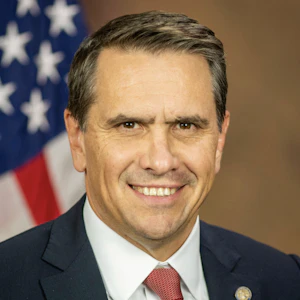
The Honorable Todd Blanche is the 40th Deputy Attorney General of the United States, overseeing the work of the 115,000 dedicated employees who fulfill the Department of Justice’s mission at Main Justice, the FBI, DEA, U.S. Marshals, ATF, and 93 U.S. Attorney’s Offices.
Todd began his career at the Department where he served for over fifteen years in a variety of capacities, including as a contractor, a paralegal in the Criminal Division, and at the United States Attorney’s office for the Southern District of New York where he eventually became an AUSA and later a supervisor.
After leaving the Department, Todd worked as a criminal defense attorney that included representing President Donald Trump in three of the criminal cases brought against him in 2023 and 2024.
Following President Trump’s historic return to the White House, the President appointed Todd to work alongside Attorney General Pam Bondi to make America safe again. At the DOJ, Todd is working tirelessly to implement President Trump’s priorities that include confronting illegal protecting American businesses from fraud.
Todd has been married to his wonderful wife Kristine for nearly thirty years, is a father and grandfather.

Paul Atkins
Paul Atkins
Prior to returning to the SEC, Chairman Atkins was most recently chief executive of Patomak Global Partners, a company he founded in 2009. Chairman Atkins helped lead efforts to develop best practices for the digital asset sector. He served as an independent director and non-executive chairman of the board of BATS Global Markets, Inc. from 2012 to 2015.
Chairman Atkins was appointed by President George W. Bush to serve as a Commissioner of the SEC from 2002 to 2008. During his tenure, he advocated for transparency, consistency, and the use of cost-benefit analysis at the agency. Chairman Atkins also represented the SEC at meetings of the President’s Working Group on Financial Markets and the U.S.-EU Transatlantic Economic Council. From 2009 to 2010, he was appointed a member of the Congressional Oversight Panel for the Troubled Asset Relief Program.
Before serving as an SEC Commissioner, Chairman Atkins was a consultant on securities and investment management industry matters, especially regarding issues of strategy, regulatory compliance, risk management, new product development, and organizational control.
From 1990 to 1994, Chairman Atkins served on the staff of two chairmen of the SEC, Richard C. Breeden and Arthur Levitt, ultimately as chief of staff and counselor, respectively. He received the SEC’s 1992 Law and Policy Award for work regarding corporate governance matters.
Chairman Atkins began his career as a lawyer in New York, focusing on a wide range of corporate transactions for U.S. and foreign clients, including public and private securities offerings and mergers and acquisitions. He was resident for 2½ years in his firm's Paris office and admitted as conseil juridique in France.
A member of the New York and Florida bars, Chairman Atkins received his J.D. from Vanderbilt University School of Law in 1983 and was Senior Student Writing Editor of the Vanderbilt Law Review. He received his A.B., Phi Beta Kappa, from Wofford College in 1980.
Originally from Lillington, North Carolina, Chairman Atkins grew up in Tampa, Florida. He and his wife Sarah have three sons.

Mike Selig
Mike Selig
Chairman Selig brings to the role deep public and private sector experience working with a wide range of stakeholders across agriculture, energy, financial, and digital asset industries, which rely upon and operate in CFTC-regulated markets.
Prior to his leadership at the CFTC, Chairman Selig most recently served as chief counsel of the Securities and Exchange Commission’s Crypto Task Force and senior advisor to SEC Chairman Paul S. Atkins. In this role, Chairman Selig helped to develop a clear regulatory framework for digital asset securities markets, harmonize the SEC and CFTC regulatory regimes, modernize the agency’s rules to reflect new and emerging technologies, and put an end to regulation by enforcement. He also participated in the President’s Working Group on Digital Asset Markets and contributed to its report on “Strengthening American Leadership in Digital Financial Technology.”
Prior to government service, Chairman Selig was a partner at an international law firm, focusing on derivatives and securities regulatory matters. During his years in private practice, he represented a broad range of clients subject to regulation by the CFTC, including commercial end users, futures commission merchants, commodity trading advisors, swap dealers, designated contract markets, derivatives clearing organizations, and digital asset firms. Chairman Selig advised clients on compliance with the Commodity Exchange Act and the CFTC’s rules and regulations thereunder, including in connection with registration applications and obligations, enforcement matters, and complex transactions.
Chairman Selig earned his law degree from The George Washington University Law School and was articles editor of The George Washington Law Review. He received his undergraduate degree from Florida State University.

David Bailey
David Bailey

Eric Trump
Eric Trump
Mr. Trump also serves as Executive Vice President of The Trump Organization, where he oversees the global management and operations of the Trump family’s extensive real estate portfolio. This includes Trump Hotels, Trump Golf, commercial and residential real estate, Trump Estates, and Trump Winery. Known for his hands-on leadership and strong market instincts, he has played a key role in expanding the company’s presence across major U.S. and international markets.
A globally recognized business leader and public figure, Mr. Trump is a prominent advocate for Bitcoin and decentralized finance. He is a co-founder of World Liberty Financial, a decentralized finance (DeFi) platform, and serves on the Board of Advisors of Metaplanet, Japan’s largest corporate holder of Bitcoin.
Beyond his business activities, Mr. Trump has helped raise more than $50 million for St. Jude Children’s Research Hospital in the fight against pediatric cancer, a philanthropic mission he began at age 21.
Mr. Trump earned a degree in Finance and Management from Georgetown University. He currently resides in Florida with his wife, Lara, and their two children. He is also the author of Under Siege, his memoir published in October 2025.

Jack Mallers
Jack Mallers
Cynthia Lummis
Cynthia Lummis
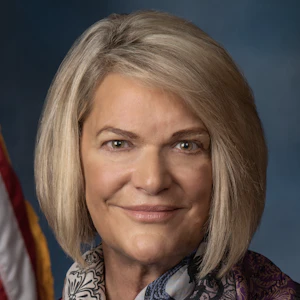
As the first-ever Chair of the Senate Banking Subcommittee on Digital Assets, Senator Lummis is the architect of the legislative framework shaping America's digital asset future. She introduced the landmark Lummis-Gillibrand Responsible Financial Innovation Act, the first comprehensive bipartisan crypto regulatory framework in Senate history. She co-authored the GENIUS Act — the first federal stablecoin law ever enacted — and introduced the BITCOIN Act, which would establish a U.S. strategic Bitcoin reserve of up to one million BTC. She is leading the Clarity Act, which will bring long-overdue regulatory certainty to the digital asset industry. She has also championed digital asset tax reform, including a de minimis exemption for small transactions and equal tax treatment for miners and stakers.
Known as Congress' "Crypto Queen," Senator Lummis represents Wyoming — a state she has helped build into one of the most digital asset-friendly regulatory environments in the nation. Before serving in the Senate, she served 14 years in the Wyoming Legislature, eight years as Wyoming State Treasurer, and eight years in the U.S. House. She is a three-time graduate of the University of Wyoming.
Her work represents a crucial bridge between traditional financial systems and the emerging digital economy, ensuring America leads the world in financial innovation while protecting the individual freedoms that define it.
Adam Back
Adam Back
Amy Oldenburg
Amy Oldenburg
David Marcus
David Marcus

Matt Schultz
Matt Schultz
Fred Thiel
Fred Thiel
Throughout his career, Mr. Thiel has consistently driven rapid growth and created substantial shareholder value. Prior to MARA, Mr. Thiel served as the CEO of two other public companies, Local Corporation (NASDAQ: LOCM) and Lantronix, Inc (NASDAQ: LTRX). He has successfully raised billions in equity and debt through private and public offerings, led companies through IPOs, executed high-value exits to strategic and financial acquirers, and implemented effective M&A and roll-up strategies.
Mr. Thiel attended the Stockholm School of Economics and executive classes at Harvard Business School, and is fluent in English, Spanish, Swedish, and French. Mr. Thiel is the Chairman of the Board for Oden Technology, Inc. and is active in Young Presidents’ Organization where he has led initiatives in both the FinTech and Technology Networks.
A recognized voice in the industry, Fred frequently shares his insights on energy and technology with major media outlets like Bloomberg TV, CNBC, and FOX Business, contributing to vital discussions about the future of these sectors.
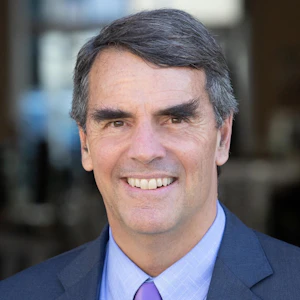
Tim Draper
Tim Draper
He is a supporter and global thought leader for entrepreneurs everywhere, and is a leading spokesperson for Bitcoin and decentralization, having won the Bitcoin US Marshall’s auction in 2014, invested in over 50 crypto companies, and led investments in Coinbase, Ledger, Tezos, and Bancor, among others.

Afroman
Afroman