Why Energy Investment Matters More than AI Hype
Speakers/Moderators

Brad Cuddy
Brad Cuddy
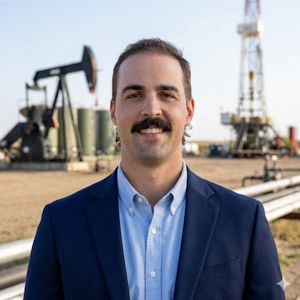
Stephen Barbour
Stephen Barbour

Sean McDonough
Sean McDonough
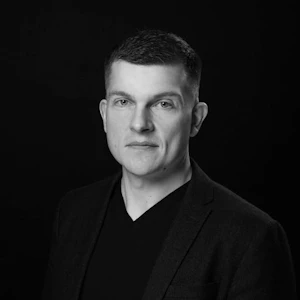
Daniel Jonsson
Daniel Jonsson
A passionate miner since 2017, Daniel has been active in the industry founding and leading companies such as mgmt Energy (formerly GreenBlocks), a bitcoin mining company and Viska Digital Assets, Iceland's first digital asset focused hedge fund.
Daniel has been an active angel investor in recent years.
Daniel is a firm believer in proof of work and doing hard things.
Session
Overview
This panel examined why energy investment is more foundational than AI hype for the future of large-scale compute. Stephen Barbour of Upstream Data, Sean McDonough of New West Data, Daniel Jonsson of MGMT Digital Infrastructure, and host Brad Cuddy discussed how Bitcoin mining, AI, and HPC all depend on reliable, affordable electricity.
The conversation focused on where compute sits in the energy stack, from distributed Bitcoin mining at the edge to vertically integrated oil and gas production and behind-the-meter power generation. The speakers argued that control over energy resources, transmission constraints, stranded energy, and baseload reliability will shape which regions can support future compute demand.
Key themes included energy sovereignty, public policy, grid balancing, Iceland’s changing relationship with Bitcoin mining, Alberta’s stranded natural gas, and the tradeoffs of energy systems built around carbon narratives rather than reliability. The panel closed with agreement that AI and Bitcoin are complementary rather than purely competitive, especially when compute can help monetize energy where it is produced.
Stoked to be here with this panel. To start, I’d like feedback from all of y’all on where you stand in the energy stack when considering energy investment versus AI. Steve, if you want to start, and we’ll work this way.
I guess our specialty as a business is that I’m the owner of Upstream Data. We specialize in distributed computing and distributed power generation. That is more or less a focus on wellhead gas, converting natural gas to power through small modular generators. A lot of what we are best at is probably not so conducive to large data center loads.
Integrated Bitcoin mining loads are the biggest part of what we are experts at and how we apply the technology. More broadly, just as someone interested in energy, I’ve been a little constructively critical of what has been happening over the last few decades in how the power generation stack has been built in the U.S. and Canada.
We’ve seen the decline of reliable baseload power generation in lieu of renewables. I think there has been a focus on the clean aspect of that, with a loss of focus on reliability. I don’t think a lot of people really predicted what was going to happen with this AI baseload demand. In my view, I don’t know if the West is really well set up to capture that demand as well as it would like. I’m sure we’ll talk about that.
I hope we all learn a lot on this panel here.
Sean McDonough, CEO at New West Data. We’re a vertically integrated oil and gas producer and compute operator. What that means is we own oil and gas wells, we own power generation infrastructure, we build power plants powered by the natural gas that we own, and then we monetize the electricity that we produce through compute. That includes Bitcoin mining and, in the future, other forms of compute, including AI and HPC.
In terms of where we sit in the value chain, I think it’s kind of all of it. As I know we’ll speak to here, we’re big believers in being as far upstream the value chain as you can. Those who control the production of raw energy are going to be the winners at the end of the day as compute operators.
Hi, Daniel Jonsson, CEO of MGMT Digital Infrastructure. We recently rebranded from Green Blocks, so more people know us as such. Traditionally, throughout our history, we have been pretty downstream. We operate in Iceland, so we are buyers of energy there. Obviously, Iceland is a small place, so we’re quite involved in the conversation around energy generation and distribution, which has been troublesome. That is odd because we are quite wealthy in terms of natural resources.
More recently, we are building a couple of sites in Finland where we intend to be very active in grid balancing. So we are stepping more into being part of critical infrastructure. We are also working on a site in Alaska. So we are definitely taking steps to get more upstream.
Iceland was one of the first major epicenters of Bitcoin mining. How have you seen that change over the years based on policy, the Bitcoin price, and this new demand for AI compute? Is there a reason why you’re branching out? Has it become inhospitable?
Yeah, great question. Yes, it has been quite inhospitable for the past couple of years, I would say. We’re definitely one of those Nordic welfare societies that has had it too good for too long. No new energy has been produced in Iceland for many years. We have a deficit in that sense, so you could say we are somewhat oversold.
We did get a few years where we were thrown under the bus. We have a fair bit of redemption at the moment. As you mentioned, Iceland was a leader. Iceland was probably the first country in Europe to have data center companies building out purpose-built facilities to host ASICs for the mining industry. This got a lot of opposition. I worked at one of those data centers previously, and we have operated our company since 2019 within that environment as well.
Our narrative throughout all of this was that this is a positive thing. We are building on the back of a young and new industry. But we got a lot of opposition. I think it’s the same across the board. Politicians read headlines, form an opinion based on those, and act accordingly. It has been increasingly challenging.
We have been all but pushed out. Throughout all of this, we continued to say, okay, you are going to want us here. You don’t want us to leave because there is going to be excess energy, there are going to be pockets of stranded energy, and so on. Let’s work together. Then there was a major fault at an aluminum smelter a few months ago, and the phone did start ringing, asking, can you plug in any more of those miners?
Politics are challenging. In areas like Finland, it is more hospitable. They have defined programs around grid balancing and so on. If we shift over to the U.S., it is very different. There is a lot of stranded energy up in Alaska and a willingness to monetize that. So there are very different conversations across these two continents.
I think a nation’s or a state’s energy policy is really going to dictate its level of success over the next couple of decades with this massive boom. Sean, I’d like to talk to you about vertical integration and how that has helped you unlock more potential and build your business better.
Absolutely, Brad. Your point about energy policy is a really important one. I think everybody at this conference recognizes the exponentially increasing demand for electricity that we face as a society. What is really driving that is this exponentially increasing demand for compute, like electricity for compute, Bitcoin mining, HPC, and AI. We view it all as the same total demand.
In vertically integrating our business, we’ve been able to achieve some really rapid exponential growth with that as a business model. Essentially, we acquire resource and have that as the underpinning of our value chain. I think we’re quite good at building power plants and we’re quite good at mining bitcoin. But where we are unique is that we are an oil and gas company. That means you have the cheapest possible and most secure possible pipeline of energy for your compute.
As an added bonus for us, we also have revenue where about half of our revenue base is oil and about half is Bitcoin mining.
I think in the early 2020s there was a lot of talk about energy companies becoming bitcoin miners or bitcoin miners becoming energy companies. I think you’re one of the only examples I can think of that has actually vertically integrated and stacked that.
I like to think of myself as a humble Canadian, but I promised our team I would say it. To our knowledge, we are absolutely the only dedicated, vertically integrated oil and gas company, institutionally sized energy company, that is also an institutional Bitcoin mining company. I think we are ahead of the game. You are going to see it gradually. I think we are essentially driving the path forward here, and we’ll see imitators to our business model. But we are proud to be quite a ways ahead of our potential competitors.
Steve, as somebody who sells picks and shovels to both oil and gas operators and people who run compute, do you see that convergence happening? Were we just too early and thinking too far ahead, or is Sean’s business model a unicorn?
I would say it’s relatively unique. Sean and I talked about this a lot in the early days, and Sean’s company is the only one I can think of that has done it. My path was not to fully vertically integrate. It is more horizontal on the infrastructure side, trying to supply the power equipment and the computing equipment in our niche.
Our niche is not the AI side of the industry, because there is a lot of opportunity just to continue to push Bitcoin mining toward the edge. That is sort of where it belongs. One of the biggest differences with Bitcoin compute, at least in the current state of AI compute, is that Bitcoin computing is very flexible. It can be co-located. It should be upstream where the power is generated.
A few years ago, I was shitposting on Twitter but also writing some blogs on the subject. That was before AI and before ChatGPT really blew it wide open. I certainly didn’t predict what we are seeing today with the AI computing demands. I thought it was probably a ways away yet. It came a lot faster.
But a lot of the ideas I was promoting back then came from seeing these big mega mines being built in Texas and elsewhere. I didn’t feel like that had a lot of legs because it was downstream in the energy stack. Bitcoin, as a technology, is one of the only scalable demands for energy that you can put anywhere. You don’t need a user base. It is just a global network and a low-bandwidth connection to the internet, and you can place that compute.
I never really believed there was much of a future in putting Bitcoin mining downstream. The AI demand really just accelerated what I always felt was inevitable anyway. There is now demand competing for those sources of energy, those big 50-plus megawatt sites, 500 megawatt sites, gigawatt sites. No Bitcoin mining application can compete with that now.
In parallel to that, I have been a little critical of ESG. I’m a well-known ESG hater, and I never really loved the fact that we were putting so much focus on the clean side of power generation when there is more to it than just how much carbon is produced from a given energy source.
That is why I have always taken this stance of going to the extreme. I’m a trained engineer, so I think about the extremes. That is why I have been a staunch defender of coal power generation. Coal is widely distributed. It might be one of the most easily accessible energy sources out there. Most first-world industrial nations can self-replicate their own reliable power generation in the coal and natural gas space.
With solar and wind, a lot of that is higher tech and is coming mainly out of China. Most of the critical components are coming out of China, so you become reliant on that. What happens if there is a supply chain problem, like a war between America and China? I don’t think that will happen, but if there were one, or maybe it is a Cold War, maybe that is what is happening, you don’t want to be too reliant on it.
We are seeing that now with countries that have converted. Basically, the entire West has not built many coal power plants in about three decades. It was the 1970s and 1980s when you saw a huge buildout of coal and nuclear. Strangely, even nuclear, which is arguably the cleanest form of reliable power generation, has not been built en masse in America in the last three decades. It was mainly built in the 1960s and 1970s.
The concern now is that when supply chains break for any reason, whether it is war or something like Covid, the weaknesses are shown. All this conversion of coal power plants across Europe, Canada, America, and the Western nations to natural gas is fine if you are swimming in natural gas. Canada and the U.S. are swimming in it. We are floating on it in Alberta.
But if you are in other nations, and major natural gas hubs are blown up by missiles, and you are relying on that energy source because you did all this in the name of going green, that infrastructure is going to take a long time to build back and fix. I have always felt it was a mistake to replace coal with these things. We should have added to it, not replaced it.
I think we have to give Steve credit for how much his pro-coal stance has been validated. The current conflict in the U.S.-Iran war has really brought to the forefront how important energy security is to society and to Western society. We need more domestic energy production of all types: coal, renewables for sure, oil and gas. It is fundamental.
You have talked about this for years, Steve. It is a human flourishing or human success thing. The more energy abundance, the happier, more stable, and more prosperous a society is. We just need to be bullish on energy of all types.
Even if you look at it from the standpoint that the U.S. clearly wants to be the dominant AI and HPC hub of the world, right now it is. As long as the infrastructure for HPC, the GPUs, the cooling stack, the power distribution stack, remains so capital intensive, the creditors and the people lending and investing in this tech are going to want to keep investing in America.
But as it presumably commoditizes over time, America has not built up its reliable, cheap baseload power. It has done pretty well on the natural gas side, but it has left coal behind. Even nuclear has stagnated, which is still bewildering.
When you compare that to the U.S.’s biggest competitor, China, and what they have done with their economy, they have not really done that. They have gone pretty hard on coal-fired power plants. They are over 51% of the world’s coal power usage or output. But they also have invested in natural gas, wind, solar, and nuclear. They have the full stack. They did not censor any one source based on single-dimension narratives like how much carbon it emits. I think they have been a lot smarter on that.
Arguably, one of the only reasons why the U.S. can have an advantage over China right now is because of the U.S.’s ability to sanction what GPUs China has access to and censor what can be put in China, for example. Unless the U.S. starts investing and switching, and it seems like the tide might finally be shifting, that advantage may not hold.
We have seen some things come out of the EPA on cleaning up some Obama-era regulations that were basically put in place to destroy the coal industry. A lot of the regulations that were pushed through on carbon accounting were designed to hurt natural gas as well. Hopefully that will reverse, because on a unit economics basis, it is going to compete on the joule again. Everything will come down to the energy cost. China has set itself up in a pretty good position by having all these different power generation stacks to work with. They are not as dependent on one supply chain as we have handicapped ourselves to be.
I think the energy sovereignty story is going to depend on where you are. China has immense coal reserves. They have great manufacturing capabilities. They have rare earth minerals. Of course they are going to make PV panels. Of course they are going to make batteries. Yes, they are going to build coal power plants. It makes sense for their own energy sovereignty.
When energy is the input to compute, and right now with AI, compute is upstream of national security, the geopolitical tension we have right now is a magnifying glass on the priorities of every sovereign nation and how they should be thinking about the future.
Danny, do you think Iceland is going in the right direction? Do you think they have realized this with their geothermal? Are they switching to, we have a ton of resources and there is a need for this resource, let’s tap into it?
I mentioned earlier that we are a classic Nordic welfare society that has had it too good for too long. The main reason we have not been building out energy production in Iceland is because anyone can oppose anything. It has just been blocked. People say, okay, we are going to put up a hydropower plant here. Our grid is 100% renewable energy, so we do not even enter the discussion that you guys have to deal with. But still people say, no, we do not want that.
In essence, there are a lot of people out there who seem to just be opposed to energy and do not understand what you guys have been saying. The future we are trying to build runs on energy. It is digital. It runs in data centers. It runs online. We need more energy. There is a direct and increasingly obvious correlation between how good we have it as a society and how much energy we build out.
Fortunately, yes, we are waking up to this a bit. We have a new Minister of Environment and Energy, and he has been championing changes to some laws that basically let a single tree hugger stop a new 100% renewable power plant from getting built. It has been ridiculous, honestly. I am hoping we are stepping out of that era.
But it is unfortunate, because we are the choir. We are preaching to each other here, and you guys probably all agree with us. I do not think we are changing minds in this hall today. But a huge portion of the population just does not seem to get it. They do not seem to get what needs to happen for us to have the future that we all want to live in. That is the challenge. In modern democracies, majority rules.
I think people forget that ESG has three words in it, and social good is one of them. We can worry about the environmental costs, but we also have to worry about what happens when the power goes out because we have not been investing in grid infrastructure, when we have not been producing enough oil and gas, and when our strategic reserves have been depleted. Then we are at the mercy of any other oil and gas producer.
Sean, you guys in the oil field, and Steve too, are no strangers to adversarial thought and lobbying against you. Calgary is pretty much the 51st state. We need you on our team, but the rest of Canada has a much different outlook.
With three minutes left, I don’t know if Steve and I can give you a proper overview of the stakeholder engagement that goes into major energy projects in Canada. One thing that is easy to speak to is Alberta. We are north of Montana. Think of it as Canada’s Texas.
As Steve alluded to, we are really swimming in natural gas. There are major egress issues on a macro level. There is a border on one side, there are 1,000 kilometers to the ocean on one side, and there is a mountain range on the other side. That is why there is so much stranded gas, or very low-priced gas, in Alberta.
Alberta is going to be a key area. I think we are leading the charge here at New West, but it is going to be a key area where you are going to see power generation to compute coming to the source of the energy.
One thing I did want to say is that we have been speaking about how we need more energy, full stop. A lack of energy production or electricity generation is part of it, but we also have an energy transmission problem. Everyone can appreciate that it is far easier to bring the compute to the point of energy production than it is to bring the energy to where you might want to locate your compute.
You are going to see that around the world. Whatever the source of the energy is, be it renewable, nonrenewable, oil and gas, coal power, or anything else, compute is going to come to where that energy is produced. We can build the power there, and we just need to bring the data there.
I would say there might be a trend. I don’t follow the AI computing space as closely as a lot of people. But there is a perception by the general public, and I think it is accurate to say, that after several decades of being fed this brain rot that it is all about carbon emissions and that is the only consideration, it is becoming quite apparent with all the things happening and supply chain breakdowns that having a better blend of energy mix is prudent.
But it is going to be hard to reverse that mentality after preaching for so long that you cannot build and should not build. Even a few years ago, natural gas was considered dirty. Then one day in Davos, they declared it clean. That was basically what happened. Now it is cool again because they saw what was happening with AI, and the AI lobbyists were like, no, it’s clean. There is money to be made. The same goes for all energy sources.
You see it in the news with protesters not loving the fact that a data center comes into their community. I think part of it might be the public’s fear that AI is going to compete for their jobs. That is a whole debate. There is also a fear that these data centers will hog energy and drive up home electricity prices. That is another battle that is going to be tough to win in the public narrative, and AI companies are going to have a lot of problems dealing with that.
It will probably trend toward having to build. They are going to have to become the energy producers. There are going to be companies that are really well set up to capitalize on this opportunity, companies that have been buying up natural gas assets and have this natural gas energy stack. Now they are in a good position to build behind-the-meter, off-grid, massive data centers and get past the public fear that this will compete with home electricity prices.
I think this is going to play out over the next few years. You are going to see a lot more protesting and a lot more public fear around what is happening. Rightly so, because we really should have been building more energy and power stack. We should have never converted and replaced. We should have just kept building more and more. But that is where we are today.
I wish we had time to dig more into energy investment and how that will affect the grid and ratepayers, but unfortunately we are out of time. I want to leave with one question, just one-word answers. Are AI and Bitcoin complementary or competitive?
Complementary in my view.
Oh yeah, complementary.
Definitely complementary.
Thanks, gents. Appreciate it.
Similar
Sessions
Bitcoin & The Rise of Emerging Market Energy Economies

Susie Violet Ward
Susie Violet Ward

Timo Steipe
Timo Steipe
As the founder of MIM, Timo aims to democratize the Bitcoin mining industry and make it accessible to every enthusiast in Europe. His commitment to decentralization and his expertise continue to drive innovation in Bitcoin mining.

Alessandro Cecere
Alessandro Cecere
Daniel Jonsson
Daniel Jonsson
A passionate miner since 2017, Daniel has been active in the industry founding and leading companies such as mgmt Energy (formerly GreenBlocks), a bitcoin mining company and Viska Digital Assets, Iceland's first digital asset focused hedge fund.
Daniel has been an active angel investor in recent years.
Daniel is a firm believer in proof of work and doing hard things.
Bitcoin & The Rise of Emerging Market Energy Economies
Speakers/Moderators
Susie Violet Ward
Susie Violet Ward
Timo Steipe
Timo Steipe
As the founder of MIM, Timo aims to democratize the Bitcoin mining industry and make it accessible to every enthusiast in Europe. His commitment to decentralization and his expertise continue to drive innovation in Bitcoin mining.
Alessandro Cecere
Alessandro Cecere
Daniel Jonsson
Daniel Jonsson
A passionate miner since 2017, Daniel has been active in the industry founding and leading companies such as mgmt Energy (formerly GreenBlocks), a bitcoin mining company and Viska Digital Assets, Iceland's first digital asset focused hedge fund.
Daniel has been an active angel investor in recent years.
Daniel is a firm believer in proof of work and doing hard things.
Why Energy Investment Matters More than AI Hype
Brad Cuddy
Brad Cuddy
Stephen Barbour
Stephen Barbour
Sean McDonough
Sean McDonough
Daniel Jonsson
Daniel Jonsson
A passionate miner since 2017, Daniel has been active in the industry founding and leading companies such as mgmt Energy (formerly GreenBlocks), a bitcoin mining company and Viska Digital Assets, Iceland's first digital asset focused hedge fund.
Daniel has been an active angel investor in recent years.
Daniel is a firm believer in proof of work and doing hard things.
Why Energy Investment Matters More than AI Hype
Speakers/Moderators
Brad Cuddy
Brad Cuddy
Stephen Barbour
Stephen Barbour
Sean McDonough
Sean McDonough
Daniel Jonsson
Daniel Jonsson
A passionate miner since 2017, Daniel has been active in the industry founding and leading companies such as mgmt Energy (formerly GreenBlocks), a bitcoin mining company and Viska Digital Assets, Iceland's first digital asset focused hedge fund.
Daniel has been an active angel investor in recent years.
Daniel is a firm believer in proof of work and doing hard things.
Other
Speakers
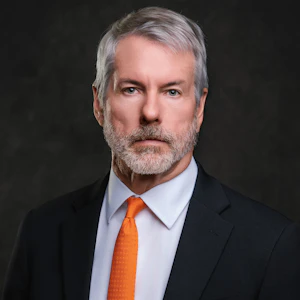
Michael Saylor
Michael Saylor
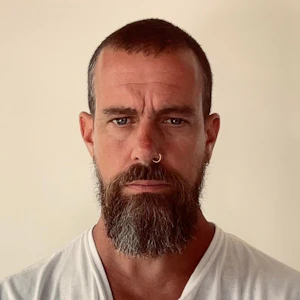
Todd Blanche
Todd Blanche
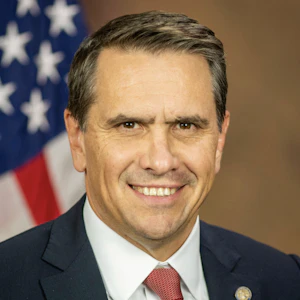
Biography of Deputy Attorney General Todd Blanche
The Honorable Todd Blanche is the 40th Deputy Attorney General of the United States, overseeing the work of the 115,000 dedicated employees who fulfill the Department of Justice’s mission at Main Justice, the FBI, DEA, U.S. Marshals, ATF, and 93 U.S. Attorney’s Offices.
Todd began his career at the Department where he served for over fifteen years in a variety of capacities, including as a contractor, a paralegal in the Criminal Division, and at the United States Attorney’s office for the Southern District of New York where he eventually became an AUSA and later a supervisor.
After leaving the Department, Todd worked as a criminal defense attorney that included representing President Donald Trump in three of the criminal cases brought against him in 2023 and 2024.
Following President Trump’s historic return to the White House, the President appointed Todd to work alongside Attorney General Pam Bondi to make America safe again. At the DOJ, Todd is working tirelessly to implement President Trump’s priorities that include confronting illegal protecting American businesses from fraud.
Todd has been married to his wonderful wife Kristine for nearly thirty years, is a father and grandfather.

Paul Atkins
Paul Atkins
Prior to returning to the SEC, Chairman Atkins was most recently chief executive of Patomak Global Partners, a company he founded in 2009. Chairman Atkins helped lead efforts to develop best practices for the digital asset sector. He served as an independent director and non-executive chairman of the board of BATS Global Markets, Inc. from 2012 to 2015.
Chairman Atkins was appointed by President George W. Bush to serve as a Commissioner of the SEC from 2002 to 2008. During his tenure, he advocated for transparency, consistency, and the use of cost-benefit analysis at the agency. Chairman Atkins also represented the SEC at meetings of the President’s Working Group on Financial Markets and the U.S.-EU Transatlantic Economic Council. From 2009 to 2010, he was appointed a member of the Congressional Oversight Panel for the Troubled Asset Relief Program.
Before serving as an SEC Commissioner, Chairman Atkins was a consultant on securities and investment management industry matters, especially regarding issues of strategy, regulatory compliance, risk management, new product development, and organizational control.
From 1990 to 1994, Chairman Atkins served on the staff of two chairmen of the SEC, Richard C. Breeden and Arthur Levitt, ultimately as chief of staff and counselor, respectively. He received the SEC’s 1992 Law and Policy Award for work regarding corporate governance matters.
Chairman Atkins began his career as a lawyer in New York, focusing on a wide range of corporate transactions for U.S. and foreign clients, including public and private securities offerings and mergers and acquisitions. He was resident for 2½ years in his firm's Paris office and admitted as conseil juridique in France.
A member of the New York and Florida bars, Chairman Atkins received his J.D. from Vanderbilt University School of Law in 1983 and was Senior Student Writing Editor of the Vanderbilt Law Review. He received his A.B., Phi Beta Kappa, from Wofford College in 1980.
Originally from Lillington, North Carolina, Chairman Atkins grew up in Tampa, Florida. He and his wife Sarah have three sons.

Mike Selig
Mike Selig
Chairman Selig brings to the role deep public and private sector experience working with a wide range of stakeholders across agriculture, energy, financial, and digital asset industries, which rely upon and operate in CFTC-regulated markets.
Prior to his leadership at the CFTC, Chairman Selig most recently served as chief counsel of the Securities and Exchange Commission’s Crypto Task Force and senior advisor to SEC Chairman Paul S. Atkins. In this role, Chairman Selig helped to develop a clear regulatory framework for digital asset securities markets, harmonize the SEC and CFTC regulatory regimes, modernize the agency’s rules to reflect new and emerging technologies, and put an end to regulation by enforcement. He also participated in the President’s Working Group on Digital Asset Markets and contributed to its report on “Strengthening American Leadership in Digital Financial Technology.”
Prior to government service, Chairman Selig was a partner at an international law firm, focusing on derivatives and securities regulatory matters. During his years in private practice, he represented a broad range of clients subject to regulation by the CFTC, including commercial end users, futures commission merchants, commodity trading advisors, swap dealers, designated contract markets, derivatives clearing organizations, and digital asset firms. Chairman Selig advised clients on compliance with the Commodity Exchange Act and the CFTC’s rules and regulations thereunder, including in connection with registration applications and obligations, enforcement matters, and complex transactions.
Chairman Selig earned his law degree from The George Washington University Law School and was articles editor of The George Washington Law Review. He received his undergraduate degree from Florida State University.

David Bailey
David Bailey

Eric Trump
Eric Trump
Mr. Trump also serves as Executive Vice President of The Trump Organization, where he oversees the global management and operations of the Trump family’s extensive real estate portfolio. This includes Trump Hotels, Trump Golf, commercial and residential real estate, Trump Estates, and Trump Winery. Known for his hands-on leadership and strong market instincts, he has played a key role in expanding the company’s presence across major U.S. and international markets.
A globally recognized business leader and public figure, Mr. Trump is a prominent advocate for Bitcoin and decentralized finance. He is a co-founder of World Liberty Financial, a decentralized finance (DeFi) platform, and serves on the Board of Advisors of Metaplanet, Japan’s largest corporate holder of Bitcoin.
Beyond his business activities, Mr. Trump has helped raise more than $50 million for St. Jude Children’s Research Hospital in the fight against pediatric cancer, a philanthropic mission he began at age 21.
Mr. Trump earned a degree in Finance and Management from Georgetown University. He currently resides in Florida with his wife, Lara, and their two children. He is also the author of Under Siege, his memoir published in October 2025.

Jack Mallers
Jack Mallers
Cynthia Lummis
Cynthia Lummis
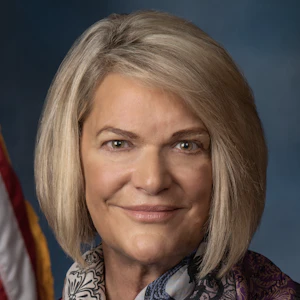
As the first-ever Chair of the Senate Banking Subcommittee on Digital Assets, Senator Lummis is the architect of the legislative framework shaping America's digital asset future. She introduced the landmark Lummis-Gillibrand Responsible Financial Innovation Act, the first comprehensive bipartisan crypto regulatory framework in Senate history. She co-authored the GENIUS Act — the first federal stablecoin law ever enacted — and introduced the BITCOIN Act, which would establish a U.S. strategic Bitcoin reserve of up to one million BTC. She is leading the Clarity Act, which will bring long-overdue regulatory certainty to the digital asset industry. She has also championed digital asset tax reform, including a de minimis exemption for small transactions and equal tax treatment for miners and stakers.
Known as Congress' "Crypto Queen," Senator Lummis represents Wyoming — a state she has helped build into one of the most digital asset-friendly regulatory environments in the nation. Before serving in the Senate, she served 14 years in the Wyoming Legislature, eight years as Wyoming State Treasurer, and eight years in the U.S. House. She is a three-time graduate of the University of Wyoming.
Her work represents a crucial bridge between traditional financial systems and the emerging digital economy, ensuring America leads the world in financial innovation while protecting the individual freedoms that define it.
Adam Back
Adam Back
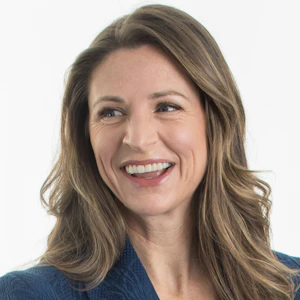
Amy Oldenburg
Amy Oldenburg
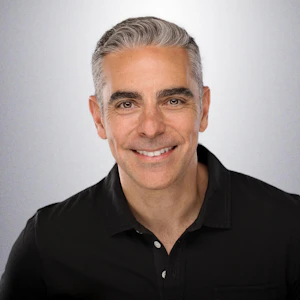
David Marcus
David Marcus

Matt Schultz
Matt Schultz
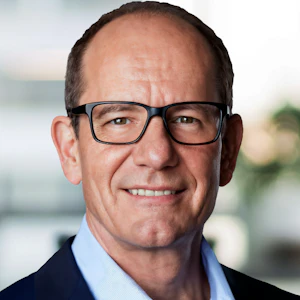
Fred Thiel
Fred Thiel
Throughout his career, Mr. Thiel has consistently driven rapid growth and created substantial shareholder value. Prior to MARA, Mr. Thiel served as the CEO of two other public companies, Local Corporation (NASDAQ: LOCM) and Lantronix, Inc (NASDAQ: LTRX). He has successfully raised billions in equity and debt through private and public offerings, led companies through IPOs, executed high-value exits to strategic and financial acquirers, and implemented effective M&A and roll-up strategies.
Mr. Thiel attended the Stockholm School of Economics and executive classes at Harvard Business School, and is fluent in English, Spanish, Swedish, and French. Mr. Thiel is the Chairman of the Board for Oden Technology, Inc. and is active in Young Presidents’ Organization where he has led initiatives in both the FinTech and Technology Networks.
A recognized voice in the industry, Fred frequently shares his insights on energy and technology with major media outlets like Bloomberg TV, CNBC, and FOX Business, contributing to vital discussions about the future of these sectors.
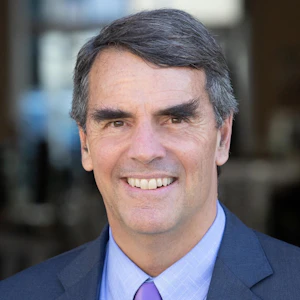
Tim Draper
Tim Draper
He is a supporter and global thought leader for entrepreneurs everywhere, and is a leading spokesperson for Bitcoin and decentralization, having won the Bitcoin US Marshall’s auction in 2014, invested in over 50 crypto companies, and led investments in Coinbase, Ledger, Tezos, and Bancor, among others.

Afroman
Afroman