Why Venture Capital is Broken & How Bitcoin is the Reset
Speakers/Moderators

Lynne Bairstow
Lynne Bairstow
Greg Carson
Greg Carson

Eric Yakes
Eric Yakes

Alex von Frankenberg
Alex von Frankenberg
Alex is a sought-after keynote speaker at international conferences and the author of Bitcoin – The Honest Money, published in German, English, and Spanish, in which he explores Bitcoin as a transparent and incorruptible monetary system. He actively invests in and serves on the boards and advisory councils of Bitcoin- and crypto-focused startups and funds, contributing to the growth of the global Bitcoin ecosystem.
Alex holds an MBA from the University of Texas at Austin and a PhD from the University of Mannheim, Germany, where his research focused on the establishment of de-facto technology standards.
Session
Overview
This panel examined whether the venture capital model is still serving early stage innovation and whether Bitcoin can help reset incentives, fund structures, and investment opportunities. Lynne Bairstow moderated a discussion with Greg Carson of Humla Ventures, Eric Yakes of Epoch Ventures, and Alex von Frankenberg of May Ventures.
The speakers debated whether VC is broken, cyclical, or simply under pressure from changing capital flows, longer exit timelines, and competition from other asset classes. They discussed the power law model, LP appetite, early stage valuation discipline, and the challenge of funding companies that need to outperform Bitcoin itself.
Bitcoin was framed both as an investment theme and as infrastructure that could reshape finance. Topics included Bitcoin-focused fintech, Lightning-enabled cross-border payments, tokenized company shares, Bitcoin-backed fund participation, Bitcoin treasury strategies, real world assets, and the potential role of Bitcoin in AI agent payments.
The conversation highlighted a core tension for Bitcoin venture capital: founders and investors may benefit from Bitcoin’s long-term growth, but they still face traditional startup risks, runway constraints, and the need to build businesses with strong unit economics.
Good afternoon. Thank you for joining us for the last panel of the day, on the last day of the conference. We're ready to bring it home with a strong close.
Our panel today is called Is VC Broken, and If So, Can Bitcoin Be the Fix? Why is this important? First of all, how many of you are really interested in venture capital? I don't know, but venture capital is about innovation. So what we're really talking about is innovation around the Bitcoin protocol that helps create the tools and infrastructure that encourage additional use and adoption. We should all be very interested in the innovation space.
My name is Lynne Bairstow. I'm a partner at Base Layer Advisors, and I'm also co-host of the Build With Bitcoin podcast. We just published our 100th episode. We cover the stories of the founders creating innovation around the Bitcoin protocol and the investors supporting them.
With me today, I'm going to be moderating the panel on VC with the investors who are supporting Bitcoin innovation. I'd like each of you to take a minute and introduce yourself, talk about how you invest around Bitcoin, and what your fund focus is. Alex, please start.
I'm Alex von Frankenberg. I've been a venture capitalist now for 25 years, and I've moved toward focusing on investing in the Bitcoin ecosystem, crypto infrastructure, and AI. I'm extremely bullish on innovation because innovation keeps accelerating and gets larger and larger and more disruptive. As innovation accelerates, it creates huge value, and that's going to make everybody connected to it, especially investors, very successful.
Hello, I'm Greg Carson. I am the managing partner and founder of Humla Ventures. We're a venture capital firm located in New York and Europe. I've been in tech and innovation for almost 30 years, first as an entrepreneur in California, growing up near Silicon Valley, then as an investment banker on Wall Street. Then I moved to Europe, where I was doing finance and venture capital in Northern Europe for a while.
I got involved in Bitcoin around 2017 and joined XBTO, which was the first Bitcoin market maker, and ran all their venture capital interests. We spun our team out of them. At Humla Ventures, we have about $180 million under management. We're invested in 65 companies, and about half of them are crypto and Bitcoin related.
We were early investors and late investors in Deribit, which sold to Coinbase last year, and on the AI side in a company that sold to NVIDIA at the end of last year as well. So we've had a good run and quite a bit of returns to our investors. I think maybe half of our investors have made many multiples, and the other half have gotten all their money back.
We're very interested in the space. We've recently done a couple of big investments in the Bitcoin ecosystem. We think it's a very good time to be investing, and we're very happy to be in the venture capital industry. We don't think it's broken.
I'm curious to learn more about why you think it's a good time, but I'll do my intro first. I'm Eric Yakes. I came from the private equity world, fell down the Bitcoin rabbit hole, and realized this is going to be one of the greatest innovations that occurs in my lifetime. I asked myself, why am I working in boring old private equity? Why am I not in Bitcoin?
I wrote one of the early economics books on Bitcoin, and that got me started in the industry. I spent some time thinking about the businesses, talking with founders, and thinking through financial services within the industry. Back around 2022, it felt a bit premature to do big Bitcoin-focused VC. That was when crypto euphoria was at all-time highs. There were tokens going in all these different directions. It was a very hard narrative to compete against: a new type of security that has liquidity for a startup that doesn't make money. That was a really hard thing to compete against in terms of fundraising.
Around 2023, I said, okay, I think the market is starting to discover reality a little bit better, and my vision of the world might be coming to fruition. That's when I said Bitcoin-focused VC might start having its day in the sun.
The way we view it is more like a fintech fund. We're looking at financial technologies, as well as general startups that are associated with Bitcoin adoption in some sort of way. Our belief is that Bitcoin will continue to go up very rapidly to an incredibly large scale over time. The degree of that scale is still to be determined, but I think even in the worst-case scenario it is very high. We want to own the businesses whose unit economics are tied to that growth. I love Bitcoin. I'm passionate about it.
The name of our panel is VC Is Broken. Can Bitcoin Fix It? I spent 10 years in early stage VC before moving on to focus my full time and attention on Bitcoin. I tend to think it is broken. I think there are some misaligned incentives, which we'll talk about a little bit more. But I'd like to throw it to all of you. Is VC broken?
How do we define broken? What do we mean by that?
It's hard. It's definitely hard. Does it still work? Yeah. Does it still encourage early stage innovation? Are the odds of successful companies the same as they were maybe when VC first started in the 70s and 80s? We'll talk a little bit more. I want to get into incentive alignment. But is it providing the function, especially relative to Bitcoin? Because I think we're all here wanting to know if innovation is being supported around the Bitcoin ecosystem.
When I was first doing a historical analysis of venture returns, I think 2023 was the first negative year globally for VC returns in two decades on a broad-based index weighting. So it's having a tough time relative to the inception of the industry, effectively.
I think a lot of that comes down to perspective. Coming from the private equity world, it's a very different view of capital allocation. The power law model is different from a typical distribution model of investing, trying to target power law outcomes with a distributed portfolio. There's been a lot of statistical analysis that has gone into looking at that type of model.
I think the question isn't just, is it broken? It is: has the distribution of returns changed, and does that demand a different style of investing?
I'm older, so I was around in the late 1990s and 2000s. It feels very similar to the 2000 to 2004 problem we had. I think that's probably outside your data set. What happened is, as you said, 2023 was the first negative year. But 2021 and 2022 were the first massive reduction in LP injection into VC. It was just a cliff.
Doing venture capital from 2021 to 2024 has been like LPs and family offices not putting money into VC, which also happened in 2000 to 2003. There were weird returns in the early 2000s from VC, and I think we're in a similar situation. It mostly stems not from VC being broken, but from family office allocators, funds of funds, and the market not favoring VC. There's no guaranteed Series A or Series B anymore. You don't have that Silicon Valley effect where, okay, I got my seed, and I got a good investor, so I'm guaranteed my A and my B. It has changed the profile of VC quite a bit, and I'd say it's probably temporary.
It is interesting, though, because that raises the question: if further capital being allocated to fund series-stage investments is what's causing the negative returns, then that's probably more of an argument that it is broken, that we need further capital to keep funding it.
Or it's cyclical. It's in this normal 20-year cycle. It's like people are getting old. The patriarch in his family office is like, I don't want a 20-year or 10-year return. I'm going to die in five or ten years.
Alex, you have worked in the earliest stage. What are you seeing in terms of this, and also from the European perspective?
I have two aspects from a European perspective. The bust of the internet bubble hit Europe, especially Germany, where I'm from, really hard. I joined the VC industry in 2000, and almost all the VC funds in Germany went away. There were only a handful left. There were smart, very successful people who said the venture capital model was broken.
Then I raised a fund in 2005, and 2005 was the last year there were negative venture capital returns in Europe. It turned out to be the best entry point you can imagine to start. So from a European perspective, American venture capital is still booming. You still have large rounds, large exits, and some IPOs.
I think the venture capital industry has some challenges. One of the challenges is strong competition from other asset classes: public markets, AI stocks that have boomed a lot, maybe even gold, and maybe to some degree Bitcoin as a competitor to the venture asset class.
What the venture capital industry should do is maybe reinvent itself, thinking about the challenges. It is illiquid for a long time. Maybe there are new approaches using AI to speed up the investment process, to understand and find the best deals. There are challenges, but from a historical point of view, this situation is the best time to set up a fund and invest.
I like this. Let's pull on this thread where maybe it's not completely broken, but it has areas that can improve. Maybe it's cyclical, but let's bring it back to Bitcoin.
Bitcoin is a whole new asset class that can underlie venture capital. How does that factor into the way you think about fund architecture, your portfolio companies, and whether they either generate Bitcoin or have Bitcoin on their balance sheet? Does that change your investment lens? Also for you as fund managers, when you're raising from LPs, can Bitcoin play a role in that?
There are several angles where Bitcoin could provide some degree of innovation for venture funds. For example, we have a portfolio company that tokenizes GmbH shares, limited company shares. That makes startups more liquid, more easily transferable, with less bureaucracy. You could take that a step further, depending on the regulatory environment. You could use crypto infrastructure to provide more liquidity to the fund structure itself, which could shorten the cash cycle and bring new investors to the asset class because they know they are not stuck for 10 or even more years. Use the technology to address the challenges of having a very illiquid, long-term asset class.
Eric, you have a relatively new fund, a couple of years old. How did you factor this in when you were setting up your fund?
We didn't have time to really think about any of that. We were like, how are we going to save money on lawyers? That's how we thought about it.
One of the perverse incentives is that having liquidity within a fund structure, with early stage investments that have a very long time horizon, can encourage you to market narratives more than create value. That was one of the things we wanted to avoid in how we're participating in investments or structuring ourselves.
Greg, voice of experience, how about you?
There are multiple aspects to that question. When we say, are you a VC in Bitcoin, what does that mean? I don't know if it's wise to hold crypto on your balance sheet while it's still massively volatile. As a board member, I'm obsessed with runway. Management team, do you have 12 months of runway? If you don't have 12 months of runway, or really 24 months of runway, you need to focus on runway. You have to raise more money, fire people, or get more revenues. There are only three options if your runway is diminishing very quickly. So if you have a volatile asset as a big part of your balance sheet, I think that's a problem.
The other aspect is whether Bitcoin is an important technology. I think that's been missing a lot, especially in this recent period. If you go back, I was interviewed by Peter McCormack in 2018, and there is a whole phrase where I said: I'm not a big crypto investor. We didn't do lots of ICOs and tokens. We invested really as SAFE and equity investors, with some token warrants once in a while, just in case there was some upside.
We were a Deribit investor. We were Hidden Road Partners investors. We invested recently in OpNET, which is launching smart contracts on Bitcoin. They launched five weeks ago, totally working. There are smart contracts on Bitcoin now, with no layer two.
The point is that I said I believe all financial transactions and assets will reside on Bitcoin in the next 20 years. I think 100%. That's a really weird contrarian narrative to how crypto is. Our fund was called the Transformation of Finance Fund. We were looking at AI, crypto, and financial change to Wall Street. We liked stuff that I would call TradFi, as opposed to DeFi.
Let's talk about another aspect that has been criticized about venture capital today, which is how long it's taking to generate exits in traditional venture capital. Does this create misalignment of incentives between founders and venture capitalists? Why is this happening? How would you see Bitcoin changing the incentive alignment between founders and investors, if so? I'm making the assumption that it does, but if you think otherwise, please take that on.
I think the venture capital incentive structure is a good incentive structure. We're venture capitalists, so we're biased, but I think it's good.
The problem is when founders get a lot of hubris early on and want these really large friends and family rounds. I ask, what's your valuation for friends and family? And they say, $80 million. You're like, okay, I don't know who your friends and family are, but that is a very high valuation for a pre-revenue, pre-product company.
The incentives in venture capital are supposed to work very specifically. The people who come in early get a very attractive valuation because they have a very high risk of losing everything. An entrepreneur does a lot of hard work and has to give up a percentage of his company because he doesn't have his own capital. Then each additional round gives less and less percentage for the money as the valuation goes up.
As far as incentives are structured, I don't know if Bitcoin changes it much, because we still have the same problem: an investment is very high risk. It's very hard to be in venture capital. We're all experienced venture capitalists, and all of us have made investments, I'm guessing, that have become zero. You give them a million dollars, and it's zero a couple of years later. That's the business.
The venture capital model is you invest in 10 companies, and one of those companies has to pay the returns of all of them. So when I give you an investment as an entrepreneur, we need you to have a forecast and confidence that you're going to make 10, 20, or 30 times our money. That's our model. That's the model of venture capital for the future, and it's been the model for the last 20 years. If you can only make a model where you're going to get me 2x, then that's not something I can invest in. That's why there are tons of great entrepreneurial companies that will never attract investment from venture capitalists.
Bitcoin changes time preference. Alex, what would you say about that? As you've moved from traditional VC and the hundreds of early stage companies you've funded to Bitcoin, is your time preference different when you're thinking about investing in a Bitcoin company?
Looking at the Bitcoin cycle from previous cycles, what Bitcoin teaches us is that it goes down really quickly and steeply, like 70% or 80%, and then it recovers over the cycle. What we've seen over the last 17 years is huge appreciation. I think what Bitcoin teaches us as venture capitalists is to really withstand those cycles, to deal with companies that go bust, to stay optimistic for the portfolio, to keep pushing the good companies, and to have a long-term perspective.
It's not really fixing the incentive issue and the challenges, but it teaches us that we can manage those challenges and be long-term successful.
I also want to say that we were talking about Bitcoin companies as if they were one thing, and they're not. They're everything from wallets and onboarding to mining, communications, and now agentic AI. There's a whole range of different types of companies within the Bitcoin ecosystem.
Eric, I want to talk to you a little bit about this ecosystem gap and what you're seeing. Eric's fund, Epoch Ventures, publishes an annual report, two years in a row, that surveys the entire Bitcoin ecosystem. This includes Bitcoin startups and companies, but also use adoption, Bitcoin treasury companies, which generally fall outside of the venture realm. What are you seeing in the ecosystem, and are there any gaps that might present unique opportunities for investment?
In terms of gaps today, with a lot of the financial services businesses we look at, there is a convergence on what we say internally is a neo-banking model that adopts stablecoins, Bitcoin, and a lot of traditional fintech functionality.
There are some very large-scale applications people use in this model today and some smaller scale ones. I think a lot of the fragmentation in that industry comes from different go-to-markets. For example, one of our portfolio companies is leveraging Bitcoin over Lightning payments to conduct cross-border settlement, specifically for the Indian diaspora in the U.S. When you learn more about the market for cross-border payments, you realize that customer acquisition cost is a very brutal game. If you can target a particular demographic, that's a competitive advantage. They might be able to get a pretty strong market share from the 15 million Indians who have migrated to the U.S. and have double the median income.
That's an example of a neobank that can emerge. What are they going to do as they capture that? They're going to sell them more financial services. There are a lot of companies like that converging on this neobank model in the industry. I think what every fintech realizes is that it would be a lot easier if they had a bank charter. That's the gap in our industry that I think needs to be filled most holistically.
I really think AI is a huge bust, but it's also a huge magnet of capital. It sucks up all the attention and lots of capital. It's a huge competitor, not only in public listed AI companies, but also in the venture capital area. So I think an opportunity is to think about Bitcoin connecting to AI, agentic payments, agentic commerce, and agentic transactions, and integrating Bitcoin.
It could very well be that AI, without being taught, understands that Bitcoin really is the best asset to hold long term and also to transact in the short term, maybe hedging the risk of volatility by swapping into stablecoins. I think that's an opportunity for Bitcoin, AI, and the venture capital space.
This is one of the major question marks in the industry right now. We're actually working with a group of Harvard undergrads on a deep research paper on this. We should chat a little bit more about it after.
I've been skeptical of the narrative of Bitcoin, as much as I would love for it to be true. Around 2023, a lot of the narratives that Bitcoin will be the chosen money of AI started to emerge. A lot of it was based on arguments that AI chooses something. But AI doesn't choose something. Infrastructure and friction choose something.
It wasn't really until we saw the profound viral emergence of open source agent models earlier this year that you could say the preferred medium they would transact with is the most frictionless. Bitcoin is much more frictionless than even stablecoins. Stablecoins are going to get material adoption, but there's a very strong argument that a form of money requiring no credential is going to be the form of money used in an agentic world.
You came around to the idea that Bitcoin is the agentic money. Is that what you're saying?
I agree with that. Obviously, I mentioned OpNET earlier. They built the OpNET platform for smart contracts on Bitcoin with agents in mind, and they have an MCP. The development community can do that.
We're so early. People realize agents are super powerful, and it is super early. We don't know where this will be one year from now. I can't possibly imagine. I wake up in the morning and my friend groups in our agent chat groups are all saying, I just saw this new thing, it changed everything. That happens every four days. If you're not using these tools, you're in the group that's not using the printing press. It's that different.
I think Bitcoin will be a very preferred transaction technology for agents. But I also am in this weird stablecoin maximalist mindset, which is that there's no way the U.S. dollar and stablecoin U.S. dollars are going away any time in the next 10 to 20 years. Maybe 20 years, but 10 years, no. It fulfills all the promises of original Bitcoin without it being hard to measure. But Bitcoin will ultimately be that one, in my opinion.
Sadly, we're going to have to start winding this panel down, although there's so much more we could talk about: all the emerging technologies around Bitcoin and what's coming. Greg, looking at VC and Bitcoin five years from now, where do you see the intersection of Bitcoin and VC being?
I think five years from now, Bitcoin as a technology will have established itself as more viable. Right now, the only Bitcoin technology companies last year were in the layer two revival, like UTXO management and all those investments, and none of them worked. The layer twos just didn't work and aren't working. The main reason is that the blocks aren't full, so there's no demand for layer two.
If we can test the technology from a few of these companies doing new technology in Bitcoin, and if we can get the blocks full, then full blocks will spur a need for innovation in Bitcoin. But the real thing is RWAs, and whether real world assets start to move toward this space. Everybody has their theory.
I want to put out what I think is a hallucination in crypto, which is that speed is important. I think this is the biggest hallucination in crypto. The only thing you need speed for is high frequency trading, of which there is almost none in crypto, really, just algorithmic trading, and paying for a hot dog at the stand. That can be solved with a VC card or with one confirmation.
This idea that we need Solana to be fast, Ethereum to be fast, and all these networks to be fast is just a hypothesis. We've been operating with 60-day settlement, 30-day settlement, and three-day settlement for 100 years in finance. You don't need your house to close in 30 seconds. A house can close in a month.
Five years from now, where do you see the intersection of VC and Bitcoin? And will Bitcoin change VC?
I would like to add one thing that I like most about Bitcoin: the community, the people around it. I think one aspect that could be better connected in the VC world is Bitcoiners as LPs. As we know, Bitcoiners don't like to give up their Bitcoin to make an investment in a fund. But I think there are ways to keep the Bitcoin and generate dollars that could flow into venture capital funds, basically through loans secured by Bitcoin.
I think the Bitcoin community could be a great LP base for venture funds and also a great innovation base and network for venture capital funds. I totally agree with the other panelists. I think Bitcoin technology is the foundation of many, many innovations being generated in the next year. So it is about connecting to the Bitcoin communities and integrating them into venture funds.
That's a great point. The amount of funding that goes into Bitcoin VC is much less than the amount that has gone into crypto and traditional tech. Eric, you started a Bitcoin VC fund. This is a newer fund. How does that hurdle rate change over time? You obviously believe in this, but where do you see this five years from now? Will Bitcoin companies outperform Bitcoin?
It's two sides of the same coin. If the economics of your business and the adoption rates of growth are tied to the capital appreciation of Bitcoin over a period, then we're arguing that we're moving with that hurdle rate over time.
Bitcoin is going up a lot more, and whatever is tied to that is good, whether it is your investors, your portfolio companies, et cetera. That's something you can get pretty confident in. The way I see the world over the next five years is that as we see this prolific digitization of finance, people start to transact with cryptographic signatures instead of prior account-based structures on different standards. As that proliferates around the world and becomes a major standard of the future, Bitcoin is going to infect the reserves of all of it.
People are going to realize that the scarcest asset in the world, and the reason it has been the best performing asset in the world in recent history, is because of that scarcity and the fundamental properties it has. As it starts to infect the reserves of everything, we see it today happening as a bridge mechanism with traditional finance. When we look at what Michael Saylor's strategy product has done, that is meeting capital where it is today, on the rails where it is today.
That exact same economic model is something that's going to exist everywhere within digital finance. Stablecoins are going to be paying a similar rate of interest. People aren't there yet today. The capital's not there today. It's where Michael Saylor is doing it. But tomorrow, it's going to be everywhere, and Bitcoin is going to be what's backing it.
You might think you're using a stablecoin that pays a really high rate of interest, but it's really just a Bitcoin reserve. It's kind of like when you have to force-feed your dog with a sweet treat to make it take its medicine. That's what these structures are for people who would be better off just owning Bitcoin over the long term.
Thank you so much for your time and attention. Please give it up for our panelists, who are some of the initial investors in Bitcoin companies, and consider supporting Bitcoin VC.
I just want to do one final thing. Thank you so much to the organizers of the Bitcoin Conference. We really appreciate you having us on stage, and appreciate the great organization of the conference today. Thank you.
Similar
Sessions
A Framework for Understanding Everything
Nolan Bauerle
Nolan Bauerle

Eric Yakes
Eric Yakes
A Framework for Understanding Everything
Speakers/Moderators
Nolan Bauerle
Nolan Bauerle
Eric Yakes
Eric Yakes
The Genesis Book / Bitcoin: The Honest Money
Aaron van Wirdum
Aaron van Wirdum
Alex von Frankenberg
Alex von Frankenberg
Alex is a sought-after keynote speaker at international conferences and the author of Bitcoin – The Honest Money, published in German, English, and Spanish, in which he explores Bitcoin as a transparent and incorruptible monetary system. He actively invests in and serves on the boards and advisory councils of Bitcoin- and crypto-focused startups and funds, contributing to the growth of the global Bitcoin ecosystem.
Alex holds an MBA from the University of Texas at Austin and a PhD from the University of Mannheim, Germany, where his research focused on the establishment of de-facto technology standards.
The Genesis Book / Bitcoin: The Honest Money
Speakers/Moderators
Aaron van Wirdum
Aaron van Wirdum
Alex von Frankenberg
Alex von Frankenberg
Alex is a sought-after keynote speaker at international conferences and the author of Bitcoin – The Honest Money, published in German, English, and Spanish, in which he explores Bitcoin as a transparent and incorruptible monetary system. He actively invests in and serves on the boards and advisory councils of Bitcoin- and crypto-focused startups and funds, contributing to the growth of the global Bitcoin ecosystem.
Alex holds an MBA from the University of Texas at Austin and a PhD from the University of Mannheim, Germany, where his research focused on the establishment of de-facto technology standards.
Why Venture Capital is Broken & How Bitcoin is the Reset
Lynne Bairstow
Lynne Bairstow
Greg Carson
Greg Carson
Eric Yakes
Eric Yakes
Alex von Frankenberg
Alex von Frankenberg
Alex is a sought-after keynote speaker at international conferences and the author of Bitcoin – The Honest Money, published in German, English, and Spanish, in which he explores Bitcoin as a transparent and incorruptible monetary system. He actively invests in and serves on the boards and advisory councils of Bitcoin- and crypto-focused startups and funds, contributing to the growth of the global Bitcoin ecosystem.
Alex holds an MBA from the University of Texas at Austin and a PhD from the University of Mannheim, Germany, where his research focused on the establishment of de-facto technology standards.
Why Venture Capital is Broken & How Bitcoin is the Reset
Speakers/Moderators
Lynne Bairstow
Lynne Bairstow
Greg Carson
Greg Carson
Eric Yakes
Eric Yakes
Alex von Frankenberg
Alex von Frankenberg
Alex is a sought-after keynote speaker at international conferences and the author of Bitcoin – The Honest Money, published in German, English, and Spanish, in which he explores Bitcoin as a transparent and incorruptible monetary system. He actively invests in and serves on the boards and advisory councils of Bitcoin- and crypto-focused startups and funds, contributing to the growth of the global Bitcoin ecosystem.
Alex holds an MBA from the University of Texas at Austin and a PhD from the University of Mannheim, Germany, where his research focused on the establishment of de-facto technology standards.
Other
Speakers

Michael Saylor
Michael Saylor
Todd Blanche
Todd Blanche
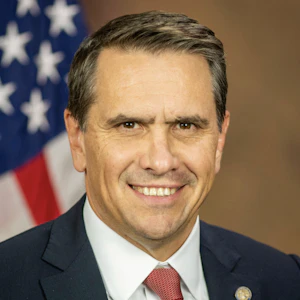
Biography of Deputy Attorney General Todd Blanche
The Honorable Todd Blanche is the 40th Deputy Attorney General of the United States, overseeing the work of the 115,000 dedicated employees who fulfill the Department of Justice’s mission at Main Justice, the FBI, DEA, U.S. Marshals, ATF, and 93 U.S. Attorney’s Offices.
Todd began his career at the Department where he served for over fifteen years in a variety of capacities, including as a contractor, a paralegal in the Criminal Division, and at the United States Attorney’s office for the Southern District of New York where he eventually became an AUSA and later a supervisor.
After leaving the Department, Todd worked as a criminal defense attorney that included representing President Donald Trump in three of the criminal cases brought against him in 2023 and 2024.
Following President Trump’s historic return to the White House, the President appointed Todd to work alongside Attorney General Pam Bondi to make America safe again. At the DOJ, Todd is working tirelessly to implement President Trump’s priorities that include confronting illegal protecting American businesses from fraud.
Todd has been married to his wonderful wife Kristine for nearly thirty years, is a father and grandfather.

Paul Atkins
Paul Atkins
Prior to returning to the SEC, Chairman Atkins was most recently chief executive of Patomak Global Partners, a company he founded in 2009. Chairman Atkins helped lead efforts to develop best practices for the digital asset sector. He served as an independent director and non-executive chairman of the board of BATS Global Markets, Inc. from 2012 to 2015.
Chairman Atkins was appointed by President George W. Bush to serve as a Commissioner of the SEC from 2002 to 2008. During his tenure, he advocated for transparency, consistency, and the use of cost-benefit analysis at the agency. Chairman Atkins also represented the SEC at meetings of the President’s Working Group on Financial Markets and the U.S.-EU Transatlantic Economic Council. From 2009 to 2010, he was appointed a member of the Congressional Oversight Panel for the Troubled Asset Relief Program.
Before serving as an SEC Commissioner, Chairman Atkins was a consultant on securities and investment management industry matters, especially regarding issues of strategy, regulatory compliance, risk management, new product development, and organizational control.
From 1990 to 1994, Chairman Atkins served on the staff of two chairmen of the SEC, Richard C. Breeden and Arthur Levitt, ultimately as chief of staff and counselor, respectively. He received the SEC’s 1992 Law and Policy Award for work regarding corporate governance matters.
Chairman Atkins began his career as a lawyer in New York, focusing on a wide range of corporate transactions for U.S. and foreign clients, including public and private securities offerings and mergers and acquisitions. He was resident for 2½ years in his firm's Paris office and admitted as conseil juridique in France.
A member of the New York and Florida bars, Chairman Atkins received his J.D. from Vanderbilt University School of Law in 1983 and was Senior Student Writing Editor of the Vanderbilt Law Review. He received his A.B., Phi Beta Kappa, from Wofford College in 1980.
Originally from Lillington, North Carolina, Chairman Atkins grew up in Tampa, Florida. He and his wife Sarah have three sons.

Mike Selig
Mike Selig
Chairman Selig brings to the role deep public and private sector experience working with a wide range of stakeholders across agriculture, energy, financial, and digital asset industries, which rely upon and operate in CFTC-regulated markets.
Prior to his leadership at the CFTC, Chairman Selig most recently served as chief counsel of the Securities and Exchange Commission’s Crypto Task Force and senior advisor to SEC Chairman Paul S. Atkins. In this role, Chairman Selig helped to develop a clear regulatory framework for digital asset securities markets, harmonize the SEC and CFTC regulatory regimes, modernize the agency’s rules to reflect new and emerging technologies, and put an end to regulation by enforcement. He also participated in the President’s Working Group on Digital Asset Markets and contributed to its report on “Strengthening American Leadership in Digital Financial Technology.”
Prior to government service, Chairman Selig was a partner at an international law firm, focusing on derivatives and securities regulatory matters. During his years in private practice, he represented a broad range of clients subject to regulation by the CFTC, including commercial end users, futures commission merchants, commodity trading advisors, swap dealers, designated contract markets, derivatives clearing organizations, and digital asset firms. Chairman Selig advised clients on compliance with the Commodity Exchange Act and the CFTC’s rules and regulations thereunder, including in connection with registration applications and obligations, enforcement matters, and complex transactions.
Chairman Selig earned his law degree from The George Washington University Law School and was articles editor of The George Washington Law Review. He received his undergraduate degree from Florida State University.

David Bailey
David Bailey

Eric Trump
Eric Trump
Mr. Trump also serves as Executive Vice President of The Trump Organization, where he oversees the global management and operations of the Trump family’s extensive real estate portfolio. This includes Trump Hotels, Trump Golf, commercial and residential real estate, Trump Estates, and Trump Winery. Known for his hands-on leadership and strong market instincts, he has played a key role in expanding the company’s presence across major U.S. and international markets.
A globally recognized business leader and public figure, Mr. Trump is a prominent advocate for Bitcoin and decentralized finance. He is a co-founder of World Liberty Financial, a decentralized finance (DeFi) platform, and serves on the Board of Advisors of Metaplanet, Japan’s largest corporate holder of Bitcoin.
Beyond his business activities, Mr. Trump has helped raise more than $50 million for St. Jude Children’s Research Hospital in the fight against pediatric cancer, a philanthropic mission he began at age 21.
Mr. Trump earned a degree in Finance and Management from Georgetown University. He currently resides in Florida with his wife, Lara, and their two children. He is also the author of Under Siege, his memoir published in October 2025.

Jack Mallers
Jack Mallers
Cynthia Lummis
Cynthia Lummis
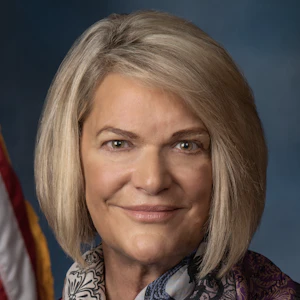
As the first-ever Chair of the Senate Banking Subcommittee on Digital Assets, Senator Lummis is the architect of the legislative framework shaping America's digital asset future. She introduced the landmark Lummis-Gillibrand Responsible Financial Innovation Act, the first comprehensive bipartisan crypto regulatory framework in Senate history. She co-authored the GENIUS Act — the first federal stablecoin law ever enacted — and introduced the BITCOIN Act, which would establish a U.S. strategic Bitcoin reserve of up to one million BTC. She is leading the Clarity Act, which will bring long-overdue regulatory certainty to the digital asset industry. She has also championed digital asset tax reform, including a de minimis exemption for small transactions and equal tax treatment for miners and stakers.
Known as Congress' "Crypto Queen," Senator Lummis represents Wyoming — a state she has helped build into one of the most digital asset-friendly regulatory environments in the nation. Before serving in the Senate, she served 14 years in the Wyoming Legislature, eight years as Wyoming State Treasurer, and eight years in the U.S. House. She is a three-time graduate of the University of Wyoming.
Her work represents a crucial bridge between traditional financial systems and the emerging digital economy, ensuring America leads the world in financial innovation while protecting the individual freedoms that define it.

Adam Back
Adam Back

Amy Oldenburg
Amy Oldenburg
David Marcus
David Marcus

Matt Schultz
Matt Schultz
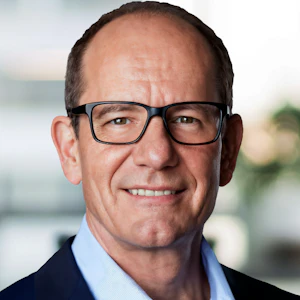
Fred Thiel
Fred Thiel
Throughout his career, Mr. Thiel has consistently driven rapid growth and created substantial shareholder value. Prior to MARA, Mr. Thiel served as the CEO of two other public companies, Local Corporation (NASDAQ: LOCM) and Lantronix, Inc (NASDAQ: LTRX). He has successfully raised billions in equity and debt through private and public offerings, led companies through IPOs, executed high-value exits to strategic and financial acquirers, and implemented effective M&A and roll-up strategies.
Mr. Thiel attended the Stockholm School of Economics and executive classes at Harvard Business School, and is fluent in English, Spanish, Swedish, and French. Mr. Thiel is the Chairman of the Board for Oden Technology, Inc. and is active in Young Presidents’ Organization where he has led initiatives in both the FinTech and Technology Networks.
A recognized voice in the industry, Fred frequently shares his insights on energy and technology with major media outlets like Bloomberg TV, CNBC, and FOX Business, contributing to vital discussions about the future of these sectors.
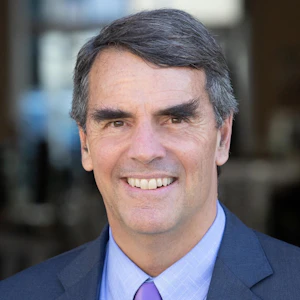
Tim Draper
Tim Draper
He is a supporter and global thought leader for entrepreneurs everywhere, and is a leading spokesperson for Bitcoin and decentralization, having won the Bitcoin US Marshall’s auction in 2014, invested in over 50 crypto companies, and led investments in Coinbase, Ledger, Tezos, and Bancor, among others.

Afroman
Afroman