Why You Need to Start a Podcast
Speakers/Moderators
Dan Webb
Dan Webb
Staci Costopoulos
Staci Costopoulos
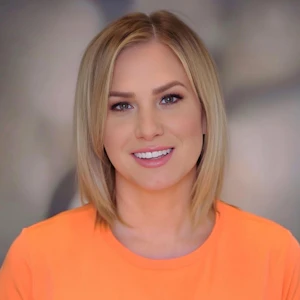
She is the creator and host of The Bitcoin Nova Podcast, where she uses curiosity, warmth, and real life dialogue to turn confusion into understanding. Through podcasting, Staci has experienced how starting her own journey inspired others to use their voice and create ripple effects that reach far beyond a single audience.
Staci also co creates and co hosts Hive Minded, a panel style show that blends Bitcoin education with humor, banter, and real friendship. Hive Minded highlights how conversation, collaboration, and different personalities make Bitcoin more approachable, especially for people who may never click on a traditional Bitcoin show.
Her journey shows that you do not need to be technical or have all the answers to make an impact. By simply starting a podcast and showing up authentically, she has connected with people across the Bitcoin ecosystem and helped others realize they can do the same, inspiring new creators to reach new audiences and carry the signal forward.
Through her podcast, Staci discovered the Illinois Bitcoin Council, whose mission is to help paint Illinois orange through education, advocacy, and collaboration.

Session
Overview
Why You Need to Start a Podcast brought together Dan Webb with Paula Iversen, Robin Seyr, and Staci Costopoulos for a discussion about podcasting as a way to share Bitcoin ideas, build personal connections, and contribute to Bitcoin culture.
The speakers described how their own podcasts began through encouragement from other Bitcoiners. Paula traced her interest in Bitcoin back to her experience with Zimbabwe’s currency collapse and her search for answers about money. Robin emphasized personal branding, AI, and the growing value of human connection, while Staci discussed overcoming imposter syndrome and finding confidence through community support.
Key themes included starting before feeling ready, using podcasts to learn from experts and ordinary Bitcoiners alike, and building real relationships both online and in person. The panel also covered practical audience growth advice, including community engagement, sharing across social platforms, editing for listener value, and staying consistent over time.
My name is Dan Webb. I used to host the High Hash Rate Podcast, and this topic is very personal to me. I'm really glad to be here today. I'm here with Paula Iversen, Staci Costopoulos, and Robin Seyr. These guys have a really great backstory, and Paula has been excited to tell it. I hope you enjoy.
I'm Paula. When we heard that we were doing this talk together, we were really excited because there was a coincidence that happened and it is the reason why we are here today. I'm going to tell you a little bit about that.
I was born and raised in Zimbabwe, and the reason that is important is because many Bitcoiners have used Zimbabwe as an example of hyperinflation and currencies that failed. In 2008, we had a big currency failure, and my mom lost all of her retirement savings and savings overnight when the government took 12 zeros off the currency.
So I said, I've had enough of this. I'm going to the States. Fast forward to 2020, and I realized I didn't have enough in retirement and I had better start learning. Then Covid happened, so like many of you, I had time to look into money and what I needed to do with my finances. I realized that, for one thing, I was way behind, and I went looking for answers. I didn't go looking for Bitcoin, but I found Bitcoin.
When I found Bitcoin, I wanted to tell everybody, but not everybody in my life wanted to hear about it. So I thought about starting a podcast so I could talk to Bitcoiners. During that time, I was watching Robin, and I was a big fan of his. Once in a while, he would do shows showing how his backstage setup worked and encouraging people to start a podcast. That was the catalyst for me to start the podcast.
About a year later, I invited Staci on the show. I saw Staci on X. She had a big following there and a great message, and I encouraged her to start a podcast. She too started a podcast. The incredible thing was that Dan came up with this subject, and also Naomi found the three of us, but none of them had any idea how we were all connected. So that's kind of how it works with Bitcoin. Just like the nodes, we are all connected.
My first guest who was a well-known guest was Jeff Booth. I said to him, I don't know if I should keep going with this. I don't know what I'm doing. He said, you never know who you're going to touch. That is exactly why I kept going. We don't know who we're going to touch. That is what we are here to talk about today, because time is our most valuable resource, and it's really important to spend my time doing things that matter to me. Bitcoin is one of those. Thank you.
So Robin inspired Paula, and Paula inspired Staci. Robin, who inspired you, and what made you decide to start a Bitcoin podcast?
It's really interesting because I think we are coming into a whole new world. On one hand, we have Bitcoin going on. We have AI going on. I think Bitcoin will suck up all the financial energy that is left in all the other assets, the monetary premium of that. Then you have AI, which will bring down the cost of producing everything that is a commodity.
If you think about real estate property, we might not need someone who plans the architecture. We just have a chat window where we say what we want, and it plans the whole thing. We might have robots that build the whole thing. We don't have human labor for that.
In a world where AI is doing most of the work, in a world where there is one scarce resource where all the financial premium is built into that, what is left that people still want? I think human connection is the single biggest scarce resource outside of Bitcoin that people still want to have.
People want to feel connected. They want to come to the conference. We all could just listen to the conference afterwards on YouTube. There is a reason why we come here, because we want to feel the energy. We want to feel the human connection. We want to meet the people that we only saw online until now.
That human connection, you can only really get on a big scale if you have a personal brand. The panel talk is titled Why You Need to Start a Podcast, but I want to take it even broader. I think we should start personal branding online in general.
In Bitcoin, it's always a little bit complicated because we are scared that if we start a personal brand online, someone will just hit us in the street and take our Bitcoin. There is this fear that we get robbed and all of those things, and it's a legitimate fear. You can do it anonymously. But I really strongly encourage people to think about the world that we are going to be entering.
One thing that you are doing already right is the Bitcoin stuff. I assume that, at least. The two other things that are extremely important in the new world are personal branding and AI. If you can leverage those two things, you will have a major advantage over everyone else who doesn't do Bitcoin, who doesn't do AI, and who has no personal branding. If you have those three things working for you, you will have a huge advantage over everyone who is filling out Excel sheets, whose name does not come up when you Google them, and who has no clue what AI is and no clue what Bitcoin is.
The hardest part about starting a podcast is the starting part. It's almost a joke, right? You tell somebody you're starting a podcast, and they say something like, oh, we need another podcast. There are not enough podcasts out there. What were some of the challenges or fears that you had to overcome, Staci, when you started yours? What was your journey like? Were you confident starting off, or were you like, who is going to listen to this?
Definitely not confident starting my podcast, and I didn't think anybody would listen to it. I was so happy when even one person watched a show and told me they really enjoyed it. Even today, I started my podcast about one year ago, and even if one person likes it, I'm happy. I love doing it. It energizes me, and it's worth it just for that.
If one person is happy from seeing it, and it helped them and maybe inspired them to start their own show or find connection with Bitcoiners, that's great. It's not what they can do for you. It's what you could do for Bitcoin. When you start a podcast, you connect with other Bitcoiners. You get to know them. That energy is spreading, it's building, and it's inspiring more people.
But it wasn't easy. It definitely was not easy. Paula was the spark for me. She saw the community building that was going on on X, and she thought that was great. She asked me to join her. I thought that was really great that she asked me, but I didn't think I would do it.
Of course, I asked my husband. I told him about it, and he said, yeah, you should do it. Of course you could talk all day about Bitcoin. Why wouldn't you? So I did it. I spread the word to the community, the Bitcoin army that I'm part of on X, and they were all hyping it. They were so excited that I was doing this that I couldn't back out.
When I shared the episode with Paula, they were so excited. They encouraged me to do it too. Paula was such a starting point for me. She got me out of my comfort zone. It was something that you would normally turn down. You think, I'm not a financial expert. I'm not a technical expert. But I have been in Bitcoin since 2020, and I love Bitcoin. I love learning about it.
I felt like I had imposter syndrome. I felt like, who would listen? Who would join me? But the great thing is, even her asking me, I wasn't a speaker, and she inspired me to speak. Now I've been doing it for a year and have a great following.
Seeing Robin's energy, Paula told me to ask Robin about going on his show because she said, he's so great to talk to. You should go on his show next. One Bitcoin show a day, and you have multiple channels now, and you're doing so much. Sometimes people ask me, how do you do it when you have a family and kids and you work? I still work, but this space energizes you. The people energize you. I feel busier now than I ever felt, but I feel more energized than I ever did before. I've met the coolest people because of starting a podcast in real life.
I want to touch on something that you said about imposter syndrome, because you always think that people are very confident in what they're doing. They are on stage and they look nice and are doing all of those things. When I started my podcast, when I did my first talk at Bitcoin Amsterdam, where I was the first time on stage, or even now doing these talks, you always have a little bit of imposter syndrome. Why are people listening to me? Why are people following me? How the heck do I earn money with that? Why is it happening?
I heard this one line, and we just talked about it before we came on stage. If you don't have this small imposter syndrome, if you don't feel like, why do I deserve this, why me, you are not pushing hard enough. I strongly believe having a little bit of imposter syndrome is a good sign that you're pushing yourself outside of your comfort zone. If you're not doing that, you're just in your comfort zone, and you're not going outside of what you are actually capable of doing.
There are so many benefits to starting a podcast that you don't really figure out until you're doing it. Paula, you talked about wanting to talk to people and learn how to improve your personal finance and how to save better. You were able to talk to Jeff Booth, and he encouraged you and told you that you never know who you might be able to touch. Can you talk a little bit about some of these personal benefits and how valuable it is to be able to speak to subject matter experts from the technical, economics, and cultural levels, and ask them questions that you personally have and that you know many others in your sphere have? What value can you put on that opportunity?
That's a huge benefit. One thing that it's helped me do is it has forced me to read everybody's book that I interview. That's been really good because I used to read a lot, but now I would rather watch a podcast or watch YouTube. But I actually still like reading.
By speaking to some of these experts, I've really learned how to do my taxes better, how to do self custody better, and so many things in Bitcoin. I talk to regular people as well as the experts, just because you never know which person's journey is going to inspire you.
I found that a lot of people have told me that they just like hearing from regular people sometimes, and that has inspired me too. As I continue on this journey, it's sending me in a different direction. That's one thing I would say. You can always just begin. You never know where you're going to end up, but if it's a strong calling in you, then it's good to take that first step.
Life is short, and I don't want to live with regrets. Even if I don't continue this, or I find a different path, I knew I needed to do this. There was something strong in me telling me to learn from everybody out there, and I'm going to continue on that path.
Speaking of books, Robin, you've got a book coming out shortly. Can you talk about that? Can you also talk about the opportunities that starting a podcast has given you, things that you maybe couldn't have imagined before you started? Have windows of opportunity and doors opened for you? How has that journey been?
Before, I was in a normal job. I was in a security company as an account manager. I loved it. The people were great. I liked security, not as much as Bitcoin or AI or chess, but I kind of liked it.
When I started my podcast, I had just moved, and I was thinking about going all in on this podcast thing. I didn't really earn money with it back then, but I was like, if I put all my energy into that, I might just live from that, because I might just do those things.
I heard one quote from Jim Carrey. It was a random late night where I watched a video, and it stuck with me so hard. He told the story of how his father was an accountant, how his father was someone who took the conservative choice even though he wanted to be a comedian and he had talent for that. Then Jim Carrey's father was fired from his job. He was laid off because of some reason he was not in control of.
So he learned very early on that you could fail at something that you don't want, so you might as well take the chance in doing what you love, doing what you really like to do. As soon as I heard that, for me, it was clear I wanted to try that out.
I had an advantage because I was young. If you're young, you can really do that. If you don't have kids, you don't have a wife, you don't have responsibilities outside of yourself, you can just jump and do something. If you fall on your nose, you are where everyone is at 24 or 25 years old. I encourage everyone to try doing what they really like and what they really love, because it might just work out.
Do you have any thoughts on that?
Yes, I do. Speaking of quotes that inspire you, it's kind of like that one thing that just clicks for you. One thing that my husband said when Paula asked me was, when you're passionate about something, you'll find the words.
When I was nervous about what I would say on the show as a hairdresser and as a mom, and not somebody in the finance space, he knew that I would be able to talk about it and share my thoughts. He encouraged me to do that. It's good to be around supportive people. Find community. Have people in your life who encourage you to try new things and get out of your comfort zone.
Also, just being a regular person, I consider regular people a bridge. I love watching all the regular Bitcoin podcasts and learning all the technical stuff and everything, but I can relay that to regular people. Whatever you can bring to the space, whoever you can talk to, you never know who you're going to touch, like Paula said. That stuck with me too.
Robin's quote is a great one too. You could fail at something you don't love, so follow your passion. Your passion energizes you. Starting a podcast for me has strengthened community, real-life community. I thought I was alone in Chicago as far as Bitcoiners, and now we found two groups of people. I'm part of the Illinois Bitcoin Council and also the Chicago Bitcoin Collective now. We have these amazing communities being built up.
It all starts with people finding out that there is a Chicago podcaster. Then I started going to meetups. This stuff is so important. It's the connection that people want. We're here because we get to see people in real life. We get to actually meet and see that you're real. We're growing the network in real life.
There are a lot of reasons not to start a podcast. I felt I was too old, didn't have enough technical skills, and also that nobody would want to hear, which some of those might be true, but I did it anyway. I thought I would get criticism, and the Bitcoin community has been amazing. Yes, there is criticism once in a while, and constructive criticism is good. But the Bitcoin community has been so supportive, and we really appreciate all your support.
You guys are more unique than you might think you are. You have the individual story that people go through. The life experience is so amazing. I've had about 600 different people on my podcast, and a bunch of them thought, it's not that interesting what I have to say, especially the early ones who had never been on a podcast.
But Michael Saylor is amazing, and all those great people like Jeff Booth. Sometimes it's hard to relate to people who have millions or billions of dollars and live a life that we can't even imagine. Having someone who is just a carpenter, teacher, or someone else who has a normal, regular life and you can relate to that on the internet, that is an amazing thing.
Globalization brought us so close together that we can connect a person in America with someone in China or someone in Europe, and you can form an audience and a community with that. It's a unique thing. Your life sounds more normal to yourself than it sounds to other people. You are more unique to other people than you are to yourself, because you think your life is the average or the standard, and most people think that. So share your story.
Once you start a podcast, what tips do any of you have for growing your audience? How do you get people to listen to your podcast once you start one?
I think the community, for me, started first. I didn't just start a podcast not knowing anybody. I was connecting with Bitcoiners online first, engaging with their accounts, appreciating their thoughts, and letting them know. It starts with engagement first and actually sharing your time.
After that, for me, it was building a little bit of a friendship base online. Then when you share something, that's how people would come and support. I really love Club Orange for being able to send to your base. I love the geo-zapping feature. That's a really great way to get onboarded and join these group chats or join like-minded people. You can also use location. If you had somebody from a certain country on your show, you could say, hey, I had this person from this country on my show and I want you guys to check it out. They get some sats in their wallet and a link to your episode. It's a really great way to market to who you want your podcast to go to.
I just share it on my social. I share it on Nostr, I share it on X, and just try to do what I can to get it out there. I think consistency, like you both have shown, is important over time. As long as it makes you happy, and you're not doing it for anybody else, you can do those things if you enjoy it and you can do it long term.
I don't disagree, but I think a lot about the audience. Especially if you deliver content, I look at every episode and every piece of content as a small product. When we think about making a small device for our customers, we always think about the customer. In content, we have this weird thing where we don't think about providing value for them directly.
Again, I don't disagree with what you're saying, but I always think about whether it is providing value for the person who is listening. What I started recently, in the last couple of months or one year maybe, is I listen to the conversation and I purposely cut things out that I think are very boring to listen to. Especially in the early part, where you are saying, hey, how are you doing, and all of this, the first five minutes I usually always cut out because it's just greeting. I don't think that's providing value for people.
I've seen the attention spans of people. You really have to think about who is listening on the other side and how you can provide the most value for them so they stick around to learn something, and they go away from this piece of content with something more than they had before.
There are three different kinds of things that you can give a person online, or three kinds of personalities that get to be famous. The first one is a very knowledgeable person, someone who is very smart, where you think, I really learn something from that. The other person is someone who is very funny and entertaining. If you combine those two things, it's amazing. The third thing is attractiveness. Those three things are values that you can provide. I don't think I'm funny. I don't think I'm very attractive. So I want to provide as much value as possible and give people something they can learn and take away. That's why I'm reading a lot. That's how I think about every piece of content I put out there.
Consistency is very underrated, and it seems very hard for people. If you're just consistent, you are already better than 99% of people. I know podcast stats: if you produce three podcasts, out of an amount of people who start one podcast, by three episodes you have already lost 97% of people. If you go to episode 20, there's only 1% left. Just producing something consistently gives you an unfair advantage. Stay consistent, but also really think about who you want to serve with that piece of content and what kind of knowledge or value you want to put in there.
Thank you very much. I hope everybody here in this audience today eventually starts your own podcast, if you want to.
Reach out to us. We would love to have you on.
Thank you.
Similar
Sessions
Why You Need to Start a Podcast
Dan Webb
Dan Webb
Staci Costopoulos
Staci Costopoulos
She is the creator and host of The Bitcoin Nova Podcast, where she uses curiosity, warmth, and real life dialogue to turn confusion into understanding. Through podcasting, Staci has experienced how starting her own journey inspired others to use their voice and create ripple effects that reach far beyond a single audience.
Staci also co creates and co hosts Hive Minded, a panel style show that blends Bitcoin education with humor, banter, and real friendship. Hive Minded highlights how conversation, collaboration, and different personalities make Bitcoin more approachable, especially for people who may never click on a traditional Bitcoin show.
Her journey shows that you do not need to be technical or have all the answers to make an impact. By simply starting a podcast and showing up authentically, she has connected with people across the Bitcoin ecosystem and helped others realize they can do the same, inspiring new creators to reach new audiences and carry the signal forward.
Through her podcast, Staci discovered the Illinois Bitcoin Council, whose mission is to help paint Illinois orange through education, advocacy, and collaboration.
Why You Need to Start a Podcast
Speakers/Moderators
Dan Webb
Dan Webb
Staci Costopoulos
Staci Costopoulos
She is the creator and host of The Bitcoin Nova Podcast, where she uses curiosity, warmth, and real life dialogue to turn confusion into understanding. Through podcasting, Staci has experienced how starting her own journey inspired others to use their voice and create ripple effects that reach far beyond a single audience.
Staci also co creates and co hosts Hive Minded, a panel style show that blends Bitcoin education with humor, banter, and real friendship. Hive Minded highlights how conversation, collaboration, and different personalities make Bitcoin more approachable, especially for people who may never click on a traditional Bitcoin show.
Her journey shows that you do not need to be technical or have all the answers to make an impact. By simply starting a podcast and showing up authentically, she has connected with people across the Bitcoin ecosystem and helped others realize they can do the same, inspiring new creators to reach new audiences and carry the signal forward.
Through her podcast, Staci discovered the Illinois Bitcoin Council, whose mission is to help paint Illinois orange through education, advocacy, and collaboration.
Other
Speakers
Michael Saylor
Michael Saylor
Todd Blanche
Todd Blanche
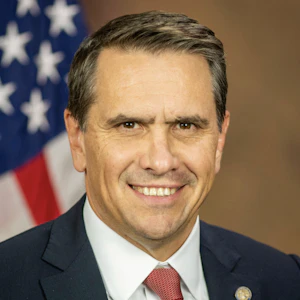
Biography of Deputy Attorney General Todd Blanche
The Honorable Todd Blanche is the 40th Deputy Attorney General of the United States, overseeing the work of the 115,000 dedicated employees who fulfill the Department of Justice’s mission at Main Justice, the FBI, DEA, U.S. Marshals, ATF, and 93 U.S. Attorney’s Offices.
Todd began his career at the Department where he served for over fifteen years in a variety of capacities, including as a contractor, a paralegal in the Criminal Division, and at the United States Attorney’s office for the Southern District of New York where he eventually became an AUSA and later a supervisor.
After leaving the Department, Todd worked as a criminal defense attorney that included representing President Donald Trump in three of the criminal cases brought against him in 2023 and 2024.
Following President Trump’s historic return to the White House, the President appointed Todd to work alongside Attorney General Pam Bondi to make America safe again. At the DOJ, Todd is working tirelessly to implement President Trump’s priorities that include confronting illegal protecting American businesses from fraud.
Todd has been married to his wonderful wife Kristine for nearly thirty years, is a father and grandfather.
Paul Atkins
Paul Atkins
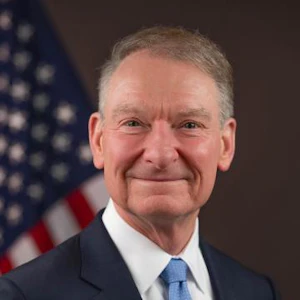
Prior to returning to the SEC, Chairman Atkins was most recently chief executive of Patomak Global Partners, a company he founded in 2009. Chairman Atkins helped lead efforts to develop best practices for the digital asset sector. He served as an independent director and non-executive chairman of the board of BATS Global Markets, Inc. from 2012 to 2015.
Chairman Atkins was appointed by President George W. Bush to serve as a Commissioner of the SEC from 2002 to 2008. During his tenure, he advocated for transparency, consistency, and the use of cost-benefit analysis at the agency. Chairman Atkins also represented the SEC at meetings of the President’s Working Group on Financial Markets and the U.S.-EU Transatlantic Economic Council. From 2009 to 2010, he was appointed a member of the Congressional Oversight Panel for the Troubled Asset Relief Program.
Before serving as an SEC Commissioner, Chairman Atkins was a consultant on securities and investment management industry matters, especially regarding issues of strategy, regulatory compliance, risk management, new product development, and organizational control.
From 1990 to 1994, Chairman Atkins served on the staff of two chairmen of the SEC, Richard C. Breeden and Arthur Levitt, ultimately as chief of staff and counselor, respectively. He received the SEC’s 1992 Law and Policy Award for work regarding corporate governance matters.
Chairman Atkins began his career as a lawyer in New York, focusing on a wide range of corporate transactions for U.S. and foreign clients, including public and private securities offerings and mergers and acquisitions. He was resident for 2½ years in his firm's Paris office and admitted as conseil juridique in France.
A member of the New York and Florida bars, Chairman Atkins received his J.D. from Vanderbilt University School of Law in 1983 and was Senior Student Writing Editor of the Vanderbilt Law Review. He received his A.B., Phi Beta Kappa, from Wofford College in 1980.
Originally from Lillington, North Carolina, Chairman Atkins grew up in Tampa, Florida. He and his wife Sarah have three sons.

Mike Selig
Mike Selig
Chairman Selig brings to the role deep public and private sector experience working with a wide range of stakeholders across agriculture, energy, financial, and digital asset industries, which rely upon and operate in CFTC-regulated markets.
Prior to his leadership at the CFTC, Chairman Selig most recently served as chief counsel of the Securities and Exchange Commission’s Crypto Task Force and senior advisor to SEC Chairman Paul S. Atkins. In this role, Chairman Selig helped to develop a clear regulatory framework for digital asset securities markets, harmonize the SEC and CFTC regulatory regimes, modernize the agency’s rules to reflect new and emerging technologies, and put an end to regulation by enforcement. He also participated in the President’s Working Group on Digital Asset Markets and contributed to its report on “Strengthening American Leadership in Digital Financial Technology.”
Prior to government service, Chairman Selig was a partner at an international law firm, focusing on derivatives and securities regulatory matters. During his years in private practice, he represented a broad range of clients subject to regulation by the CFTC, including commercial end users, futures commission merchants, commodity trading advisors, swap dealers, designated contract markets, derivatives clearing organizations, and digital asset firms. Chairman Selig advised clients on compliance with the Commodity Exchange Act and the CFTC’s rules and regulations thereunder, including in connection with registration applications and obligations, enforcement matters, and complex transactions.
Chairman Selig earned his law degree from The George Washington University Law School and was articles editor of The George Washington Law Review. He received his undergraduate degree from Florida State University.
David Bailey
David Bailey

Eric Trump
Eric Trump
Mr. Trump also serves as Executive Vice President of The Trump Organization, where he oversees the global management and operations of the Trump family’s extensive real estate portfolio. This includes Trump Hotels, Trump Golf, commercial and residential real estate, Trump Estates, and Trump Winery. Known for his hands-on leadership and strong market instincts, he has played a key role in expanding the company’s presence across major U.S. and international markets.
A globally recognized business leader and public figure, Mr. Trump is a prominent advocate for Bitcoin and decentralized finance. He is a co-founder of World Liberty Financial, a decentralized finance (DeFi) platform, and serves on the Board of Advisors of Metaplanet, Japan’s largest corporate holder of Bitcoin.
Beyond his business activities, Mr. Trump has helped raise more than $50 million for St. Jude Children’s Research Hospital in the fight against pediatric cancer, a philanthropic mission he began at age 21.
Mr. Trump earned a degree in Finance and Management from Georgetown University. He currently resides in Florida with his wife, Lara, and their two children. He is also the author of Under Siege, his memoir published in October 2025.
Jack Mallers
Jack Mallers
Cynthia Lummis
Cynthia Lummis
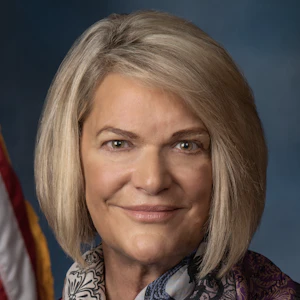
As the first-ever Chair of the Senate Banking Subcommittee on Digital Assets, Senator Lummis is the architect of the legislative framework shaping America's digital asset future. She introduced the landmark Lummis-Gillibrand Responsible Financial Innovation Act, the first comprehensive bipartisan crypto regulatory framework in Senate history. She co-authored the GENIUS Act — the first federal stablecoin law ever enacted — and introduced the BITCOIN Act, which would establish a U.S. strategic Bitcoin reserve of up to one million BTC. She is leading the Clarity Act, which will bring long-overdue regulatory certainty to the digital asset industry. She has also championed digital asset tax reform, including a de minimis exemption for small transactions and equal tax treatment for miners and stakers.
Known as Congress' "Crypto Queen," Senator Lummis represents Wyoming — a state she has helped build into one of the most digital asset-friendly regulatory environments in the nation. Before serving in the Senate, she served 14 years in the Wyoming Legislature, eight years as Wyoming State Treasurer, and eight years in the U.S. House. She is a three-time graduate of the University of Wyoming.
Her work represents a crucial bridge between traditional financial systems and the emerging digital economy, ensuring America leads the world in financial innovation while protecting the individual freedoms that define it.
Adam Back
Adam Back
Amy Oldenburg
Amy Oldenburg
David Marcus
David Marcus

Matt Schultz
Matt Schultz
Fred Thiel
Fred Thiel
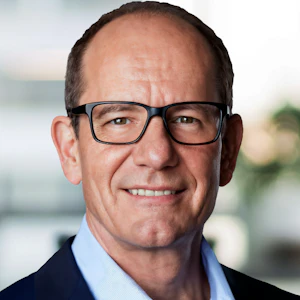
Throughout his career, Mr. Thiel has consistently driven rapid growth and created substantial shareholder value. Prior to MARA, Mr. Thiel served as the CEO of two other public companies, Local Corporation (NASDAQ: LOCM) and Lantronix, Inc (NASDAQ: LTRX). He has successfully raised billions in equity and debt through private and public offerings, led companies through IPOs, executed high-value exits to strategic and financial acquirers, and implemented effective M&A and roll-up strategies.
Mr. Thiel attended the Stockholm School of Economics and executive classes at Harvard Business School, and is fluent in English, Spanish, Swedish, and French. Mr. Thiel is the Chairman of the Board for Oden Technology, Inc. and is active in Young Presidents’ Organization where he has led initiatives in both the FinTech and Technology Networks.
A recognized voice in the industry, Fred frequently shares his insights on energy and technology with major media outlets like Bloomberg TV, CNBC, and FOX Business, contributing to vital discussions about the future of these sectors.
Tim Draper
Tim Draper
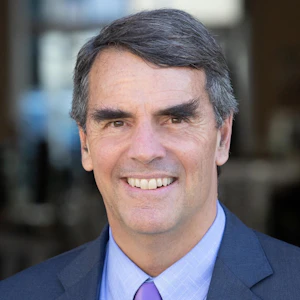
He is a supporter and global thought leader for entrepreneurs everywhere, and is a leading spokesperson for Bitcoin and decentralization, having won the Bitcoin US Marshall’s auction in 2014, invested in over 50 crypto companies, and led investments in Coinbase, Ledger, Tezos, and Bancor, among others.
Afroman
Afroman