Write Code or Suit Up: Should Bitcoiners Run for Office or Focus on Building?
Speakers/Moderators

Troy Cross
Troy Cross


Session
Overview
Moderated by Troy Cross, this discussion with Peter McCormack, American HODL, and Frank Corva examined whether Bitcoiners should focus on building tools and culture or participate more directly in politics. The panel challenged the framing as a false choice, arguing that political engagement can include advocacy, coalition-building, community work, journalism, and cultural influence, not only running for office.
A major theme was the tension between Bitcoin’s freedom-oriented ethos and its growing institutional and political acceptance. The speakers discussed open source developer prosecutions, privacy, self custody, policy incentives, and the difficulty of working within state institutions while trying to preserve Bitcoin’s cypherpunk roots.
Peter McCormack reflected on local community work in Bedford and the limits of localism when national policy can override local progress. American HODL argued that political power is dangerous and fragile compared with durable ideas, while Frank Corva emphasized the need for Bitcoiners to stay engaged on policy because future threats are difficult to predict.
The conversation ended on the importance of protecting Bitcoin’s role as freedom technology. The panel warned that if Bitcoin becomes only an institutional asset or a number-go-up trade, it risks losing the self custody, sovereignty, and exit values that make it politically significant.
Welcome, everybody. I'm honored to be here with these gentlemen, legends that they are, and I'm grateful to the conference for inviting us. But I have to take issue with this prompt. It seems like it has a number of logical fallacies. You don't have to suit up to run for office. You don't have to choose between running for office and building. You don't have to do either of them. And there are more ways than running for office to be involved in politics.
But I do think we're in a moment right now in Bitcoin's history. Bitcoin is an asset, a network, and a protocol, but it's also a social movement. And that social movement is morphing in ways that I want to try to understand today on this panel. Everybody here is a myth maker, a storyteller, a culture maker. I'm going to use the word influencer, even though that has a derogatory sense. But I mean it seriously. This is a cultural movement, and these are some of the cultural creators of that culture.
So I think the question before us today, the deep question we'll get to, is: what does it mean to be a Bitcoiner right now, when institutions have taken the lead and when we've won a lot of our political battles? Not all of them, but we've done so much winning that I don't know if we're sick of winning. We're still playing with our Bitcoin and our crypto. We're supposed to be sick of winning at this point. Anyway, I want to start with Frank. Frank, why right now should Bitcoiners care about politics and be involved in it?
I think you were just alluding to a phrase from Trump, who spoke here at this conference two years ago. There were a lot of promises made, and there was actually someone from the DOJ, or the head of the DOJ, on this stage earlier today talking about code being free speech and not going after developers. But there are developers who are still in jail.
I spent time in the courtroom with the Samourai developers last year. I spent time at the Roman Storm and Tornado Cash trial this year, covering that in the Southern District of New York. While we have won on some levels, so long as we have open source developers still in prison, we still have to be at the table to make sure that cannot be the case, and we have to work to get them out.
We need people who really care about this. Massive shout out to the Bitcoin Policy Institute team, yourself included, for continuing to remain at the table despite how frustrating it's been to see certain developments. At the same time, credit where it's due: things are better in a lot of ways for Bitcoin in the United States under Trump, but there's still a tremendous amount of work to be done. If we're not at the table, that work is not going to get done.
What else needs to be done besides protecting code?
I think in this space things evolve, and new issues come up. We didn't know that we needed to protect open source developers. We don't know what the next issue is going to be. But if you're not there to actually have that discussion and protect property rights, the same way we saw predecessors protect the open internet in the 1990s and protect privacy and cryptography from being categorized like ammunition, then those discussions are not going to happen.
We don't necessarily know what's coming next, but if we're not there to have that discussion and fight for what we think is necessary, and I think right now that is the fight for privacy and rights, then it's just not going to get had. We're going to cede these things to the powers that be.
Peter, I think we've all watched your journey. We don't know what it's like from the inside. You went from being the voice of Bitcoin for many people to becoming a politician, for lack of a better word. You're not holding elective office, but what you're doing is political: building an actual community and throwing your energy into the welfare of your country. That seems like a good thing to me, and seems as political as it can get. I don't know if you're suited up or not, but can you tell us about this journey? What's it been like for you, and where are you at now?
Making the show for eight years, you live in a bubble. You get on a plane, you come out to the U.S., you stay in a couple of cities, you make some interviews, hang out with my boy Danny and some of my friends, and then you go home and get to work preparing the next trip. It is living in a bubble and not really experiencing real life.
The minute I stopped making the show and went back to the UK and focused on real life, it became very obvious how pernicious the state is and how destructive it was to the freedom, liberty, and prosperity of human beings.
I've really just been A/B testing for the last two years how local community support works, how politics works, and wondering if there is something I can do to make a difference. I started locally to begin with. That is a waste of time because at a local level you are downstream from central government. Whatever you do, they can just turn a knob and destroy it. I tried opening businesses, and they increased the taxes or increased the bureaucracy. Those jobs I created, I can no longer guarantee.
Then I realized localism is good for certain people, but really, if you want to stop the decline of the UK, you have to find a way to attack the root of the cancer, essentially, which is central government. That's particularly challenging, but that's where I am at the moment. I'm not going to run for office, but I certainly will happily influence decision making.
Do you think Peter should run for office?
Absolutely. I said this to Peter on stage, and I think Troy echoed it here: what Peter has built in Bedford is a political machine. If you go after the town football club, if you're acting as a private Batman cleaning up the streets, if you have one of the biggest podcasts in the UK talking about political issues, it's hard to call that anything other than a political machine.
But I understand, because I'm friends with Peter, his reluctance to want to get into politics. In some sense, it's like this infinite trolley problem where you're being asked to pull the lever and millions die, but if you don't pull the lever, millions die, and if you won't pull the lever, somebody will shoot you in the head and replace you with somebody who will pull the lever. There's an infinite line of people waiting to join you at the lever.
I think why we coalesce around Bitcoin is because men are fallible. We're fragile. If you want to be a politician, you have to basically sign your own death warrant, kiss your wife and kids goodbye, and say, I'm willing to take a bullet to the head, neck, or chest for this wise political cause or ideology. That's a very tough thing to do.
Even if you are the type of man with great internal fortitude, like a John F. Kennedy type, I still think you end up accomplishing very little because, as a man, you are easy to take off the board. Whereas an idea like Bitcoin is essentially bulletproof. That is why we sort of coalesce around Bitcoin.
I like something here. You said, what does it mean to be a Bitcoiner? I think it means to be free, to be sovereign, to have choice and optionality. If you're becoming a politician because you believe you can create a better country, you're trying to free as many people as possible. But you have to do the math and think: can we win this? Can you make a change?
I think the cancer of socialism is so deeply rooted in what so many people think the future of the country should be that it's very difficult to undo right now. It's almost like you've got to let these people experience what they think is utopia, let it fail, and then come back and provide some option to rescue.
It's a bit like Alcatraz. If you wanted to escape from Alcatraz, you could get everyone together and try to get them on side, but then you fail because the guards are aware. Or there are two or three of you who try to escape and spread the idea of escaping.
I've kind of come back full circle. Would I free more people by individually targeting them and explaining Bitcoin, or will I free more by trying to become a politician? I think I'd fail at becoming a politician, but I think by being a Bitcoiner and explaining freedom, you can actually help some people. As a Bitcoiner, your job is to spread freedom in the most effective way possible.
Could I ask you a question, Peter? In trying to teach people about Bitcoin and hopefully inspire people to become Bitcoiners, I think that becomes the counter to what we're experiencing in New York right now, with Mamdani thinking that that's the answer. I hesitate a little bit, because I get where you're coming from sentiment-wise, to say, look, just have full-blown socialism and see how that goes. I lived in Venezuela under Chavez. I've seen how that looks. It's not good, and it takes a really long time to recover from that.
But in your opinion, especially given the role you've played hosting What Bitcoin Did all the way up until now, do you feel like we are producing good Bitcoiners, people who are going to fight for this and talk about it as a counter to some of these other political ideologies that are now becoming more prevalent?
Not enough of them.
My experience in Bitcoin, my understanding, was that we were meant to create our own freedom and then go back and spread that freedom to where we're from. I don't know how many people have actually gone and gotten dirty in the weeds and done it. Certainly some have, but not everyone has.
Bitcoin has a couple of tests in it. There's the test of holding your Bitcoin. But there is also a test if you get financial freedom from it: what are you going to do with that? Are you going to disappear, live in solitude, and have a wealthy, prosperous, comfortable life and hope nobody finds you? Or are you going to go back and try to spread the freedom that you earned by being in a Bitcoin community? Because we collectively built that freedom together.
So I feel like, personally, I have a duty to go and spread that freedom. By not doing the work, I've not been what I think is a good Bitcoiner. That's not to say everyone should do it, but I just feel that pressure. I was fortunate enough to discover this insane asset. It gave me freedom. Well, how do I free more people?
I think it's inspiring, Peter, whether you want it to be or not. HODL, are you going to run for office? Suit up and run for office?
I think if I do, I have to be willing to die. Then I wonder to myself if my death would accomplish anything, and the answer is usually no when I game this out in my head. So I think the answer to whether I'm going to run for office is decidedly no, because I do not believe that I am capable of making change on that scale, unfortunately.
This is the problem, isn't it? Realists like you and Peter are why the wrong people run for office. There's a vicious circle here. Everything you're saying makes me want to vote for you. That's what I want. I want somebody who sees it clear-eyed and is honest about the futility of it.
In some ways, I want to give you some stoic wisdom from the ancients. You don't have to listen to me because I'm not running for office. But you do your duty not because of the outcome that's coming your way, but because it's in alignment with the universe, because it's your destiny, because it's right, if you find that it's right.
I hope that some Bitcoiners both see the futility and do it. You all would be top contenders for me. We have a political movement. We've got one. Look, Donald Trump is probably the president because of this. That's good and bad in various ways, but we're powerful. We're maybe not powerful enough to get you elected right now, but how should we proceed?
Frank, you've been a correspondent at the White House. I saw your press card. Short of running for office, short of running a podcast that engages the leading politicians, what are other ways that Bitcoiners throughout all walks of life can engage the political system? Not just fighting for Bitcoin policy, but the broader philosophical ethos of Bitcoin, which, as Peter said, is freedom, sovereignty, empowerment, fairness, and inclusivity that underlies the protocol itself.
I think it's a really important question. Right now it's a huge struggle because people are struggling to make ends meet. To say, hey, move your time and energy over to this thing, when they're like, I don't have any time and energy left, I just need somebody to take me out of the pain I'm in right now, makes the situation more difficult.
For those who might have a little more open-mindedness, maybe a little disposable income, or some desire to look for a third way, if you will, not just a left or right way but this Bitcoin way, I think you can get through to them on a political level. I don't necessarily know how to do that. I think a lot of it comes from conversations, actually sitting down and having a conversation and explaining certain things.
Luckily, we have things like HRF to point to and say, look, here's how Bitcoin is being used as a tool for human rights. As someone who lives in New York and speaks mostly with people who are left-leaning, I can at least point to that and say, how could you not be a proponent of this technology? Look what it's doing for these people over there.
But I think often, similar to what Peter deals with in the UK, we're living in a bubble of privilege. It's also a bubble where we haven't experienced the pain of these financial crashes that we've gone through. They've been papered over to a point where people don't feel the repercussions. They just think, well, the government handled whatever happened in 2008. They handled whatever happened with Covid. We're good enough, things are good enough, so they'll handle the next thing as well.
There's a lot of outsourcing of responsibility and personal agency because people feel that things are good enough. I think that's starting to change right now, and people are feeling more pain than they've ever felt financially, but most people are still defaulting to the idea that the government has to come up with some sort of solution.
The idea of Bitcoin being a third way, leaning into Bitcoin itself as an asset, as money, and also the network around it, is still a radically new concept to people. Peter said it himself: we're in a bubble. I wish that wasn't the case 17 years in with Bitcoin. In some ways we're still super early. Unfortunately, I think for most people, pain is going to be the thing that brings them to Bitcoin. I don't think people are in that level of pain yet. It's not necessarily going to be intellectual curiosity. So it's still a bit of a waiting game. The best we can do is put the right message out there and hopefully attract the right people when they are at that moment of pain and feel they need some sort of relief.
One more for you, Frank. What did you learn in your role as correspondent? What misconceptions do people have about getting involved politically or Bitcoin politics?
The political apparatus is a tremendous machine, and it's all about incentives. We talk about incentives a lot as Bitcoiners. It's very difficult to go against the grain. As he said, if you truly go against the grain, the odds of you making it through and coming out the other side alive, I think, are very, very low. I don't say that to be a doomer. I just think the system is designed the way it's designed to perpetuate itself.
Bureaucracies exist to perpetuate themselves on some level. If you're doing something to throw sand in those gears, the bureaucracy itself is going to want to get you out of it. That's my personal opinion. I don't mean to be too extreme, but seeing it up close, you can see what the incentives are.
Even having conversations with BPI — and I think BPI has done amazing work — when I talk with them about whatever's coming down the pipeline as far as policy, the first thing they talk about is the incentives of the politicians involved in whatever bill they're trying to get passed. It's a really difficult mechanism to push back against, especially just as an individual.
Building coalitions is really important, but that takes a lot of time. It's not really a sexy thing to do. The sexy thing is to run your mouth, get media attention, and then not necessarily follow up on whatever you were promising to do while you were getting that attention.
It's funny, because this has been pretty realist, a downer, whatever — doomer. But the thing that we thought would happen didn't happen. We assumed the state would be oppositional for the long term. We thought of Bitcoin as a tool to separate money from state, and we thought the state would clamp down on it. We thought there was a 'then they fight you' stage, but we thought that was going to be a very, very long time.
That's not what's happened. We literally had someone two years ago announce himself as the Bitcoin president at this conference in Nashville. The Secretary of Treasury was having drinks. Janet Yellen was the number one opponent, larded into the infrastructure bill the outlawing of self custody. We didn't anticipate this.
For all the gloom and doom of this panel, this is a crazy transformation. The politics is different on this side of the divide. Politicians saw they could benefit from it. That argument was out there in the space, but I feel like it wasn't the dominant one. What is it like now? What do we do now? That's what is kind of weird to me. The price isn't too high, but it's surreal to see this stuff.
I think that's why there's a bit of a hangover, because we chewed through a lot of our narratives. We were like, these things are going to happen, and then they all happened at once. There was the strategic reserve, there was the Bitcoin president, Donald Trump. We were basically accepted into the mainstream. We were like, okay, there it is, buddy, Bitcoin goes to a billion now, right? That didn't really happen. There was kind of a muted bull market. The price is a little disappointing based on expectations, although it's still relatively high.
Higher than when Donald Trump did that speech.
I think there is a realism and a pragmatism setting into the market. Maybe our ideological days are over. But to your point, it doesn't mean we can't make real, meaningful, and lasting change working within the system and, to some degree, making our peace with the establishment. Although that's a bitter pill to swallow for most Bitcoiners.
For all of us. There's a real push-pull between the cypherpunk roots, the cypherpunk vision, the cypherpunk future, and the pragmatic reality of dealing with the state apparatus. We are just now starting to grapple with the consequences of that. I don't think we have great answers to give each other about what it is we're really doing.
Are we, like our critics would say, opportunists? Are we idealists working in a pragmatic sense to better the system? Are we abandoning our idealistic goals? It's tough to know where we're at as a collective at this moment. I do think every individual Bitcoiner needs to answer that for themselves.
I can give an answer. I think the separation of money and state was a noble idea, but possibly naive. Naive to think you will never have a state. There will always be rulers of some kind. So I think the goal of separating money and state itself is very challenging. But I do think with Bitcoin, what we are actually enabling is the separation of person and state.
In an inflationary environment, unless you're super rich — and even if you're super rich, you kind of want to encourage the state to continue the gravy train — if you're not free and you're suffering from the ills of inflation, you're trying to get the state to vote for you and do what you want. Bitcoiners are these weird people who see the benefits from an inflationary system but don't want it, and largely may vote, but kind of don't really want to vote.
Their advantage over everybody else is that they have the fuck-you money to say fuck you. The freedom that comes with Bitcoin is that you're separating person and state, in that the state no longer controls you. You're not desperate for it to either provide you with redistribution or continue the gravy train.
If we can encourage people that this idea is separating from state, which gives you freedom, then I think that is a more achievable cause. Because you talk about wanting to change government, but the problem is everyone gets co-opted. If you run for office, you might get shot. But the best thing is a popular uprising. A popular uprising is enough people who have separated themselves from the state that they can say, fuck you. So I just think about it like that.
If we have a wealth tax specific to Bitcoin and crypto assets, then we maybe haven't quite achieved the separation. There's still a policy side to it because they have guns and law.
But jurisdictional arbitrage is a choice.
Well, this is why they do the clawback measure. Sorry, just being realistic.
Come and get it, bitch.
Well, this is sovereignty, really.
If you have the keys, there is a negotiation that has to happen with the key holder.
I think we need to keep an eye on that exit door and protect it. The more KYC-gated custody Bitcoin there is, the harder it is to make use of that key because you have limited buyers willing to take it. This is why the spirit of Bitcoin, despite being institutionalized — I heard somebody say, Bitcoin is an institutional asset now, I don't have to worry about it anymore. I'm like, well, you need to think about that freedom core, or it loses some of its value.
Some of the value is that ability to make the move that you're saying, Peter, and separate yourself from state. If you just wholly sign it over to the institutions, you potentially lose that.
I think the state is particularly happy about most people starting to think that way. We don't have to worry about it anymore. It's just an asset allocation thing. Maybe I'm saying the quiet part out loud there, but I think that's part of the problem.
We talked about this a little bit earlier on a different panel. The new Bitcoiners who are coming in are maybe not getting that same dose of the ethos that earlier Bitcoiners carried and had. I think it's really important that we carry that on and explain the freedom technology part of Bitcoin. The number-go-up part is great. I love it. I like having more purchasing power. All that stuff is great. But I think that part disappears if the freedom part also disappears. So it's essential that those coming into the space understand this very, very well.
I couldn't agree more. HODL, you said every Bitcoiner has to decide for themselves. I think of myself as a pragmatic idealist, if that makes any sense. I want to be there and I want us to be there. I hope we keep the spirit of freedom alive within Bitcoin and do not sign it over to the institutions. That would be death. And I hope we extend that spirit of freedom beyond the sphere of Bitcoin itself into the broader world. I'm inspired by all of you. Thank you for being here today.
Thank you for having us.
Thank you, sir.
Similar
Sessions
The Future of Money: Bitcoin vs. CBDCs

Roger Huang
Roger Huang
The Future of Money: Bitcoin vs. CBDCs
Speakers/Moderators
Roger Huang
Roger Huang
More than Just Plebs: The Evolution of Bitcoin Culture & Community
Avi Burra
Avi Burra

More than Just Plebs: The Evolution of Bitcoin Culture & Community
Speakers/Moderators
Avi Burra
Avi Burra
Femi Longe and Friends
Femi Longe and Friends
Speakers/Moderators
Write Code or Suit Up: Should Bitcoiners Run for Office or Focus on Building?
Troy Cross
Troy Cross
Write Code or Suit Up: Should Bitcoiners Run for Office or Focus on Building?
Speakers/Moderators
Troy Cross
Troy Cross
Other
Speakers
Michael Saylor
Michael Saylor
Todd Blanche
Todd Blanche
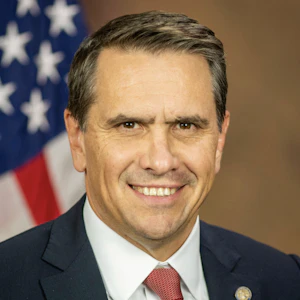
Biography of Deputy Attorney General Todd Blanche
The Honorable Todd Blanche is the 40th Deputy Attorney General of the United States, overseeing the work of the 115,000 dedicated employees who fulfill the Department of Justice’s mission at Main Justice, the FBI, DEA, U.S. Marshals, ATF, and 93 U.S. Attorney’s Offices.
Todd began his career at the Department where he served for over fifteen years in a variety of capacities, including as a contractor, a paralegal in the Criminal Division, and at the United States Attorney’s office for the Southern District of New York where he eventually became an AUSA and later a supervisor.
After leaving the Department, Todd worked as a criminal defense attorney that included representing President Donald Trump in three of the criminal cases brought against him in 2023 and 2024.
Following President Trump’s historic return to the White House, the President appointed Todd to work alongside Attorney General Pam Bondi to make America safe again. At the DOJ, Todd is working tirelessly to implement President Trump’s priorities that include confronting illegal protecting American businesses from fraud.
Todd has been married to his wonderful wife Kristine for nearly thirty years, is a father and grandfather.
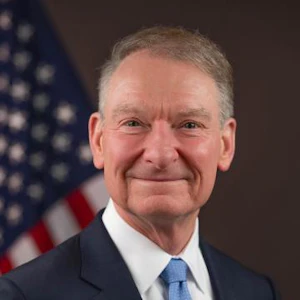
Paul Atkins
Paul Atkins
Prior to returning to the SEC, Chairman Atkins was most recently chief executive of Patomak Global Partners, a company he founded in 2009. Chairman Atkins helped lead efforts to develop best practices for the digital asset sector. He served as an independent director and non-executive chairman of the board of BATS Global Markets, Inc. from 2012 to 2015.
Chairman Atkins was appointed by President George W. Bush to serve as a Commissioner of the SEC from 2002 to 2008. During his tenure, he advocated for transparency, consistency, and the use of cost-benefit analysis at the agency. Chairman Atkins also represented the SEC at meetings of the President’s Working Group on Financial Markets and the U.S.-EU Transatlantic Economic Council. From 2009 to 2010, he was appointed a member of the Congressional Oversight Panel for the Troubled Asset Relief Program.
Before serving as an SEC Commissioner, Chairman Atkins was a consultant on securities and investment management industry matters, especially regarding issues of strategy, regulatory compliance, risk management, new product development, and organizational control.
From 1990 to 1994, Chairman Atkins served on the staff of two chairmen of the SEC, Richard C. Breeden and Arthur Levitt, ultimately as chief of staff and counselor, respectively. He received the SEC’s 1992 Law and Policy Award for work regarding corporate governance matters.
Chairman Atkins began his career as a lawyer in New York, focusing on a wide range of corporate transactions for U.S. and foreign clients, including public and private securities offerings and mergers and acquisitions. He was resident for 2½ years in his firm's Paris office and admitted as conseil juridique in France.
A member of the New York and Florida bars, Chairman Atkins received his J.D. from Vanderbilt University School of Law in 1983 and was Senior Student Writing Editor of the Vanderbilt Law Review. He received his A.B., Phi Beta Kappa, from Wofford College in 1980.
Originally from Lillington, North Carolina, Chairman Atkins grew up in Tampa, Florida. He and his wife Sarah have three sons.

Mike Selig
Mike Selig
Chairman Selig brings to the role deep public and private sector experience working with a wide range of stakeholders across agriculture, energy, financial, and digital asset industries, which rely upon and operate in CFTC-regulated markets.
Prior to his leadership at the CFTC, Chairman Selig most recently served as chief counsel of the Securities and Exchange Commission’s Crypto Task Force and senior advisor to SEC Chairman Paul S. Atkins. In this role, Chairman Selig helped to develop a clear regulatory framework for digital asset securities markets, harmonize the SEC and CFTC regulatory regimes, modernize the agency’s rules to reflect new and emerging technologies, and put an end to regulation by enforcement. He also participated in the President’s Working Group on Digital Asset Markets and contributed to its report on “Strengthening American Leadership in Digital Financial Technology.”
Prior to government service, Chairman Selig was a partner at an international law firm, focusing on derivatives and securities regulatory matters. During his years in private practice, he represented a broad range of clients subject to regulation by the CFTC, including commercial end users, futures commission merchants, commodity trading advisors, swap dealers, designated contract markets, derivatives clearing organizations, and digital asset firms. Chairman Selig advised clients on compliance with the Commodity Exchange Act and the CFTC’s rules and regulations thereunder, including in connection with registration applications and obligations, enforcement matters, and complex transactions.
Chairman Selig earned his law degree from The George Washington University Law School and was articles editor of The George Washington Law Review. He received his undergraduate degree from Florida State University.

David Bailey
David Bailey

Eric Trump
Eric Trump
Mr. Trump also serves as Executive Vice President of The Trump Organization, where he oversees the global management and operations of the Trump family’s extensive real estate portfolio. This includes Trump Hotels, Trump Golf, commercial and residential real estate, Trump Estates, and Trump Winery. Known for his hands-on leadership and strong market instincts, he has played a key role in expanding the company’s presence across major U.S. and international markets.
A globally recognized business leader and public figure, Mr. Trump is a prominent advocate for Bitcoin and decentralized finance. He is a co-founder of World Liberty Financial, a decentralized finance (DeFi) platform, and serves on the Board of Advisors of Metaplanet, Japan’s largest corporate holder of Bitcoin.
Beyond his business activities, Mr. Trump has helped raise more than $50 million for St. Jude Children’s Research Hospital in the fight against pediatric cancer, a philanthropic mission he began at age 21.
Mr. Trump earned a degree in Finance and Management from Georgetown University. He currently resides in Florida with his wife, Lara, and their two children. He is also the author of Under Siege, his memoir published in October 2025.

Jack Mallers
Jack Mallers
Cynthia Lummis
Cynthia Lummis
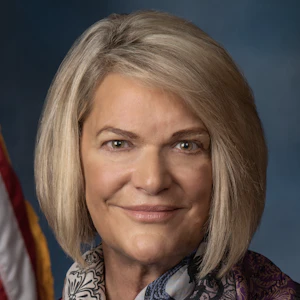
As the first-ever Chair of the Senate Banking Subcommittee on Digital Assets, Senator Lummis is the architect of the legislative framework shaping America's digital asset future. She introduced the landmark Lummis-Gillibrand Responsible Financial Innovation Act, the first comprehensive bipartisan crypto regulatory framework in Senate history. She co-authored the GENIUS Act — the first federal stablecoin law ever enacted — and introduced the BITCOIN Act, which would establish a U.S. strategic Bitcoin reserve of up to one million BTC. She is leading the Clarity Act, which will bring long-overdue regulatory certainty to the digital asset industry. She has also championed digital asset tax reform, including a de minimis exemption for small transactions and equal tax treatment for miners and stakers.
Known as Congress' "Crypto Queen," Senator Lummis represents Wyoming — a state she has helped build into one of the most digital asset-friendly regulatory environments in the nation. Before serving in the Senate, she served 14 years in the Wyoming Legislature, eight years as Wyoming State Treasurer, and eight years in the U.S. House. She is a three-time graduate of the University of Wyoming.
Her work represents a crucial bridge between traditional financial systems and the emerging digital economy, ensuring America leads the world in financial innovation while protecting the individual freedoms that define it.

Adam Back
Adam Back
Amy Oldenburg
Amy Oldenburg
David Marcus
David Marcus

Matt Schultz
Matt Schultz
Fred Thiel
Fred Thiel
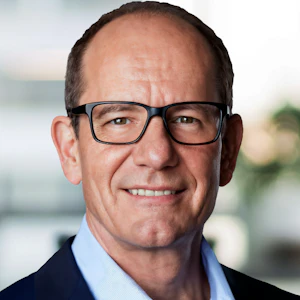
Throughout his career, Mr. Thiel has consistently driven rapid growth and created substantial shareholder value. Prior to MARA, Mr. Thiel served as the CEO of two other public companies, Local Corporation (NASDAQ: LOCM) and Lantronix, Inc (NASDAQ: LTRX). He has successfully raised billions in equity and debt through private and public offerings, led companies through IPOs, executed high-value exits to strategic and financial acquirers, and implemented effective M&A and roll-up strategies.
Mr. Thiel attended the Stockholm School of Economics and executive classes at Harvard Business School, and is fluent in English, Spanish, Swedish, and French. Mr. Thiel is the Chairman of the Board for Oden Technology, Inc. and is active in Young Presidents’ Organization where he has led initiatives in both the FinTech and Technology Networks.
A recognized voice in the industry, Fred frequently shares his insights on energy and technology with major media outlets like Bloomberg TV, CNBC, and FOX Business, contributing to vital discussions about the future of these sectors.
Tim Draper
Tim Draper
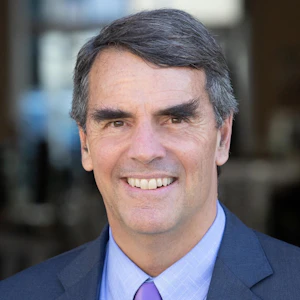
He is a supporter and global thought leader for entrepreneurs everywhere, and is a leading spokesperson for Bitcoin and decentralization, having won the Bitcoin US Marshall’s auction in 2014, invested in over 50 crypto companies, and led investments in Coinbase, Ledger, Tezos, and Bancor, among others.
Afroman
Afroman